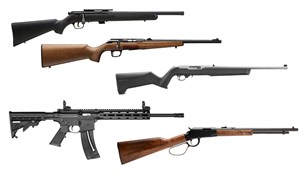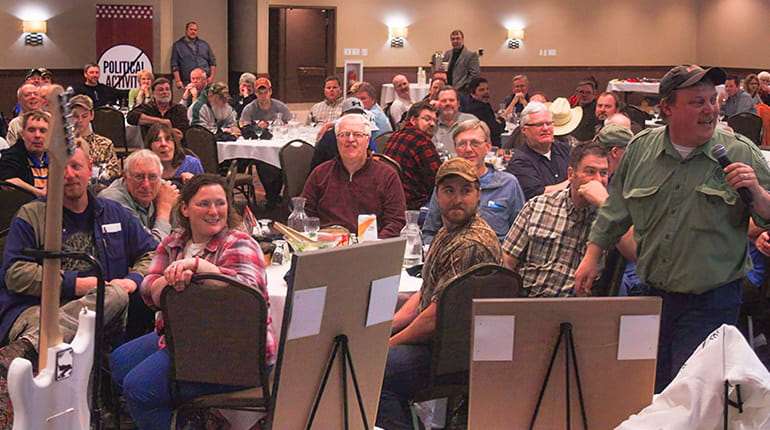

Competition shooting organizations are expanding their efforts to draw more shooters to the firing line. One approach is increased outreach to women and youth, and another is to create a “run what ya brung” classification that invites gun owners to compete with whatever firearm they have at home. A third is to cater to those with physical limitations. The American Rimfire Association takes all three approaches.
National Rifle Association of America President Bill Bachenberg, in the February 2026 issue of American Rifleman, said the organization is “refocusing” on new and traditional competitions, and this year NRA established three new F-Class rifle competition categories, including one for “production” factory rifles. Civilian Marksmanship Program rifle competitions have included a classification for off-the-shelf “sporting” rimfire rifles, and CMP recently opened a new classification for .22 Long Rifle military training rifles. Organizations have also established “factory” or “hunter” firearm classifications for their competitions. These newer classifications lower the cost of competing by limiting “accurizing tricks” to firearms while leveling the playing field, often via setting an upper price limit on firearms as they come from the factory.
American Rimfire Association
Back in 1998, a group of shooters desiring formal benchrest competition exclusively for the .22 Long Rifle cartridge rifle established the American Rimfire Association. In 2010, the ARA flag shifted to Dan Killough of Killough Shooting Sports in Brownsville, Texas. Killough introduced American rimfire shooters to electronic target scoring, which has long been popular in Europe and the UK as an accurate and unbiased scoring system. Seven years later, ammunition manufacturer Eley, Inc. in England acquired the organization, which has expanded its number of sanctioned ARA clubs across the United States to such a successful degree that only a handful of states don’t have an ARA club.
Like NRA’s three new F-Class competitions inviting greater participation by, among other things, opening the field to shooting factory rifles from a bipod, ARA rules go far to be inclusive rather than exclusive while still maintaining high standards for competition.
How To Bring Them
“The American Rimfire Association was built to balance camaraderie and competition in a precision-driven sport that welcomes everyone,” ARA Competition Manager Dawn Killough said in an email exchange. “With Factory and Unlimited Class divisions, shooters can compete at a level that fits their goals.”
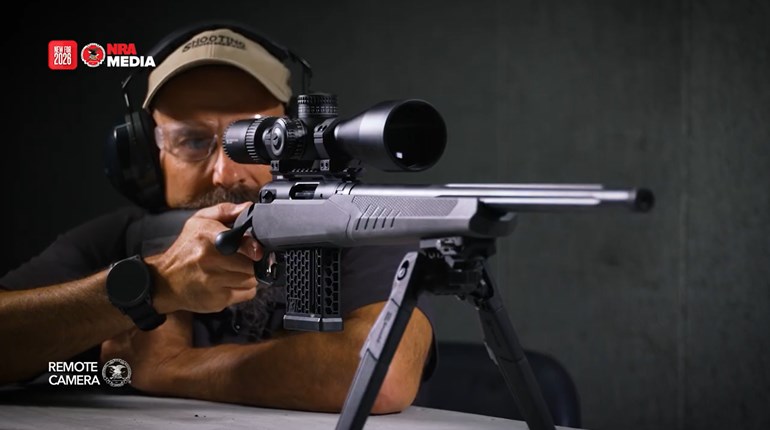
ARA competition is broadly appealing in several ways. First, shooting from a bench accommodates those with physical limitations who are unable to shoot “position” competitions. Firing is from a rest or a bipod. The solid bench is also a confidence builder for youngsters or newbies who can become discouraged to see their sights wandering all over a target when shooting from a less-supported position, such as offhand.
Secondly, according to the ARA rulebook, an ARA-sanctioned match needs a minimum of only two competitors. That’s right—just two competitors. A match consists of two to six target sheets and is fired at 50 yards within a 20-minute time limit. Target sheets are printed with 25 individual targets, the competitor firing one shot at each target. Electronic scoring (targets are sent to ARA to verify official scores) assures impartiality, though competitors can challenge scores, if they wish.
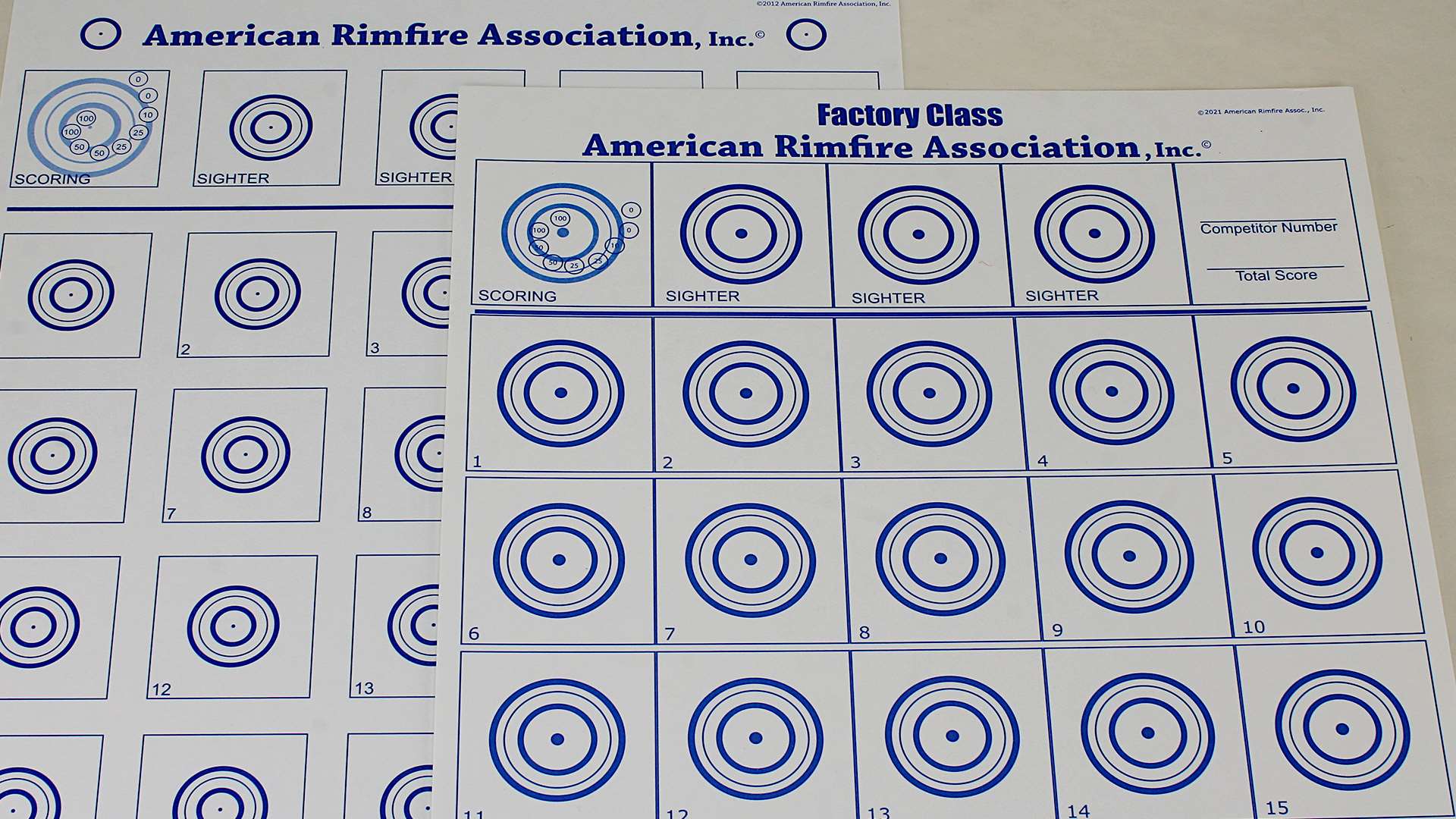
Competitions are conducted at both local and national levels and classified specifically as either Indoor or Outdoor matches. And to further encourage youth participation, there is never a match fee for Junior (ages 7-17) competitors.
“Run What Ya Brung”—Or Not
ARA benchrest competition includes both an Unlimited Class and a Factory rifle class. Unlimited Class rifles have no restrictions on weight, barrel dimension, stock dimension or scope magnification, leaving the field wide open to the serious shooter or experimenter.
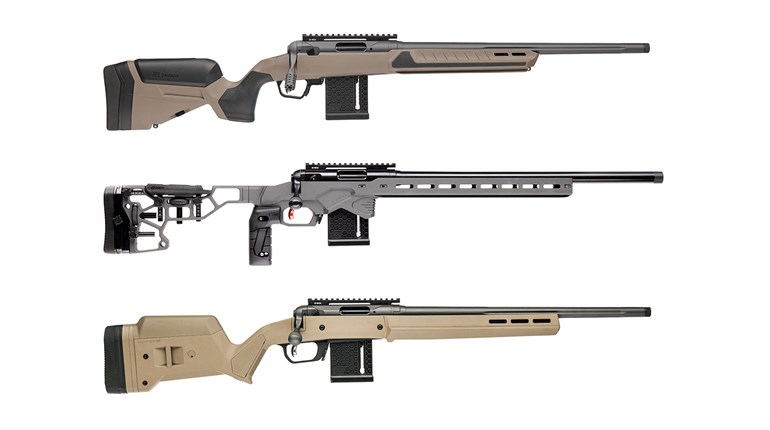
Factory Class invites new competitors and those who don’t want to invest thousands of dollars in a rifle. To understand which rifles are eligible for the Factory Class, ARA developed a simple “Yes/No” flow chart of eligible features, as well as Approved and Excluded lists of specific rifles and rifle models. Generally, a Factory Class rifle have a magazine (though single-loading is permitted) and is still in production with an MSRP not exceeding $1,450, though many out-of-production rifles also appear on the Approved list. If the rifle you wish to compete with is neither Approved nor Excluded, you can submit a Factory Rifle Approval Request Form to ARA. Rules permit glass bedding a Factory Class rifle and installing an aftermarket trigger, and there’s no limitation on optics.
But Dawn said there’s more to ARA competition than the rifles and accoutrements, and the organization is proactive in reaching out to members. “We actively support new clubs and competitors, helping them feel confident, connect with others, punch Xs and build lasting friendships at the range,” she said.
ARA competition targets and accoutrements are available from Killough Shooting Sports. Though technically owned by Eley in England, the American Rimfire Association is headquartered in Winters, Texas. Visit the ARA website for more information, including a PDF-format rulebook and where to find the ARA-sanctioned club and match nearest you.
Most Popular