When shooters talk about ammunition they tend to focus on the bullet: its weight, its profile and what it does when it hits the target. The cartridge case rarely gets the same attention, which is a shame because it is doing more work than most people realize. The case holds everything together. It contains the primer, the propellant and the projectile in a single neat package. When the round fires, the case expands to seal the chamber against escaping gas, then springs back enough to extract cleanly. It even acts as a heat sink, pulling thermal energy out of the chamber every time a spent case is ejected.
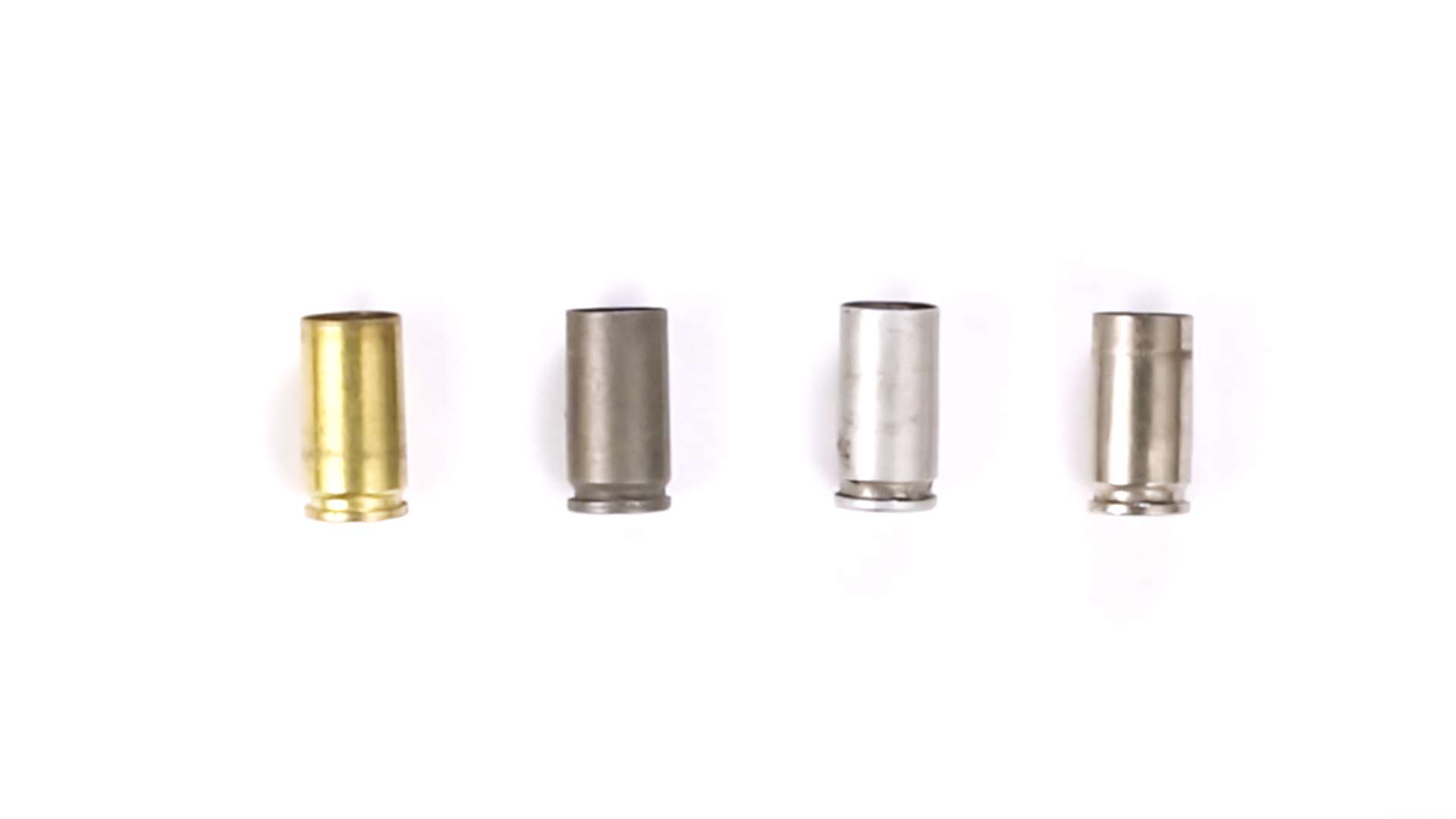
Not all cases are made from the same material, and the differences matter more than you might expect. There are four common cartridge case materials in circulation today: brass, steel, aluminum and nickel-plated brass. Each one exists for specific economic and practical reasons, and the material your ammunition uses can affect everything from how it feeds and fires to whether you can reload it afterward.
Brass, specifically an alloy of roughly 60% copper and 40% zinc, is the most widely used cartridge case material and has been since the 19th century. There are good reasons for that. Brass is malleable enough to form into cases easily and to expand under chamber pressure for a reliable gas seal, yet strong enough to endure the process repeatedly. It resists corrosion without requiring additional coatings and is softer than the steel used in firearms, which means less wear on extractors, chambers and feed ramps over time. For reloaders, brass is the clear winner. Quality brass cases that are properly maintained can be reloaded 10 or more times, making them the most economical choice over the long haul despite a higher initial cost per round.
Steel-cased ammunition is common in imported and military surplus loads, particularly from Eastern European manufacturers. The appeal is straightforward: steel is cheaper than brass, which keeps the per-round price down. However, steel cases require a lacquer or polymer coating to prevent rust and they are harder than brass. That added hardness means more wear on your firearm’s extractor and chamber over high round counts. Steel cases also lack the elasticity of brass, so they don’t spring back as readily after firing, which can occasionally cause extraction issues in some firearms. Reloading steel cases is generally not practical. For shooters who want affordable range ammunition and don’t plan to save their brass, steel gets the job done at a lower price point, but check your firearm manufacturer’s recommendations first, as some specifically advise against it.
Aluminum cases occupy a similar budget-friendly space as steel but with a different set of characteristics. They are lighter than both brass and steel and softer than steel, so they produce less wear on your firearm. The trade-off is durability. Aluminum cases are strictly single-use and should never be reloaded. The material simply cannot withstand the stresses of resizing and refiring. Aluminum-cased ammunition is commonly marketed as affordable training and range ammo, and for that purpose it works perfectly well. Just don’t plan on picking it up afterward for your reloading bench.
Nickel-plated brass starts with a standard brass case and adds a thin layer of nickel to the exterior. This coating makes the case more resistant to tarnish and corrosion, provides a slicker surface for smoother feeding and extraction, and is easier to spot in low-light conditions thanks to its distinctive silver appearance. These qualities make nickel-plated cases a popular choice for self-defense and premium hunting ammunition—rounds that may be loaded into a magazine, carried for weeks or months, handled repeatedly and fired only when it truly counts. The added cost over standard brass reflects the plating process, but for ammunition that lives in a carry gun or sits in a hunting pack through a long season, the corrosion resistance and reliability are worth the premium.
How to Tell Them Apart
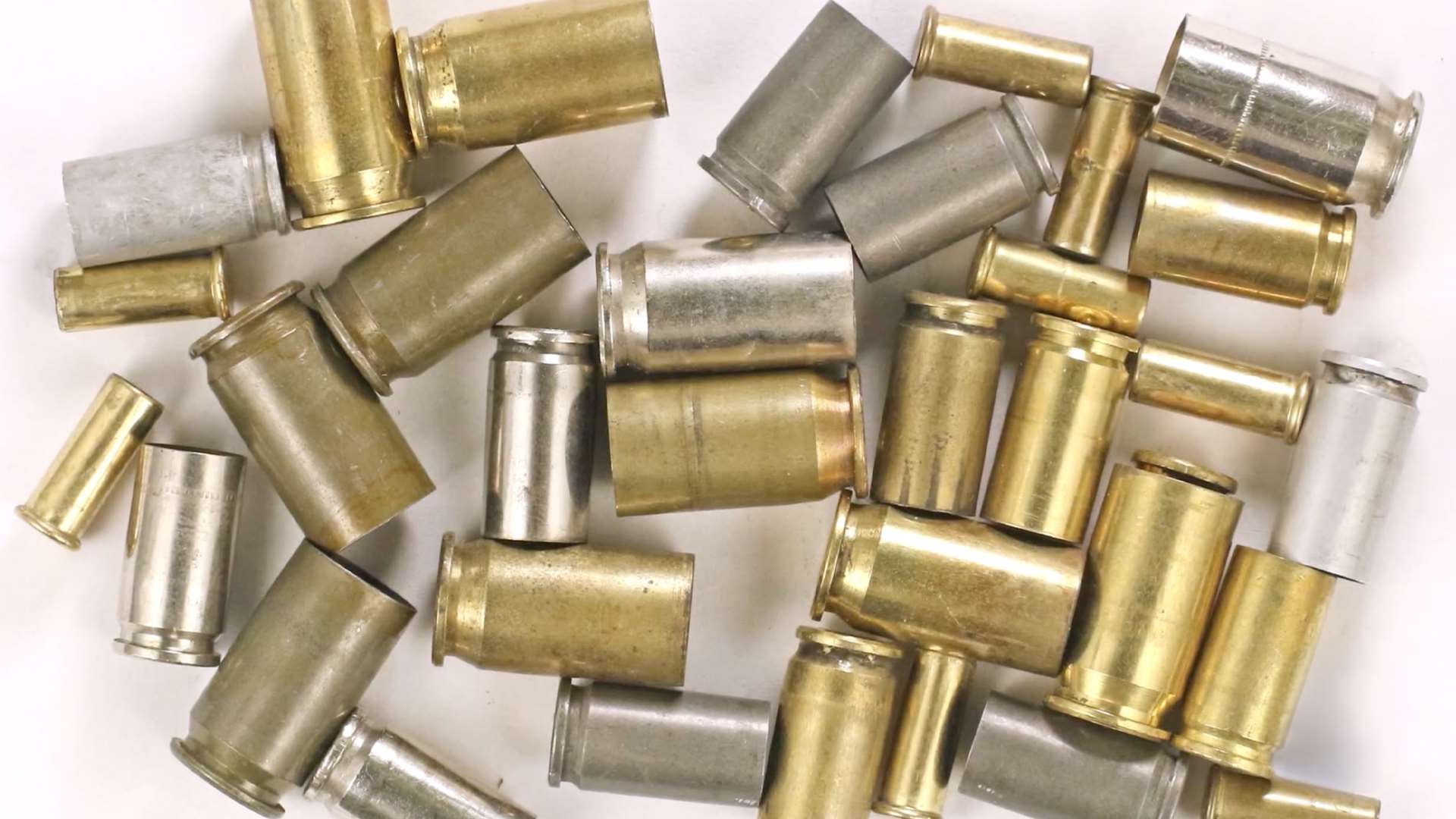
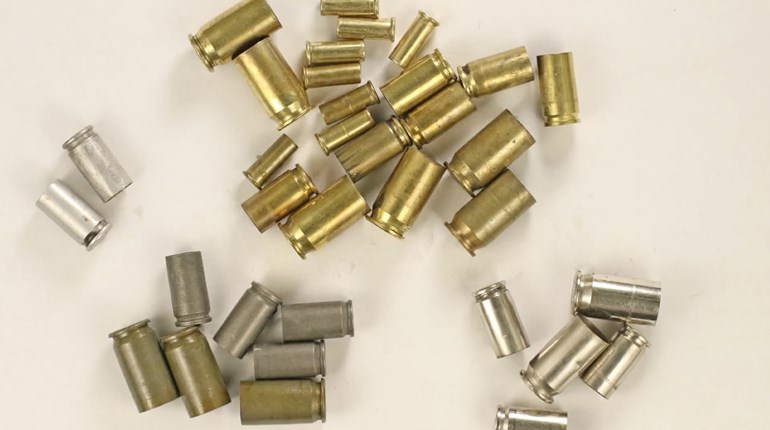
Identifying case material is usually as simple as looking at the cartridge or reading the ammunition box. Brass cases have a warm golden or straw color. Steel cases are typically dark gray or greenish, often with a visible lacquer or polymer coating. Aluminum cases appear as a lighter, matte gray. Nickel-plated brass has a bright silver finish that is easy to distinguish from the warmer tone of unplated brass.
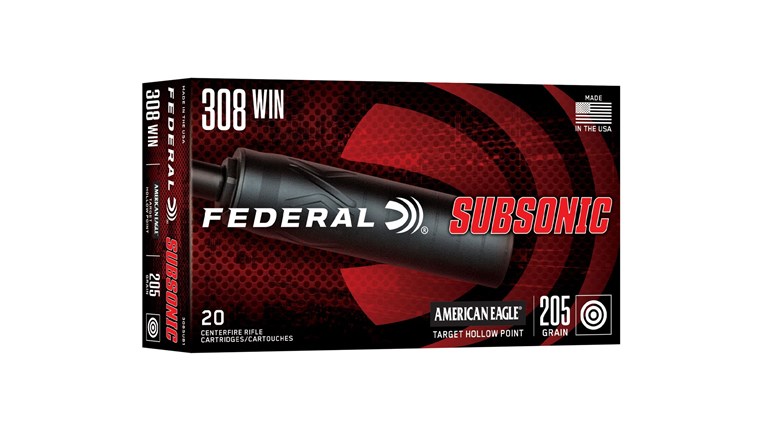
Most ammunition manufacturers also print the case material on the packaging, so checking the box before you buy is always a good habit—particularly if your firearm’s manual specifies which case materials are safe to use.
Why It Matters
For casual range shooters, case material might come down to nothing more than price. But for competitors running high round counts, hunters carrying ammunition through harsh conditions and reloaders looking to get the most out of every component, the case material is a decision worth making deliberately. Understanding what each material does well and where it falls short helps you choose ammunition that matches both your firearm and your purpose. The case may not be the most glamorous part of a cartridge, but it is arguably the most essential.
Watch the full NRA Women cartridge case material video featured at the top of this article for a visual breakdown of each type.