A sling is the only piece of gear that NRA America’s Rifle Challenge requires beyond the rifle itself, a pair of magazines, and eye and ear protection. It is also, in Kyle Lamb’s view, one of the most underused tools in a carbine shooter’s kit. In the fourth installment of the ARC video series featured on the NRA YouTube page, he walks through the mechanics of a two-point quick-adjust sling—how to tighten it, how to loosen it and how to make it do useful work in every position the program demands. Watch the full video above.
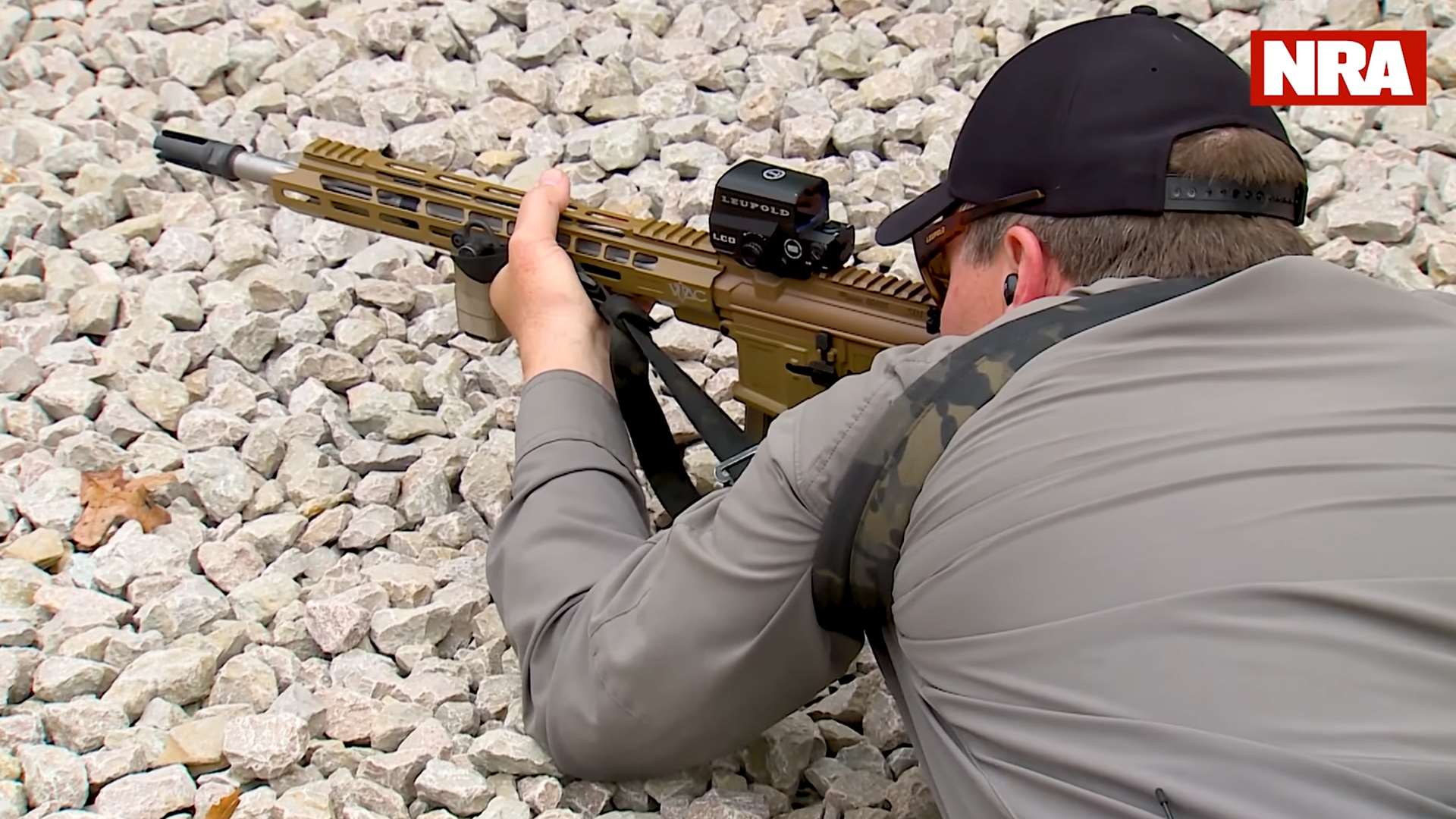
The sling Lamb demonstrates has a pull tab that releases tension instantly and a squeeze mechanism that cinches it tight. That speed matters in ARC, where a competitor may need to go from a slung rifle at the walk to a firing position in seconds. Lamb’s first demonstration is the basic tighten-and-lock: grab the rifle, squeeze the adjustment, drop the support-side elbow through the loop and the sling pulls the rifle firmly into the shoulder. The movement takes about two seconds once practiced.
From there, Lamb goes prone. If the sling feels tight enough after dropping into position, he leaves it alone. If not, he reaches up and adds a click or two of tension without lifting his body off the ground, then grabs the sling material itself to pull out any remaining slack. The result, as Lamb describes it, is a platform so stable that the sling functions like an extra pair of hands holding the rifle in place. This matters at the distances ARC stages cover—out to 100 yards at Level One and as far as 400 yards at Level Two—where even small movements in the support hand translate into misses on steel.
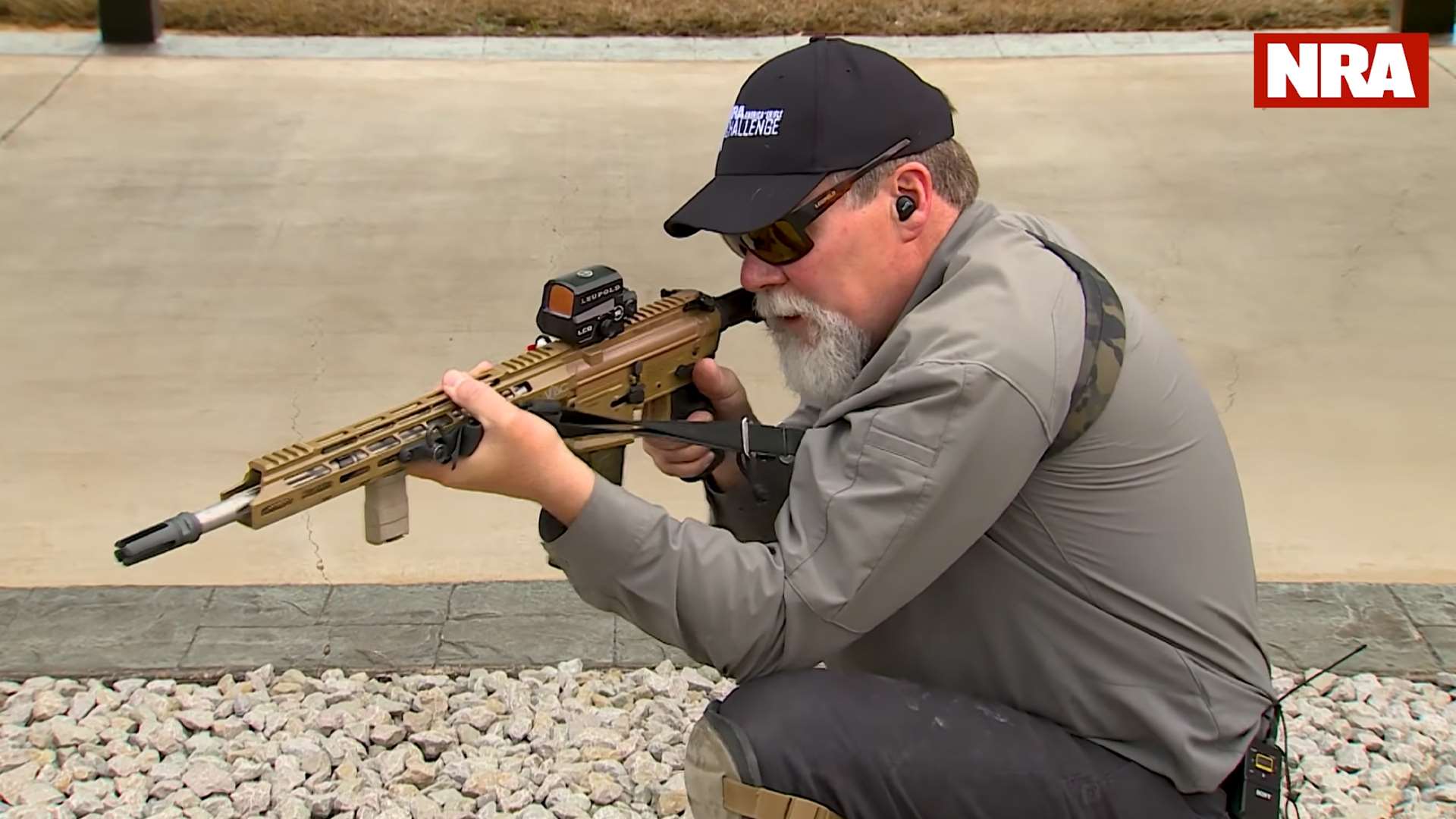
Recovery from prone follows a specific sequence. Lamb drops his elbow back through the sling, pushes up to a kneeling position and re-slings the rifle before doing anything else. Kneeling gets its own treatment. Lamb sets the elbow inside the knee—the same opposing-pressure technique he taught in the ARC barricade video—then tightens the sling against the front of the rifle. The final step is a small, deliberate rotation of the firing arm downward. That rotation tensions the entire system: sling, support arm, knee and rifle all lock together. It’s the kind of detail that separates a wobbly kneeling position from a genuinely stable one.
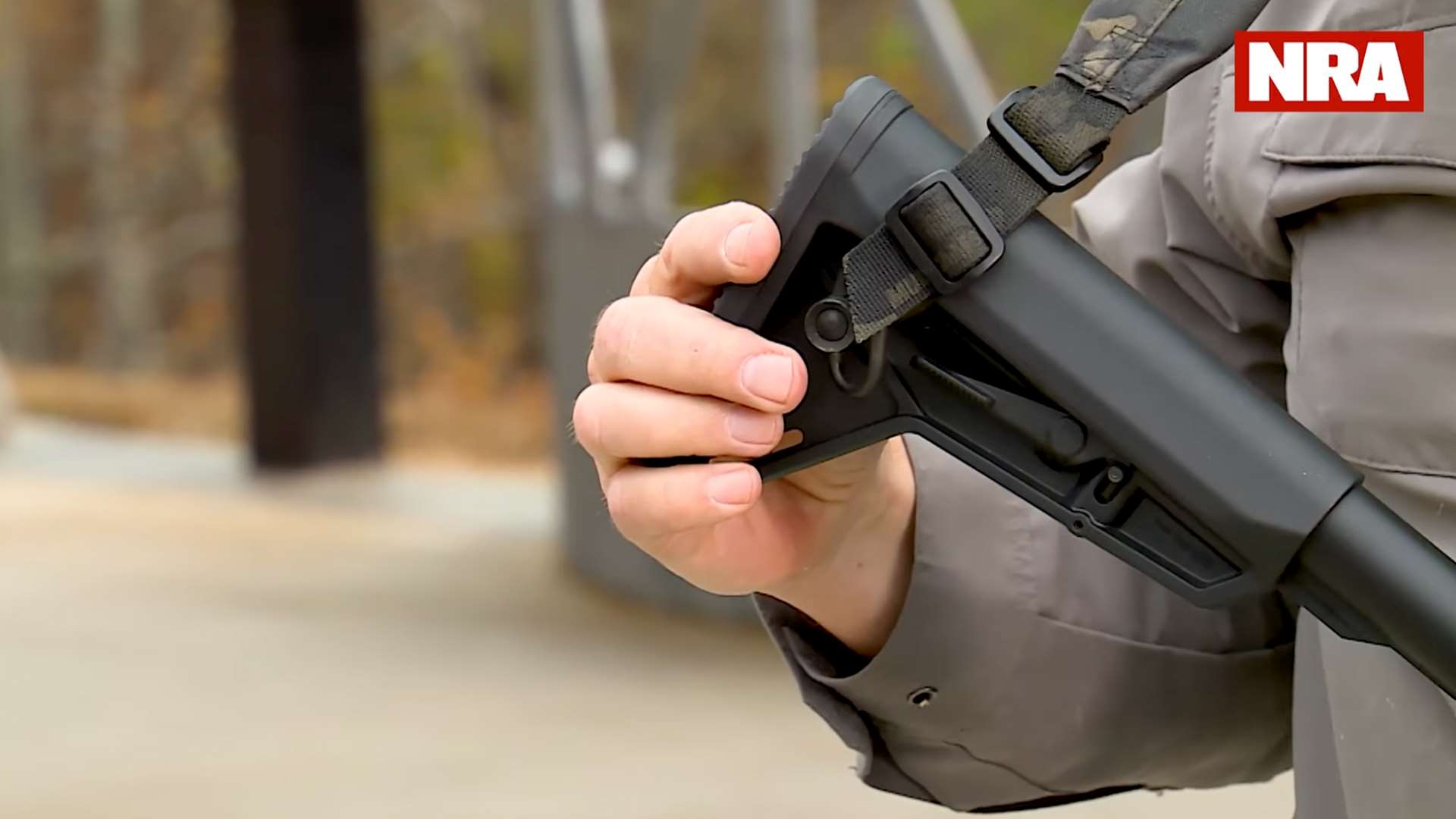
One detail in Lamb’s setup: He attaches the rear of the sling to the right side of the buttstock rather than the left side. The reason is practical. Lamb trains to transition the rifle from his dominant shoulder to his support side, a skill that becomes relevant when shooting around cover or barricade ports that favor the opposite hand. With the sling mounted on the right, the loop has enough slack to cross his chest without binding against his neck during the transition. To switch back, he grabs the front of the magazine well and rotates the rifle into its normal orientation, then re-slings for the next position.
ARC Level Two and Two-Gun matches may require competitors to transition from rifle to pistol during a stage. Lamb keeps his sling moderately tight for these situations. When the rifle runs empty, he lowers it and lets the sling catch the weight against his body, freeing both hands to draw his sidearm. The rifle stays controlled—no swinging muzzle, no fumbling—because the sling is already under tension. Lamb’s demonstration makes clear that it only works smoothly if the sling tension is set before the moment arrives.
The sling also handles the unglamorous work between stages. After the last shot, Lamb drops his magazine, inserts an empty chamber indicator and cinches the sling to pin the unloaded rifle against his body. That configuration keeps the muzzle safe while competitors walk downrange, score targets or collect brass. If a front carry feels uncomfortable for longer walks, he loosens the sling, swings the rifle to his back and tightens it again, a position that frees the arms and distributes the weight more evenly across the torso.
Lamb’s closing advice is direct: Buy a quality two-point quick-adjust sling, practice getting in and out of positions with it and treat it as a stability tool rather than just a carrying strap. The sling is required equipment in ARC for a reason: it makes every position more stable and more durable. Competitors who learn to use it well will see the difference on the scoreboard.
For more information on the NRA America’s Rifle Challenge program, visit arc.nra.org.