** When you buy products through the links on our site, we may earn a commission that supports NRA's mission to protect, preserve and defend the Second Amendment. **
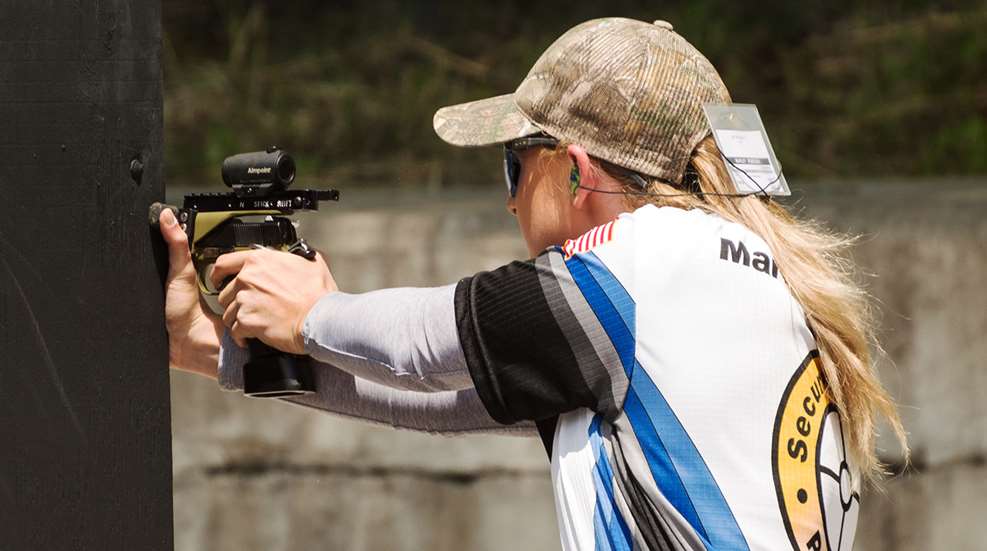
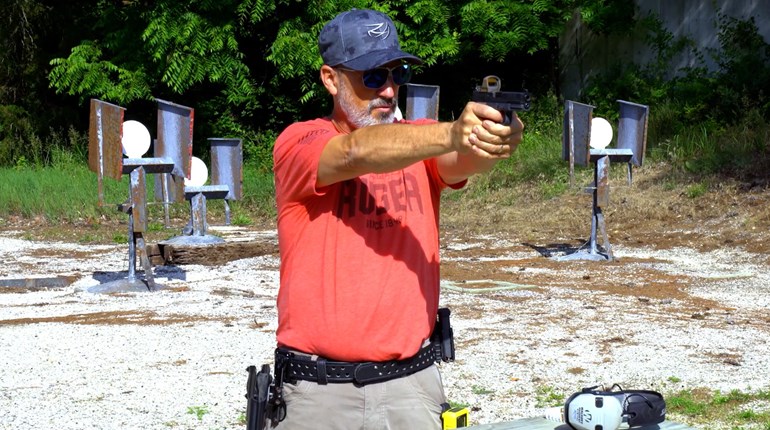
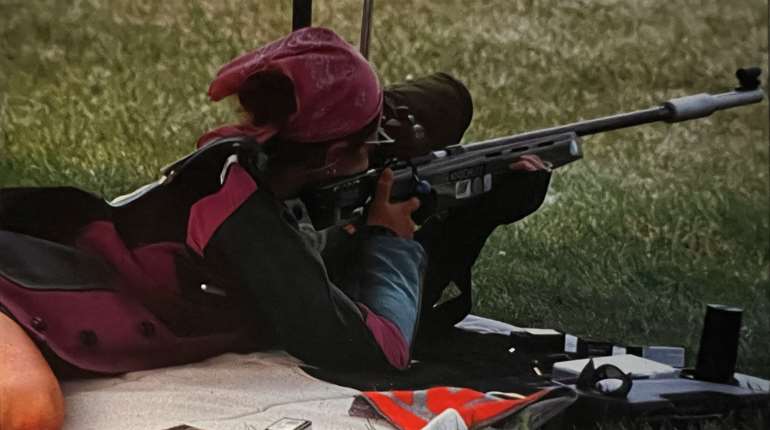
Above: New shooter Marley Robeson competed at the 2017 NRA Bianchi Cup as her second match ever. Here she is shooting the Barricade Event.
In order to improve, a beginning shooter should spend as much time on the range as possible. The more time you spend around the sport, the more information you will retain about the sport. Whether the information is about the next competition, how an experienced shooter sets up their equipment or actual on-the-line experience of your own, the longer you hang around, the more readily available the information will become. Also, take time and watch the top shooters; you will be able to see what they are doing, then you can imitate them.
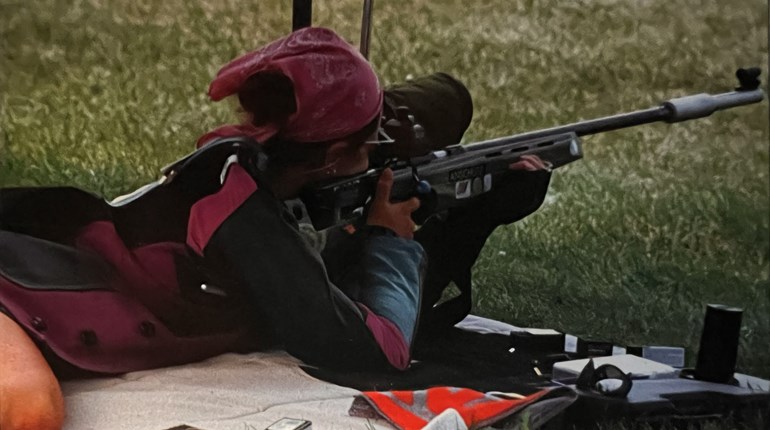
A shooter's next focus should be developing basic shooting fundamentals. Start with forming a solid position. Make sure you have good bone support that ends up going straight into the ground. Most of all, make sure your position is legal. There is no use in practicing a position if you have to change it once the match starts.
"One of the best places to learn a good position is at a local or national shooting camp," said Jason Parker, U.S. Army Marksmanship Unit team member and two-time Olympian. "The coaches available will be able to advance your technique to help you achieve whatever goal you want to achieve."
Once you have a well-built position, make sure your natural point of aim is as close to perfect as possible. Top shooters will only shoot a shot if their natural point of aim (NPA) is in exact alignment with the target. At first, shooters will have a larger area that they accept, but it should get smaller with practice.
"Sight alignment, in my opinion, is the most important fundamental in shooting," said Parker. "It is always talked about when discussing the fundamentals of shooting, but people don't spend enough time on it."
The first thing a shooter should do when looking through the sights is to align the front sight inside the rear, perfectly every time. This is as important as aligning the front sight on the target.
Lastly, in order to reach whatever goal you have set for yourself, it is important to write it down. Next, make a plan to reach that specific goal. Plans are just a blueprint of what you want to achieve, so it can change.
"I usually use some major competition to evaluate where I am. Then, after the match—win or lose—I take a look back and see what I can do to improve for the next competition," concluded Parker.
You can have a long-term plan to reach the Olympics, or you can have a short-term plan for what to accomplish in the next practice session. Whatever it might be, commit to achieving your goal.
In order to improve, a beginning shooter should spend as much time on the range as possible. The more time you spend around the sport, the more information you will retain about the sport. Whether the information is about the next competition, how an experienced shooter sets up their equipment or actual on-the-line experience of your own, the longer you hang around, the more readily available the information will become. Also, take time and watch the top shooters; you will be able to see what they are doing, then you can imitate them.
A shooter's next focus should be developing basic shooting fundamentals. Start with forming a solid position. Make sure you have good bone support that ends up going straight into the ground. Most of all, make sure your position is legal. There is no use in practicing a position if you have to change it once the match starts.
"One of the best places to learn a good position is at a local or national shooting camp," said Jason Parker, U.S. Army Marksmanship Unit team member and two-time Olympian. "The coaches available will be able to advance your technique to help you achieve whatever goal you want to achieve."
Once you have a well-built position, make sure your natural point of aim is as close to perfect as possible. Top shooters will only shoot a shot if their natural point of aim (NPA) is in exact alignment with the target. At first, shooters will have a larger area that they accept, but it should get smaller with practice.
"Sight alignment, in my opinion, is the most important fundamental in shooting," said Parker. "It is always talked about when discussing the fundamentals of shooting, but people don't spend enough time on it."
The first thing a shooter should do when looking through the sights is to align the front sight inside the rear, perfectly every time. This is as important as aligning the front sight on the target.
Lastly, in order to reach whatever goal you have set for yourself, it is important to write it down. Next, make a plan to reach that specific goal. Plans are just a blueprint of what you want to achieve, so it can change.
"I usually use some major competition to evaluate where I am. Then, after the match—win or lose—I take a look back and see what I can do to improve for the next competition," concluded Parker.
You can have a long-term plan to reach the Olympics, or you can have a short-term plan for what to accomplish in the next practice session. Whatever it might be, commit to achieving your goal.