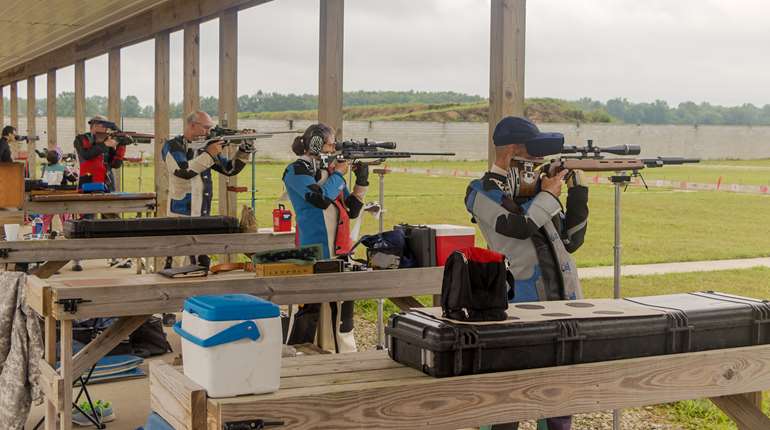
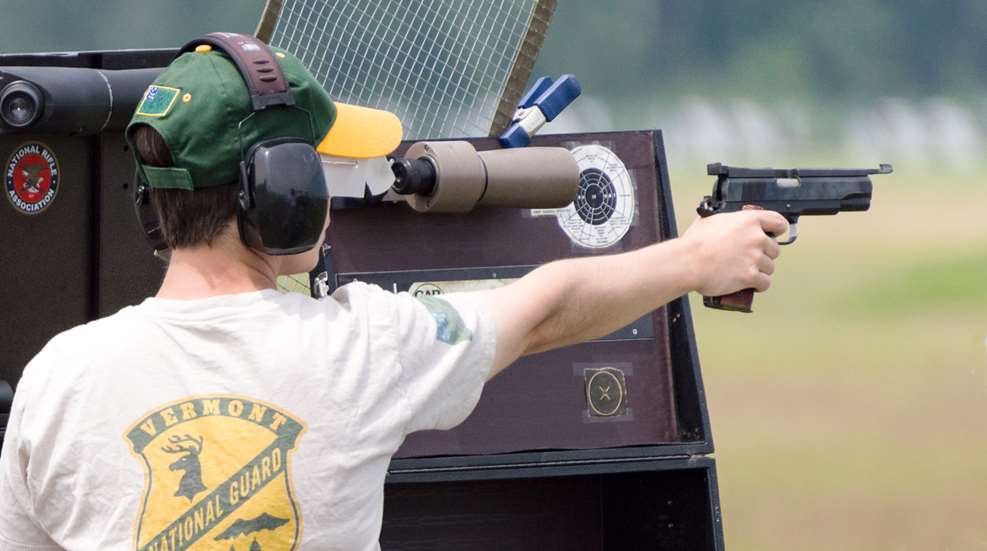
When training for Precision Pistol shooting you need to learn call shots. Rifle shooters do a shot behind method when competing. They shoot a shot and call it by making a mark on a target in their rifle data book. When the target comes up, they see where the shot actually hit, then they take another shot, plot the location of the last shot on a separate target in their data book, and then plot the call of the next shot on the call target.
Pistol shooters need to use a 10-shot behind method when training.
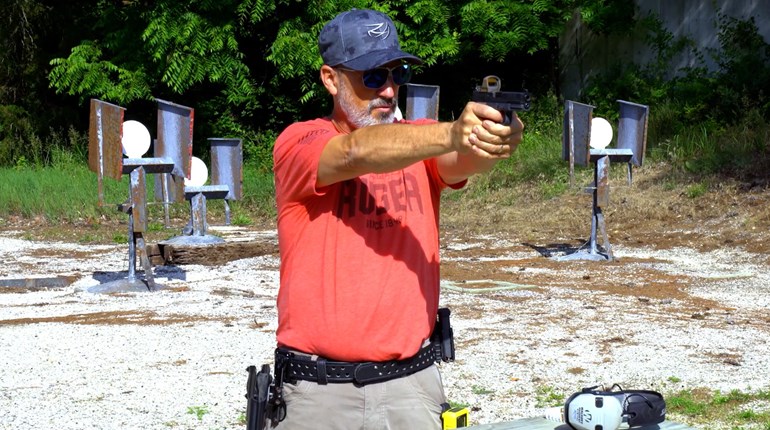
Put your scope away. Grab a target or a blank piece of paper and set it next to you on the bench. Shoot 10 shots slow fire at 25 or 50 yards, or even 50 feet if indoors. After each shot, call the shot by plotting a mark on your target or piece of paper on the bench. Don't look down range trying to see where your shots are going—just shoot.
When you are done, take your call target down range and hold it up against your shot target. The pattern you called and the pattern you shot should look identical, by shape, but not necessarily by size.
When someone says they are inside or outside their call, what they are referring to is shot location. For instance, if I call a shot a nine at 1 o'clock, and it impacts the target as a solid 10 at 1 o’clock—that is being inside your call. The opposite would be outside your call.
If you're not able to call your shots, you are either not focusing on your sights—or with a dot on the target, you’re jerking the trigger so hard you don't actually see where the sights were when the shot broke.
Read Part I and Part II of Brian's Precision Pistol Fundamentals Clinic.
Submit your coaching tips to [email protected].
Most Popular