They’re best known for shattering clay targets for Team USA. Now Vincent Hancock and Conner Prince are taking aim at a quieter pursuit—literally.
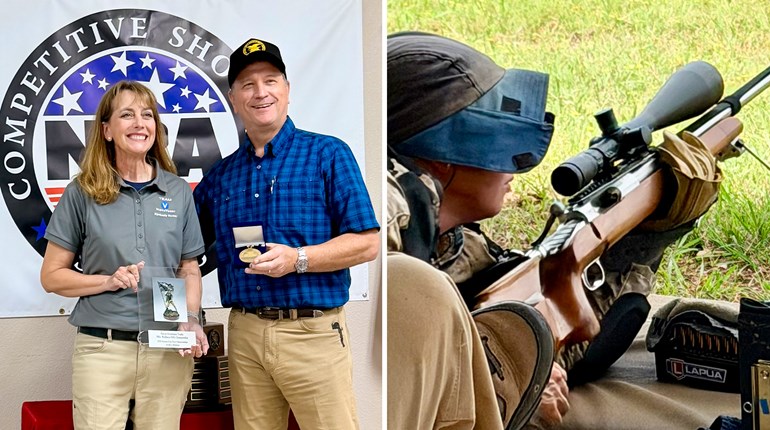
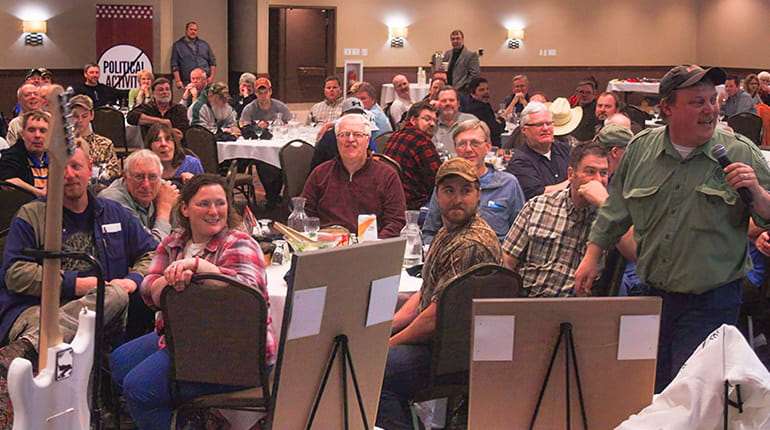
Between training cycles for the Los Angeles 2028 Olympics, the U.S. skeet medalists have spun up Backwoods Suppressors, a hunter-focused suppressor company that the duo were promoting during the 2026 NRA Annual Meetings and Exhibits in Houston. Shooting Sports USA sat down with Hancock and Prince at the show to talk through how the company came together and what makes their cans different. (Watch the full interview above.)

The company started, Hancock said, with a pitch from a small group already working in the suppressor industry who were looking to launch something new. That pitch evolved into a four-person ownership team—Hancock, Prince, Prince’s father and a family friend—and after some early collaborators moved on, Prince took the lead on engineering and product development while Hancock helped define what kind of company Backwoods Suppressors would be.
The answer was specific. Plenty of suppressor companies make a product hunters can use; very few are built around hunters from the start.
“We want to be a hunting company that provides suppressors and suppression for the everyday hunter that goes out in the field,” Hancock said. “We’re not trying to make you a tactical guy. We’re not trying to make a tactical gun. You’re just a normal dude going out hunting and shooting something that’s not going to bust your eardrums.”
The Lineup
The current Backwoods lineup includes five suppressors built around two philosophies: light enough to carry all day, and quiet enough to matter.
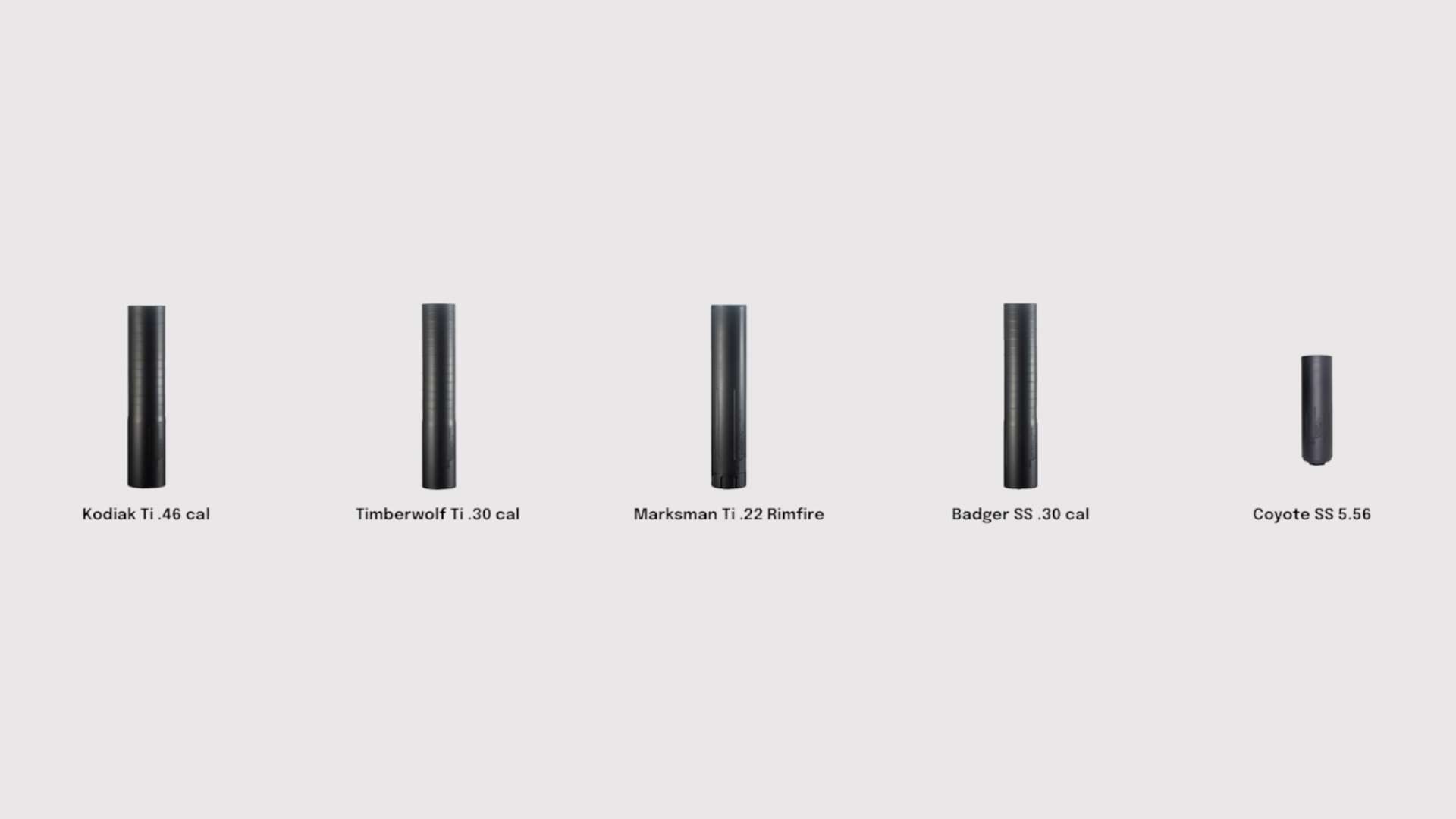
- Kodiak Ti .46 cal — titanium, big-bore rifle
- Timberwolf Ti .30 cal — titanium, .30-caliber rifle
- Marksman Ti .22 Rimfire — titanium, three-piece monocore
- Badger SS .30 cal — stainless steel, a “you can’t break the thing” workhorse
- Coyote SS 5.56 — stainless steel, optimized for AR-platform rifles
The four centerfire rifle models share the same conical baffle geometry, scaled to caliber. The .22 Rimfire steps off that template with a serviceable three-piece monocore designed for easy cleaning. Every model except the rimfire is HUB-compatible and direct-thread-ready, and Backwoods makes its own thread adapters across the common pitches from 1/2x28 up through 11/16x24, plus a range of end caps tuned to .270, .308, .357 and 5.56 mm.
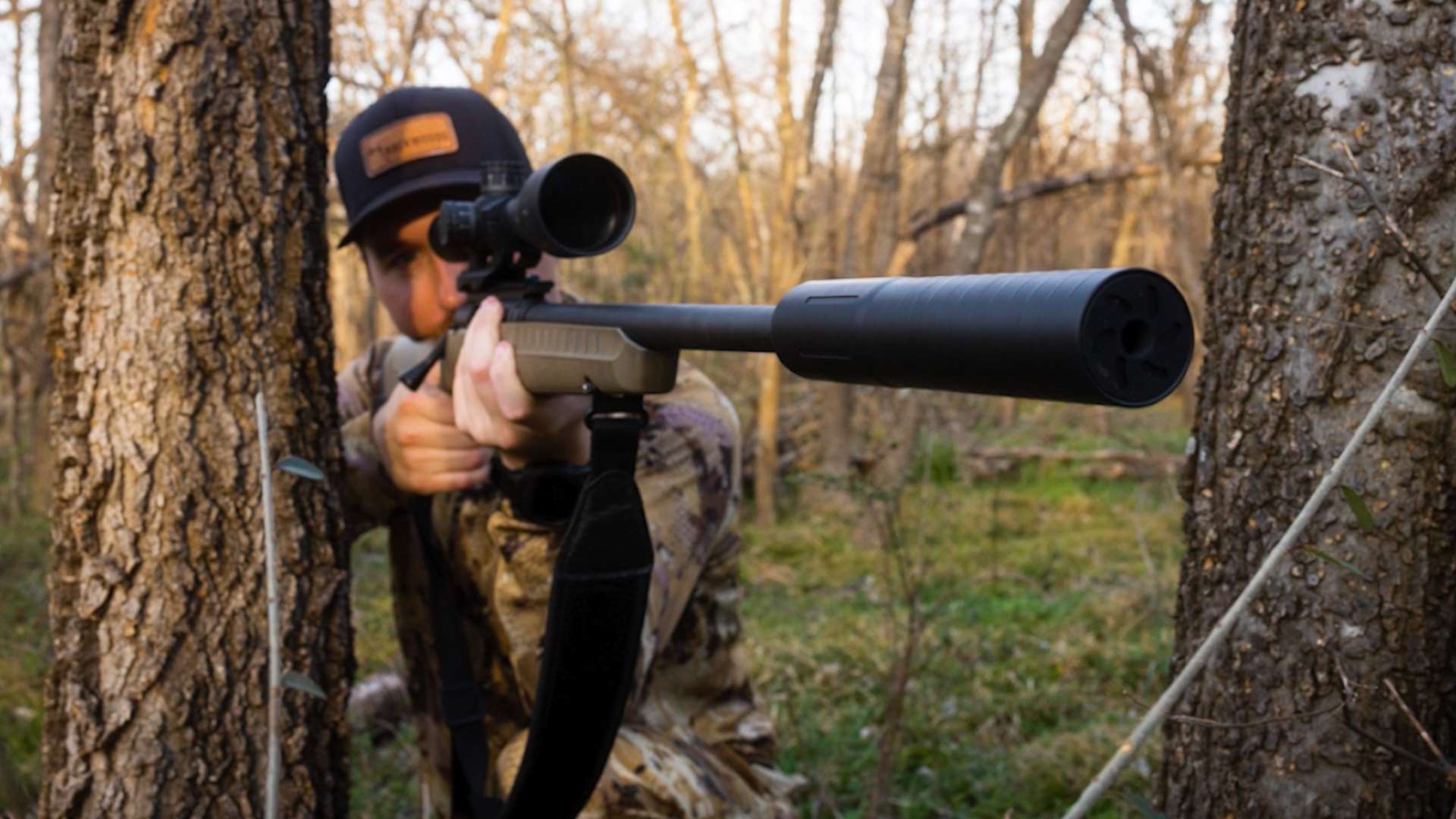
Material choice is the lever Backwoods pulls between weight and durability. The titanium models—Kodiak, Timberwolf and Marksman—are aimed at hunters putting miles on their boots.
“When you’re hiking up in the backwoods or back country, you need light,” Prince said. The stainless Badger and Coyote trade some weight for indestructibility and, in the Coyote’s case, gas-back mitigation that Hancock said matters for AR-platform hunting rigs, particularly in his own state of Texas, where blind hunting with semi-automatics is common.
The engineering target throughout, Hancock said, was a “happy medium” between length, weight and sound suppression. Go too long and you’ve built a quiet suppressor nobody wants to carry; go too short and you’ve built a light suppressor that nobody wants to fire next to their ear. Backwoods’ bet is that splitting that difference, in a hunter-specific package, is where the market has room.
Where to buy
Backwoods Suppressors is primarily a B2B operation, with product shipping through a growing dealer network and major online retailers in the near term. The company’s own website will handle limited runs—think small-batch cans for Precision Rifle Series competition or laser-engraved special editions—alongside brand and product information.
For the full conversation with Hancock and Prince, watch the video at the top of this article. To learn more about the lineup, visit backwoodssuppressors.com.