When NRA Executive Vice President and CEO Doug Hamlin introduced a special guest at the NRA Annual Meetings and Exhibits in Houston this April, the highlight reel told the story without narration. A windy English afternoon. An iron-sighted rifle at 1,000 yards. A perfect string of 15 shots. And then a wooden chair, hoisted on the shoulders of teammates, carrying an American shooter across a stretch of grass that has belonged to British marksmen since Queen Victoria sat on the throne.
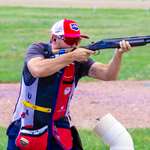
Brandon Green, head coach of the U.S. National Rifle Team and an NRA life member since 2011, had done what no American had managed in the 156-year history of the Imperial Meeting at Bisley. He had won the King’s Prize.
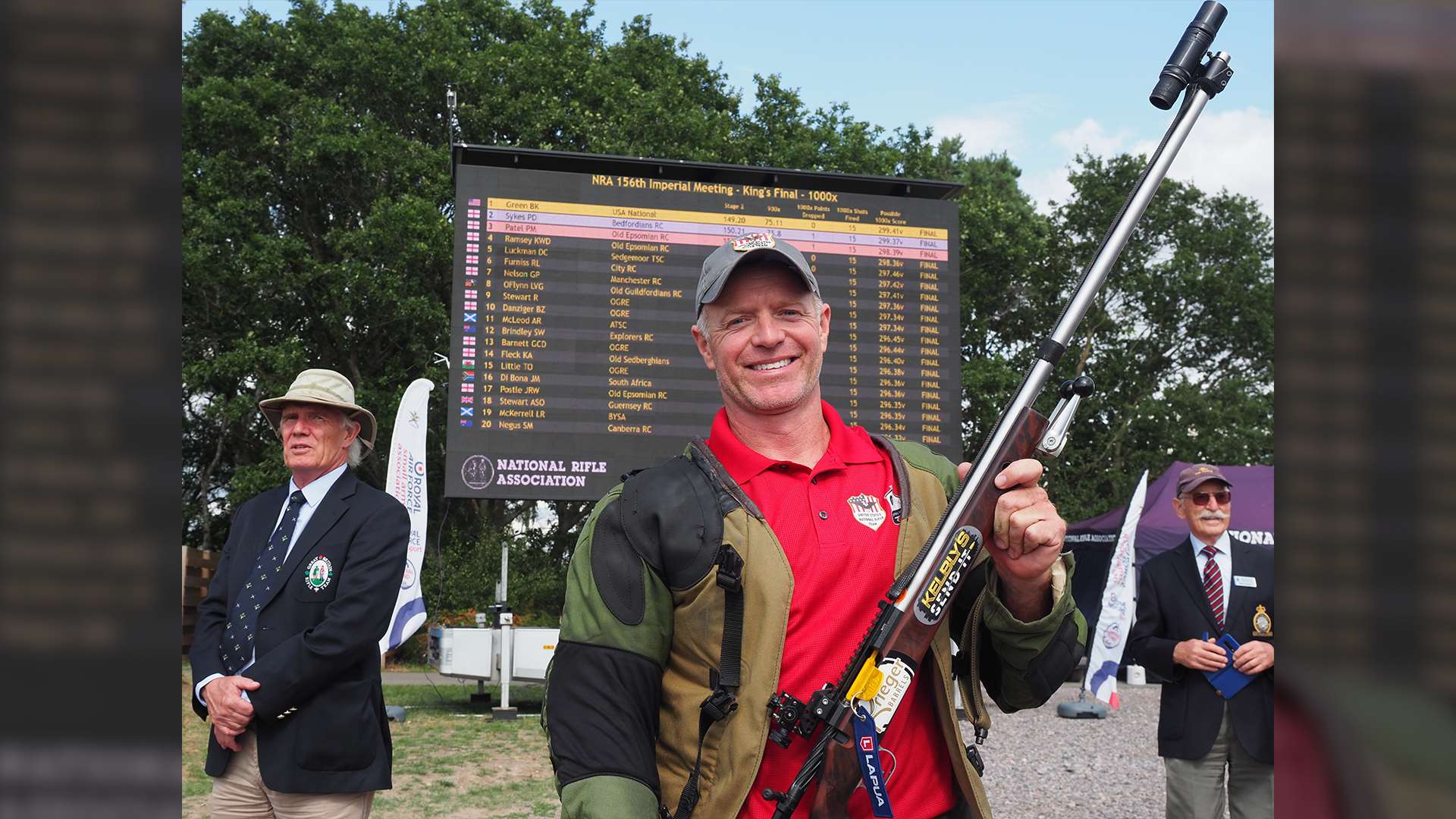
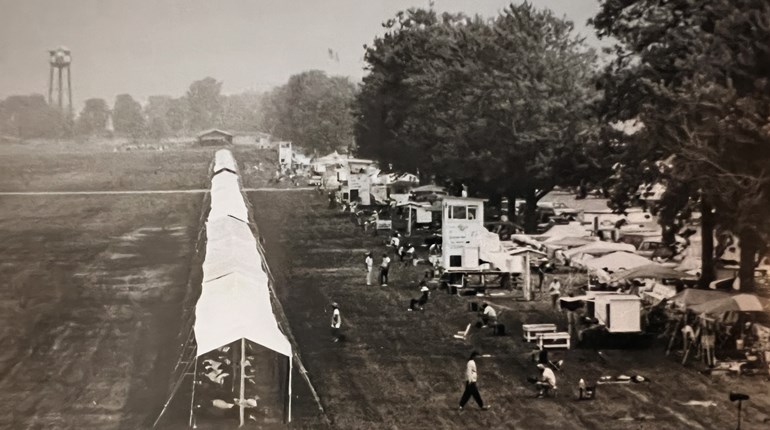
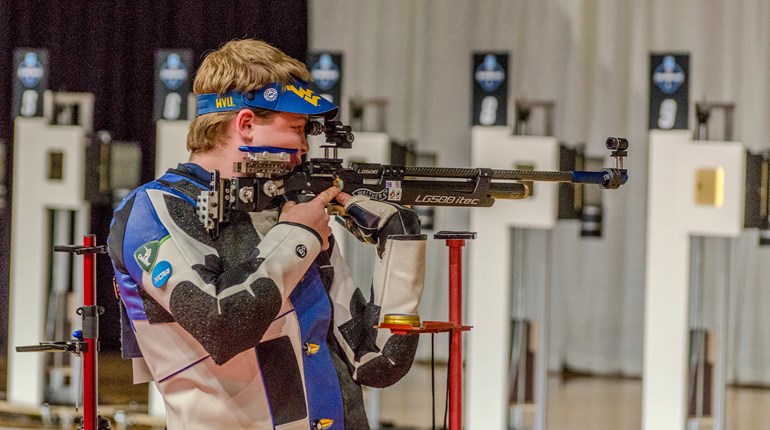
The prize itself dates to 1860, when Queen Victoria established it to encourage marksmanship among the volunteer rifle corps then forming across Britain. It moved to Bisley Camp from Wimbledon Common in 1890, and ever since it has been the unofficial world championship of target rifle shooting—a discipline that demands an iron-sighted rifle, a steady wind call and the patience to fire 15 shots at a target nearly six-tenths of a mile away. Green is the first American to win.
Green, who grew up in NRA-sanctioned matches and chased his way through the American competitive circuit, had it on his bucket list for years. “It’s basically the home of target rifle shooting,” he said. “All of the competitive shooting that we do here in the United States was derived from the way they do it over there.”
He didn’t expect to win. The King’s Prize is contested over three days, narrowing from roughly 900 competitors to 300 to a final 100, and Green dropped a point early in the second stage—a costly mistake at this level. “Usually if you lose a point early on, you're fighting from the back of the pack,” he said. “He entered the final in 30th place and decided to swing for the long-range portion and see what happened.”
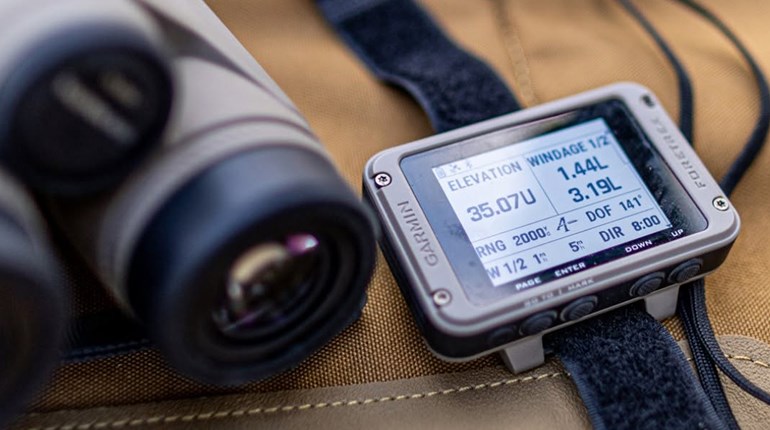
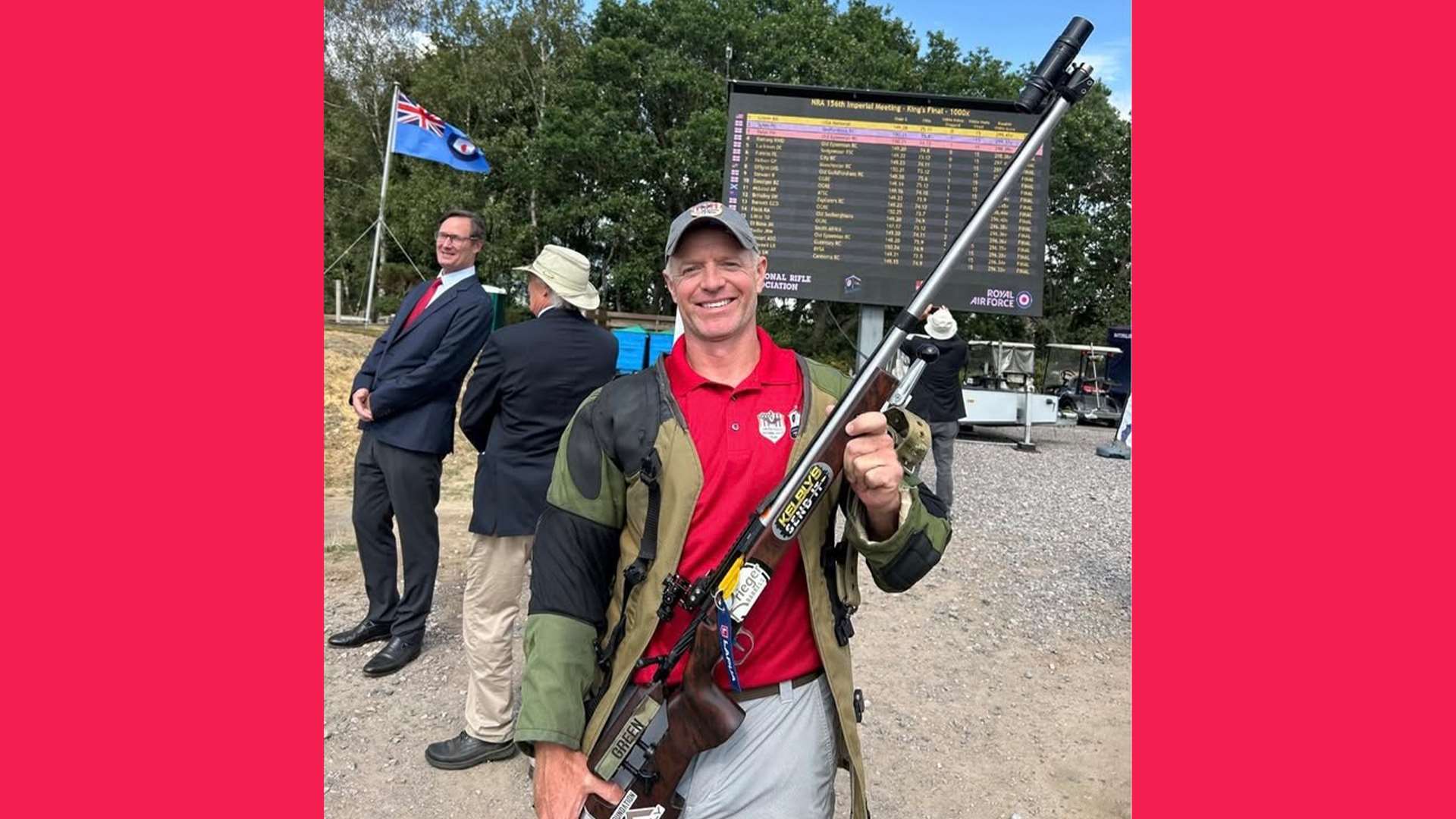
What happened is that the wind did its work on the field while Green kept his composure. Twelve shooters entered the final with perfect scores. The wind began to thin them almost immediately. Green climbed to 13th by the halfway mark, then to fourth after a flawless string at 900 yards. By the time the field moved to the 1,000-yard line, only one competitor remained perfectly clean—Britain’s PD Sykes.
Then Green did something only two shooters in the history of the King’s Final had done before him. He fired a perfect 75 with 10 V-bulls at 1,000 yards, putting him at the top of the leaderboard, also leaving Sykes needing a five on his final shot to seal the win. Sykes fired a four. The title went to Green, 299 with 41 V-bulls, the latter denoting mall inner ring hits.
The British, to their credit, did not treat the American intrusion as an intrusion, rather treating it as a coronation. “I kind of expected it to be a little bit lackluster, given that an American had never won it,” Green said. “I thought they would shake my hand, congratulate me and that would be the end of it. But they turned everything up a notch.”
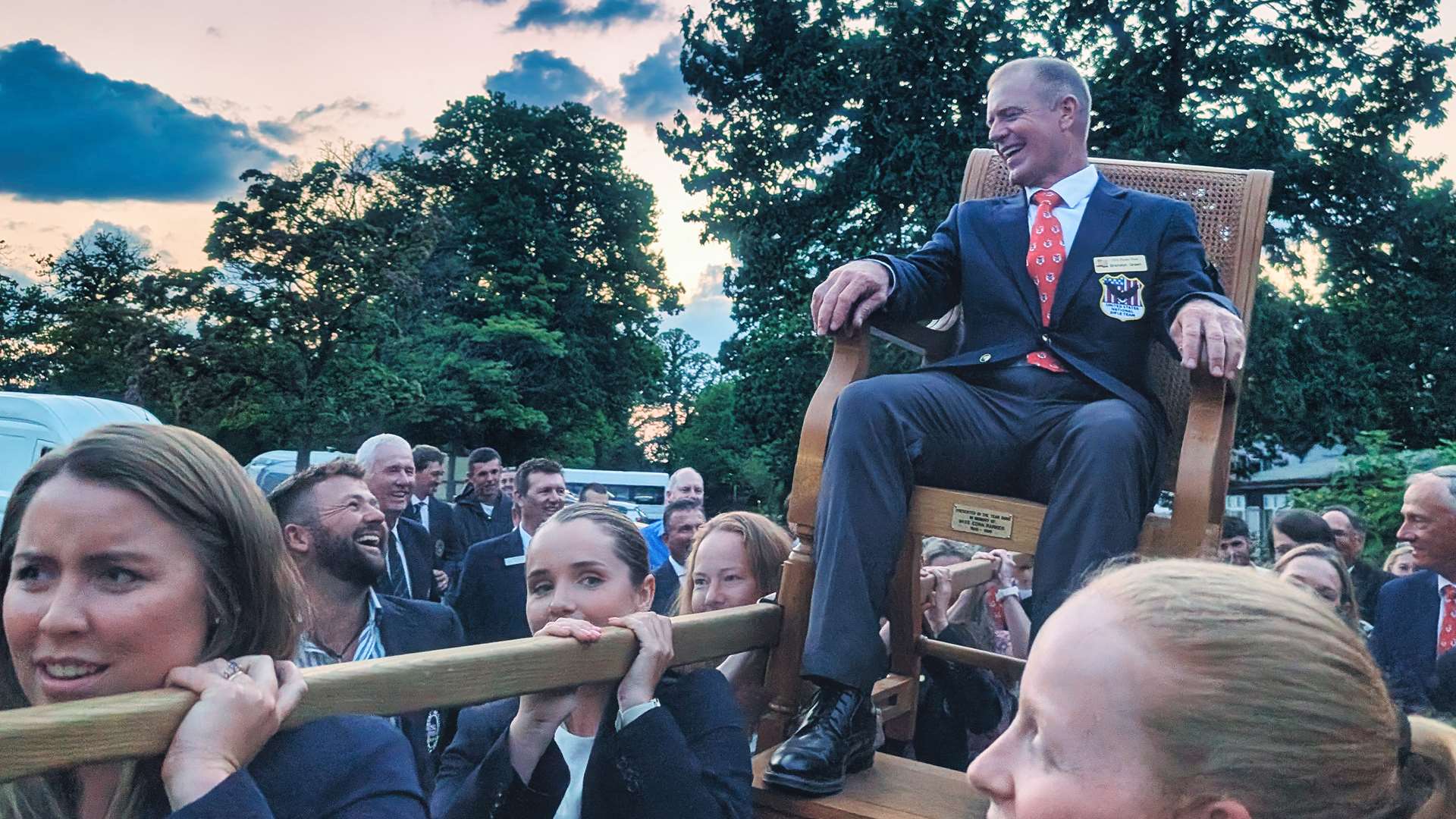
What followed is the part of the story that the highlight reel in Houston was built around. In keeping with a tradition that has not changed materially since the Victorian era, Green was lifted into a ceremonial wooden chair and carried off Bisley’s Stickledown Range on the shoulders of his teammates, behind a brass band, back to the Canadian clubhouse where the U.S. squad was staying. An hour later, dressed in sport coats, the procession reformed and carried him to the prize-giving. Then to every clubhouse on camp. At each stop, the residents cheered him in, walked him through the history of the building and poured him a drink from one of their trophies.
The celebration went all night. At dawn, in another tradition no one had bothered to abandon, the shooters played a game of cricket on the 1,000-yard range. Green, by his own admission, was not very good at it.
He came to Houston this April as the NRA’s guest, the highlight reel rolling for the membership, the chair and the band and the trophy on the big screens. The Tennessee shooter who started in NRA-sanctioned matches as a 13-year-old, who took home the trophy that had eluded every American before him.
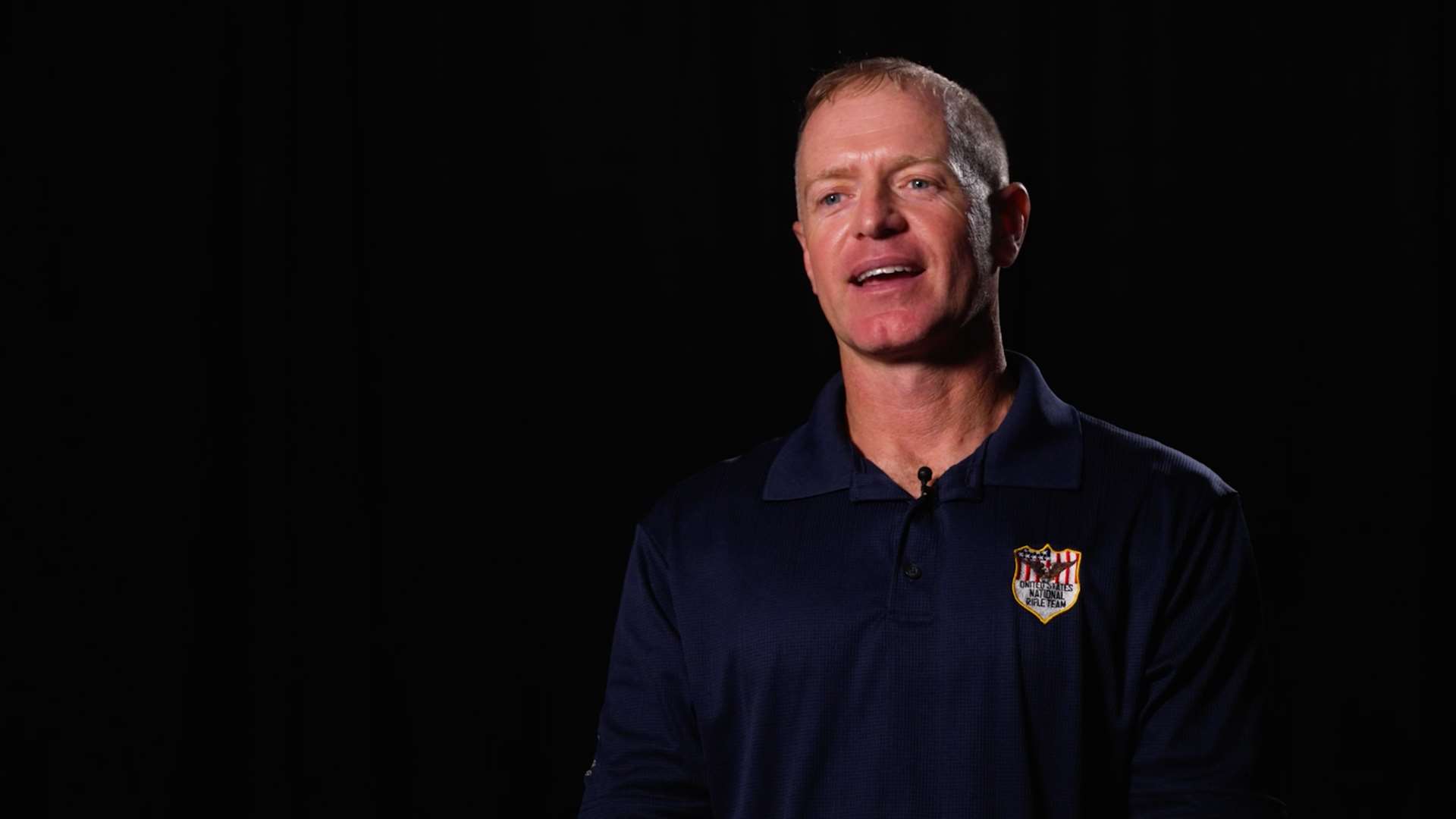
“The NRA’s sanctioned matches basically brought me into my life as a competitive shooter, and everything I’ve done has been to shoot the NRA national championships,” Green said. “If it weren’t for the NRA and organizations like them, we would be in a much different situation. I’m proud to be a member.”
The chair at Bisley is waiting on the next champion. But the history books already have their first American.