
Campbell Wright must have arrived at Milan Cortina 2026 with the men’s 10 km sprint circled on his calendar, because on Friday morning at the Anterselva Biathlon Arena, the top-ranked American in men’s biathlon delivered a result that keeps his Olympic medal hopes alive—if only barely.
Wright finished 12th with a time of 24:03.1, which was one minute, 10 seconds behind gold medalist Quentin Fillon Maillet of France. It was the kind of performance that tells two stories at once: close enough to taste the podium, far enough to understand how razor-thin the margins are in a sport that has never produced an American Olympic medal.
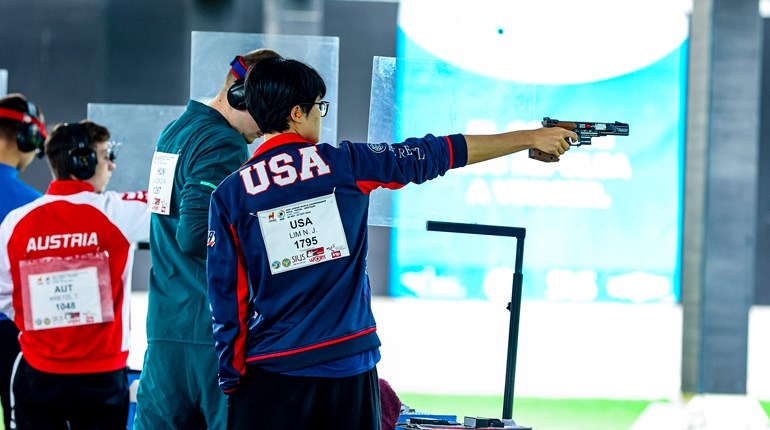
A biathlon 10 km sprint sends athletes through three loops of skiing with two trips to the shooting range—one prone, one standing—and each missed target forces a 150-meter penalty loop before the next ski leg. Wright’s lone miss came during his first, the prone shooting stage, where a single errant shot sent him through the penalty loop and dropped him from 11th to 26th on the course. His section time of 1:09.9 at the prone stage, including the penalty loop, was 22.3 seconds slower than the fastest shooter in the field.
What followed was a masterclass in damage control. Wright cleaned all five targets in his standing stage, posting the 10th-fastest shooting time at 48.3 seconds, and vaulted from 16th to seventh on the course. His ski splits on the second loop told the story of an athlete pushing hard to recover lost ground—his 3:27.9 split to the 8.1-km checkpoint was the seventh-fastest in the field of 90 biathletes.
But the effort came at a cost. Wright faded over the final kilometer, posting the 57th-fastest finishing split of 1:26.9 as the aggressive second loop caught up with him. As he told The New York Times after the race, the closing stretch was punishing. He described it as one of his hardest final kilometers in recent memory and said his legs simply stopped cooperating with about a kilometer to go.
Still, 12th place with only one missed target and the 16th-fastest overall course time is a strong platform heading into men’s 12.5 km pursuit at Anterselva on Sunday. In the biathlon pursuit format, athletes start at staggered intervals based on their sprint finish times, meaning Wright will leave the gate 70 seconds behind Fillon Maillet. It’s a deficit, but not an insurmountable one for a biathlete of Wright’s caliber.
Wright, who was born and raised in New Zealand to American parents and switched to the U.S. team after the Beijing 2022 Winter Olympics, won two silver medals at last year’s IBU World Championships in Lenzerheide, Switzerland, including one in the sprint. He currently sits 10th in biathlon’s overall World Cup standings this season.
When asked whether his result in the men’s 10 km sprint left him out of contention for the pursuit, Wright was direct in his response to The New York Times: he believes he is in the game for all the remaining events and that finishing 12th does not eliminate him from anything.
The podium on Friday belonged entirely to athletes who hit all 10 targets. Fillon Maillet won gold with a time of 22:53.1 and perfect at both shooting bouts. Norway’s Vetle Sjaastad Christiansen took silver and his teammate Sturla Holm Laegreid claimed bronze by just two-tenths of a second—a remarkable result for Laegreid, who also earned bronze in the men’s 20 km individual earlier in the week. As reported by olympics.com, the sprint podium made Olympic history with all three medalists shooting clean.
Wright’s teammate Paul Schommer also qualified for Sunday’s pursuit, finishing 47th with one miss in prone and a starting deficit of two minutes and 38 seconds. In addition, Team USA’s Sean Doherty and Maxime Germain finished 65th and 66th respectively, falling outside the top-60 pursuit cutoff.
Earlier at Milan Cortina, Wright showed his range in the men’s 20 km individual, known as biathlon’s longest and most punishing format. He finished 27th with a time of 56:53.9, five minutes and 22.4 seconds behind gold medalist Johan-Olav Botn of Norway, missing two of his 20 targets across the four shooting stages. Biathlon individual events add a minute to the clock for every missed target rather than requiring a penalty loop, making it a test of marksmanship under fatigue. Wright’s top-30 finish in that event, combined with Friday’s sprint result, marks consistent production across two biathlon disciplines.
Wright and the U.S. men return to the Anterselva Biathlon Arena on Sunday, Feb. 15 for the 12.5 km pursuit, with the men’s 4x7.5 km relay on Tuesday, Feb. 17 and the 15 km mass start on Friday, Feb. 20 still to come. The women’s program continues this weekend on Saturday with the 7.5 km sprint, followed by the pursuit on Sunday, the 4x6 km relay on Feb. 18 and the 12.5 km mass start on Feb. 21. All Olympic biathlon events are streaming on Peacock, with select broadcasts airing on NBC and USA Network.
The United States Biathlon Association, the national governing body recognized by both the International Biathlon Union and the U.S. Olympic and Paralympic Committee, has been developing athletes from the grassroots to the elite level since its founding in 1980. Wright’s emergence as a legitimate top-15 World Cup competitor could represent the breakthrough that Team USA and U.S. Biathlon have been building toward for decades. With more biathlon competition still remaining in Italy, the best may be yet to come at Milan Cortina 2026.
Most Popular