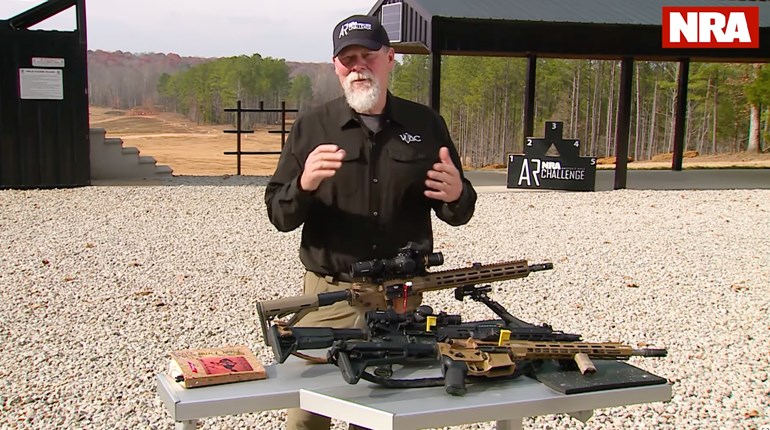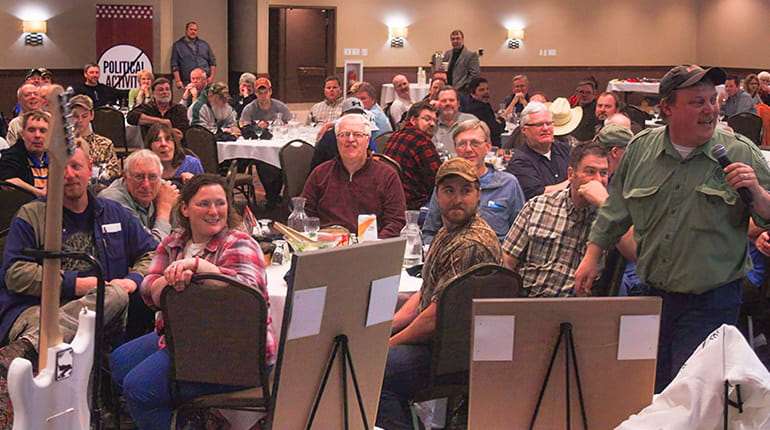
The barricade is the defining prop in NRA America’s Rifle Challenge. Built from 2x4 lumber to NRA specifications, it appears in every Level 1 match and many Level 2 stages, presenting competitors with six shooting positions at varying heights and angles. It’s where the ARC program’s emphasis on positional shooting becomes physical—where stance, body mechanics and rifle placement matter as much as sight picture and trigger press. In the second installment of his NRA ARC video series, Kyle Lamb walks through each position on the barricade with the kind of detail that turns a confusing first encounter into a manageable one. Watch the video above.
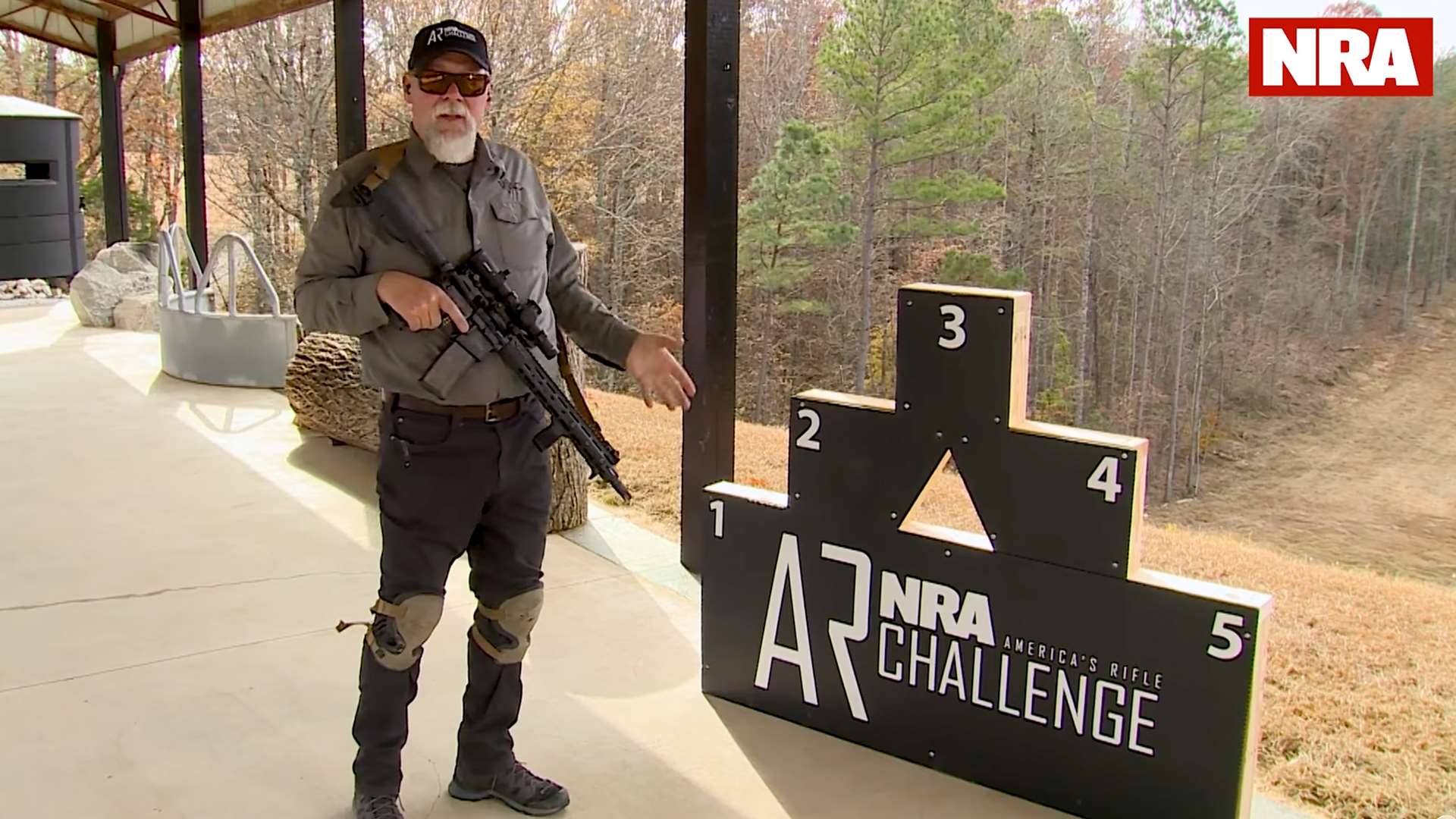
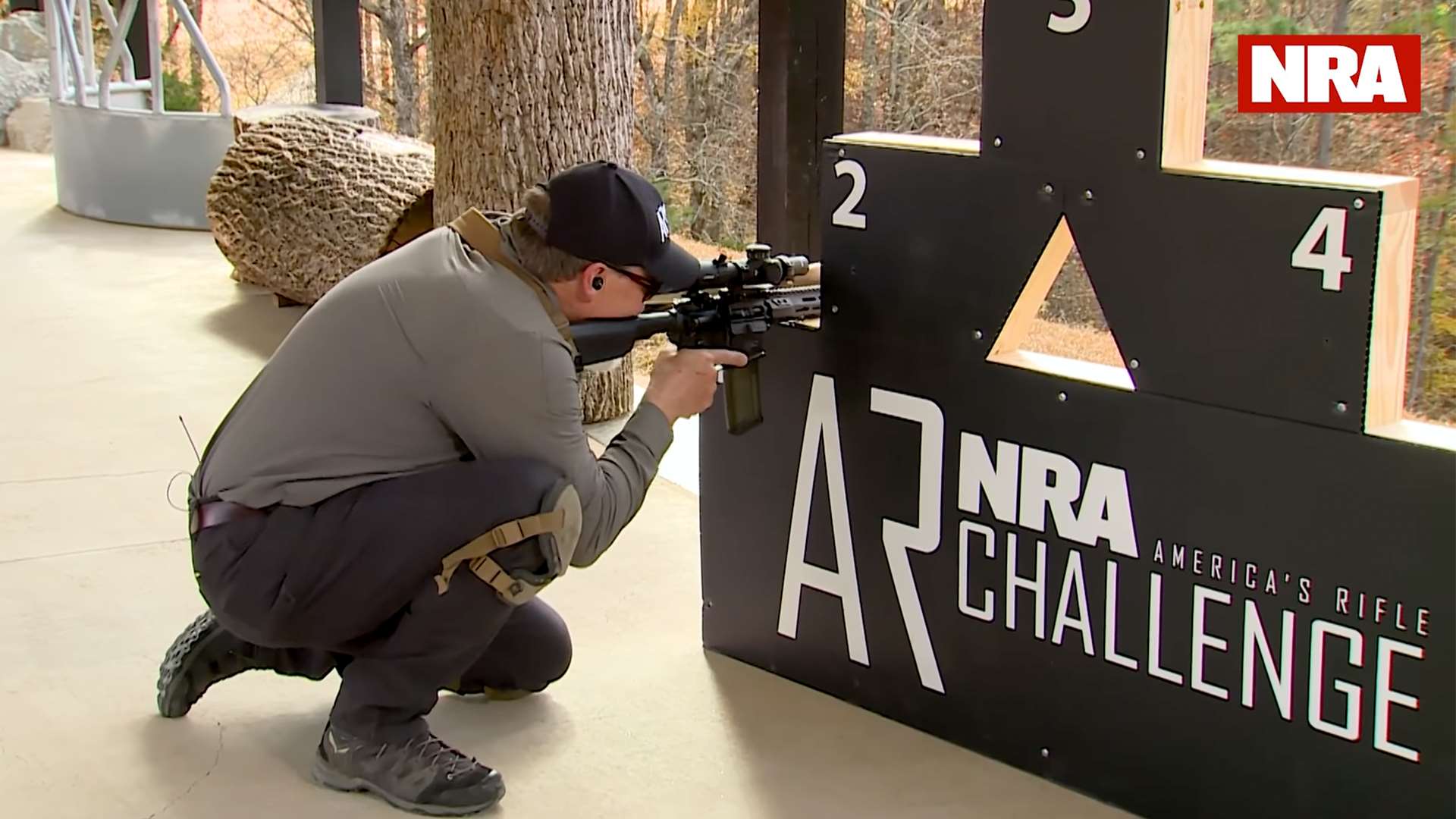
Lamb starts at position one, a low kneeling shot, and immediately identifies the stability problem most people overlook: the back knee. He brings it up and keeps his foot flat on the ground, then drops his support-side elbow in front of the knee and pushes elbow against knee to create opposing pressure. That push is the key. It locks the upper body into the lower body and eliminates the wobble that comes from simply resting an arm on a kneecap. For people who lack the flexibility to get into that position, Lamb offers an alternative—let the rifle sit on the support hand and place the entire elbow on top of the knee. It works, he notes, but produces less stability.
Position two is higher on the barricade, and it introduces a reach problem. At this height, the elbow can’t contact the knee without an adjustment. Lamb’s fix is simple: slide the firing hand down slightly on the pistol grip. That small shift lowers the elbow enough to make contact with the knee again while still allowing the trigger finger to reach the trigger. It is the kind of adaptation that experienced positional shooters make instinctively but that first-time competitors rarely think to try.
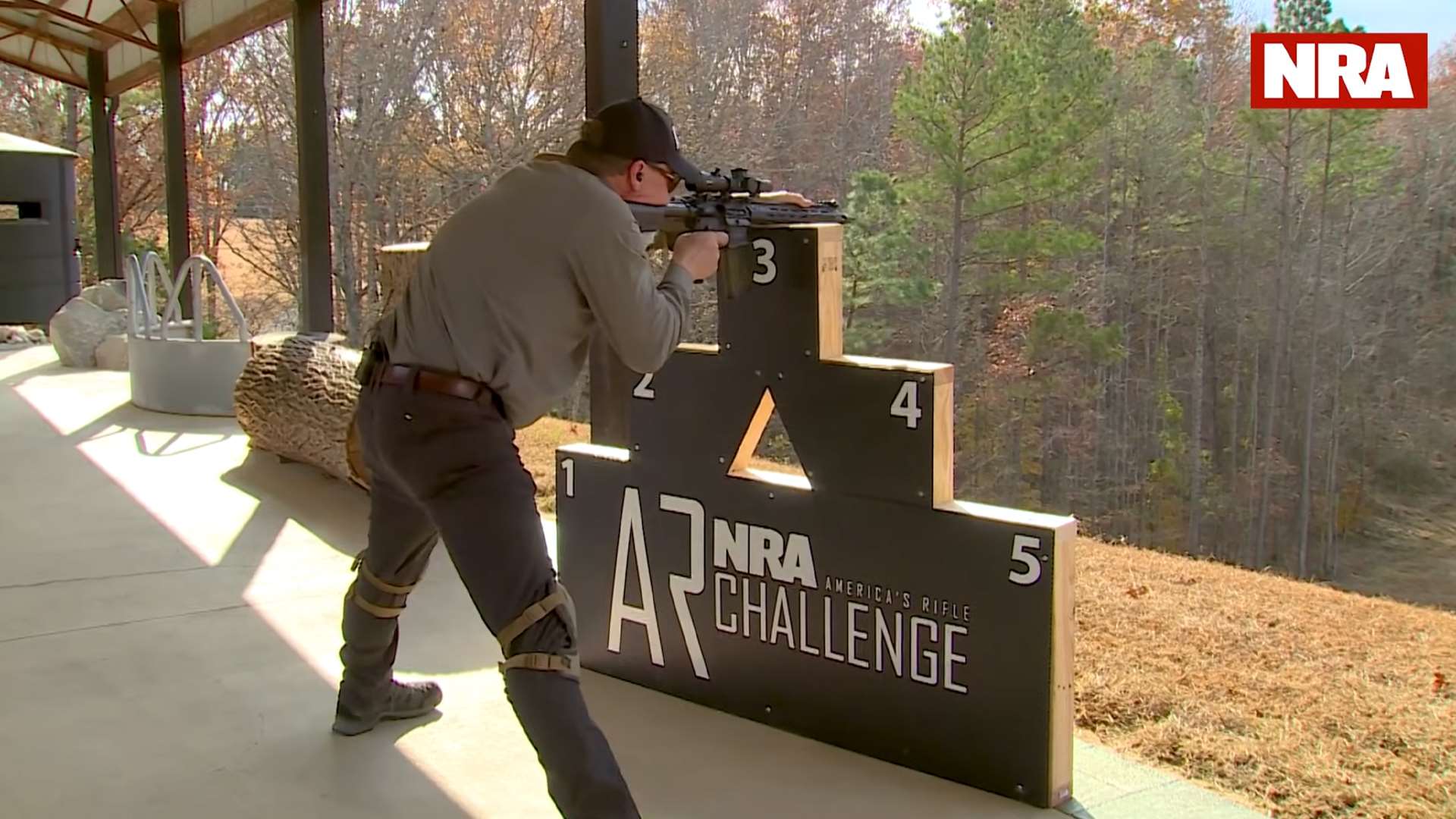
Position three is standing, and Lamb’s advice here runs counter to most people’s instinct. Rather than crouching and bending the knees to absorb movement, he recommends locking both knees. Bent knees introduce sway. Locked knees create a rigid base. The position will feel less athletic and more static, but static is the point—the barricade rewards stillness, not fluidity.
Positions four and five mirror one and two on the opposite side of the barricade, so the same principles apply. The real lesson comes in the transition from position five to position six, which is where Lamb sees people waste the most time. The common mistake is stepping back with the whole body to reposition the rifle into the lowest port. Lamb’s method is faster: pull the rifle back over the shoulder, then drop into the new position and shove the muzzle into the hole. The body stays close to the barricade while the rifle does the moving. It is a small change that saves significant time under the clock.
One final detail applies to every position. Lamb pulls his rifle back from the front edge of the barricade rather than pushing it forward. A rifle resting on the leading edge of a wooden surface has a tendency to rock, especially under recoil. Pulling it back places the handguard or fore-end on a wider, more stable section of the barricade. Combined with firm contact at the buttstock—stability in the front and stability in the back, as Lamb puts it—the platform becomes significantly more solid.
Lamb closes with a reminder that the skills practiced on the ARC barricade are not limited to match day. Barricade shooting translates directly to hunting scenarios, defensive situations and other shooting disciplines where improvised support is available but a bench or bipod is not. The ARC barricade is simply a structured way to practice something that the real world demands in unstructured form. For more information on the NRA America’s Rifle Challenge program, including barricade building plans, visit arc.nra.org.