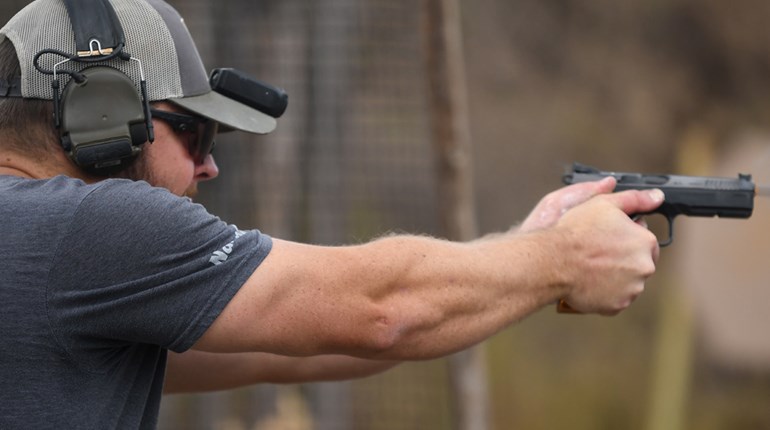
In the first installment of a new video series produced for the NRA America’s Rifle Challenge program, firearm expert Kyle Lamb of Viking Tactics offers three pieces of advice for people considering their first ARC match. Watch the full video above.
His first recommendation: take a Level 1 shooting instruction course before stepping into a match. It is not a prerequisite for ARC competition, but Lamb frames it as a shortcut to confidence. The structured format of the program—with stages ranging from standing and kneeling to prone and barricade shooting at distances from 10 to 100 yards—rewards people who arrive with even a basic understanding of positional fundamentals.
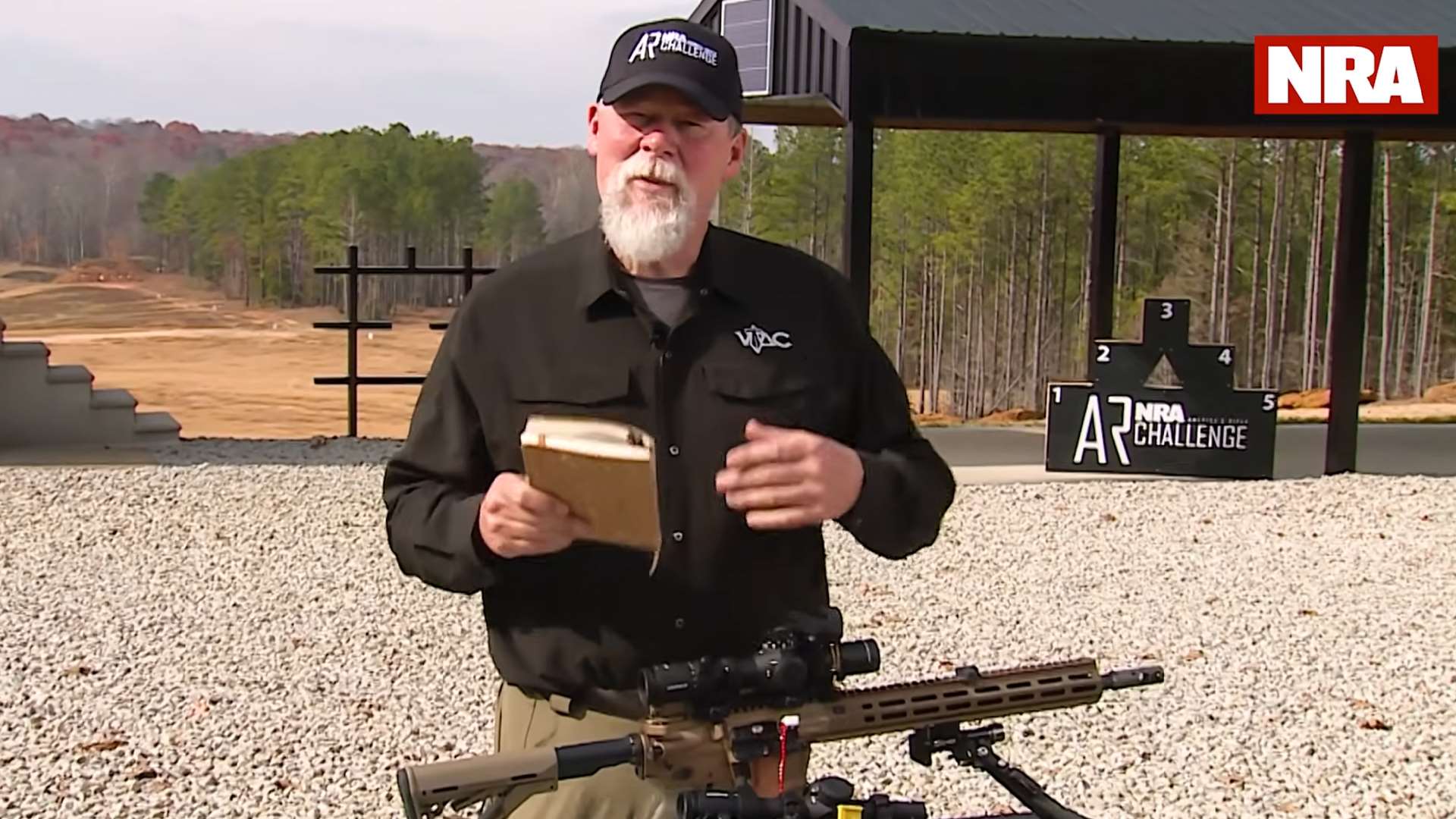
Second, Lamb insists on keeping a shooting log. Not a round count—he fires too much ammunition to bother tracking that—but a journal of what went wrong and what needs work. “I’m not necessarily the guy that keeps track of how many rounds I fire, because I shoot a lot of ammo,” Lamb said, “but I do keep track of what I’m doing incorrectly. I want to figure out how to be better, and this log keeps track of that.” The advice reflects the ARC program’s emphasis on measurable improvement. Because matches use standardized courses of fire and scoring, competitors can track performance over time, test equipment changes and identify weaknesses in specific positions or distances.
The third tip may be the most important, and it is where Lamb’s voice shifts from instructor to storyteller. Find a shooting partner. He traces his own shooting friendships back to the Army, where a young captain named Lynn Ashley—who eventually retired as a colonel from Special Forces—became a training companion. The two have been shooting together for more than 30 years. When Lamb decided to try precision rifle competition a few years ago, another friend, Brad Wright, helped him along the learning curve. They still shoot matches and practice together.
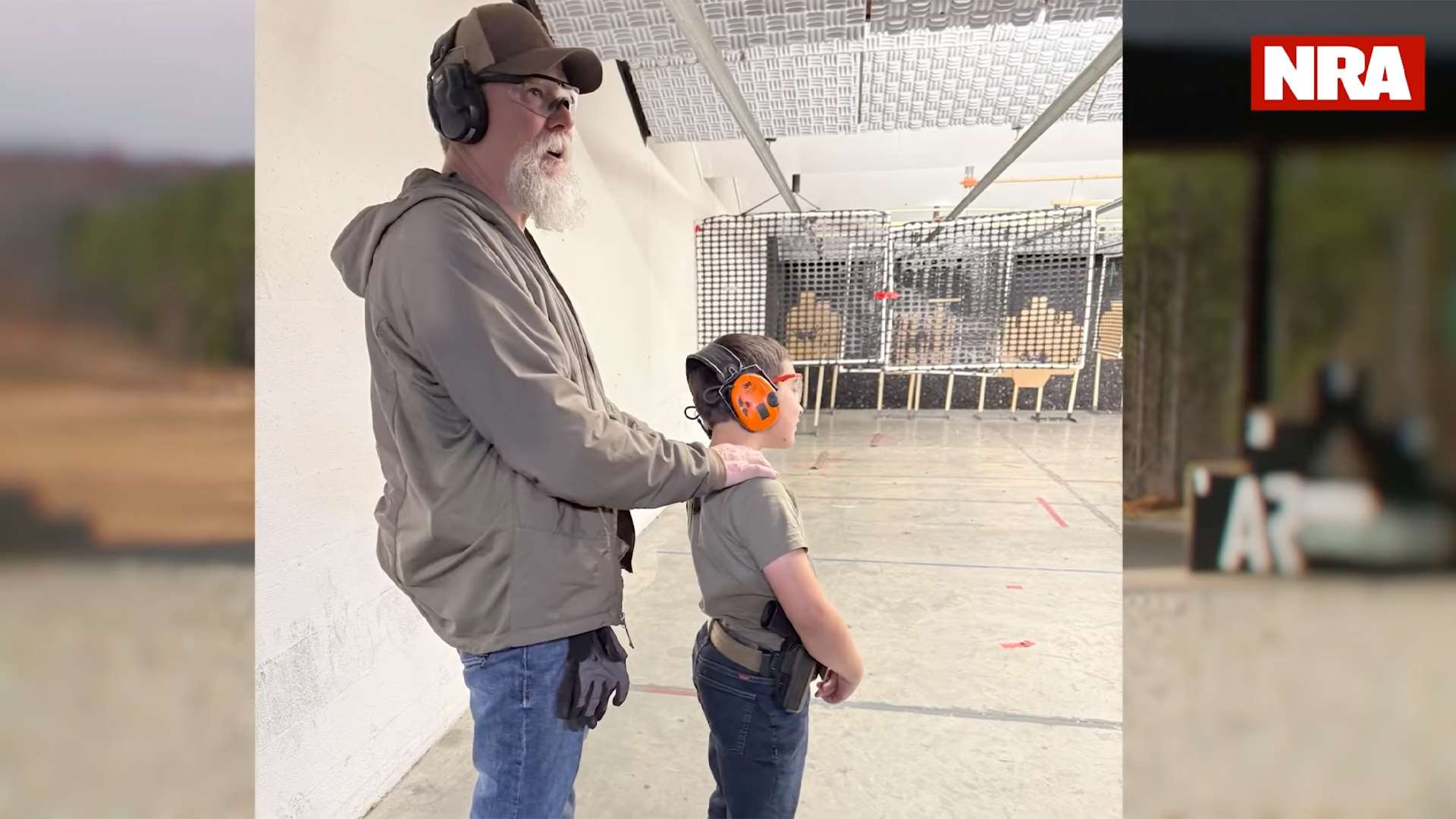
But the partnership Lamb talks about most is the one with his 11-year-old grandson, Denver, who has already shot his first competition. “When Denver and I go to the range, I got to tell you, that’s the happiest that I can be,” Lamb said. “He loves to go shoot with grandpa, and it’s really a good experience.” The message underneath the anecdote is unmistakable: ARC is a family-friendly program, and the relationships people build around it tend to outlast the match results.
NRA America’s Rifle Challenge is designed around the AR-15 platform with support for rimfire ARs, pistol-caliber carbines and suppressors where legally permitted. Gear requirements are minimal: a safe, functional AR-15, a sling, two magazines and eye and ear protection. ARC Level 1 matches can run on indoor ranges as short as 25 yards, making the program accessible to clubs almost anywhere in the country. Level 2 adds dynamic stages with movement and barricade shooting, and Two-Gun introduces handgun transitions for more experienced competitors.
Lamb closes the video the way he has closed decades of training sessions—with a direct invitation. “That old, dusty AR that’s been sitting in your closet or locked up in a gun safe, pull that joker out, tune it up and come out and train with us,” he said. “I promise you’re going to love it.”
Be sure to subscribe to the NRA YouTube page for notifications about new ARC videos. For more information on NRA America’s Rifle Challenge, visit arc.nra.org.