One of the first decisions a new NRA America’s Rifle Challenge competitor makes is which division to enter, and it’s largely a decision about what is already in the gun safe. ARC’s three equipment divisions—Stock, Limited and Open—are designed so that the rifle most people already own fits cleanly into at least one of them. In this video, pro shooter Ryan Muller walks through what defines each division, what separates them and what competitors need to know before their first match. Watch the full video above.
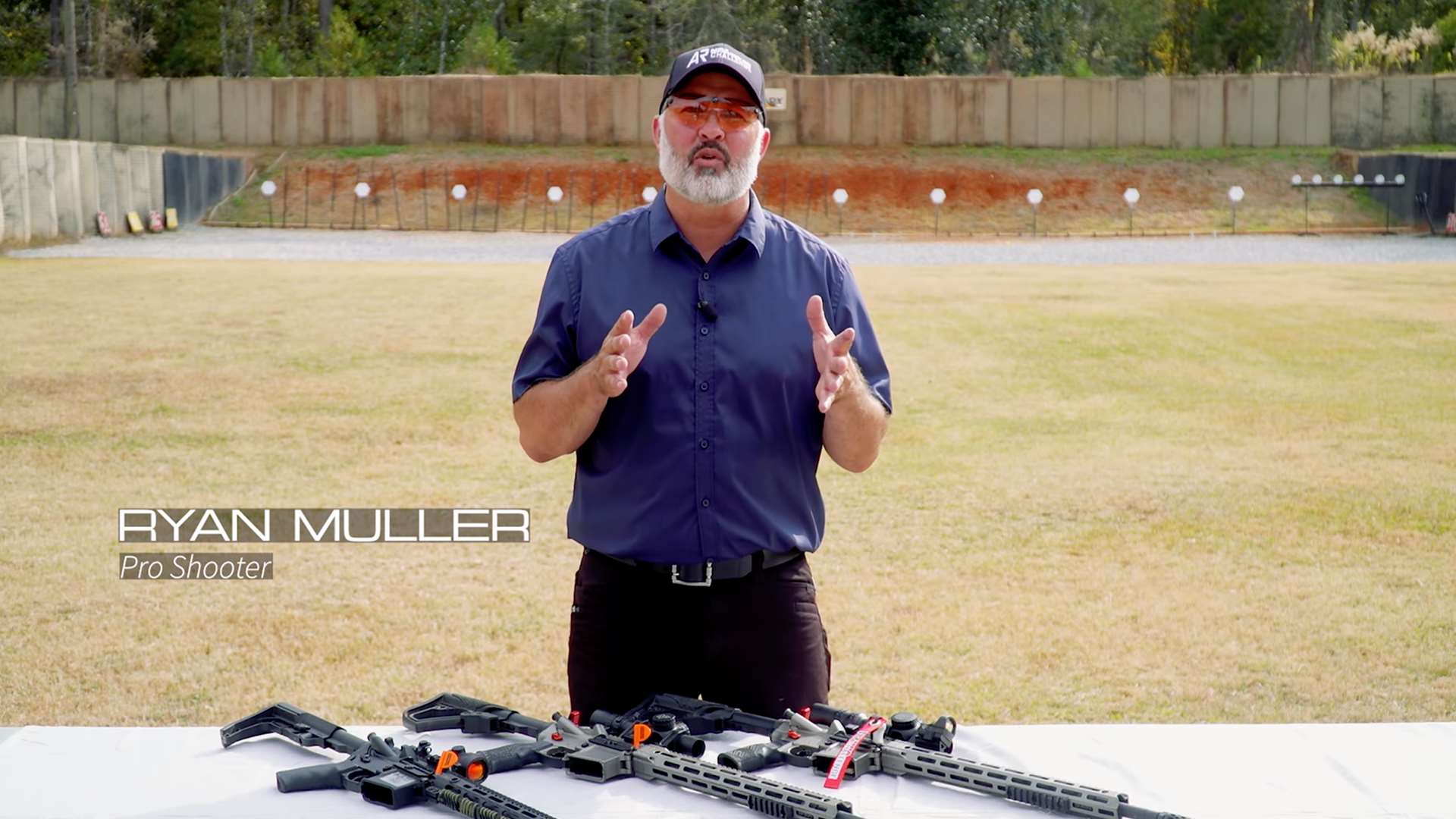
Before getting into the division-specific rules, Muller covers the common ground. All three divisions share the same approved caliber list: .223 Remington or 5.56 mm NATO, .308 Winchester or 7.62 mm NATO, and .300 Blackout. Some ARC matches may allow pistol-caliber carbines chambered in 9 mm, .40 S&W or .45 Auto, along with semi-automatic rimfire rifles. Suppressors are welcome across all divisions where legally permitted—when attached, they don’t count toward the maximum barrel length. Short-barreled rifles are also authorized, though competitors are responsible for complying with all applicable federal, state and local laws.
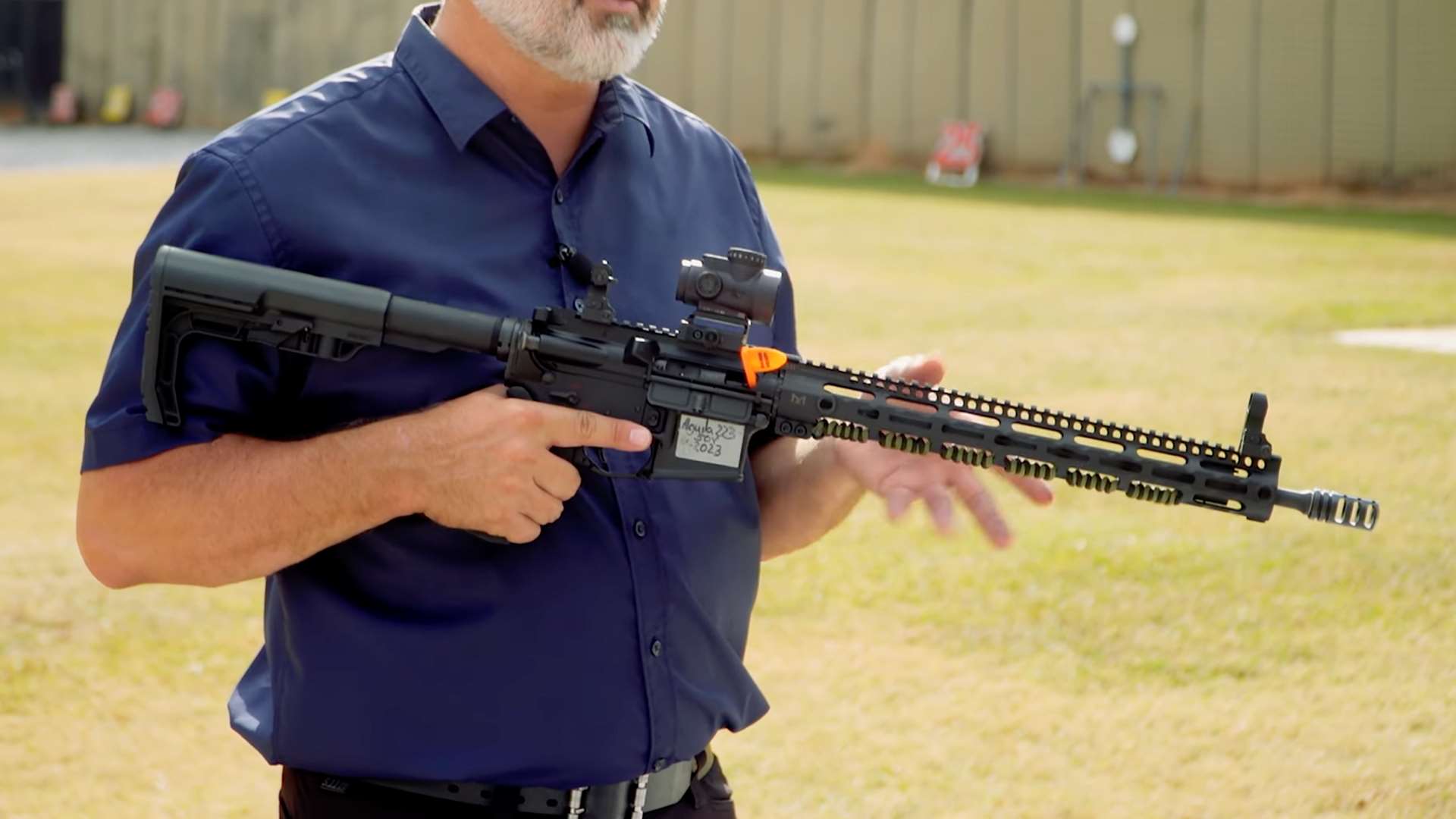
Stock is the entry point. The rifle must be semi-automatic with a maximum barrel length of 20 inches and a maximum magazine capacity of 30 rounds. The defining restriction is optics: Stock competitors may only use non-magnified sighting systems. That means a red-dot sight, iron sights (fixed or flip-up) or a non-magnified prismatic optic, including any combination of those. A red dot co-witnessed with iron sights is perfectly legal. What is not permitted is any form of magnification. Bipods, monopods, tripods and support bags are also restricted in Stock unless the stage brief specifically provides them for all competitors. The result is the simplest, most accessible configuration in the program—an AR-15 with a red dot and a sling is all a Stock competitor needs to show up and shoot.
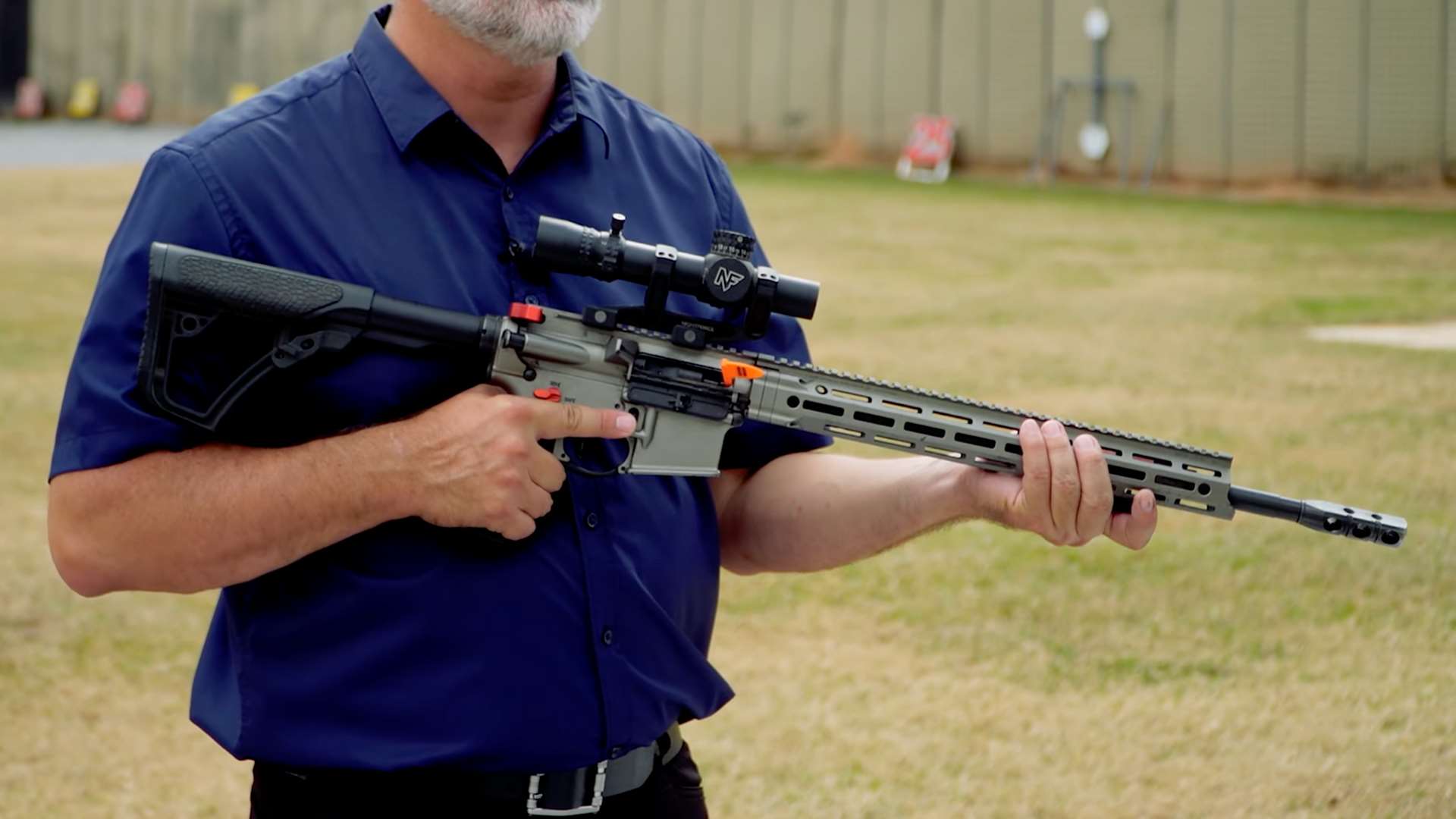
NRA ARC Limited division adds magnification. Competitors may mount a magnified optic—fixed or variable, up to 8X power—alongside a set of fixed or flip-up iron sights, for a total of two sighting systems. A magnifier used in conjunction with a red-dot sight also counts as Limited. The barrel length and magazine capacity remain the same as Stock: 20 inches and 30 rounds. The key accessory difference is that non-mounted support bags become optional in Limited, though they may not be pre-staged on a stage before the start signal.
For many competitors, Limited represents the natural next step after Stock—the same rifle with a low-power variable optic swapped onto the rail.
Open is the least restrictive ARC division. Competitors may mount up to three sighting systems: a primary optic at any magnification with no upper limit, a non-magnified red-dot sight as a secondary optic and a set of fixed or flip-up iron sights. The maximum barrel length extends to 24 inches, and magazine capacity increases to 45 rounds. Bipods and support bags are authorized for use during Level 2 and Two-Gun events, with bipods required to start in the folded position and support bags prohibited from being pre-staged. Open also allows aftermarket magazine wells on the rifle.
This is the division for competitors who want to build a purpose-driven precision AR with a high-magnification scope, a piggybacked dot for close targets and a bipod for distance work—the kind of setup Kyle Lamb demonstrated in his ARC videos on scope mounting and zeroing.
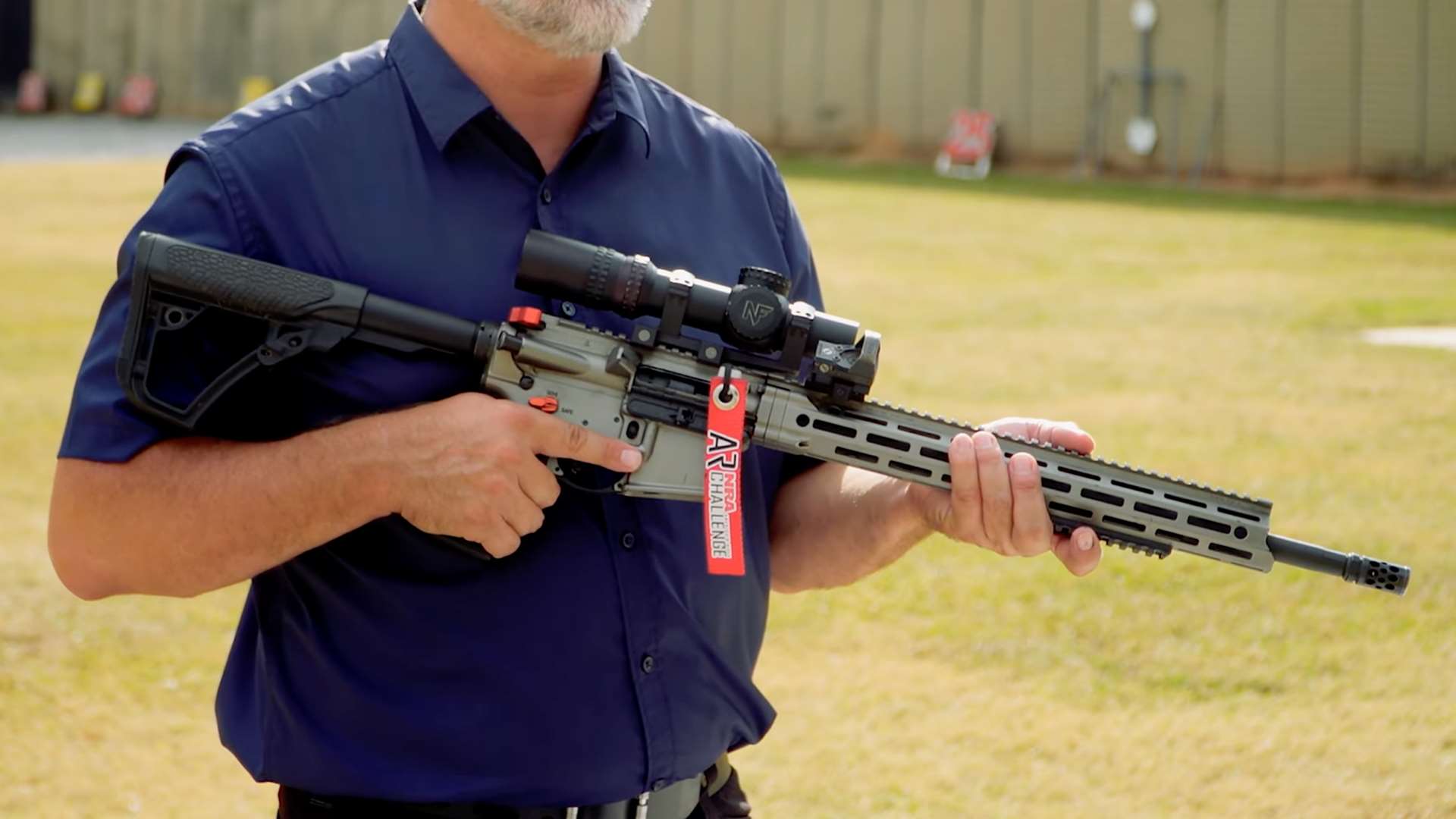
A few rules apply across all three NRA ARC divisions. Every competitor must declare a division before the match begins and may not change once the match is underway, except with match director approval in cases of good-faith error. Any rifle or accessory found to be out of compliance will result in the competitor being moved to Open division, or disqualified if the equipment does not meet even Open’s requirements. Triggers must function safely—fully automatic, burst, binary and forced-reset triggers are prohibited in every division—and the NRA strongly recommends a minimum trigger pull weight of 3½ pounds. In addition, a sling is required equipment in all ARC events unless a specific stage brief limits its use.
For competitors interested in ARC Two-Gun, each division also defines its own handgun rules. Stock requires a mostly unmodified semi-automatic pistol with traditional notch-and-post sights. Limited allows a slide-mounted miniature red dot co-witnessed with iron sights and permits aftermarket magazine wells. Open is the most permissive, allowing ported or compensated barrels, slide-mounted dots, and frame-mounted lasers. All three divisions cap handgun magazine capacity at 21 rounds and require 9 mm, .40 S&W or .45 Auto chambering.
The division structure is one of the things that makes ARC work as a program. A first-time competitor with a stock AR and a red dot is not competing against a shooter running a 10X scope on a bipod—they are in different divisions, measured against different equipment standards, on the same course of fire. That keeps the playing field level within each division while giving competitors a clear upgrade path as their skills and interest grow.
For more information on NRA America’s Rifle Challenge, visit arc.nra.org.