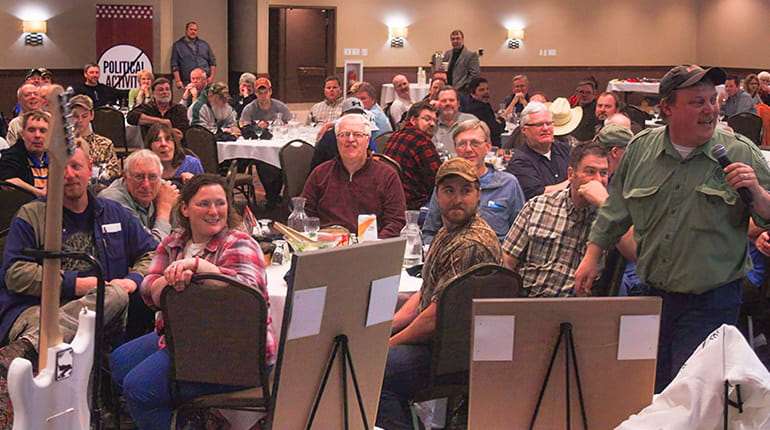
After covering shooting from the ARC barricade, sling technique and scope mounting, the latest installment in the NRA America’s Rifle Challenge video series featuring Kyle Lamb addresses zeroing your rifle. Working with three rifles configured for ARC’s Stock, Limited and Open divisions, he walks through the full zeroing process from 100-yard confirmation to close-range height-over-bore holds to dialing elevation on steel targets nearly 400 yards away. Watch the full video above.
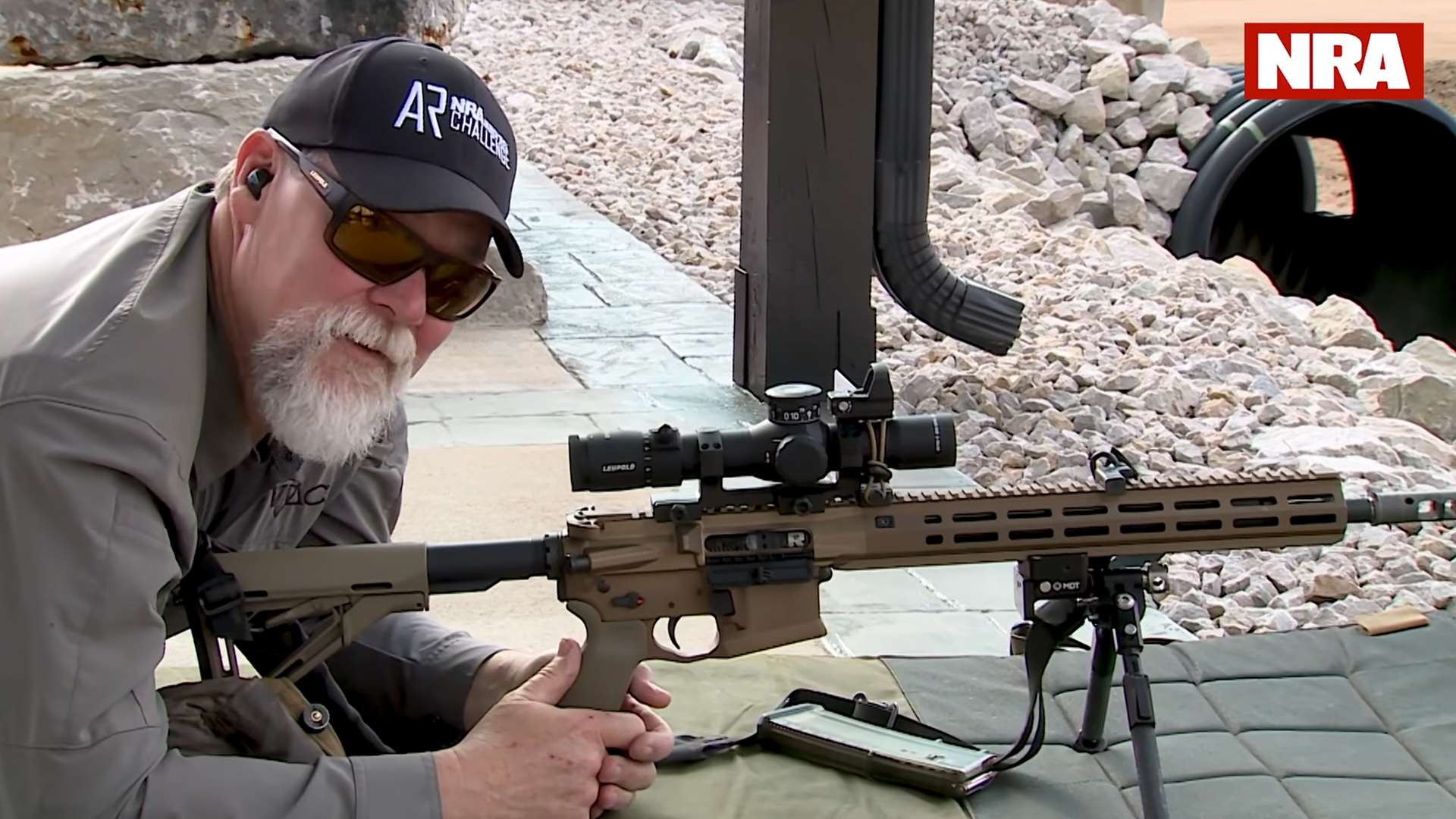
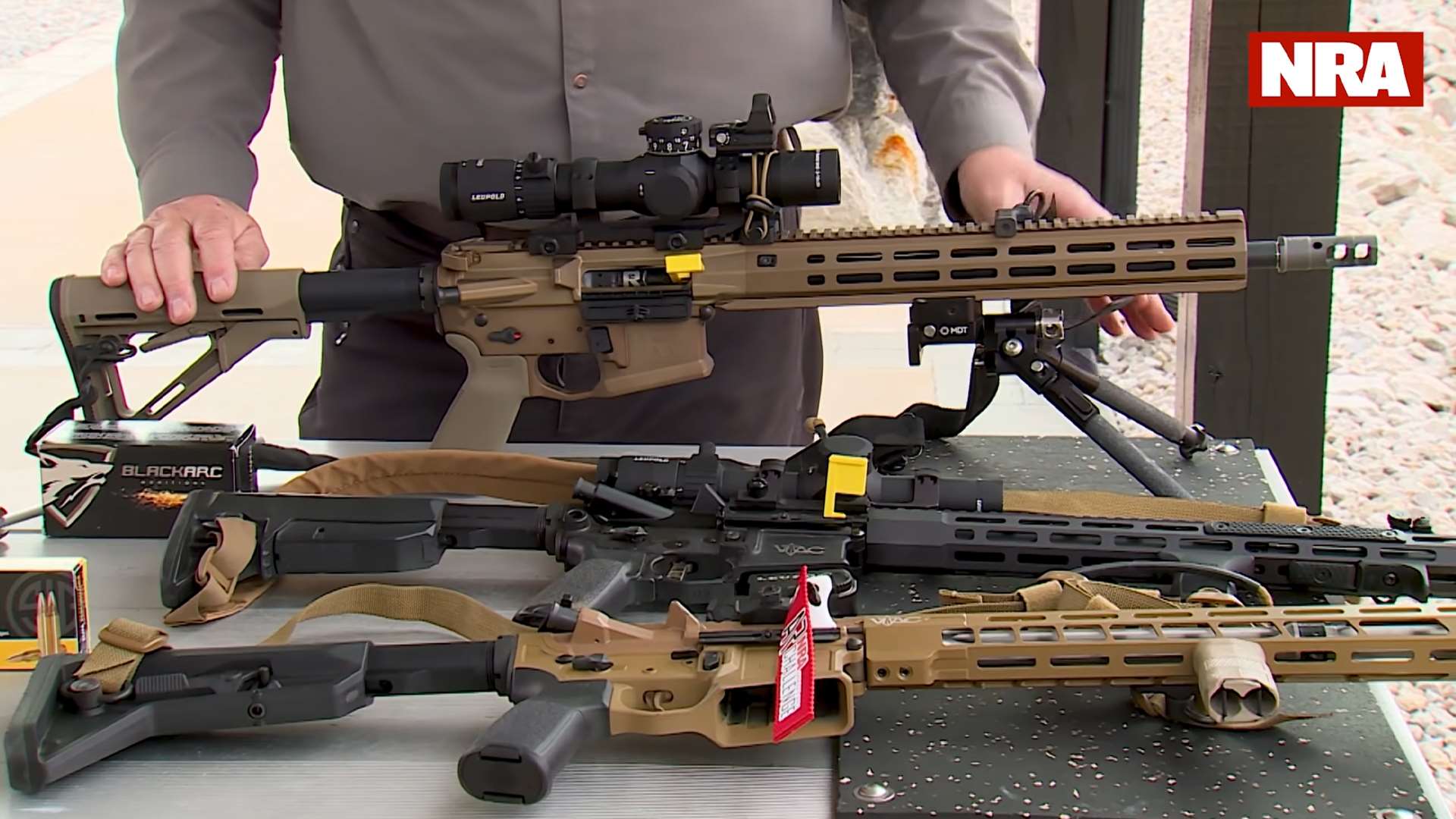
The three rifles represent the spectrum of what ARC competitors bring to the line. Lamb’s Stock rifle is a standard AR-15 with a Leupold LCO red-dot sight mounted two inches above the bore, shooting SIG Sauer 55-grain ball ammunition.
His Limited rifle carries a Leupold 1-4.5X scope at 2.7 inches above the bore, paired with Hornady’s 73-grain ELD-X.
The Open rifle—a Ridgeline Defense build—runs a Leupold 2-10X scope with a piggybacked red dot, a bipod and BlackArc Munitions’ 80.5-grain Berger load.
Each combination produces different ballistic behavior, which means each one needs its own zero and its own set of come-ups at distance.
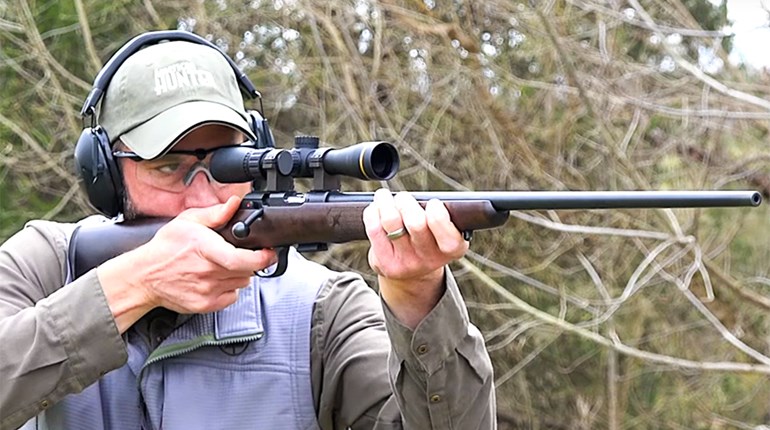
Lamb starts the zeroing process at 100 yards in the prone position, using his sling to build stability—the same technique he covered in the previous video on sling use. Before firing, he adjusts his buttstock to the correct length of pull, noting that a stock set too long pushes the shooter away from the rifle and degrades the position. He also dims his red dot until it is barely visible against the target, a preference that keeps the dot from obscuring the aiming point.
His first three-shot group lands about an inch and a half right and an inch and a half low. Because his red-dot sight has half-MOA click adjustments, the correction is three clicks left and three clicks up. Lamb makes the adjustment, walks back to the line and fires a confirmation group. The process is methodical and unhurried. He stresses taking time to build a solid position before each shot, following through on the trigger and shooting a tight group rather than accepting a loose one that happens to center on the target. A zero built on scattered shots is not a zero—it’s a guess.
With the 100-yard zero confirmed, Lamb moves to 10 yards to demonstrate the problem that may trip up first-time ARC competitors: height over bore. Because the optic sits above the barrel—two inches on the Stock rifle, even more on the others—a rifle zeroed at 100 yards will shoot low at close range. The bullet has not yet risen to meet the line of sight. Lamb proves it by firing a group at 10 yards with the red dot centered on the target. The impacts land noticeably below his aim point. He holds up a magazine next to the target to show the offset, then moves to a second target and holds high by that same distance. The second group hits center. The lesson is simple but essential: at ARC distances as close as 10 yards, a competitor who aims dead center with a 100-yard zero will miss low every time.
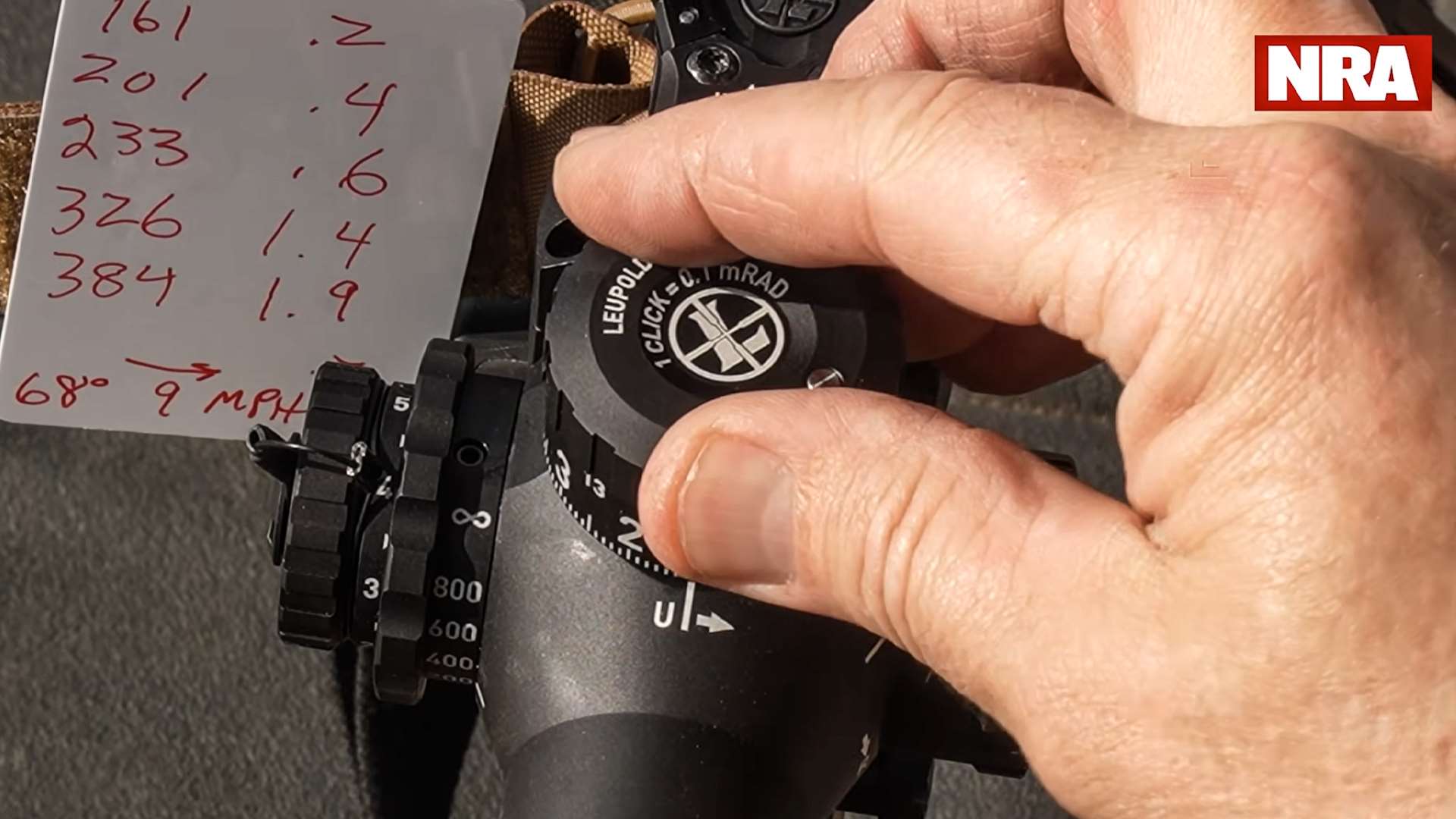
Next, Lamb shifts to the ARC Open rifle and a line of steel targets stretching from 161 to 384 yards. Lamb has pre-calculated his elevation data using the rifle’s ballistic profile—muzzle velocity, bullet weight and optic height—and works in mils rather than MOA. One mil equals 3.43 minutes of angle, a distinction that matters because the two systems are not interchangeable on a scope turret. Before each shot, Lamb dials his specific come-up: 0.2 mils at 161 yards, 0.4 at 201, 0.6 at 233, 1.4 at 326 and 1.9 at 384 yards. He also reads the wind, favoring the left edge of the target on a left-to-right crosswind at 201 yards and holding just off the left edge at 384 yards. Every target goes down.
The demonstration serves two purposes. First, it validates the zero: if the 100-yard zero were off by even a fraction, the errors would compound at distance and the steel would stay standing. Second, it shows what becomes possible when a competitor combines a confirmed zero with reliable ballistic data. Lamb is not estimating holdovers or guessing at wind. He is dialing known values and executing a repeatable process. That is the standard ARC’s Open division is designed to reward, and it begins with time spent at the 100-yard line getting the zero right.
Lamb’s closing point applies to every ARC division. Whether a shooter is running a red dot on a Stock rifle at 25 yards or dialing a magnified optic on an Open rifle at 400, the competition starts before match day—at the range with a solid prone position and a methodical zeroing process.
For more information on NRA America’s Rifle Challenge, visit arc.nra.org. If you’re an NRA member, find an ARC competition at a range near you with the new NRA App.