
If you compete long enough, travel becomes part of your season—Nationals, Area matches and Majors across the country. It all takes planning, and that includes your travel. When you add firearms to that equation, the margin for error goes to zero. Yes, the easiest way to travel with your competition gear and firearms is to drive, but even that takes a certain amount of planning.
One of the questions I get a lot is about flying with firearms and how to do it. Flying domestically with firearms is absolutely legal. It is done every single day by competitors, hunters, law enforcement and everyday gun owners. But it is only smooth when you are disciplined, detailed and prepared. This is not the time to wing it. This is about doing it right, every time.
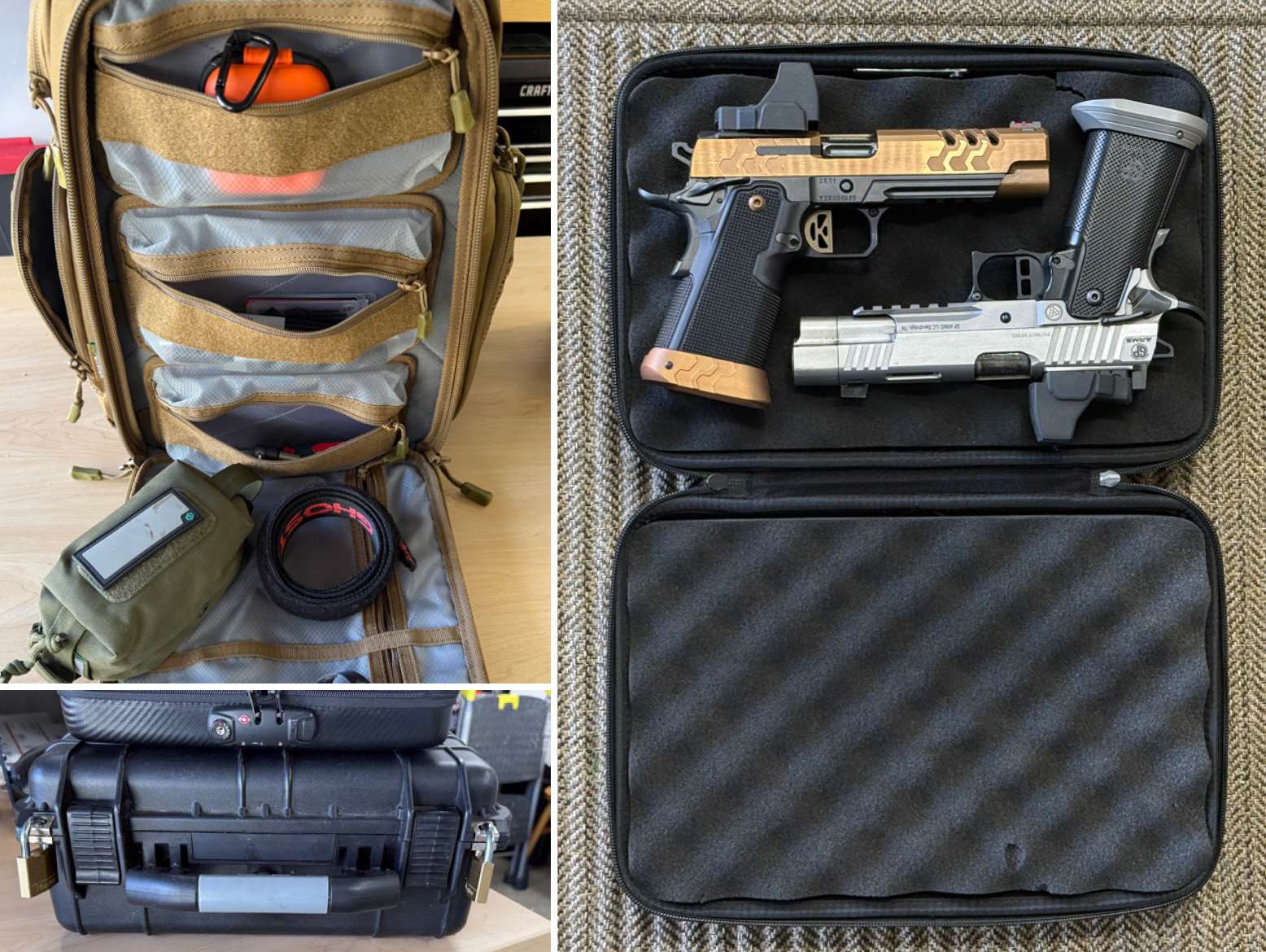
Start with the right case—hard-sided, lockable. This is non-negotiable. The foundation of flying with firearms is your case. The Transportation Security Administration (TSA) requires that firearms be transported in a hard-sided container that is completely secure and locked.
That means:
- A true hard-sided case, polymer or metal
- No soft cases as the primary firearm container
- No zipper cases
- No hybrid bags with flimsy structure
Your firearm must be inside a hard-sided case that cannot be pried open. If a corner can flex and expose the contents, it is not compliant. Get a good case—don’t go cheap. Use quality padlocks. Not decorative luggage locks, but real locks. The case must be secured in a way that it cannot be opened without removing the locks. Most competition shooters use multiple lock points if the case allows it. If your case has four lock holes, use them.
Only you retain the key or combination. Do not use TSA-approved locks on your firearm case. The rule is clear. Only the passenger may retain the key or combination.
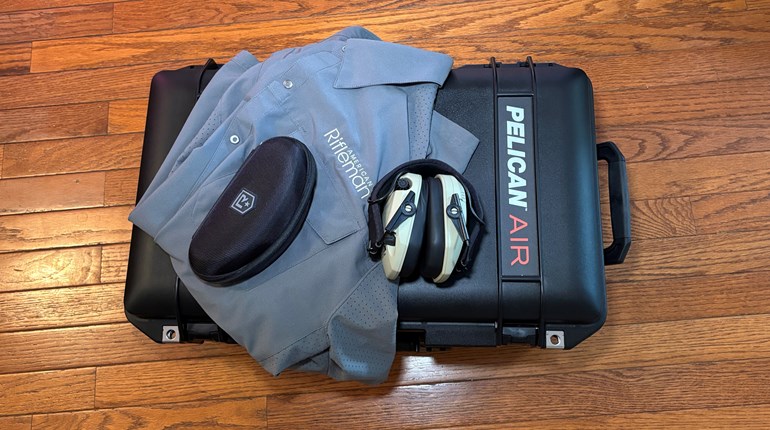
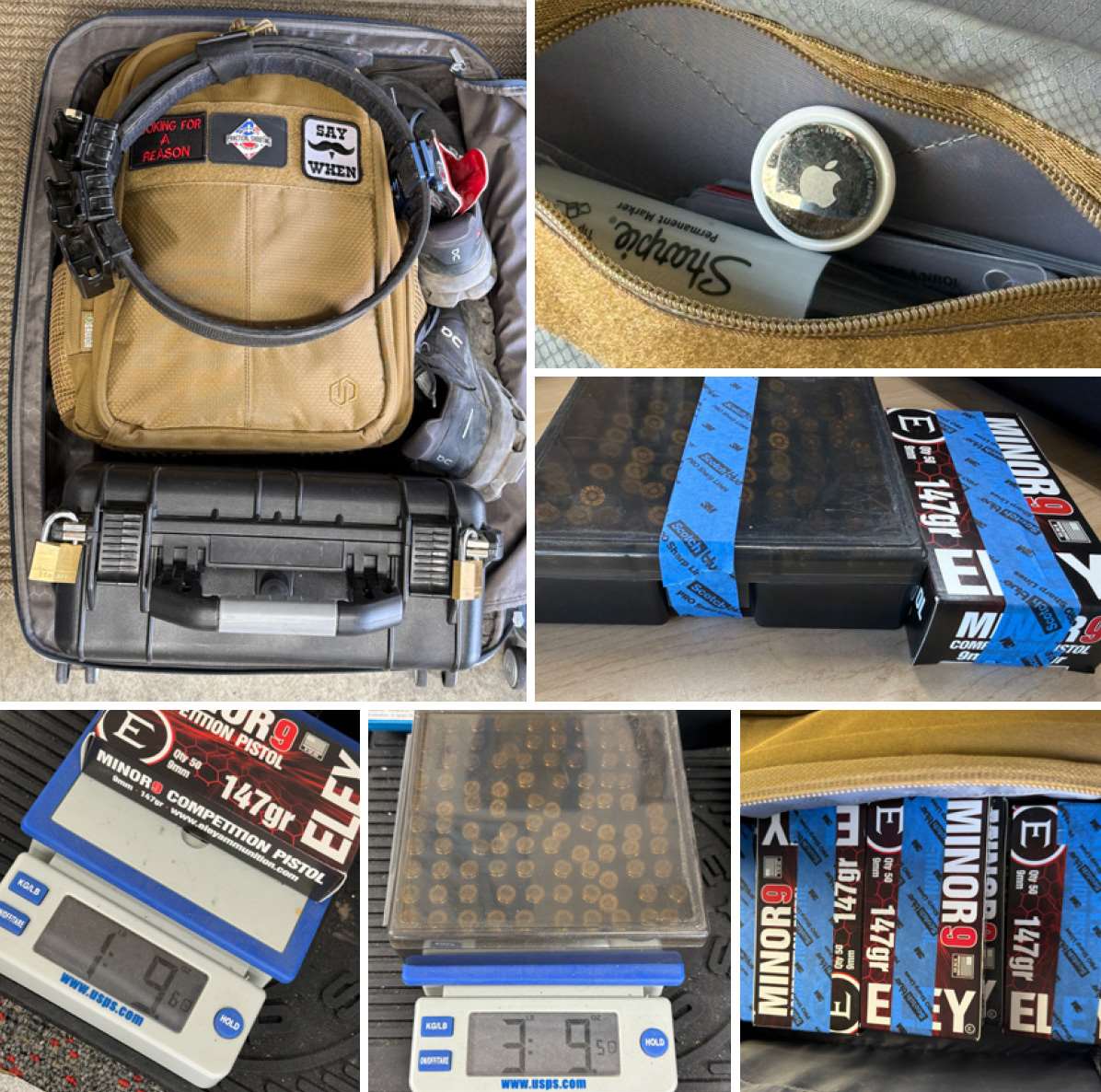
How you pack everything to make the check-in process go smoothly is very important. I have a dedicated hard-sided suitcase that I use for my range bag, gear and locked gun case. The range bag holds the ammunition, magazines and needed accessories and tools. I am able to keep this at the 50 pounds max weight that most airlines follow.
You have two primary options when packing. Place your locked firearm case inside a larger checked suitcase or check the locked firearm case as a standalone piece of luggage. Most competitors choose to place the locked hard case inside a standard suitcase. This adds an additional layer of discretion and protection. If you are traveling with long guns, then checking that case as a standalone piece is most likely going to be required unless you are able to break down your firearm (like an AR PCC) and pack it in a hard-sided case that can fit into a suitcase.
When packing your suitcase, put the locked firearm case in the suitcase and surround it so that you are preventing as much movement as you can. Don’t bury it in the suitcase because at check-in you will have to present the case as part of the declaration process. Avoid obvious outlines or shapes from the exterior. Do not overpack to the point that the suitcase bulges.
Keep your gear organized. Magazines can go inside the locked firearm case or in the checked suitcase, but never loose and rolling around. Do not leave an unloaded magazine in the firearm either. Ammunition must be transported in checked baggage only. Never in a carry-on.
Key requirements:
- Ammunition must be securely packed.
- It must be in original factory packaging or a proper ammo box designed to hold cartridges.
- Loose rounds rolling around in a bag are not acceptable.
- Most airlines limit ammunition to 11 pounds per passenger. Confirm with your airline.
You can pack ammunition in the same checked suitcase as your firearm. I do not recommend having the ammunition in the same locked case as your firearm.
Keep it separated in the same suitcase. Airline rules can vary slightly within the federal framework. I also recommend that you tape the boxes, whether they are factory boxes or plastic cases for reloads, so they do not open in transit.
Magazines should be unloaded. Some airlines require this explicitly. Even if not stated, it is best practice. This is where having magazine sleeve pouches come in handy, and I highly recommend them for travel. Separate your ammo in a clean, organized manner. Make it easy for inspection if required.
Follow the airline rules, not just the federal rules. TSA sets the baseline. Airlines can add additional requirements.
Before every trip:
- Go to your airline website.
- Search their firearm and ammunition policy.
- Screenshot or print the policy.
- Verify weight limits and packaging requirements.
Policies can change. Do not assume last year’s experience is still current. Having this handy can also help at check-in, just in case the information you are getting is different than what the airline website states. Sometimes the agent at the counter might not be as familiar with these policies, and it helps to have them just in case. This is part of your pre-match checklist. Do not show up to the airport without knowing the airline’s firearm policy.
At the airport, once you get to the check-in counter, declare that you are checking a firearm immediately. Do not use curbside check-in. Go to the main airline counter. Even if you are checking in at the kiosk, you will go to the special assistance line. I usually find that line and just go to it and bypass the kiosk.
When you get to the agent, clearly state: “I need to declare an unloaded firearm in my checked bag.”
Do not joke. Do not use slang. Do not say anything dramatic. Be professional. And do not just roll up there and start opening suitcases and pulling stuff out. Declare, then follow their instructions.
The usual instructions are:
- Open your suitcase.
- Open the locked firearm case if asked.
- Show that the firearm is unloaded if asked.
Again, do not jump ahead. Follow their instructions. They will provide a declaration card that you sign, affirming that the firearm is unloaded. That card is typically placed inside the suitcase, not on the outside. Sometimes they just want to verify that the case is locked and do not ask you to verify the firearms are unloaded. If they do ask you to open the case to verify, do so as discreetly as possible. I usually turn the case so the lid, when open, is facing me and they are able to look down into the case. I like to have a visible chamber flag to show that they are unloaded.
Once declared, the process can vary by airport. Some airports will escort you to a TSA screening station. Some will take the bag behind the counter and return it after inspection. Some will require you to wait nearby for clearance. This is why you give yourself extra time. This may require you to go with your luggage to the oversized area, where TSA will send the suitcase through their machine, or even ask for the combination or keys to visually inspect the case. Give yourself more time than you think you need. Every airport handles firearm declarations a little differently. Some are seamless and take five minutes. Some require additional screening. Some have long lines at specific times of day.
Arrive at least 30 minutes earlier than you normally would for a domestic flight. Give yourself even more buffer. The worst feeling is cutting it close while your bag is in a back room waiting on inspection.
Tracking devices are smart insurance for peace of mind. Technology is your friend. Devices like the Apple AirTag are inexpensive and extremely effective. Place a tracking device inside your firearm case and another in your suitcase. If your bag gets delayed, misrouted or held, you will know exactly where it is. That knowledge reduces stress and helps airline staff locate it quickly. It is not paranoia. It is preparation. When you are traveling with thousands of dollars in equipment and a major match entry fee on the line, tracking is smart.
At your destination, pay attention at baggage claim. Firearm checked bags are not always delivered on the standard carousel.
Some airports:
- Deliver them to the airline baggage office.
- Hand them directly to a representative.
- Require ID to release the bag.
- Have them in the oversized luggage area.
Ask the airline agent at departure what the procedure will be at your destination. However, they may not know, so you can always check at the airline office at your destination.Ask the airline agent at departure what the procedure will be at your destination. However, they may not know, so you can always check at the airline office at your destination.
When you retrieve your bag:
- Inspect it immediately.
- Confirm locks are intact.
- Confirm no visible tampering.
If there is an issue, report it before leaving the secured area. As part of your pre-travel preparation, you should be aware of what the airline covers if your baggage with your firearm is damaged or doesn’t show up. I highly recommend knowing what is covered, not only by the airline, but if you have separate insurance on your firearms and whether it covers travel. Especially if it is just an additional policy tacked on to your homeowners insurance, it might not cover loss outside of your home.
This guidance applies only to travel within the United States. International travel introduces additional federal forms, foreign import laws and vastly different regulations.
If you are flying within the United States, follow TSA rules, follow your airline policy and stay organized. Flying with firearms is not complicated, but it demands discipline.
Always remember:
- Use a real, hard-sided case.
- Lock it properly.
- Pack ammunition correctly.
- Declare professionally.
- Give yourself time.
- Track your bags.
As competitors, we obsess over stage plans, equipment setup and match strategy. Apply that same mindset to travel. The goal is simple. Arrive with your gear, on time, stress-free and ready to “Make Ready.”
Article from the March/April 2026 issue of USPSA’s magazine.
Most Popular