After reading my previous article about 5.56 NATO and .223 Rem., naturally shooters may be curious about other calibers. So, what about 7.62x51mm NATO compared to its civilian equivalent, .308 Win.? This is a great question.
Commercial .308 Win. came first. The two ended up differently. Similar to the 5.56 NATO vs. .223 Rem., the difference between .308 Win. and 7.62 NATO is in the chamber, but it’s in a different place. The difference in these two isn’t the throat, it’s the headspace. NATO is ridiculously longer. Although there are different pressure-testing standards used by NATO and SAAMI, .308 Win. commercial ammo is normally loaded to a higher-pressure maximum than mil-spec NATO. It’s safe to shoot NATO rounds in a .308 Win. chamber, and .308 commercial ammo in a NATO chamber. The difference is in what comes back out. The case (either case) will have been stressed, a whopping lot. A softer or thinner commercial case might be hopelessly contorted.
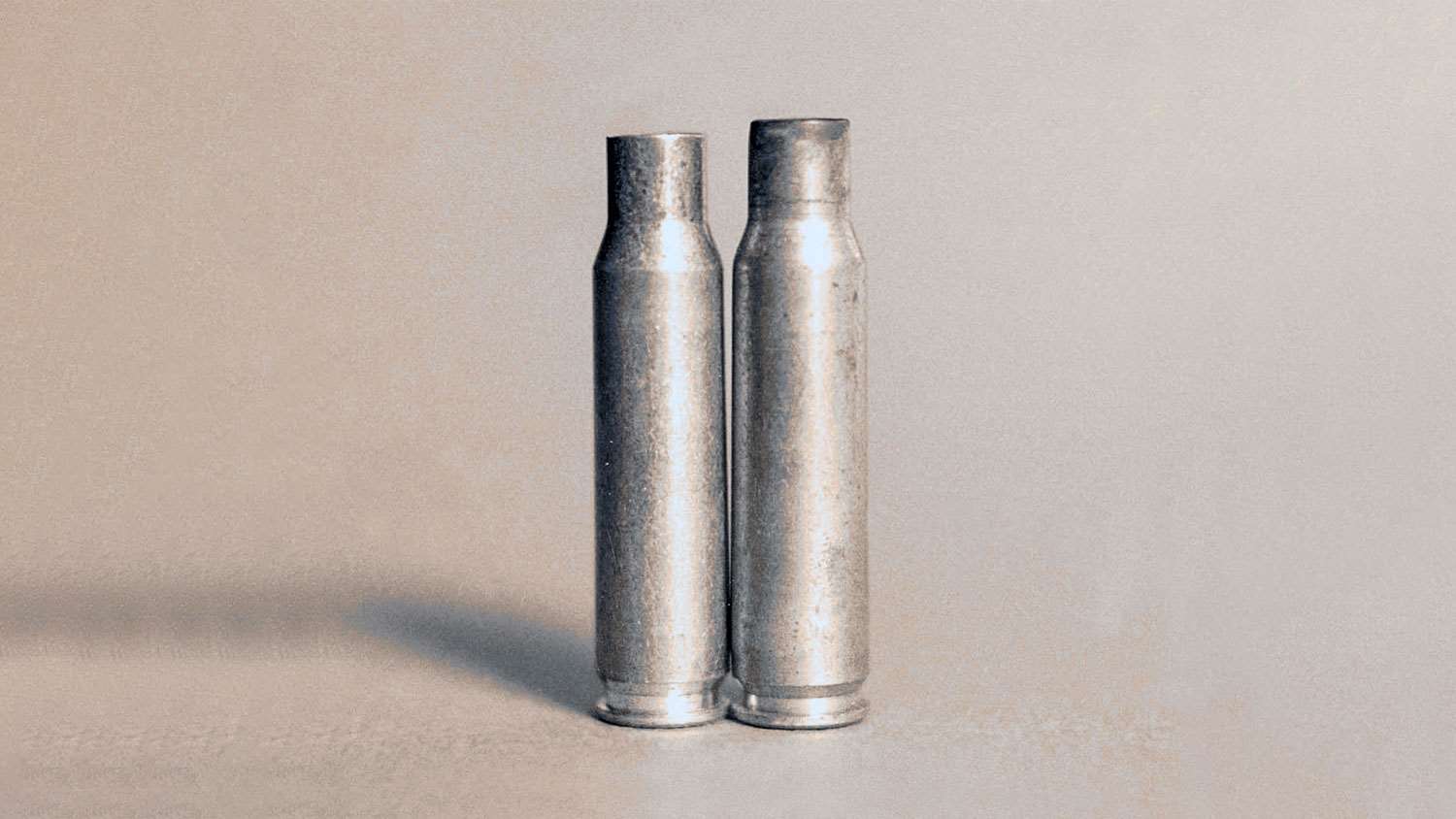
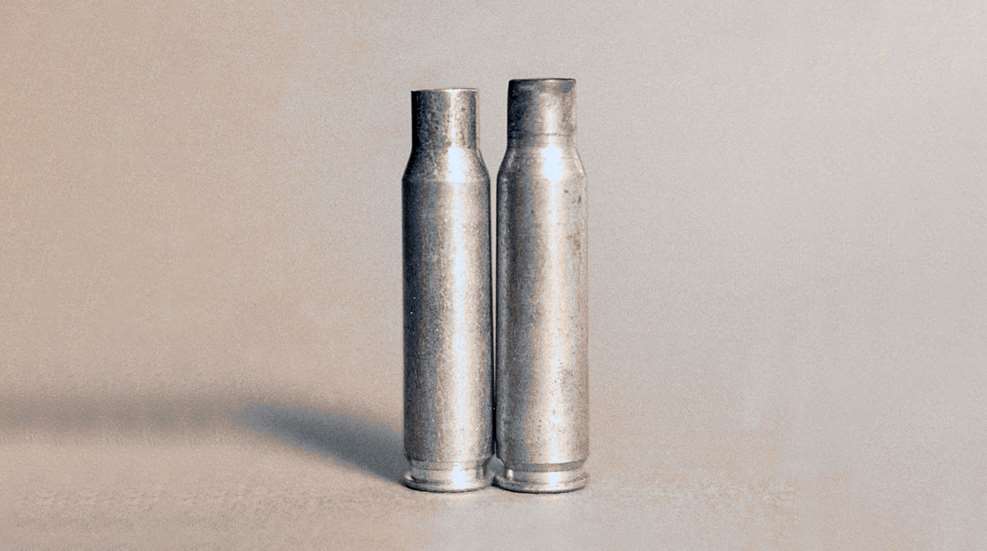
As for numbers, SAAMI spec headspace for a .308 Win. is a minimum (shortest allowable or “GO” figure) of 1.6300 inches, and a “reject” (too long) figure of 1.6340. Well, the number given as a minimum for NATO is 1.6380. The “reject” on NATO is 1.6455. I’m not at all clear on why anyone thought that was a good idea, but that’s what was done. It’s also the reason NATO cartridge case specs call for considerably thicker-walled brass and associated hard alloy. It has to endure that much more expansion. It’s a big reason not to purchase “surplus” 7.62 brass for reloading. That’s my advice at least. Cases fired through a true NATO chamber will be patently worthless to anyone owning a .308 Win. They’ll be blown beyond all reasonable repair.
If you are a handloader for a 7.62 NATO chamber, get a cartridge case headspace gauge and subtract 0.004 inches from the spent case reading to use as a figure to set your sizing die (case shoulder set-back). So, be sure not to take it down to .308 Win. specs—or it’s liable to break on next use. Actually break.
See more: 10 Of Our Best Articles On Handloading
Most Popular