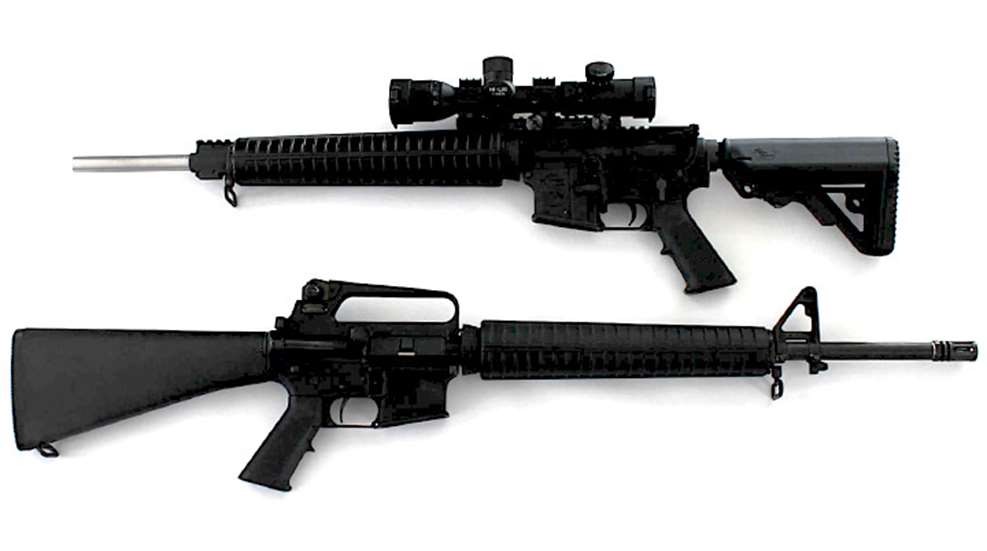
Switching from iron sights to a scope for Service Rifle competition requires a significant outlay of cash to stay in the game. How much? What are the options for keeping the cost down?
Let’s be frank here to keep the record clear for history. The foundation of High Power competition in the first years of the 20th century was the intent that civilians be familiar and even proficient in the use of U.S. government battle rifles in the event of being called up for military service. The U.S. Army’s DCM worked with NRA to establish competitions; the government loaned rifles and provided ammunition to competitors at the National Matches, and offered bargain price surplus rifles and ammunition to clubs and competitors. High Power competition was deliberately affordable to Everyman.
Service Rifle Evolution
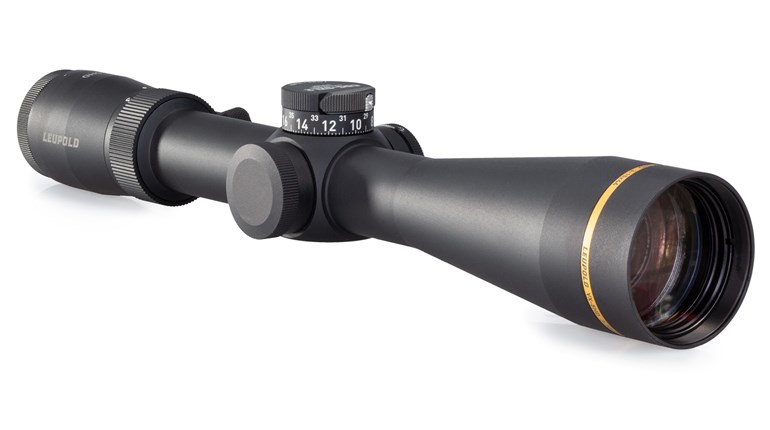
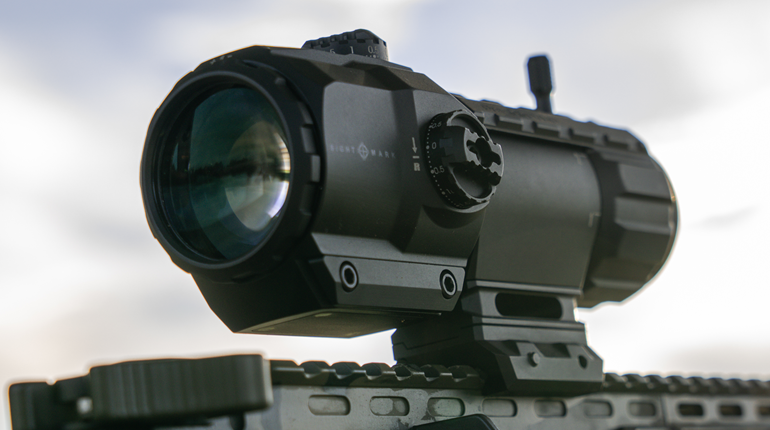
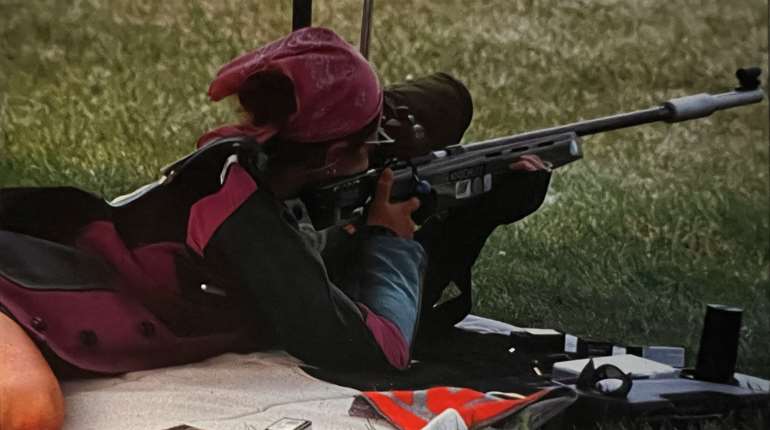
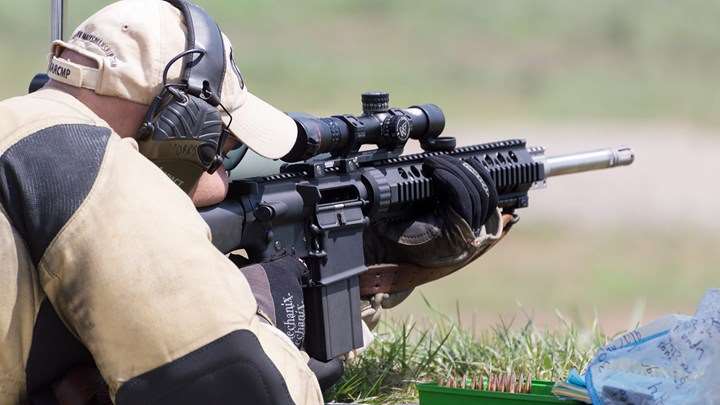
High Power as a sport has evolved since 1907, in ways that aren’t even dim reflections of the realities of combat shooting, such as permitting spotting scopes, shooting coats, shooting mats and creating a new class of Match Rifles chambering exotic cartridges that bear no resemblance to battle rifles and issue ammunition. Still, the Service Rifle class ostensibly intends to reflect the current issue rifle, from the M1903 Springfield through the M1 Garand and M14, to the M16. Today’s military issue rifles sport optical sights, and so NRA and CMP rules changed in 2016 to permit optics on Service Rifles for competition. Because magnifying rifle scopes are a clear advantage over iron sights, the serious Service Rifle competitor, especially when in pursuit of a Distinguished Rifleman badge, must now utilize a scope.
Not Just a Scope
Of course, we’d expect the cost of a scope to increase the price we pay for shooting Service Rifle competition, but the changeover involves more than just a scope. We also need a flat top upper receiver, a gas block lacking the front sight assembly, a cantilever or extended scope mount and an adjustable buttstock. We can’t simply mount a scope to the A2’s carrying handle, as that would raise the scope’s centerline higher than 3.5 inches above the bore. High Power rules prohibit this.
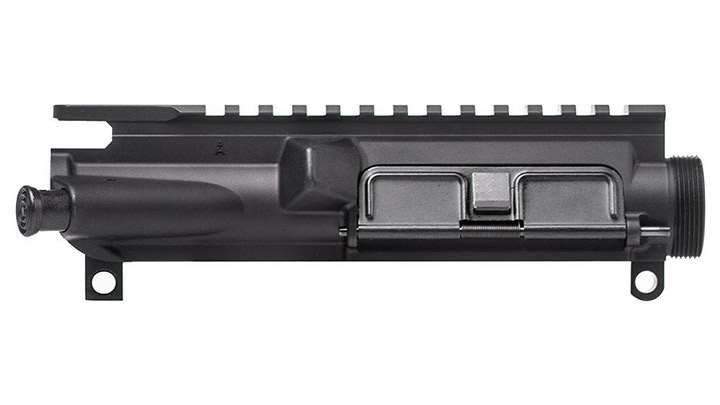
Manufacturers are now incorporating these features into off-the-shelf Service Rifles, but those of us who already have an iron-sighted NM A2 setup can swap out parts to build a new flat top upper. But if we don’t have the tools or knowledge (or a gunsmith) to convert an A2 to a flat top to accept a scope, then we must buy a new upper.
Itemizing Costs
For a conversion, we’ll have to ditch our A2 upper receiver for a flat top receiver, and the gas block with its view-blocking front sight assembly has to go, too. Upper receivers that fit tightly to a barrel extension for improved accuracy cost more than other upper receivers. Rules prohibit adjustable gas blocks, so pretty much any flat top gas block that fits well is acceptable.
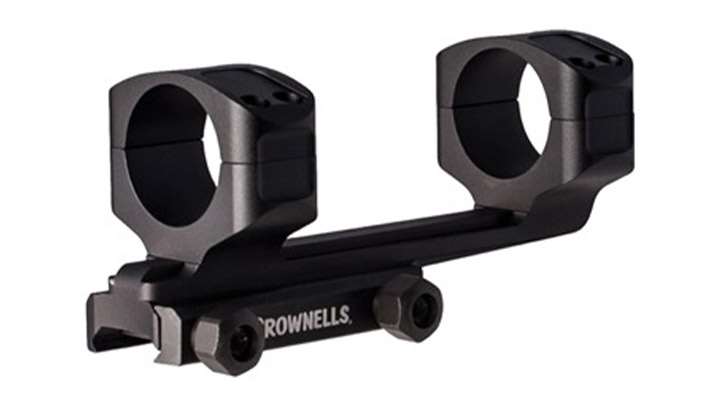
We need a cantilever or extended scope mount that gets the ocular lens far enough away from our eye for prone shooting. Such mounts run from about $35 upwards into five and six times that, if you wish. A rough guide is to mount the scope so that the end of the ocular lens is just about over the top of the trigger; precise mounting depends upon your specific scope’s eye relief and your preferences.
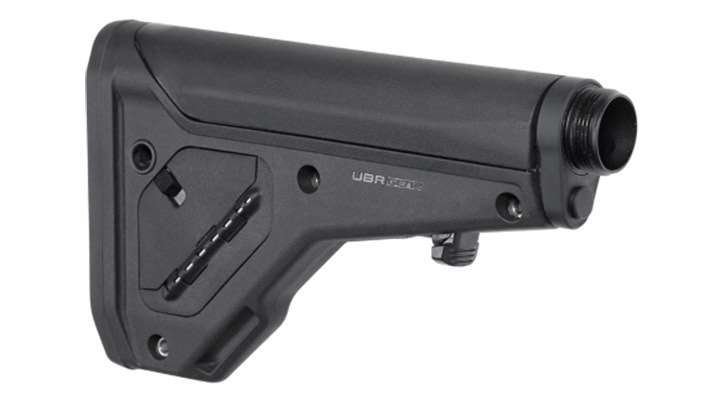
Second to the cost of the scope—which may run from $350 to $2,000 and more, depending on your choice—and comparable to the stripped flat top upper receiver, is the cost of a buttstock adjustable for length (and length only,in accordance with NRA and CMP rules), as most scope-shooting competitors need an adjustable buttstock to accommodate the different shooting positions.
Run of the mill collapsible buttstocks lack tight fit—they’re wobbly, which is not conducive to precision shooting. The Magpul UBR Gen 2 adjustable buttstock for example, has the rigidity we need at an MSRP of $200. Certainly, there are other choices and more to come—but the point is that cheap collapsible buttstocks aren’t going to cut it. Collapsibles also require a new buffer tube, which may or may not be included with the buttstock.
The estimate to change over from irons to glass is:
- Scope—$500
- Buttstock—$200
- Cantilever mount—$50
- Flat top receiver—$150
- Receiver gas block—$30
- Gunsmithing—$100
- Total—$1,030
Complete Upper
Going the new complete upper route, White Oak Armament has a match grade, flat top upper starting at $740; adding the Magpul collapsible buttstock totals $940. Add in $475 for a Hi-Lux XTC scope and $60 for an extended scope mount, and we’re up to $1,475.
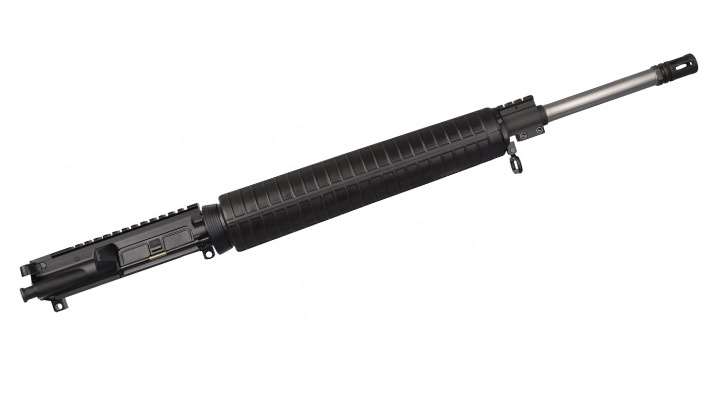
We might recoup some of that by selling the NM A2 upper for a couple hundred dollars. Another approach is to spend a bit more to build a new lower, perhaps incorporating some second-hand parts, to mount to the old upper and have another accurate AR-15 to show for the money.
There’s no way around the reality that the new Service Rifle rules permitting optics has increased the cost to be competitive. High Power is perhaps no longer the Everyman sport it was when DCM provided rifles and ammunition, but some creativity and shopping about can keep us in the game.
See more: Service Rifle: Full vs. Reduced Course