Having shot over 100 competitions at every level during the last four years, I’ve seen a wide variety of shooting skills, but sadly I’ve also seen the same mistakes continue to be made over and over again. Here’s a list of the five biggest mistakes I see at matches which if eliminated, will likely provide you with the greatest improvement benefits. (Note: This guide is geared towards Steel Challenge competition, but the most of the principles presented here apply to all competitive shooting disciplines.)
1. Over-Aiming
This is by far the biggest speed killer I see. Taking way too much time to refine a sight picture that does not need to be refined wastes a tremendous amount of time on a run. Shooters who exhibit this behavior have never taken the time during training to determine what the minimum sight picture is necessary to hit a particular target.
The result is that they try to acquire the same sight picture for every target—regardless of the target difficulty—before pulling the trigger. Does this method work for hitting the target? Sure it does, but it has no place as a competitive shooting technique. There is no need to have the same sight picture for a 12-inch plate at seven yards, as there is for a 10-inch 18-yard plate or even an 18x24-inch plate at 35 yards.
2. Trigger Control
During the firing cycle, which consists of acquiring the target, getting the proper sight picture, breaking the shot and confirming where your bullet went (shot calling), proper trigger control is essential. The goal of trigger control is quite simple—do not move the gun as you break the shot. Moving the gun before or after breaking the shot does not materially effect if you will hit the target.
Many shooters think they are not moving the gun when they pull the trigger. However, these same shooters are usually quite surprised when you ask them to tell you where the bullet went and they say it was the center of the target because that is where they believe their sights were, only to go down range and see the bullet had hit somewhere else. This is usually due to the fact that while the sights may have been lined up on the target center prior to the trigger pull, and at the moment the shot breaks the shooter does something to move the gun. Since they have not yet learned to call shots properly, not only does the bullet go somewhere else, but they did not see that the sights had moved and the bullet went exactly were the sights were at the instant the shot broke and the bullet is not where they thought it was.
3. Gun and Ammunition Combination
This one continually surprises me, particularly when I see it happen to experienced shooters. For competitive shooting, you must figure out how to have a 100 percent reliable gun and ammunition combination. Having even one ammo jam, stovepipe or other gun issue in a match is one too many. If you cannot fire several thousand rounds in a row without a single issue, then your equipment is not ready for competition and you should spend whatever amount of time is needed to address the issue before you shoot another match.
The corollary issue to this is shooters who have modified their guns so much that they have turned what used to be a 100 percent reliable firearm into something else. Chasing some “material solution” to a problem you are having in the hope that it will fix what is actually a technique issue is wasted effort. You need to train more—not continually mess with your equipment. Remember, the road to Steel Challenge shooting greatness is paved with bullets—lots of them.
Do you really think changing your trigger pull weight from 2 pounds to 1.75 pounds is really going to matter all that much? The only changes I’ve made to my RFPO gun in the last six years are cosmetic. I don’t mess around with springs, sears, etc. Once I made the initial upgrades to turn my gun into a race gun, I have not touched it. I don’t need to, as it runs reliably and eats almost any brand of ammunition.
4. Being “Results Oriented”
This is one is more subtle, as many shooters who do this do not even realize what effect it is having on their ability to perform well. Constantly thinking about results from a prior stage or an upcoming one not only can do no good, but it actually can do quite a bit of harm. Continually dwelling on past mistakes during a match erodes your confidence in your abilities and allows doubts to creep into your thoughts.
Once you start to doubt what you can do you are no longer able to shoot subconsciously, since you are now using your conscious mind to continually think about things you did or will do in the future. Focusing on mistakes during a match only ensures that you will continue to make them, since this is what you are training your mind to do. During competitions, try to focus on things you are doing right, not on things you are doing wrong.
5. Poor Grip Mechanics
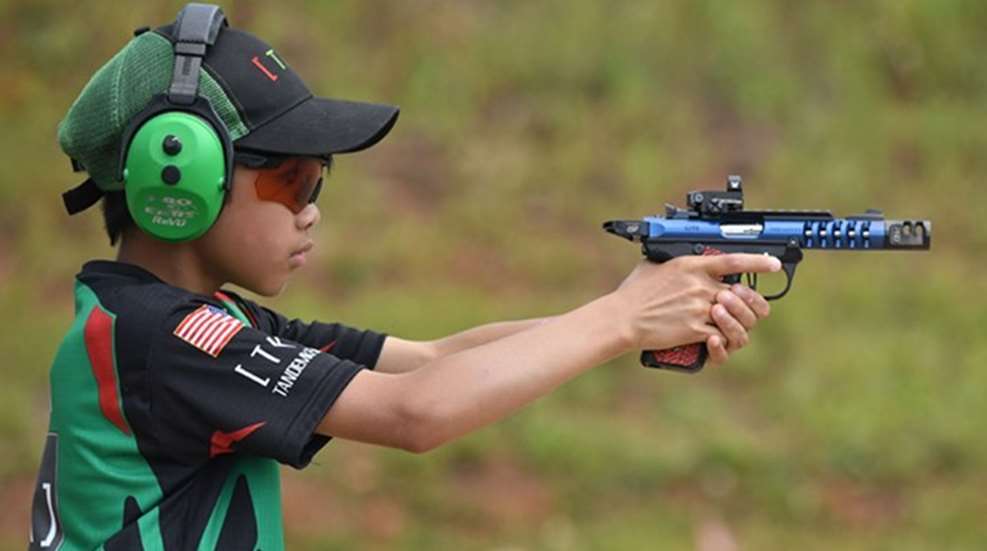
Having and maintaining the proper grip throughout a run can cure a lot of issues. Unfortunately, many shooters still don’t understand what a proper grip is. A proper grip facilitates both good trigger control and recoil management.
Acquiring the proper grip pressure has two parts. For your trigger hand, you want to grip the gun only hard enough to allow you to move your trigger finger quickly. Your weak hand is another matter. This is where most of your control comes from and where most shooters fall short. You simply want to crush the gun. You hear the 60/40 grip pressure rule a lot. I don’t know about you, but I can’t tell when I’m gripping at 60 percent with one hand or 50 percent or 68 percent. What I tell my students is to grip the gun until your hands are literally shaking from the pressure you are exerting, and then back off just to the point where you stop shaking. That’s how hard you should be gripping the gun with your weak hand. If, after 20 minutes of dry fire, your hand doesn’t hurt, then you are likely not gripping hard enough.
Notice that the majority of the mistakes listed here are nothing more than fundamental shooting skills. There is a very big hint here—top shooters don’t have any special techniques that only they are using to become great. On the contrary, they have trained themselves to execute shooting fundamentals at a high level.
If you are looking to improve your results at matches, consider focusing your training on perfecting fundamental shooting techniques. Before long, you will become one of those shooters everyone else fears when you show up for a match.
About the author: Ken Verderame is a 3-division Steel Challenge Grand Master and creator of a Steel Challenge dry-fire training system.
Article from the January/February 2021 issue of USPSA’s FrontSight magazine.
Read more: Review: Browning Buck Mark Plus Vision
Most Popular