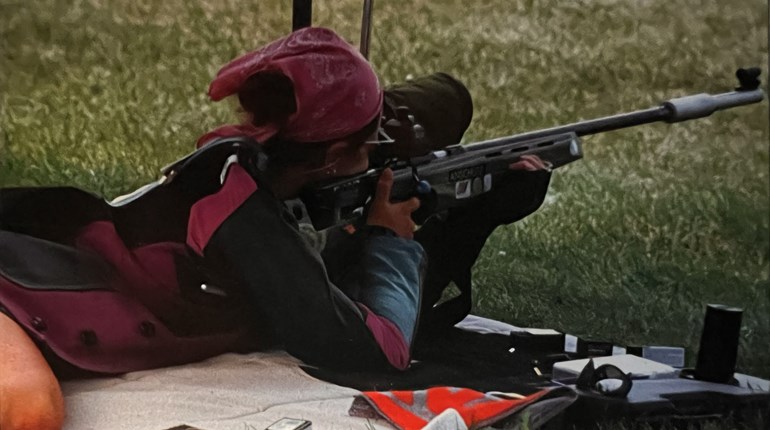
Smallbore rifle (.22 rimfire) competition was a popular activity in the years 1880 to 1920 in both NRA competition and in the indoor version of the standing-position-only Schuetzen game. The rifles used were of a type: single shot and fitted with some type of lever-actuated breechblock and two-piece stocks. Typical models were high- and low-wall versions of the Winchester Model 1885, the Marlin-Ballard and the Stevens Models 44 and 44½. These were all good rifles but World War I introduced changes that would relegate all of them to the competitive scrap heap as they were replaced on the match firing line by products of Winchester, Savage and the U.S. Army’s Springfield Armory.
The first of these changes was World War I itself. The millions of Americans serving in the Armed Forces learned to shoot using a bolt-action repeating rifle―the Springfield or the Enfield. Those who, after leaving the service, turned (or returned) to target shooting for relaxation (or for military preparedness) increasingly looked for a military rifle sized bolt-action rifle to do it with and the American arms industry scrambled to satisfy their desires.
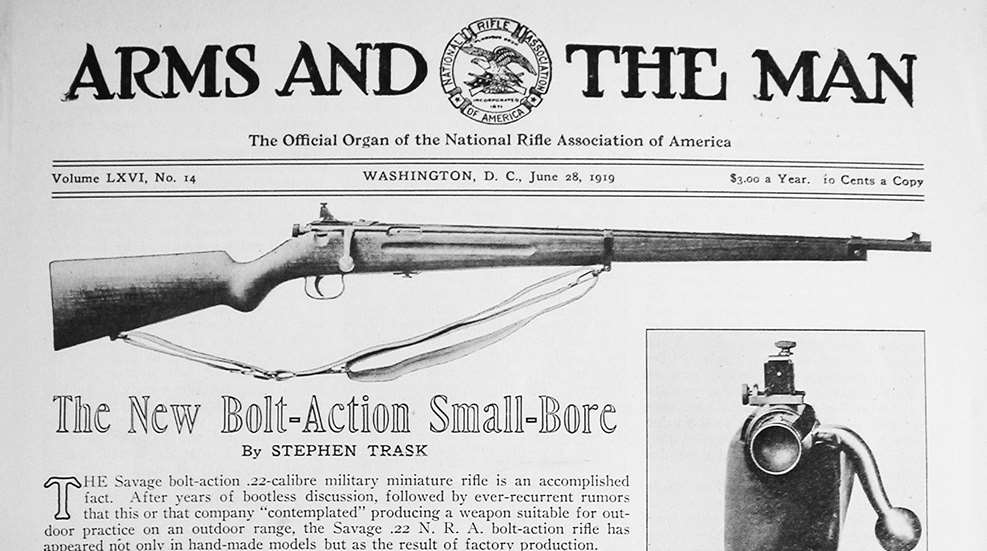
Savage was first out of the starting gate if only by being the first to announce its ware in print in the June 28, 1919 issue of Arms and the Man in a report by Stephen Trask (one of the pens names of associate editor Kendrick Scofield) on the Savage Model 1919 NRA .22 cal. rifle. That it was a competition rifle was indicated by the NRA suffix to the model number.
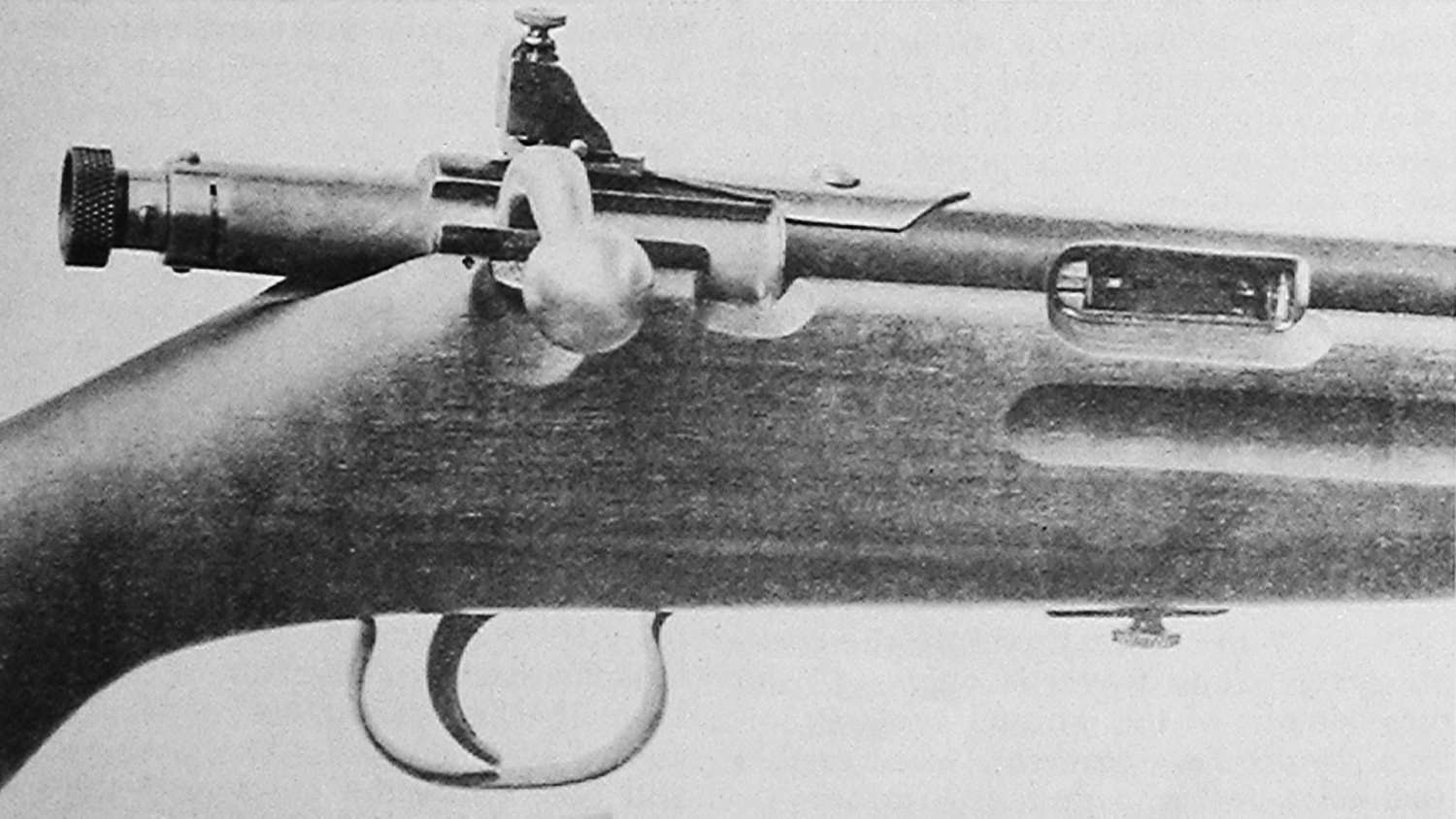
The Savage was a medium-priced rifle. Retail price, when a Model 52 was advertised at $38, was $20―from the same supplier. The 1919 NRA .22 was a repeating bolt-action rifle, fed by a five-shot, detachable, box magazine. The barrel was 25 inches long, stocked with a full-length, military-style, pistol grip stock. Unique at the time, although Savage used the feature on later rifle designs, was the integral barrel and receiver. The Savage factory simply began with an oversize piece of bar stock, drilled and reamed the barrel, drilled and reamed the boltway at the breech end of the barrel, rifled the barrel, then turned the whole assembly to the correct outer dimensions. Viewed casually it seems a shortcut. In fact the process produces an assembly that is more rigid than a conventional two-piece barrel and receiver. In addition the practice virtually guarantees that the boltway and the bore will be concentric and that the breech face will be square with relation to the bolt.
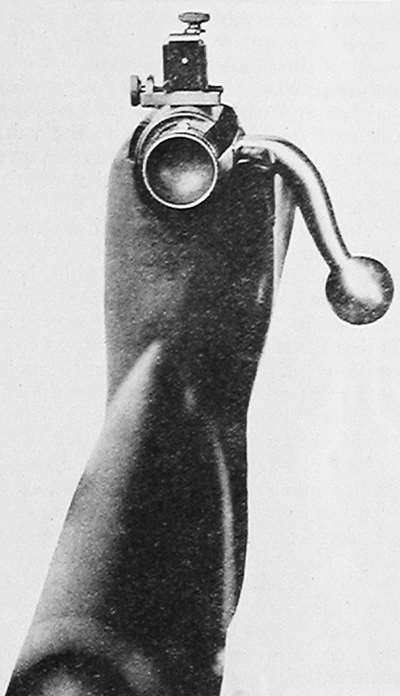
The 1919 was fitted with an undercut, front sight of the same type as that proposed by Maj. John Dooley of the Marine Corps and the U.S. Cartridge Co., for use on the Marines’ Model 1903 rifles. The rear sight was a neatly contrived, very compact aperture, screw-adjustable in one minute increments for elevation and wind drift, that fit into a dovetail assembly attached to the receiver by two screws (later on Lyman offered its 48G and the No. 103 Tang sight that could be fitted to a 1919 as well). The 1919 action cocked on the closing stroke of the bolt, a feature advertised (correctly) as providing more positive primary extraction. The only drawback of the Savage design was the dual use of the trigger mechanism for firing and as a bolt stop/release―a perfectly acceptable practice, then and now, but not one best suited to a really good trigger pull.
Savage Model 1919 NRA rifles (some 50,000) of them were made between 1919 and 1933. The replacement in the Savage line was the Model 1933 (sometimes referred to as the New Savage Model 1919 NRA, or the Model 19-33, or, simply the Model 19). Model 19s had an improved stock design that did away with the full-length military stock, replacing it with one that had a straighter, higher comb, a better pistol grip and a banded, half-length fore-end. The lockwork was changed to cock entirely when the bolt was unlocked and lock time was shortened considerably. Whereas the 1919 locked using a single lug at the root of the bolt handle, the 19 had dual lugs―the bolt handle being one. Model 19s were available with 28-inch, heavy-weight barrels as an option. Sights on the 19 were improved as well. Lyman receiver sights could be had on order. The Model 19 stayed in production for the civilian market until the start of World War II as competition for the Mossberg 44, Remington’s 34s, 41s, and the early 500-series, the Stevens Model 416, and the Winchester Model 75. About 6,000 Savage Model 19s were purchased by the military for primary marksmanship training.