
Accurizing the M16, modifying Army competition regulations, expanding ranges, increasing support personnel—these were some of the year’s National Match pro-growth agenda items. But before any more could be discussed, a bureaucratic hurdle had to be crossed.
“Rifle Matches Threatened” was the headline in the June 10 issue of the Sandusky (Ohio) Register. The article, which appeared just 36 days before the scheduled First Shot Ceremony, revealed that a loophole existed whereby government funding of the matches was not assured. Legislative officials and National Match proponents, however, successfully sought passage of a supplemental appropriation bill that provided the necessary Army support for this year’s program.
“For many … the [National Matches] represent a sort of homecoming, a chance to share in the camaraderie that makes shooting unique among American sports.”
—The American Rifleman, October 1986
If any shooter could take the competitive equivalent of this congressional close call and play it out on the firing line it was Tom Woods, who entered the 1986 pistol championships with three straight top three finishes at the National Matches. However, like Max Barrington before him and James Lenardson who would soon follow, Woods possessed a persistence that paid off with an eventual championship performance. For Woods, his win came this year when his 2620-122X effort placed him three ahead of Lenardson. Lenardson's second-place overall earned him his fifth straight National Guard title and represented his best national championship showing to date, having already logged three third place finishes. While the “close but no cigar” cliché no longer applied to Woods, Lenardson would have to wait two more years before he could shed the stereotype.
After the .22 Championship was fired, Woods sat nine points behind Staff Sgt. Sumter Nelson’s top score of 887. By the time the .45 competition rolled around, Woods trailed the frontrunner Nelson by 12. Strong winds played havoc with everyone's .45 scores as Richard Lamb’s winning 866 would attest, but Woods’ 861 tally (Nelson fired an 838) was enough to swing things in his favor and the national title was his.
Ruby Fox’s second straight women’s title, her eighth since 1976, featured a sweep of all three championship aggregates while Joe White made it three straight years as senior champion and Lance Bowman won both collegiate and junior laurels.
Woods returned to the winner’s podium for his win in the Board-sponsored President's Match, which Nelson had won the year prior. It was the second President’s title for Woods, who previously won the match in 1977 when it was fired as an NRA National Match Course aggregate. Capt. Paul Berna held forth for the Marines by winning the Custer Trophy for high score in the National Trophy Individual Match while Nelson and Lenardson represented half of the winning All-Guard foursome in the National Trophy Team event. A day earlier, Fox and Lamb’s USAR teammates captured the NRA team aggregate title, ending the three-year reign held by the U.S. Army Marksmanship Unit out of Fort Benning.
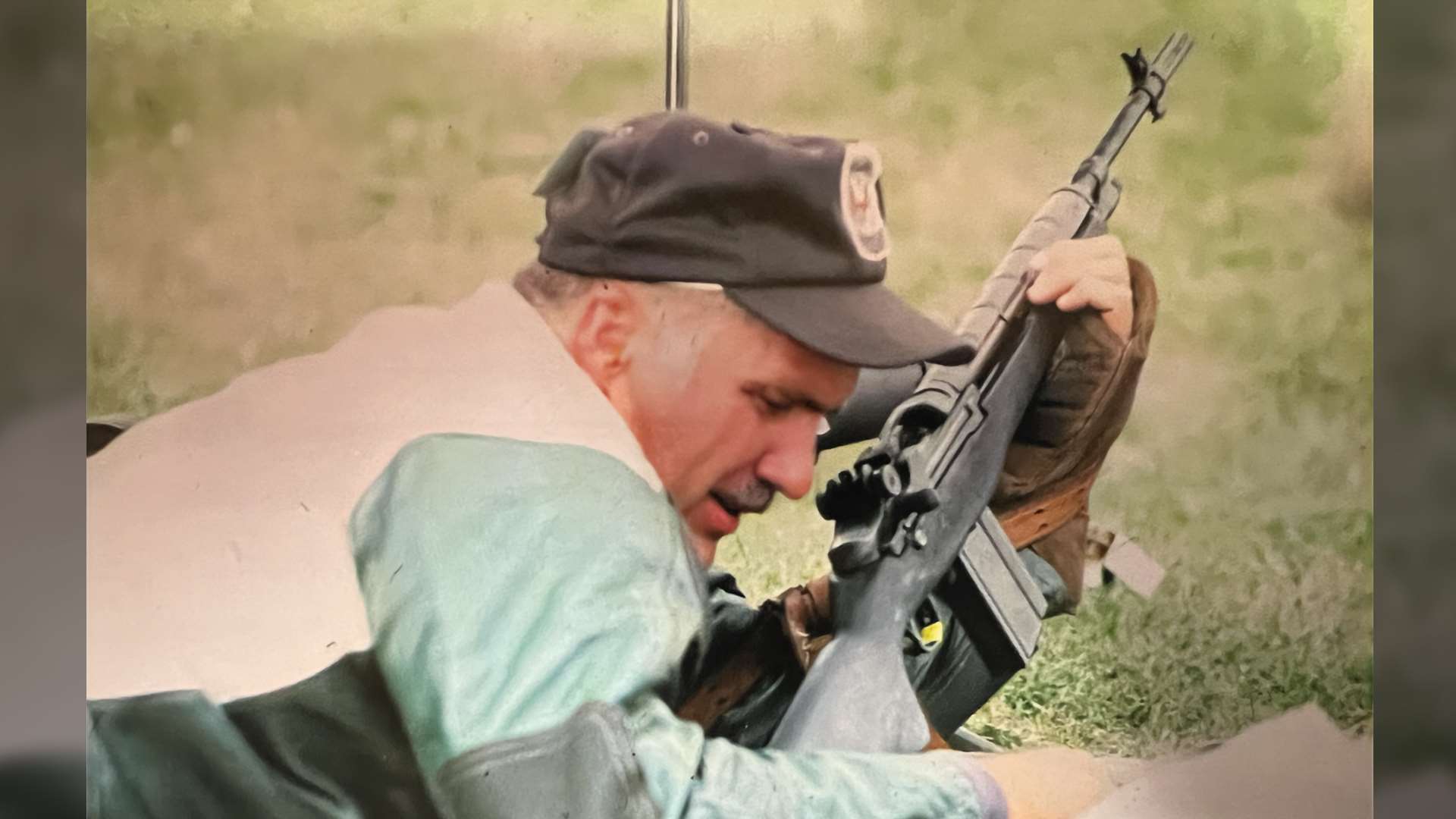
If two things could be predicted safely at Camp Perry, it would be the unpredictable weather and that Lones Wigger, Jr., would contend for a national title. After being unseated from his familiar three-position throne the year before by Carl Bernosky, Wigger came to this year’s championship focused on regaining the crown. This year’s matches also held a particular sense of urgency for Wigger in that his retirement from the Army was just a few months away and this was his last hurrah as a member of the USAMU team.
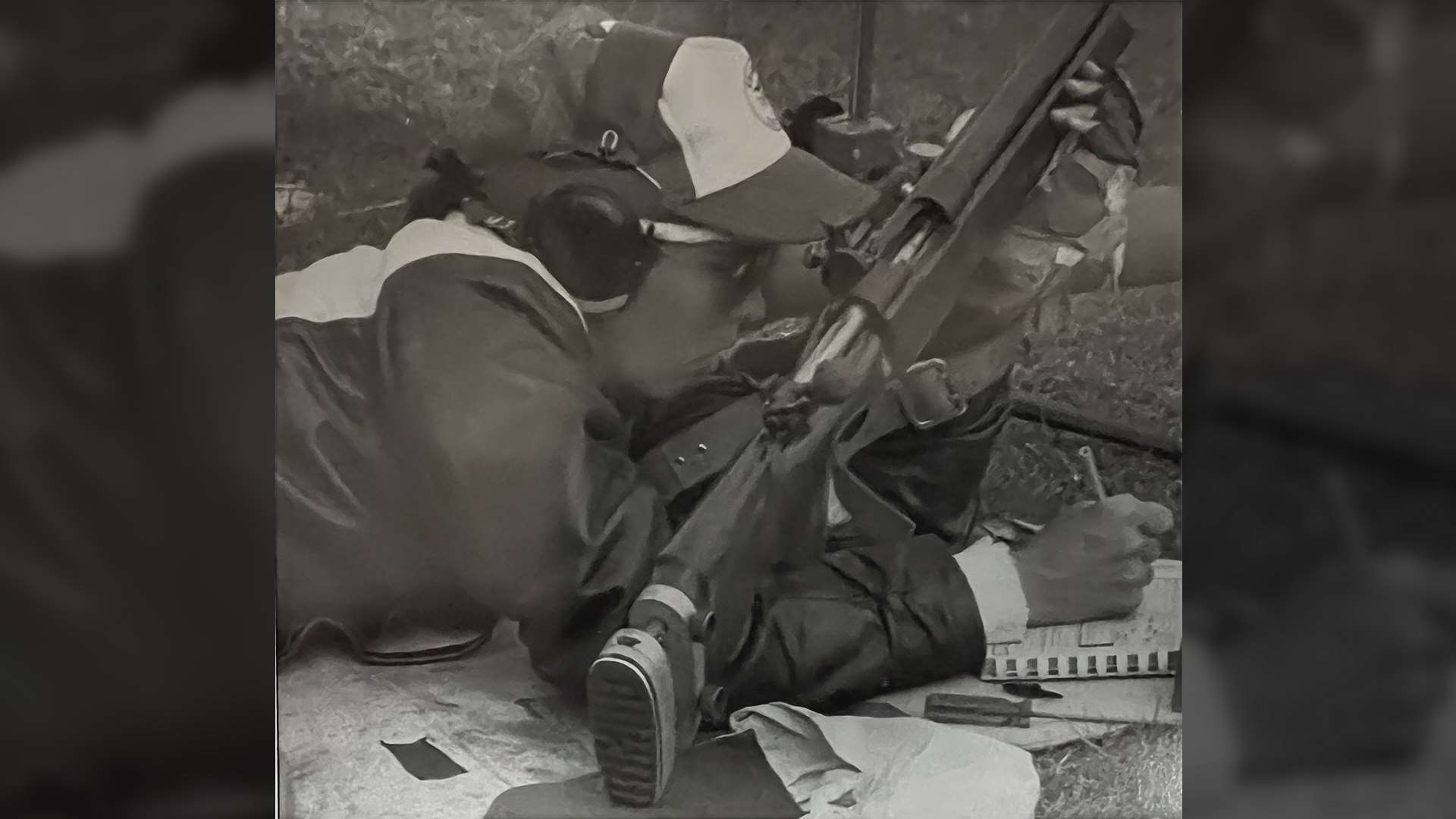
While he got off to a shaky start in the metallic prone stage, Wigger took control in standing and as the day wore on, got only tougher in the position that he quite often dominated—kneeling. When the scores were tallied, Wigger had put together an 1162-18X, a new National Match record that exceeded the old one that he set six years earlier by seven points.
The any-sight matches began in much the same way as metallic for Wigger. His name was nowhere to be seen on the results bulletin for the prone match, which went to National Guard Staff Sgt. Hap Rocketto with a 399-11X. But Wigger then took up his solid standing position and continued his march forward with a 15-point lead heading into the final kneeling match. Knowing that a perfect 400 was probably needed to overtake Wigger most likely played on the minds of the leaders. Surprisingly Wigger, and everyone else, was thrashed in kneeling by Army Reserve Maj. Bill Beard, who produced a fine 390-6X. Nevertheless, Wigger had an 1151-16X on the day and with it, wrapped up the position championship in the face of Beard’s 1144-23X challenge, which moved him into second overall. Defending champion Bernosky held on for civilian honors and USAMU Capt. Joyce Meyers topped the women's category. Jesse Johnston held on to his collegiate title while Robin Bardenhagen scooped up both junior and intermediate junior wins. Robert Makielski and Fred Cole returned to again top the senior and intermediate senior classes, respectively.
While Wigger was certainly no slouch at prone, other familiar names kept cropping up over the course of the first day. Bruce Meredith and Dave Weaver won the 50-yard and 50-meter matches, respectively, while Randle Team icon and eventual metallic sight champion Lenore Lemanski won the Dewar in a tie-break. Competition on the second day saw former champion Presley Kendall and Wigger offspring Deena win two matches each. Ron Wigger also showed up on the results bulletin and ended up second by an X to Eric Klumker’s winning 1598-111X, with sister Deena in third.
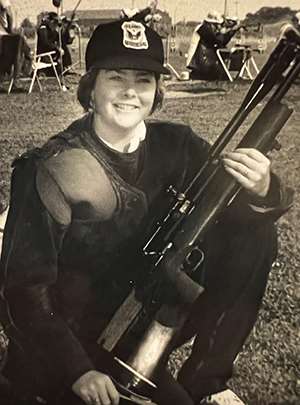
By the end of the third day, three shooters compiled 1600s and there was still no clear-cut leader. As is often the case in prone, no winner would be decided until the last day, and perhaps not until the last 20-shot string. Perfect scores and tiebreakers carried over into the final day, keeping crews busy in the scoring shed. Despite the number of 400 ties however, there were no 1600s and Mark Marinoff won the last daily with a 1598-128X. Carolyn Millard emerged the any-sight champion with her 3196-248X.
After all the fine shooting it was still not clear how the final standings would sort out. Former high power shooter and Marine Gunnery Sgt. Gary Andrade summed it up simply when he said, “One day, all the targets will be shot, and when they’re scored, we’ll find out who won.” Andrade’s statement was prophetic in that he turned out to be the winner, but not without a challenge that resulted in one of the closest finishes in National Match prone history. Andrade had quietly collected 6384 points, the same as Ron Wigger. After all the ties, the stat crew must have been relieved to find that Andrade had a five-X lead on Wigger and they would not have to delve into the least used and most obscure sections of the rulebook to determine the national open and service champions. Kendall finished third and claimed high civilian honors, Edie Reynolds was women’s champion and Web Wright, III, earned both collegiate and junior titles.
Marine CWO Ken Cooper, coming off a fine performance in the smallbore prone championship, kicked off the high power program with a win in the opening event, the President’s Match. After seven prior top 10 finishes, Cooper seemed to be heading down the same path when his lead evaporated after dropping three points at 600 yards in tricky winds. In the end, however, he eeked out the win by a three-X margin, marking the only Marine victory of the program. Army Maj. Ed Schumacher battled the same shifty conditions on his way to earning the Daniel Boone Trophy for his National Trophy Individual win, while All Guard and Army units won the National Trophy and Rattle Battle (NTIT) contests.
The NRA high power championship pitted two former champions going head to head. Patrick McCann and defending champ G. David Tubb, two of the most prolific performers in National Match history, did not disappoint this year. McCann was first out of the gate with his winning Vandenberg Trophy score of 795-27X while Tubb posted a 792. Mid-790 scores were fired in all three aggregates that comprised the championship, as Army Capt. Dave Erickson captured the Nevada Trophy with a 795 and a record 796 was fired in the Clarke Trophy Match by Anthony Scala. Tubb recorded a 794 in the Nevada and maintained a record pace through the Clarke aggregate matches. When Tubb laid down on the firing line for the last match, he had a two-point advantage over McCann. Once he was sighted in for the 600-yard Crowell contest, he methodically fired 20 shots in the 10-ring, collecting 10 Xs in the process.
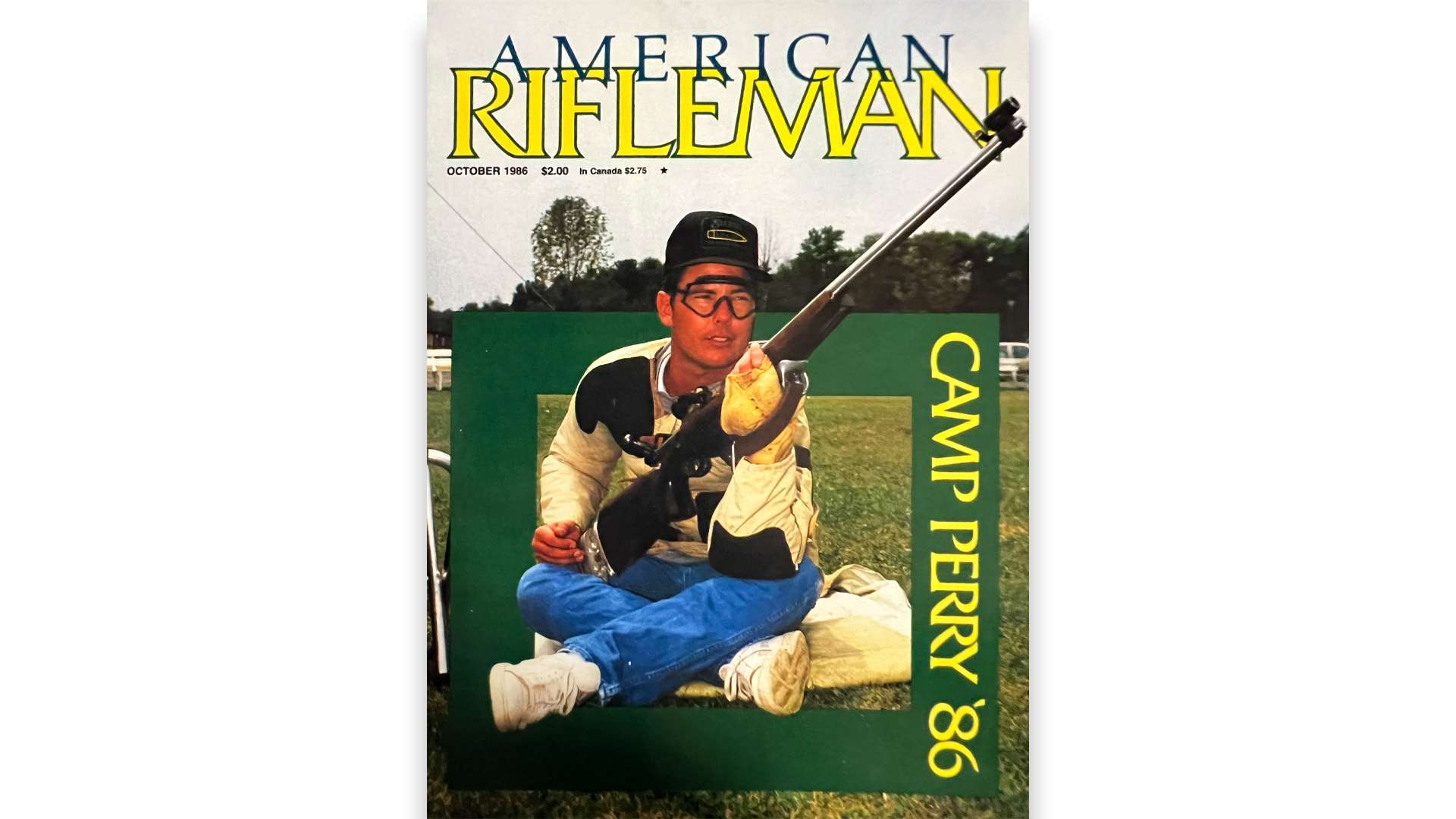
Tubb’s final 2380-107X upped the championship record by three while McCann finished three points back for second place. The Army’s John Mann was named service champion for his 2365 effort, followed closely by teammates Jeff LaRosa and Erickson for a top three service sweep. Mark Humphreville defended his police crown while Chris Vesy dominated the junior and collegiate categories, just as he did the year before.
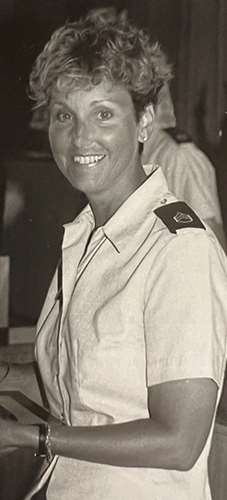
Nancy (Clark) Gallagher won her third women’s title and this year’s match may have signified the unofficial passing of the torch from seven-time champ Noma McCullough to Gallagher as the dominant woman high power shooter at the National Matches. While McCullough would still produce one more title, Gallagher was clearly on her way, despite a six-year absence from the Camp Perry firing lines, to establishing herself not only as the new force in women’s high power, but in overall competition as well.
1986 National Matches Fact
This year Lenore Lemanski and Carolyn Millard won the smallbore prone metallic and any sight championships, respectively, marking the first time in National Match history that women won both sub aggregates of the national prone championship in the same year.