WARNING: All technical data in this publication, especially for handloading, reflect the limited experience of individuals using specific tools, products, equipment and components under specific conditions and circumstances not necessarily reported in the article and over which the National Rifle Association (NRA) has no control. The data has not otherwise been tested or verified by the NRA. The NRA, its agents, officers and employees accept no responsibility for the results obtained by persons using such data and disclaim all liability for any consequential injuries or damages.
In this article, we reexamine having a custom rifle built with a specialized chamber. The number of possible topics to choose from is vast, but we will limit ourselves here to basic issues that will help newer shooters avoid pitfalls—while optimizing their ammunition and chambers. The previous article in this series provided some essential background information. Those of you who missed it are encouraged to read it before continuing.
Your carefully chosen, talented and knowledgeable riflesmith can be a tremendous resource. Some have many years of hands-on experience and feedback from shooters, which amounts to a database that is a veritable gold mine of information. However, it is important that the customer does their own research, too. Once a caliber has been chosen, for example, the customer should verify the correct twist rates for the bullet lengths (not weights) and velocities they may wish to shoot. Bullet stability and rifling twist rate calculators found online can be very helpful.
Why do this?
Here is an example—about 25 years ago, the author commissioned his first all-out, no-horses-spared, custom-built accurate rifle. Each part of this project was contracted with a specialist who was renowned in his field: bedding, metalsmithing, etc. The gunsmith who was the barrel specialist had a benchrest shooting background. As such, he habitually picked the slowest possible rifling twist rate that would get the job done. This practice can enhance accuracy by a smidgeon or two, which is critical in a sport that is as demanding of pure accuracy as benchrest.
Interestingly, most of this particular gunsmith’s rifles were purpose-built to fire at 300 yards and closer. This rifle, a ballistic twin to the 7mm-08, was intended for routine use at 550 yards (High Power Rifle Silhouette) and beyond (just for fun.) The gunsmith recommended a twist that the author knew would be borderline with the bullets he intended to use, and inadequate with any higher-BC bullets he might want to try later. Thus, he overrode the gunsmith’s recommendation, choosing a faster twist rate. The gunsmith took it in good humor, knowing that all shooter’s applications are not the same. However, if the writer had blindly accepted this gunsmith’s recommendation, the utility of his rifle would have been crippled. The gunsmith was quite knowledgeable—he just came from a different theoretical orientation.
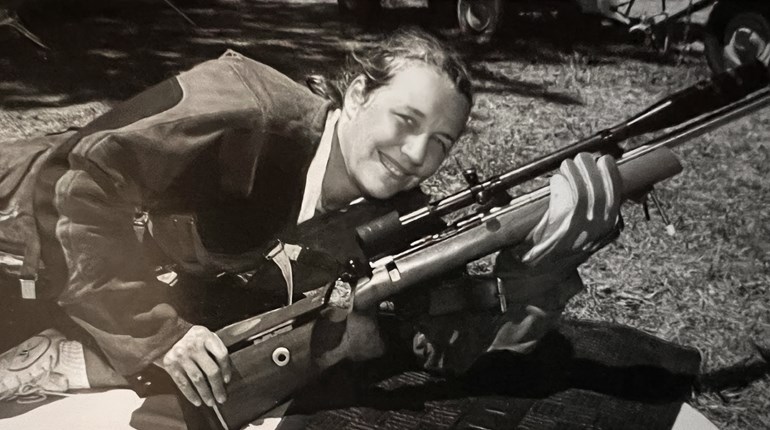
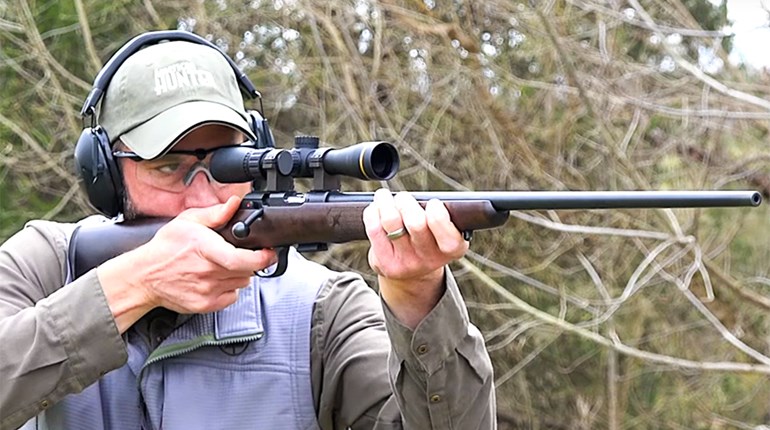
As it happened, shortly after the author had conducted preliminary load development with his chosen match bullet (150-grain BTHP), he was invited to a local 1000-yard prone match. Having no other suitable rifle, he grabbed his handy silhouette rifle (which weighed a scant 8-lbs. scoped) and some handloads, heading off in pursuit of long-range glory. The other competitors looked askance at what appeared to be an accurized, lightweight deer rifle, but the author was soon on target with his 10x scope.
The ammunition development really paid off—despite the bullet’s relatively low BC, the rifle was a stone tack-driver, and the bullets landed where aimed—point first! The little “deer rifle,” with a top-quality but featherweight-contoured barrel, scored far above last place on its’ maiden voyage at 1000 yards. The point is that if the rifle’s flexibility had been limited by a too slow rifling twist, this opportunity would have never arisen. Be careful to assess and balance primarily theoretical concerns with issues of real-world practicality and your specific needs.
In our next article, we’ll continue this discussion to help handloaders work with their riflesmiths for the best results.
SSUSA thanks the U.S. Army Marksmanship Unit for allowing the reprint of this article.
Most Popular