
The wait for a genuine U.S. military M14 finally has a month attached to it. January 2027.
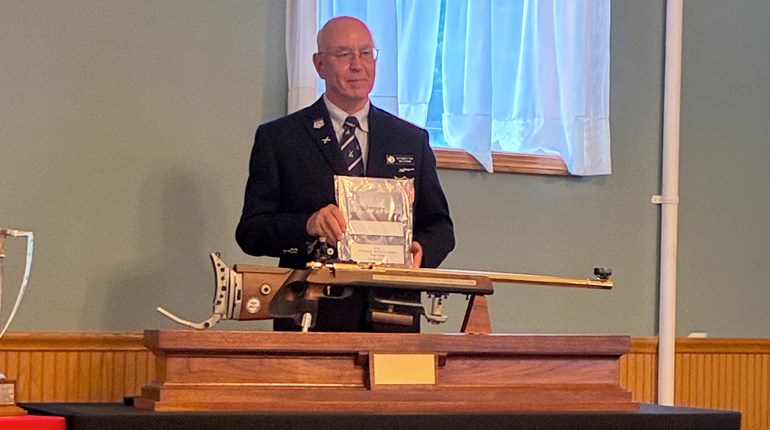
That date, along with nearly everything else fans have been arguing about since the Civilian Marksmanship Program’s late-July announcement, came from CMP CEO and board chairman Jerry O’Keefe in a video interview with Shooting USA’s John Scoutten recorded at Camp Perry. O’Keefe walked through pricing, quantities, purchase limits and the legal machinery behind a transfer that a lot of people assumed would never happen.
Let’s begin with the number everyone wants. Online speculation had settled somewhere between $3,000 and $5,000 per rifle, and O’Keefe shot it down without hesitation. A final price point hasn’t been set, but the ceiling has: less than $2,000. That figure is a function of both the CMP’s not-for-profit status and the sheer volume headed its way. The government will retain a portion of its M14 inventory for ceremonial and operational purposes, then transfer what O’Keefe described as the overwhelming majority. He put that figure at well more than 100,000 rifles.
Purchase limits will start conservative. Two M14s per person, per year, with the CMP prepared to revisit the cap once it sees how demand behaves. O’Keefe called it constrained on purpose, the goal being to spread rifles across as many eligible U.S. citizens as possible rather than let early orders drain the shelves.
Why January
CMP’s original announcement listed first order fulfillment as late 2026 to early 2027. Reaction to the news pushed that window to its back edge. O’Keefe said response across forums, websites and YouTube exceeded even the CMP’s own high expectations, which told the organization it needed several months to build a substantial inventory of converted rifles before opening the order window. Hence January 2027.
The Legal Path
Every M14 in the pipeline was originally serialized as a fully automatic firearm, which is precisely why this took years of groundwork. O’Keefe declined to wade into every layer of legal nuance, but he identified the load-bearing element plainly.
“We are a federally chartered not-for-profit, but that federal charter provides significant authorizations and exemptions that no other entity that sells firearms has,” he said.
No legislation had to be rewritten. According to O’Keefe, the pathway existed under current federal law and policy, and the CMP worked it in concert with its federal partners rather than around them. That collaboration extended to the mechanics of the conversion itself, with the CMP walking those partners through each step of the machining process so the end product would land squarely inside its enabling legislation as a permanently and irreversibly semi-automatic .30-cal. rifle.
One Rifle at a Time
There’s no shortcut here. Each rifle has to be individually converted, which means six figures’ worth of receivers passing through a shop floor under federal scrutiny. To manage it, the CMP is leaning on optical character recognition technology to read and log serial numbers as rifles move through conversion. O’Keefe said the system will let the organization know down to the second when any given rifle became permanently semi-automatic, and generate reports for any federal partner that requests them.
Shotguns and 1911s
M14 news dominated the conversation, but it wasn’t the only announcement O’Keefe made.
A provision in last year’s National Defense Authorization Act authorized a one-time transfer of surplus shotguns from the military departments to the CMP. All branches are working through their inventories now, and the Army is furthest along. O’Keefe expects between 2,000 and 3,000 shotguns from the Army sometime this fall. Buried in that batch are 438 Winchester Model 1897 trench guns, a detail that should get the attention of Cowboy Action shooters and collectors alike.
Pistol buyers get relief, too. CMP’s lifetime limit on 1911s, which started at two per person and moved to four, sunsets at the end of this year. Beginning in January 2027, the limit becomes two per person per year, opening the door for anyone who long ago maxed out. Inventory, O’Keefe added, remains strong.
Where the Money Goes
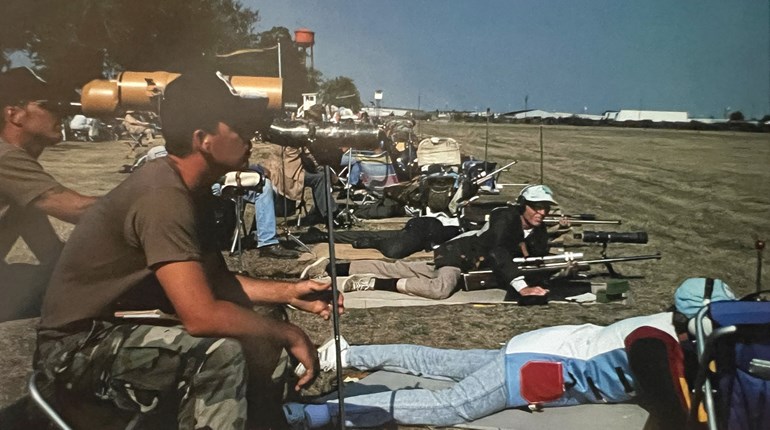
For competitors, the through line matters more than the hardware. Firearm sales underwrite the rest of the CMP, and O’Keefe made the case while standing at Camp Perry with 4,000 shooters expected to compete on the ranges around him.
“Above and beyond the fees that we charge them, those don't come close to covering all the costs,” he said.
Rifle and pistol pipelines cover that gap. Between M14s, reclaimed M1s and other rifles, the 1911 inventory and now shotguns, the CMP has multiple sales channels to fund competitions, training, education, summer camps, the Camp Perry expansion, $1 million in scholarships and its partnership with the Wyoming State Shooting Complex.
There’s a competitive footnote worth remembering, too. M14 variants owned High Power Service Rifle from the mid-1960s into the mid-1990s, and the rifle’s civilian descendants have been a fixture on high power firing lines ever since. Come January, the originals join them.
Ordering procedures, grading, pricing and sales channels will be published at thecmp.org.