
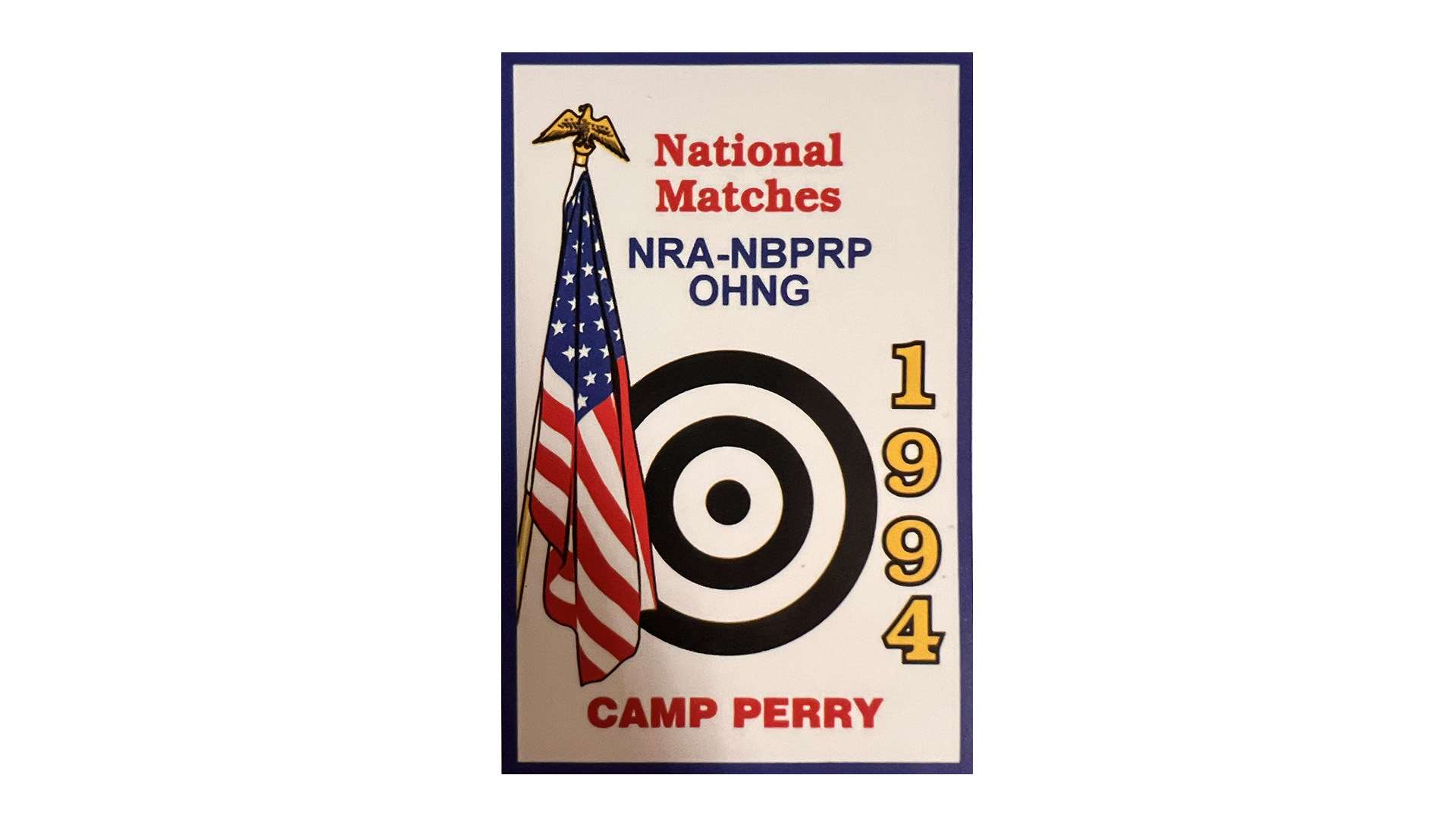
Newspaper reports in spring of 1994 strongly suggested that this year’s National Matches at Camp Perry would be the last. After the DCM narrowly escaped elimination in 1993, the Department of Defense withdrew its support of the National Board this year and Army officials recommended that a $2 million dollar phase-out process of the DCM program begin after this summer’s National Matches.
“This may be the last of the National Rifle Matches held at Camp Perry.”
—Port Clinton (Ohio) News Herald, March 29, 1994
“The future of the National Rifle and Pistol Matches … is looking bleaker than ever.”
—The (Ohio) Blade, March 30, 1994
“The matches are worth saving … they just are questionable as a tax-supported activity.”
—Port Clinton (Ohio) News Herald, March 31, 1994
“… this is expected to be the last year for the matches, which span nearly a century … Congress has been slowly pulling any support of the DCM in the wake of military budget cuts and the growing anti-gun caucus.”
—Port Clinton (Ohio) News Herald, April 6, 1994
Military support of the National Matches was critical to any procurement of federal funds and the Army’s withdrawal fueled talk of the event’s demise. In May, NRA National Match Coordinator Ed Andrus responded to questions about the future of the National Matches with no DCM: “Of one thing you may be sure, we [NRA] are intent on keeping the Matches going.” Andrus, who marked his 35th consecutive year of association with the National Matches in 1994, was both adamant and sincere in his statement. His commitment to the National Matches was unending, and the shooting community suffered a great loss upon Andrus’ death in October.
In early July 1994, an amendment to eliminate National Board funding was defeated and DCM funds were again available to help conduct the National Matches. But over time, anti-gun legislators had successfully chipped away at the military core of the National Matches. With the connection severed, other avenues needed to be explored.
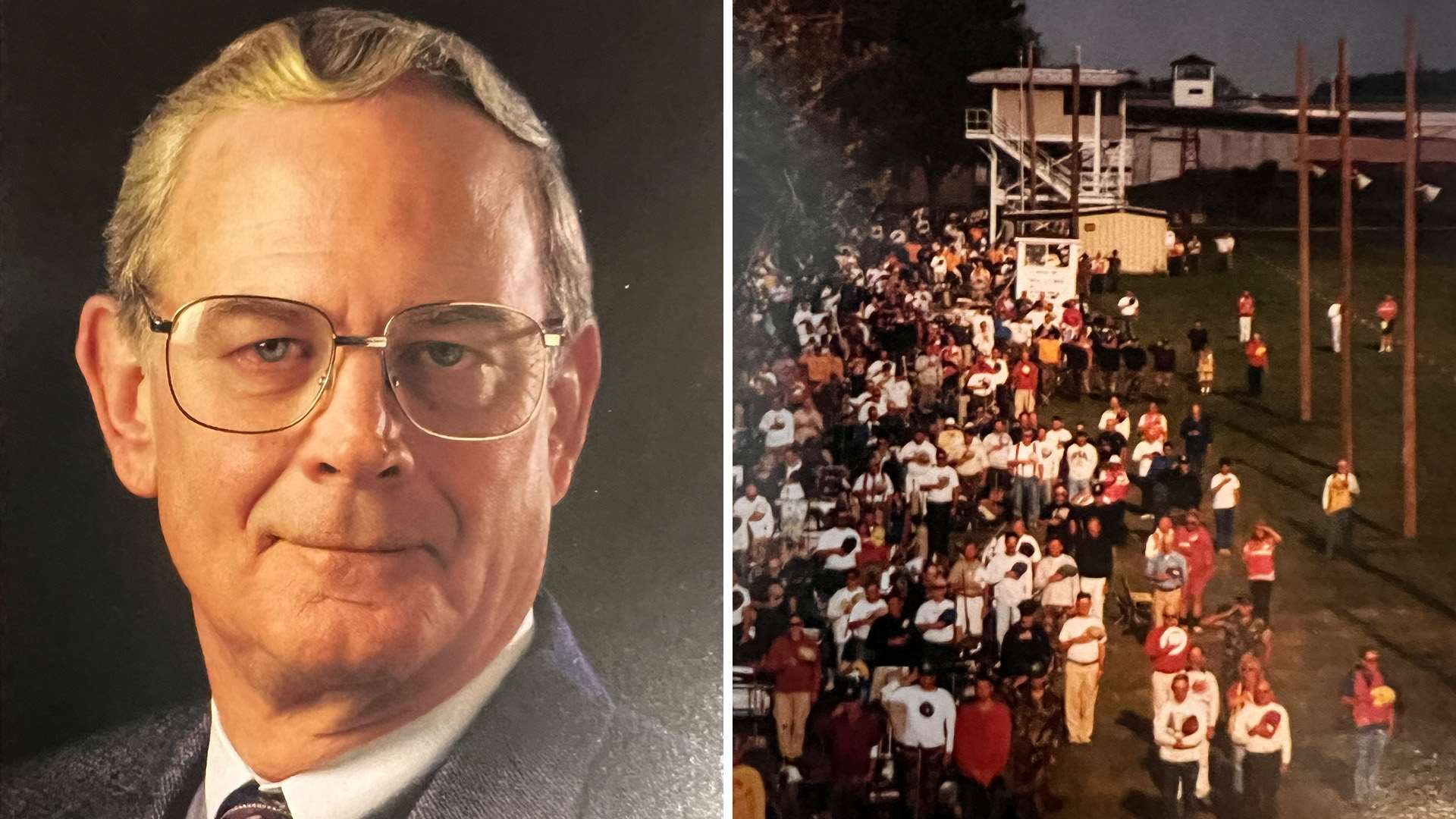
Not coincidentally, this was the year when the organization Friends of Camp Perry was created to help promote and preserve the programs and history associated with the National Guard training site. Outside awareness and support of Camp Perry was especially critical to the future of the National Matches and local officials, fully aware of the positive impact the National Matches had on their area, coordinated letter writing campaigns and trips to the nation’s capital in order to retain the prestigious program at Camp Perry.
Master Sgt. Steve Reiter certainly had what it took to retain the Harrison Trophy, emblematic of the national pistol championship. The Army Reservist’s 2651-128X score was not only good for a title defense, but a third national title in four years. Only X-count kept Reiter from victory in both the .22 and .45 Championships and his cumulative effort was four better than teammate Darius Young, who finished second this year as well as the other two years in which Reiter won the title (1991, 1993).
Fellow Reservists Jim Bob McCarty and Ruby Fox topped the service and women’s categories and for Fox, who swept all three aggregates in her class, it was the 11th time she was named national women’s pistol champion and awarded the Alexander Memorial Trophy. Junior John Bickar performed an aggregate sweep of his own en route to his successful title defense, while Al Dorman and Ed Williams topped the civilians and seniors, respectively.
In team competition, Marines held true for the NRA Aggregate title and finished second to the National Guard in the Board contest, while the Corps fielded winners in both National Trophy individual events—Sgt. Brian Zins topped the President’s field and CWO Paul Malsbury won the National Trophy Individual Match.
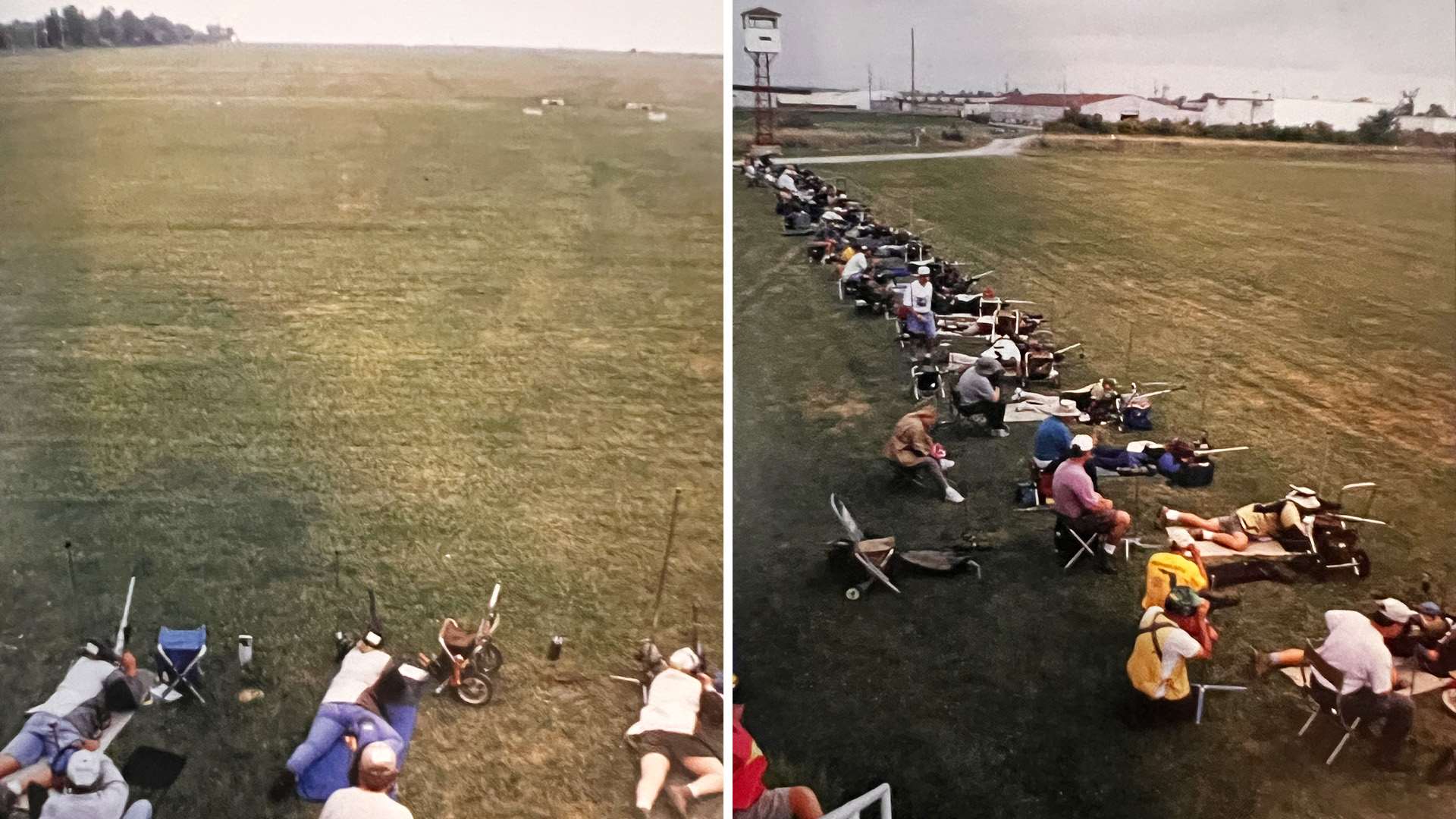
The weather during the opening phase of smallbore was indicative of the event in many ways. For most of the three days it was outstanding, as was the shooting. The brief violent burst of wind and rain that tore down a section of the shooters’ awning and upset several target carts during the afternoon of the first day, however, proved symbolic of the new records that swept away the old in a new post-Wigger era in three-position.
After a winning iron prone score of 394 by Sgt. Kendall Goben of the U.S. Army Marksmanship Unit, Capt. Mike Anti took over in the standing match and did not relinquish, despite the later combined assault of Sgt. Lance Peters and civilian Ken Benyo. With a 383 kneeling score, Anti eclipsed Benyo’s record from the year prior to secure the metallic sight championship with 1147, five points higher than the previous mark set in 1993 when Jim Meredith won the national position title.
Even though Anti had been pressed by Peters and Benyo, he posted high scores that did not win matches but, when totaled, gave him a national any sight championship record score of 1156-50X. Setting two daily records in a two-day match naturally ensured a new aggregate record and in Anti’s case, he smashed the existing mark of 2281-83X set by Lones Wigger, Jr., in 1992 with his 2303-91X. In a tournament comprising six fired matches, two sub aggregates and a grand aggregate, Anti set an amazing four records in five wins.
Joining Anti, the new open and service champion, on the awards stage was Benyo, who took the civilian title and Army Lt. Kristin (Peterson) Frazer, who earned her second straight women’s title. Fred Cole won his seventh consecutive senior crown while Eve Gestl kept family tradition alive when she won the collegiate title, a crown her brother Erin previously wore for three straight years.
A very traditional order of matches had been followed since the re-institution of the 6400-point prone aggregate in 1966, but 1994 was different once it was decided to alter the order of firing and begin with the Dewar, followed by the 100-yard match, the Meter match and the 50-yard event. (Previously, the order was 50-yard match, 50-meter match, Dewar, 100-yard match.) The reasoning for the switch was to fire the long matches earlier in the day when the effects of wind and mirage would be minimized.
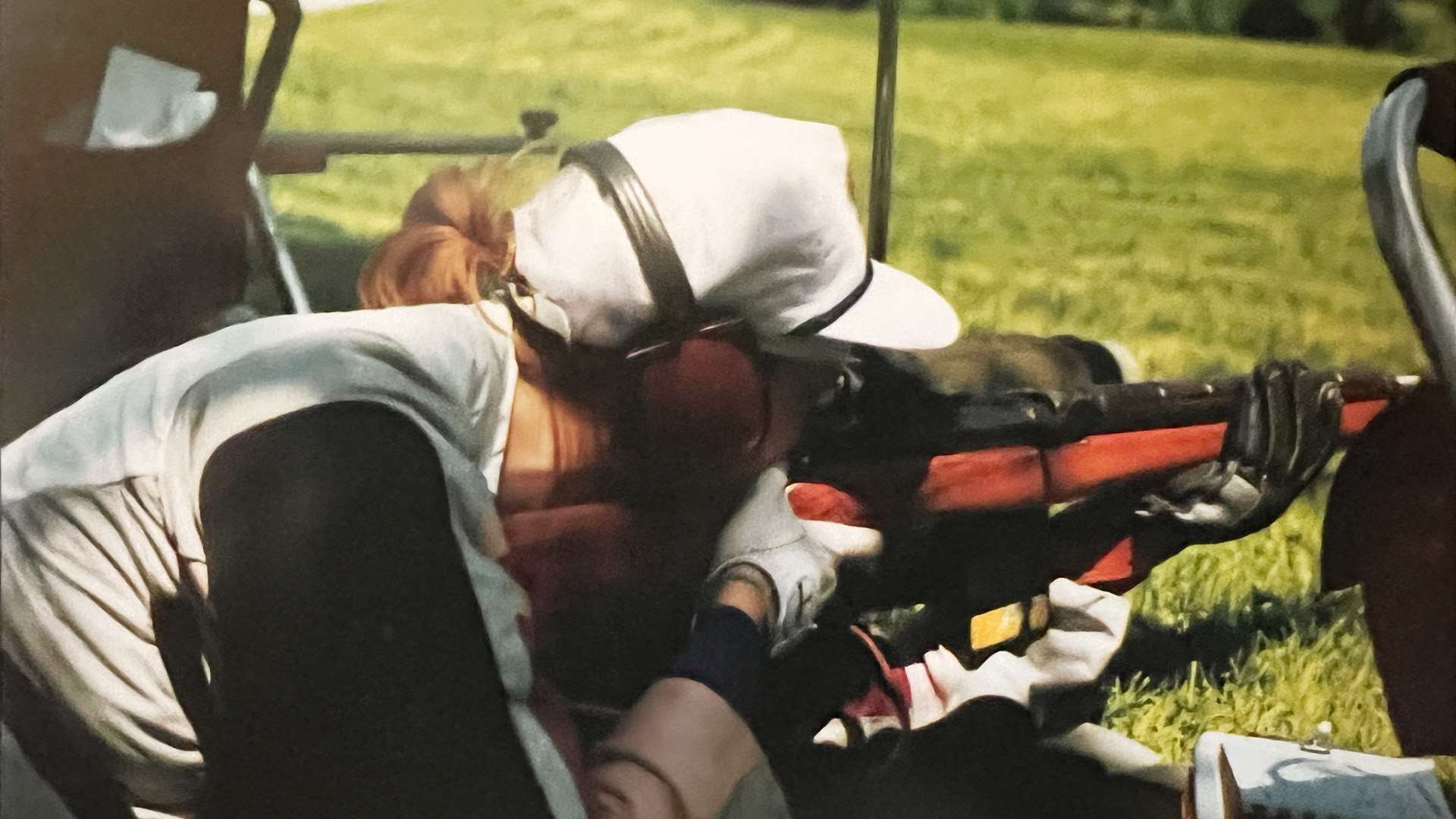
Fresh off her position win, Frazer fired a 400-36X in the Dewar, followed by 400s and match wins by Lenore Lemanski, Ken Johnson and Cory Brunetti. At the end of the day Frazer stood atop the field with a 1599-125X while Brunetti topped the second daily with a 1599-118X. Conditions were not the best, as noted by the fact that there were no 1600s. And it was Johnson who kept Frazer at bay by two points to win the metallic sight championship with a score of 3197-244X.
Once any sight competition began after team day, position champion Mike Anti won the third daily aggregate with a perfect 1600-144X while Carolyn Millard-Sparks, the defending national prone champion, collected the final aggregate with a 1600-142X, which helped secure the women’s any-sight championship but was not enough to claim the Remington Trophy for the women’s prone title, an honor that went to Lemanski for the fourth time in her career. With the win, Lemanski broke a tie with her sister Bobbie Vitito, who had also won the award three times. Lemanski won her first Remington Trophy in 1959, proving that experience should never be underestimated.
T.R. Bishop, the 1990 prone champion, won the 1994 Schweitzer Medal as high civilian, while the gold medal for service honors and, on its 60th anniversary in competition, the Critchfield Trophy for the open championship was awarded to Ken Johnson. Johnson’s first national title came a year after he finished second overall in the prone championship and in an odd twist, this was the second time the Critchfield Trophy was presented to a Kenneth Johnson. In 1956, J. Kenneth Johnson was crowned the national champion. It is rare enough that a name appears twice on the trophy but that the same name belongs to two separate riflemen is noteworthy.
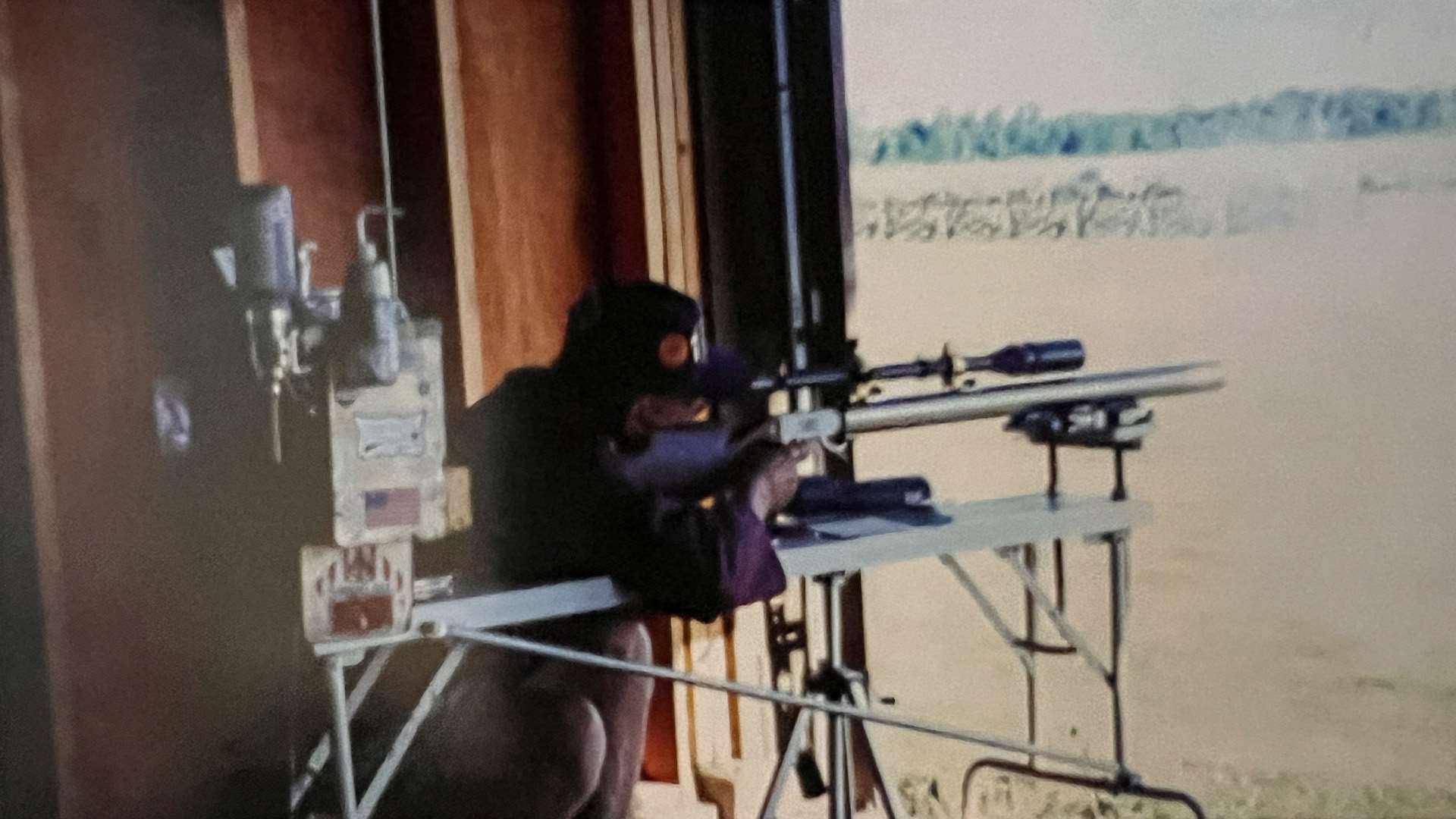
Like Johnson in smallbore prone, Mitchell Maxberry finished second overall at the 1993 National Matches—in high power. And just as Johnson was able to grab the brass ring this year, so too did Maxberry. This year Maxberry reversed the 1993 order of finish when he posted a 2372-98X to eclipse defending champion G. David Tubb by six. Behind Tubb by just three Xs was perennial women’s champion Nancy Tompkins-Gallagher, whose performance included a record 200-18X in the 600-yard Air Force Cup Match.
Maxberry’s ability to offset a sub-par performance (782) in the Nevada Trophy Aggregate with wins in both the Vandenberg Cup and Clarke Trophy Aggregates surely made his breakthrough win all the more satisfying in a year where weather played its familiar antagonistic role. In fact, two days after the NRA championship was won with the lowest score in five years, Wimbledon Cup and Herrick Trophy Team competition was called off due to the bad conditions.
A breakthrough of another sort took place during the high power program when Army shooters tallied some impressive victories using M16s. Army Spl. Christopher Hatcher kicked things off with a win in the President’s Rifle Match followed a few days later by Sgt. 1st Class Kenneth Gill’s victory in the NRA service rifle championship. Gill’s win broke the Marines’ three-year stranglehold on the title and came just a year after M14s dominated the firing line at Camp Perry. Gill also fired the high rapid-fire aggregate (1197) in the championship for the McCann Trophy.
Staff Sgt. David Kerin of the Army National Guard followed his second place President’s Match finish with a victory in the National Trophy Individual Match for the Daniel Boone Trophy. Army Reserve Gold finished just out of the money in both Board team events when the Marine’s Gold unit prevailed by two in the National Trophy Team Match and All-Guard Bowman edged them in the Rattle Battle.
The 1994 long-range championship did not factor in a Wimbledon score since the match was canceled, but Gary Hudson’s 600-yard scores from the high power championship, when combined with his Leech Cup and winning Palma Individual scores, earned him the Tompkins Trophy. The Centenary Trophy and Canadian Cup were also his as the result of his fine long-range aggregate performances. As for the Leech Cup honor, Robert Gustin, Jr., nabbed the victory with a 197-8X and 99 shoot-off score, while the service rifle equivalent for the Porter Trophy went to Marine Reservist Allan Lederman with a record 199-10X and 98 shoot-off.
1994 NATIONAL MATCHES FACTS
Premier long-range shooter Nancy Tompkins-Gallagher, who placed third overall in the 1994 NRA high power championship, showed her versatility as a shooter when she not only crossed disciplines but posted a win with a 400-37X score in a 50-meter match during the smallbore prone championship.
The Department of Defense Authorization Act for Fiscal Year 1996 was introduced in the 104th Congress during the 1994 NRA High Power Rifle Championships, setting in motion the process by which the Civilian Marksmanship Program would no longer be conducted by the Department of the Army.