
The last National Match program of the 20th century featured the greatest one-year attendance increase in 15 years. And topping the field of nearly 3,800 shooters was a group of distinguished marksmen responsible for some of the finest National Match performances in their respective disciplines—Steve Reiter won his fourth national pistol title, Troy Bassham defended his smallbore position crown, Lones Wigger, Jr., won smallbore prone title number seven, G. David Tubb captured his eighth high power championship and defending national high power champion Nancy Tompkins-Gallagher earned her third long-range title.
Something rarely accomplished in National Match history nearly became a reality when Al Dorman, a civilian, appeared poised to win the national pistol championship. Dorman, who won the .45 Championship in 1998, led this year’s championship race entering the .45 stage. But Army Reserve Master Sgt. Reiter, who entered the final stage in fourth place, saved his best for last and fired a field-topping 887 for the aggregate win en route to his fourth national title. Dorman, conversely, fired an 867 and dropped out of title contention with his 2625 total, which placed him fourth among the high master civilian class. Center-fire champ Sgt. Keith Sanderson finished eight behind Reiter’s 2638-133X for second overall while Army Maj. Steven King placed third. In addition, perennial title contender Darius Young, who fired the record .45 aggregate score (892) six years earlier, nabbed high civilian and senior honors.
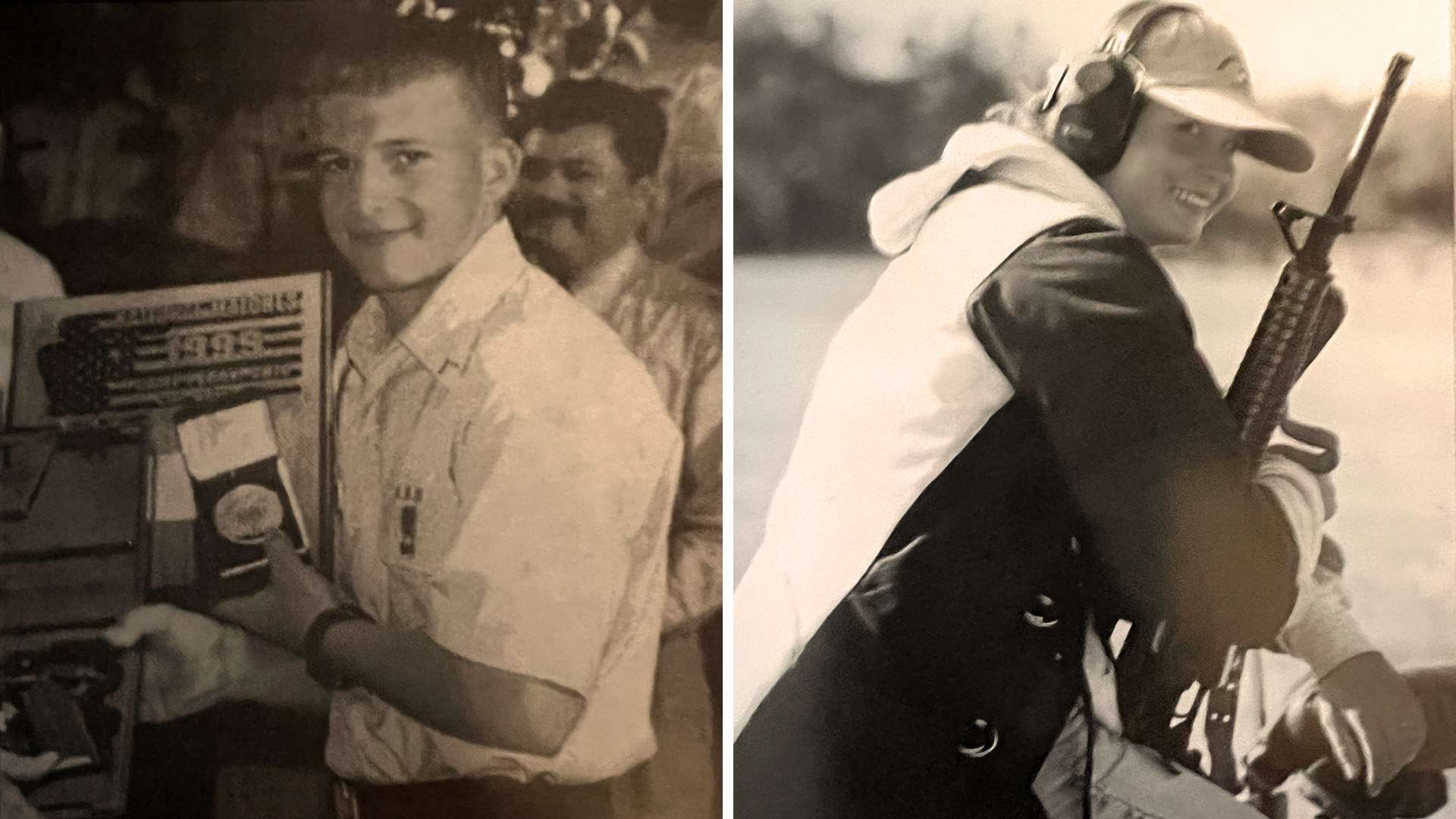
Like Reiter, women’s champion Ruby Fox won a title with a late surge. Fox’s win came against Kimberly Hobart and marked the Army Reservist’s sixth consecutive title and 17th overall in a 24-year span. Former collegiate champion John Bickar topped the category again this year while Pvt. Adam Sokolowski repeated as junior champion. Sokolowski, 19, won all three junior aggregate titles and confidently stood toe to toe against more than 500 others in the National Trophy Individual Match to claim the Gen. Custer Trophy before joining his U.S. Army Marksmanship Unit teammates in the winning Gold Cup effort for National Team honors.
Competing as a civilian, Young won the first CMP-sponsored event fired, the President’s Pistol Match, a day after firing the highest individual score among the top three teams and contributing to a rare civilian win in the NRA Team Aggregate Match as a member of Team Ultra Dot along with Jerry Chaney, Lawrence Carter and Ron Steinbrecher.
Any year that ends in nine is symbolic to the smallbore championship as it records the passage of another decade of competition since the initial matches at Caldwell, New Jersey, in 1919. This 80th anniversary year also marked the end of a century in which Lones Wigger, Jr., was the leading force in U.S. shooting. The position matches, part of the National Match program since 1957, had been Wigger’s domain from 1963 until his retirement earlier this decade. Over a 30-year span, 21 national position titles were won by Wigger and a title defense by anyone else was nearly impossible because apart from 1989 and 1990, Wigger never went more than one year without a title.
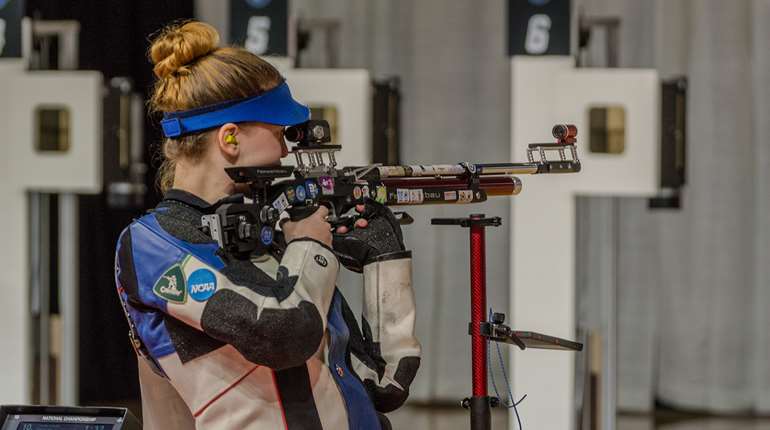
In 1999, Army Staff Sgt. Troy Bassham became the first smallbore shooter in the post-Wigger era of the National Matches to notch back-to-back position wins. His title defense got underway with a kneeling match victory and a metallic-sight championship score that put him in front by a slim two-X margin.
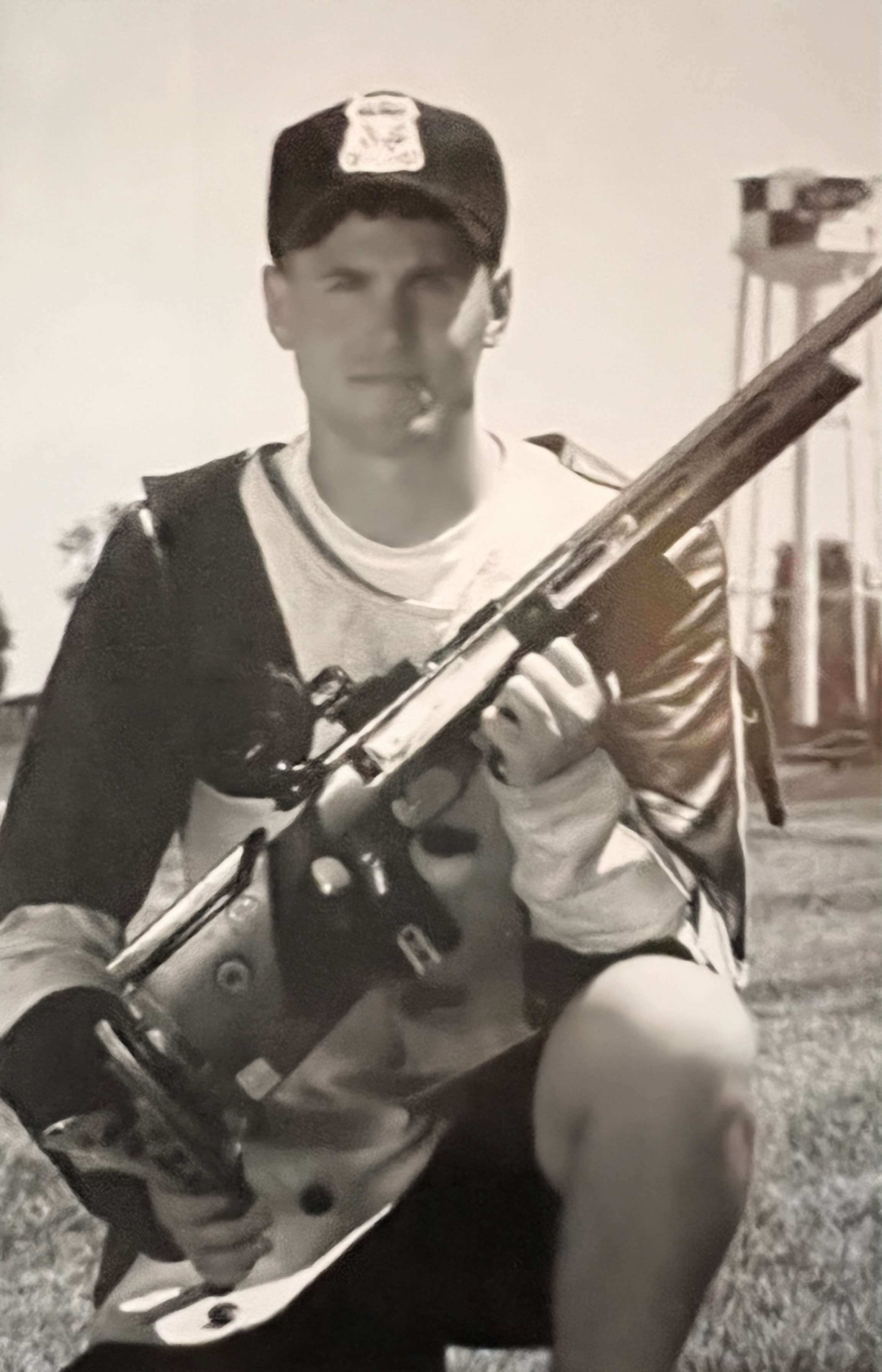
In any-sight competition, Bassham followed the opening prone match win by 1994 national champion Maj. Michael Anti with wins in standing and kneeling, the former in record fashion. And so, after two days and three match wins, Bassham produced a score of 2301-83X for his second consecutive position title and service championship. Another dual category winner was Jean Foster, daughter of Olympian Jack Foster, who claimed both the civilian and women’s titles with a 2286-90X. Fred Cole retained his seemingly indomitable grip on the senior crown while Shane Barnhart, who held his own grip on both the junior and collegiate categories for the past few years, took the collegiate title again as Nicole Allaire fired her way to the top of the junior field.
Things were hot in more ways than one during the prone championships. With temperatures scorching enough to bubble up the tar on Lawrence Road, the always cool Lones Wigger, Jr., shot a blistering 6398 with 533 Xs to win his seventh national prone title. Wigger set the tone, and pace, of the matches on the first day of the metallic sight stage with a perfect 1600-134X. His nearest challenger was his son, National Guard Maj. Ron Wigger, at 1599-122X. The elder Wigger also won the 50-yard match with a 400-38X while Paul Nordquist won the Dewar with a 400-36X. Trevor Gathman and Geoffrey Regan then topped the 100-yard and 50-meter matches, respectively, with perfect scores.
The second day’s aggregate went to 1993 national champion Carolyn Millard-Sparks with a 1600-125X and despite dropping two points, Wigger stood atop the scoreboard with a two-day total of 3198-267X after a brief period when it seemed he was out of the running altogether. The combination of Wigger’s experience, rock steady hold, McMillan-barreled Anschutz and Federal Ultra Match ammunition resulted in groups so tight that scorers initially thought one of his targets was shy by a shot. It took a challenge and re-examination of targets and backers to find the bullet hole before the Hoppe Memorial Trophy for the metallic sight championship was again Wigger’s.
The weather conditions, while extremely hot and humid, were conducive to good shooting as the large number of 400s and high X counts would attest. And in a prone match, particularly one where almost 300 of the nation’s best are in attendance, no lead is a safe one. After a break for team competition, the prone championship resumed with any-sight contests and by the final day, neither the high temperatures nor quality of shooting let up. Army Staff Sgt. Anthony Leone led the way with a 3200-277X to win the U.S. Cartridge Company Trophy for the any-sight championship and his final score of 6396-525X was good for the service honor and third overall.
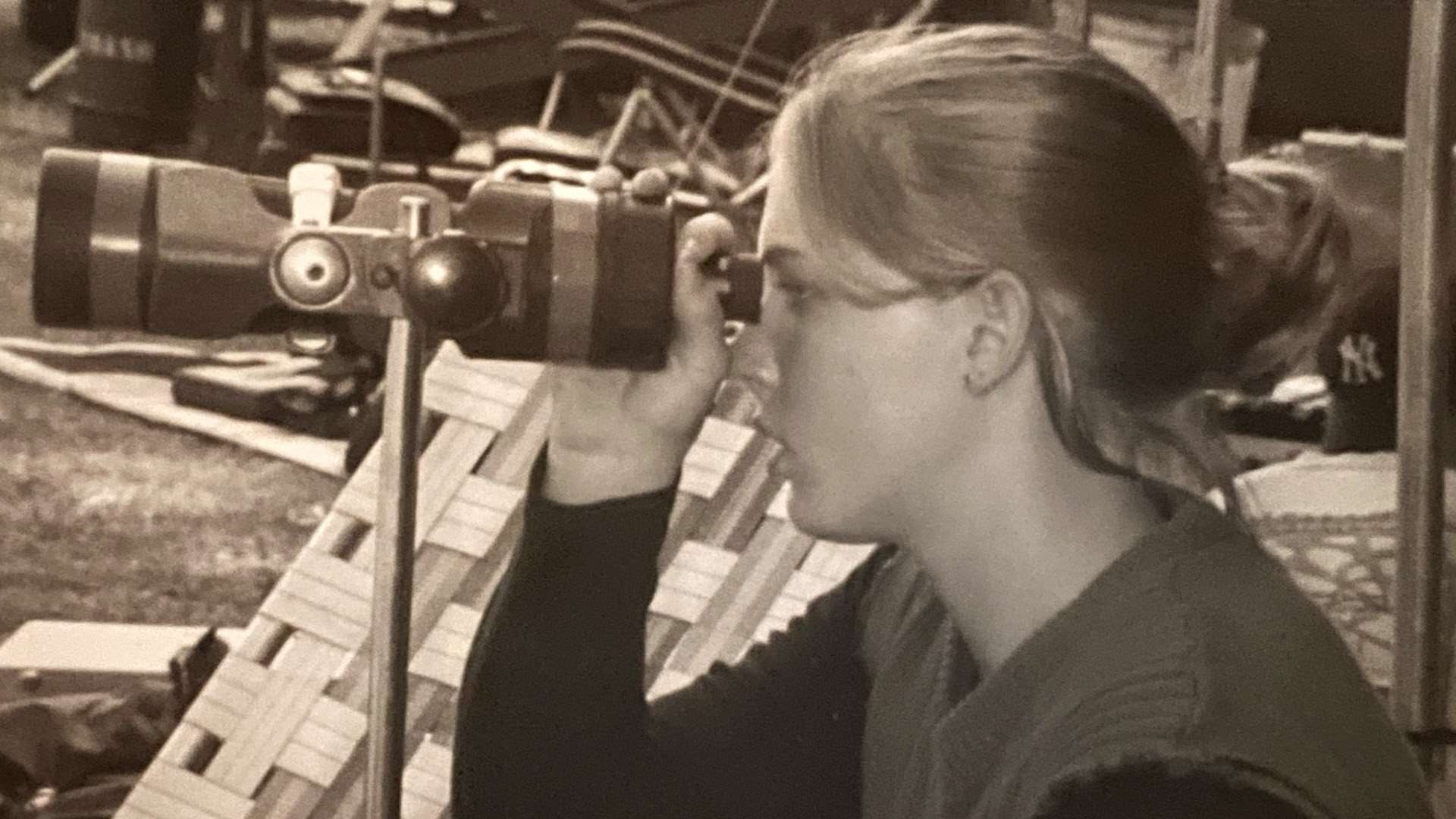
As Wigger hammered the iron sight aggregate and Leone the any sight aggregate, women’s champion Millard-Sparks quietly shot plenty of Xs, 10s and just four nines to take second overall with a 6396-531X, six Xs ahead of Leone. Jim Hinkle was awarded the Sam Bond Trophy as high senior while Barnhart repeated as collegiate champ and Mike Beyerle topped the juniors.
With another championship win this year, G. David Tubb closed the chapter on a decade in which he captured half of the 10 possible national high power titles. Overall, it was his eighth title since 1985 and his emergence as a preeminent force in high power was undeniable.
Firing a Winchester Model 70 in 6.5 mm-08 fitted with a stock of his own design, Tubb grabbed the early lead with a Vandenberg Cup victory, the first of three aggregates that comprise the championship. Combined with his runner-up finishes in both the Clarke and Nevada Aggregates, Tubb’s 2377-115X score bettered Bert Medina’s second-place tally by nine. Medina’s performance did net him the Erdman Trophy for the high aggregate score from the standing matches while Tubb earned the McCann Trophy for the high rapid-fire aggregate.
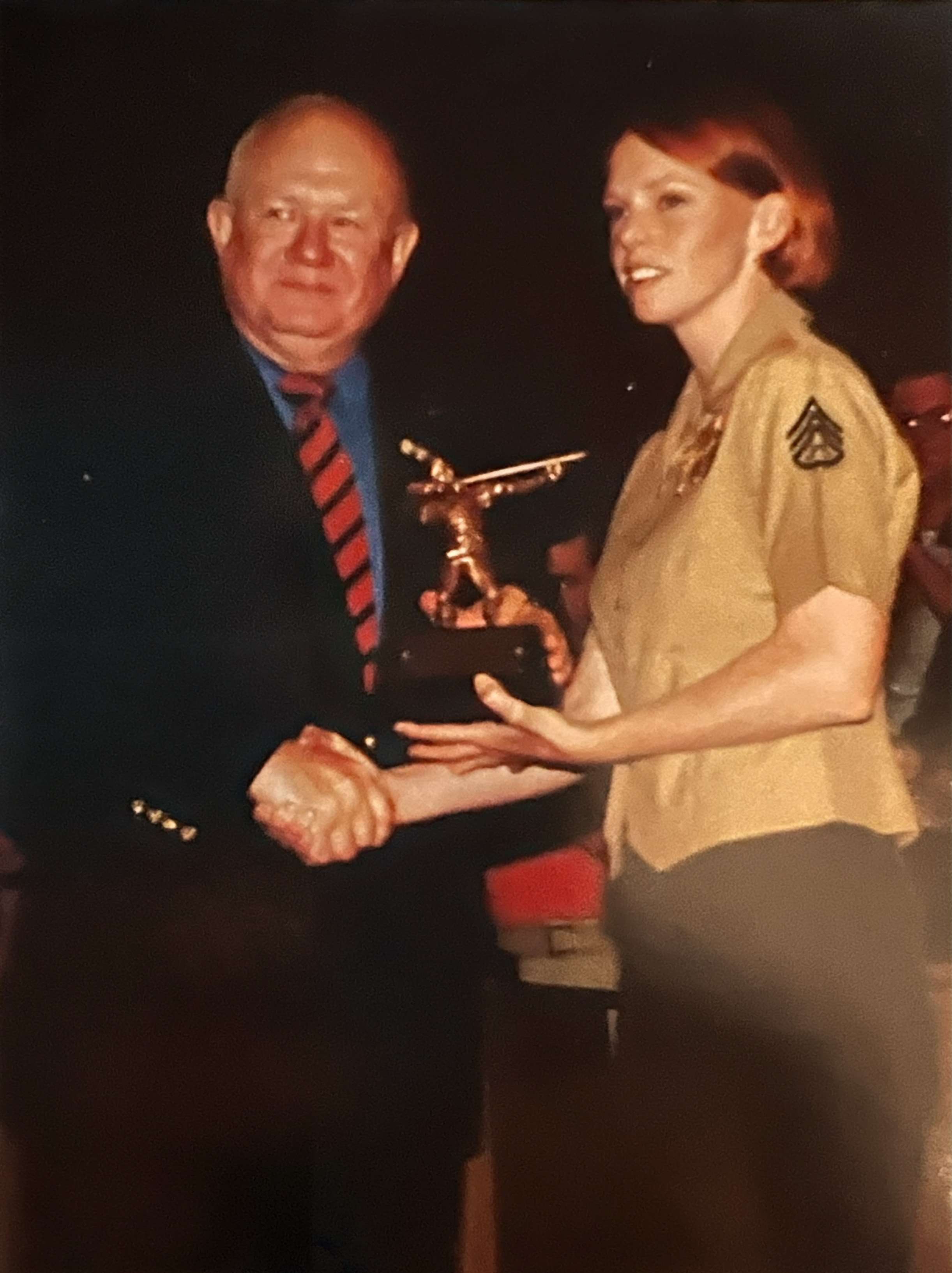
Five-time champ Carl Bernosky, possessor of the championship record score (2385) since 1992, finished 10 behind Tubb for third while six-time champion Mid Tompkins captured his second straight senior title. Title defenses also went to Medina in the police category (fourth consecutive) and to Nancy Tompkins-Gallagher for women’s match rifle. But Tompkins-Gallagher, who won the overall prize the year before, did not fire the high women’s score this time around because Marine Staff Sgt. Julia Watson fired a higher service score. In fact, just as Tompkins-Gallagher made National Match history in 1998 as the first woman to win the overall high power championship, Watson became the first female DuPont Trophy recipient this year with her overall service win.
Just the year before, Watson had become the first woman to win the National Trophy Individual Match. And while the Daniel Boone Trophy for high score in the event this year went to Army Sgt 1st Class Kevin McMahon, Watson fired on the winning National Trophy Infantry Team. USAMU Bentson, with McMahon a member, won the National Trophy Team Match and the first CMP rifle contest of the program—the President’s Match—went for the second time to Army Master Sgt. John Chubb, who first won the event in 1995.
The Tompkins Trophy for the long-range championship stayed in the family for a third straight year as Tompkins-Gallagher succeeded her daughter Michelle Gallagher, age 18, (who succeeded her mother the year before). Extending the talented bloodline even further, younger daughter Sherri Gallagher, age 15, won two of the three 600-yard matches from the NRA High Power Championship that factor into the Long-Range Championship Aggregate. The teens also finished second and third in the Wimbledon Cup Match, which was won by George Sutton, while their mother won the Leech Cup. The Roumanian Trophy Match proved the ultimate family showcase at 1,000 yards as Mid Tompkins and Tompkins-Gallagher teamed with Michelle and Sherri Gallagher for the win.