
With the privatization of the Civilian Marksmanship Program (CMP) in 1996, all National Board and National Board Trophy references were eliminated from the match program this year. Instead, the match schedule’s full complement of shooting opportunities featured CMP National Trophy Matches.
By now, NRA National Matches Coordinator M.S. “Gil” Gilchrist and Director of Civilian Marksmanship Michael Robertson were well acclimated in their respective positions and it proved beneficial given the arduous task at hand—increase National Match attendance in the wake of the CMP privatization and potential decrease in shooter services. (From 1997 to 2003, total National Match attendance increased by more than 1,000 shooters.)
On a more ceremonious note, this was the 90th year since the National Matches were first fired at Camp Perry and among the nearly 3,400 competitors on hand, Lones Wigger, Jr., and G. David Tubb celebrated with personal milestones as both won national championships and established unprecedented title counts in the process.
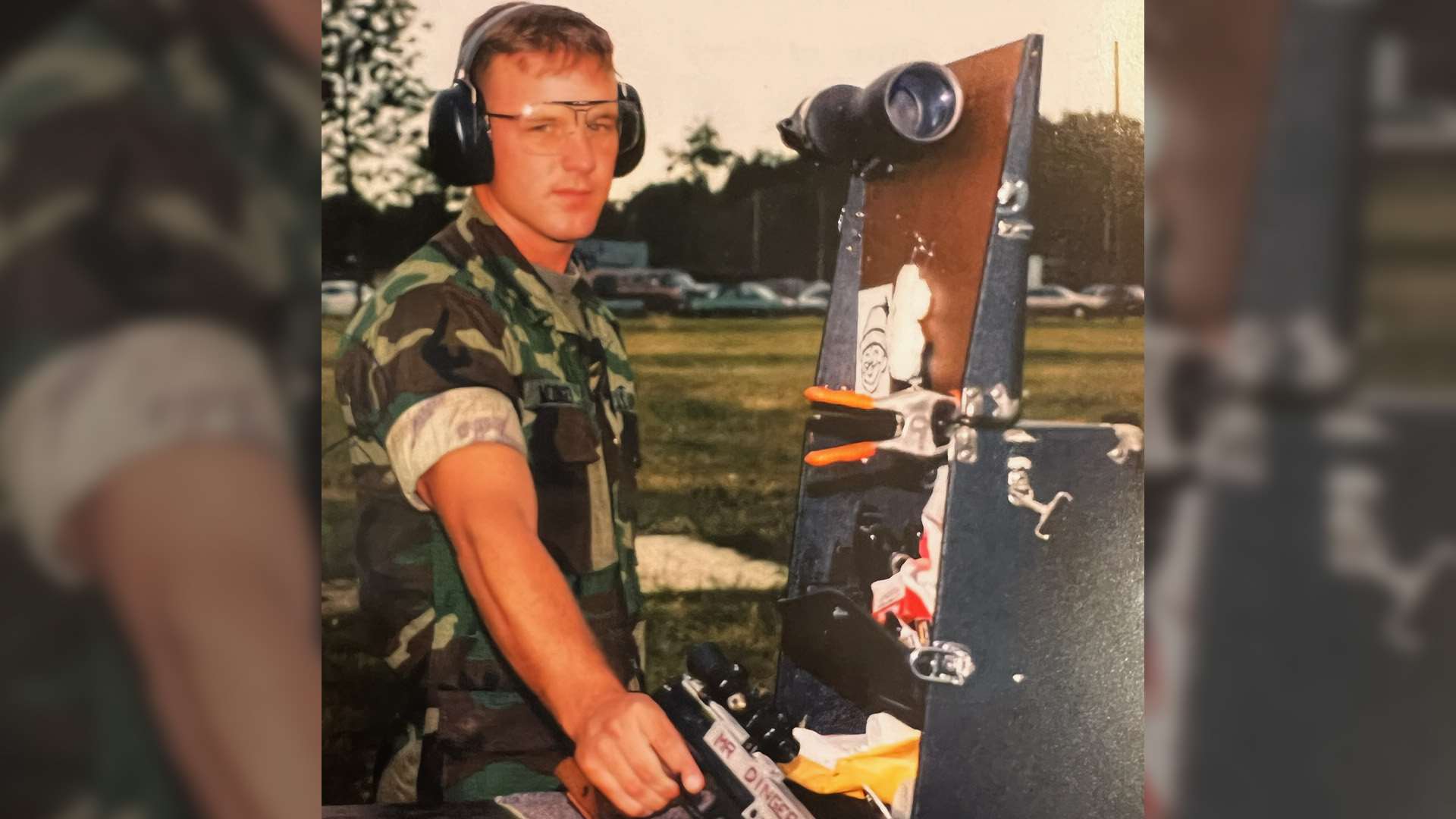
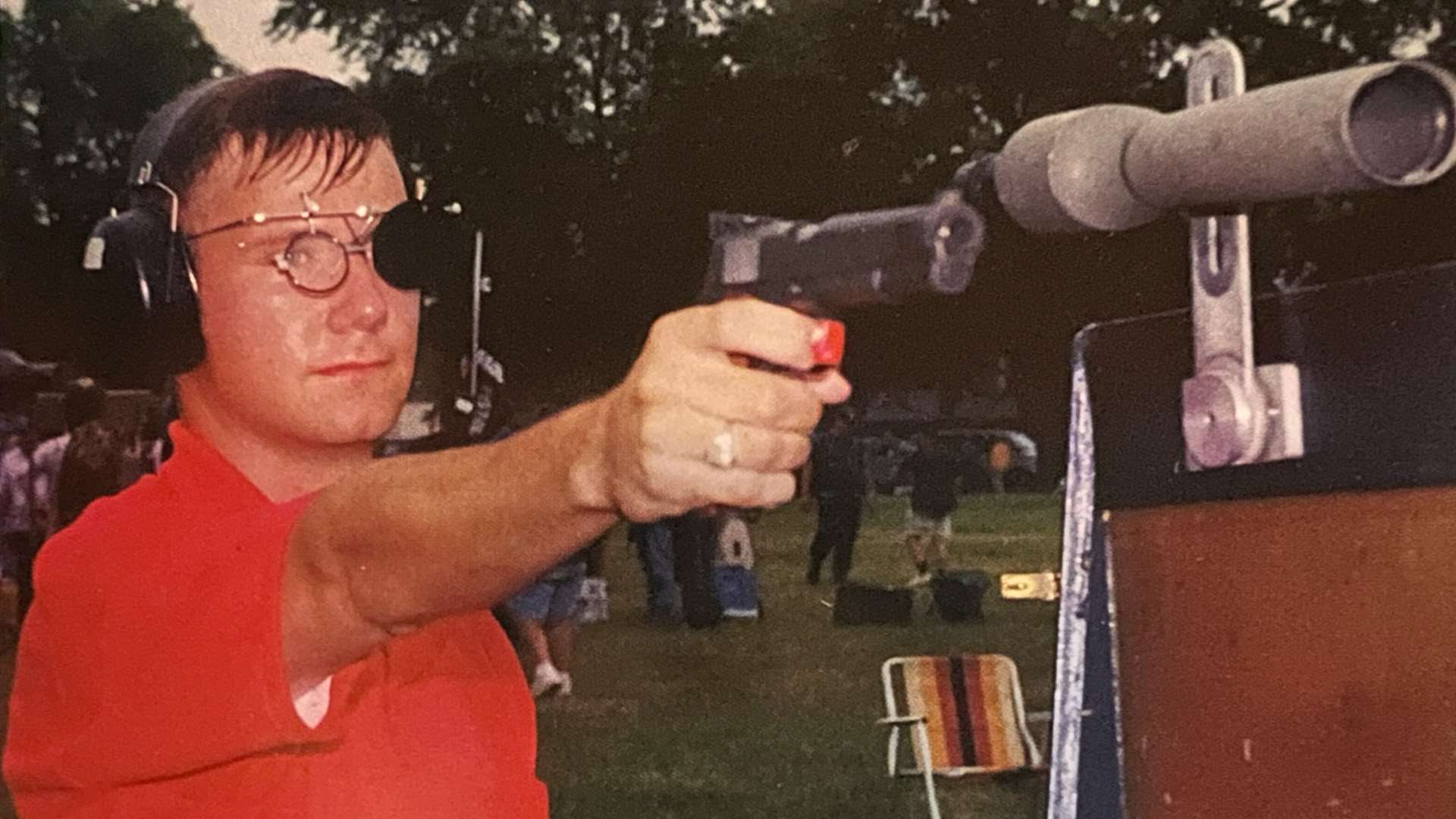
A notable occurrence also took place in pistol when Sgt. Jason Meidinger became the second Marine in as many years to claim the title of national champion—the first time Marines won back-to-back handgun crowns. Prior to this year, just four Marines had ever won the championship in the 60-plus years the event had been fired (Bill McMillan in 1957, Frank Higginson in 1970, Mario Lozoya in 1992, Brian Zins in 1996) and Meidinger’s turn on the podium came in convincing fashion.
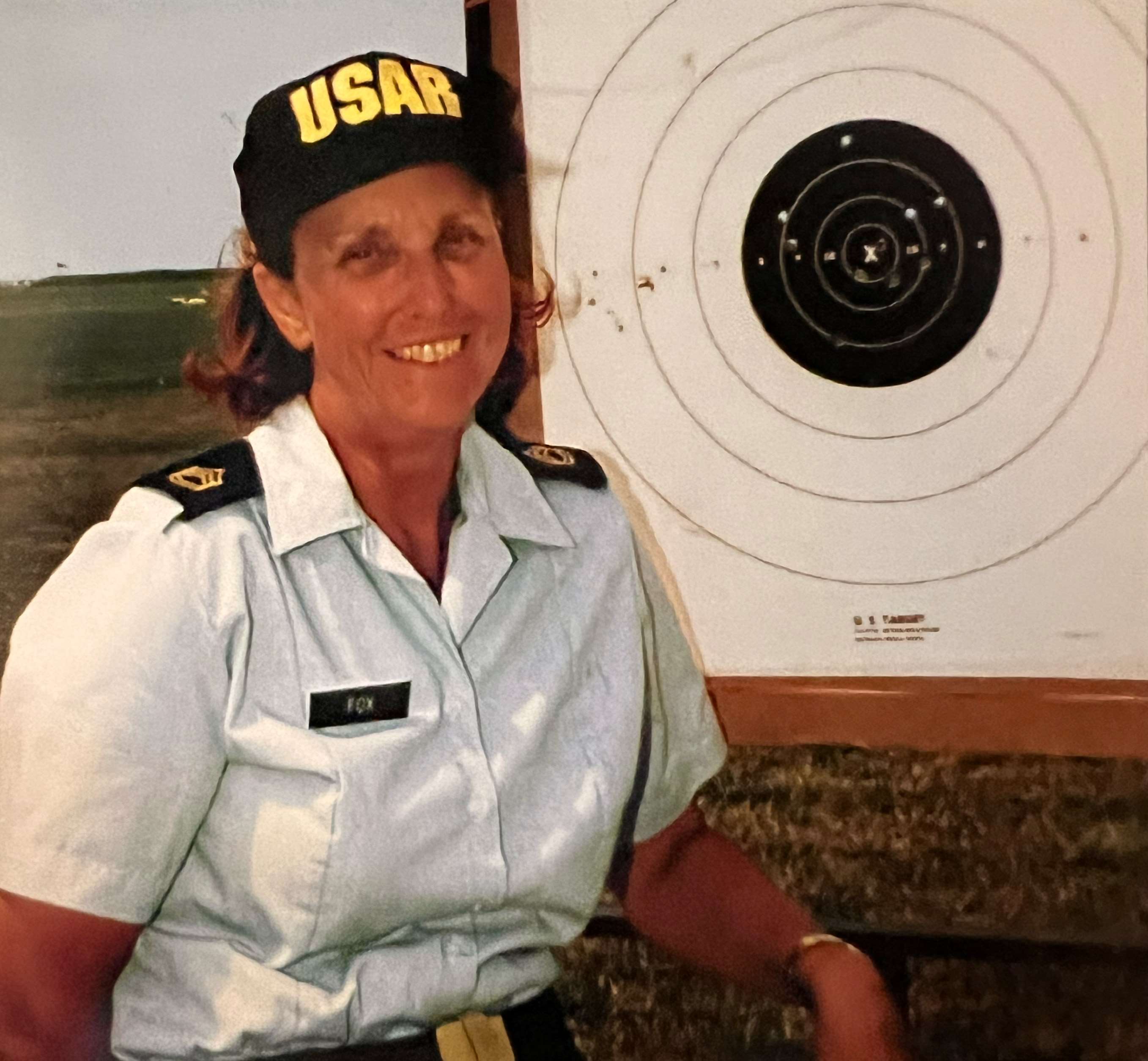
It started with Meidinger’s win in the Preliminary Championship followed by his record breaking 897 in the .22 Championship that featured perfect scores in the National Match Course and Timed Fire Matches. Record scores were safe in center fire, however, as tricky winds kept the entire field a good 15 points or more under the 891 aggregate mark set by Joe Pascarella in 1980. CWO Paul Malsbury, a teammate of Meidinger’s, emerged triumphant with an 876. Meidinger then sealed his title bid with a field-topping rapid fire score and an 889 aggregate for victory in the .45 Championship. His combined score of 2654-140X put him 15 points ahead of runner up Jerry Chaney, who claimed the Manchester Trophy as high civilian. Ruby Fox earned her 15th women’s title, Norm Girardin topped the seniors and John Bickar kept his lock on two categories when he repeated as both junior and collegiate champ.
Honors in the National Trophy Pistol Matches went to the Reserve sector as SFC James Henderson of the Army Reserve won the President’s Pistol Match, which this year included the presentation of a CMP special grade M1 Garand rifle in addition to the President’s trophy and congratulatory letter from the President of the United States. (This was the last year that a congratulatory letter from the President was included in the awards description for the President’s Pistol and Rifle Matches.) SFC Frederick Little of the Army National Guard won the National Trophy Individual Match while All-Guard Gold topped the field of 29 in National Trophy Team competition.
It was a “Three P” year during smallbore—position, prone and Pershing. The usual competitor list during prone was expanded by the addition of British and Canadian team members who did their best to wrest the Pershing Trophy from the hands of the hosts. But before the contest took place, the national position championship was conducted.
It was a remarkable year for Maj. Steve Goff. The Arkansas National Guardsman was assigned to active duty at the U.S. Army Marksmanship Training Unit and during the winter he was the only person to medal in all three smallbore events at the NRA National Indoor Rifle Championships, including a national record 1196x1200 in three position. At Perry, the metallic sight matches went to David Cramer (prone), SPC Jason Parker (standing) and Capt. Glenn Dubis, who fired a national record 387-15X kneeling. But at the end of the day Goff was in the driver’s seat when he won the metallic sight championship with an 1143-41X, one point ahead of Parker.
Goff wasted no time making his presence felt in the any sight matches with a 399 prone score and it was quickly apparent that it would take a major breakdown to derail him. Civilian Ken Benyo demonstrated his kneeling proficiency by upping the National Match record score by five to 392-17X on his way to winning the any sight championship, but Goff had a 20-point advantage over Benyo in iron sights. With his final score of 2295-82X, Goff finished 15 points ahead of runner-up Tom Tamas, who won the title in 1989 and was the two-time defending national prone champion. Benyo claimed his fifth straight civilian title while Army Reserve Lt. Kimberly Howe topped both the women’s and collegiate categories and Shane Barnhart defended his junior crown.
The four days of prone shooting featured excellent weather and Cramer set the tone for the matches when he equaled the metallic sight Dewar match record with a 400-38X. Lones Wigger, Jr., who had been keeping a low profile since his retirement from three-position in 1993, had the highest X-count of the six 1600s fired. With 134 Xs, Wigger led Barnhart by four and stayed clean to claim the metallic sight championship with a score of 3200-251X.
Just as the championship broke for team competition, so did the weather. Conditions were perfect for an October day in Vermont to view foliage, but not so for a July day in Ohio to shoot prone. Cool temperatures blew in and many large puddles of water covered Lake Shore Drive as the wind drove the crashing surf completely across the two-lane black top road.
Calls to the weather bureau, consultation between team officials and a final meeting with range personnel led to the decision to postpone the international postal Randle and Dewar Matches until after the Pershing Match the next day. When Pershing officials and competitors assembled, Canada drew the left side of the line; Great Britain the center; and the United States, with the right-hand firing points, was captained by Edie Reynolds, the first woman ever named as a U.S. Pershing Team captain. Dubis was the high gun for the United States and the match with a 400-36X. The U.S. Team was selected from the highest scores fired in the Prone Metallic Sight Aggregate. Firing members included Shane Barnhart, Glenn Dubis, James Hinkle, Lones Wigger, Jr., Steve Goff, Cory Brunetti, Jason Parker, Eliza Bishop, Kerry Spurgin and Barry Smith.
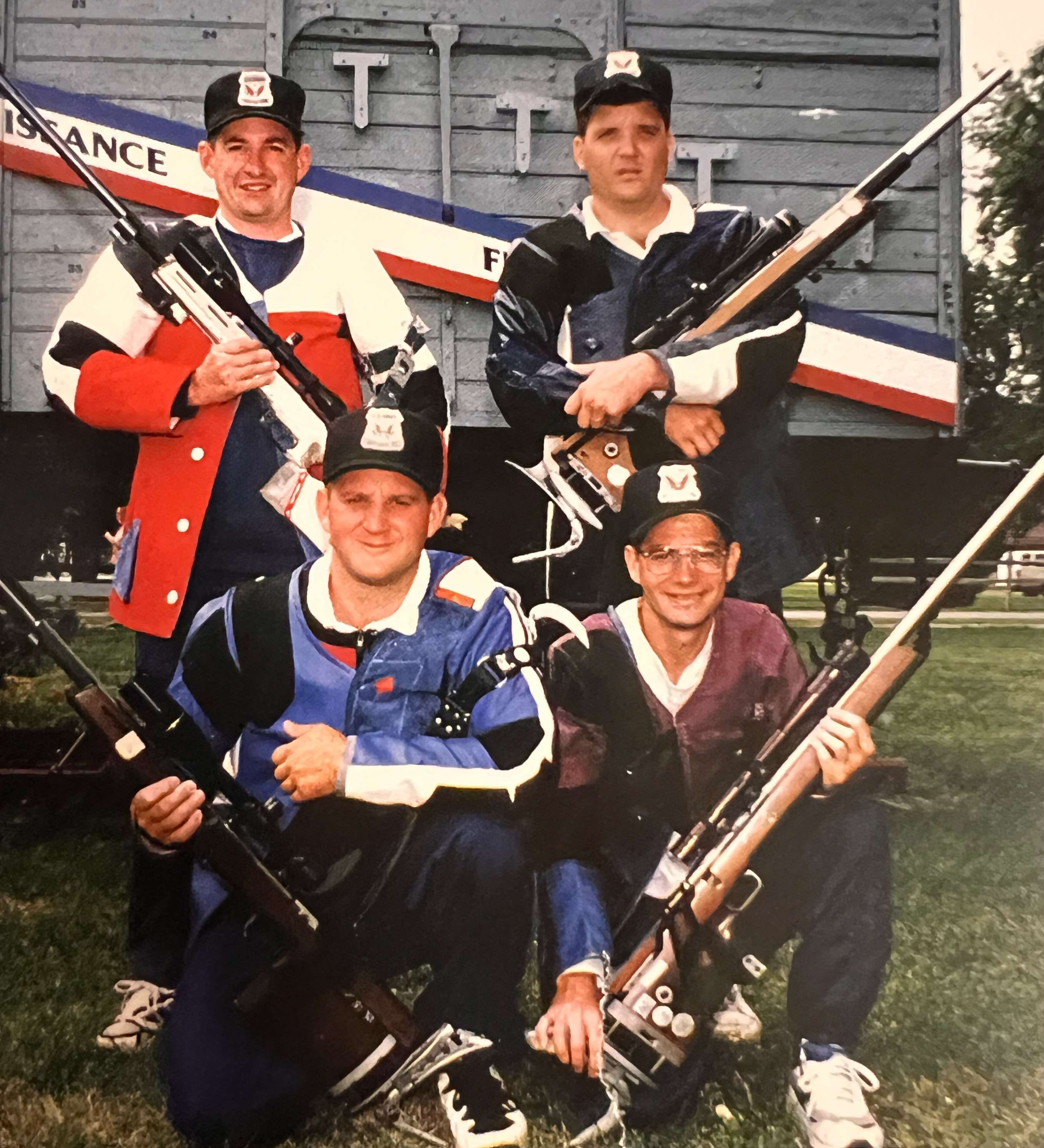
No sooner had the Pershing Match ended when U.S. shooters on the Dewar Team rearranged themselves on the line. It was the second of three equipment set ups for Eliza Bishop, who earned the distinction as only the second person in National Match history to shoot on a Pershing, Dewar and Randle Team in the same year. (Janet Friddell was the first in 1961.) Dubis repeated his Pershing performance as the U.S. Team’s top gun with a 392x400 on the tough English target. Pershing Team members were joined by Tony Leone, Dave Cramer, Dan Makucevich, Geoff Reagan, Tom Jastermsky, Larry Parker Sr., Tom Tamas, David Dye, Douglas Clark and Lance Hopper—the Dewar 20.
Once Dewar Team members gathered up their equipment, the Randle Team spread their mats and arranged their gear. Reynolds, Carolyn Millard-Sparks, Michelle Bohren, Dana Knezevich, Karen Jacobs, Sherri Volberg, Kimberly Howe, Nancy Tompkins-Gallagher and Emily Caruso joined Bishop. Overall, the international tallies gave the Pershing victory to the United States while Dewar and Randle laurels went to Great Britain and South Africa, respectively.
The Randle Match had barely ended when the line was again filled—this time with teams of senior and junior shooters who competed in the NRA Smallbore Committee-sponsored Randle Doubles/Mentor Match. This special event proved very popular as Allen Elliot and Nathan Tracey topped 35 other teams and combined for a perfect 800-61X in the any-sight Dewar course.
After the two-day break for team matches everyone was eager to get back to the final half of the prone championship. British Pershing teammates Mike Babb and Richard Fowke made some noise as Fowke grabbed two matches and Babb the third 1600 aggregate of the contest. The 6400-point aggregate entered its last day with the British duo finishing in style after a slow start, but after a long four-year dry spell, it was Lones Wigger, Jr., who found his way back to the top step during the awards ceremony. Significantly, Wigger’s 6399-527X effort was built on a perfect iron sights score—it was only a lost point in the any sight phase that kept him from breaking his own national championship record of 6399-556X set in 1975. With the win, his sixth overall, Wigger surpassed Dave Weaver with whom he had been tied at five titles each. Barnhart, who was 42 years Wigger’s junior, was the silver medalist by two points and had now won both the position and prone junior championships two straight years. Position champ Goff, who was in kindergarten the year Wigger won the first of his 21 position championships, was declared the service champion and had won or placed in the top three in five national championships.
Carolyn Millard-Sparks earned her fifth national women’s championship while Ron West was named senior champion for the fourth consecutive year. Kimberly Howe doubled up a pair of collegiate championships, adding the prone title to her position crown.
Just like Wigger in smallbore prone, G. David Tubb entered unchartered territory this year when he became the sole possessor of most national high power championships. Since 1993, Tubb had been tied with Mid Tompkins for most national titles—six—and his quest for number seven seemed only a matter of time given his second-place finishes in 1994 and again in 1996.
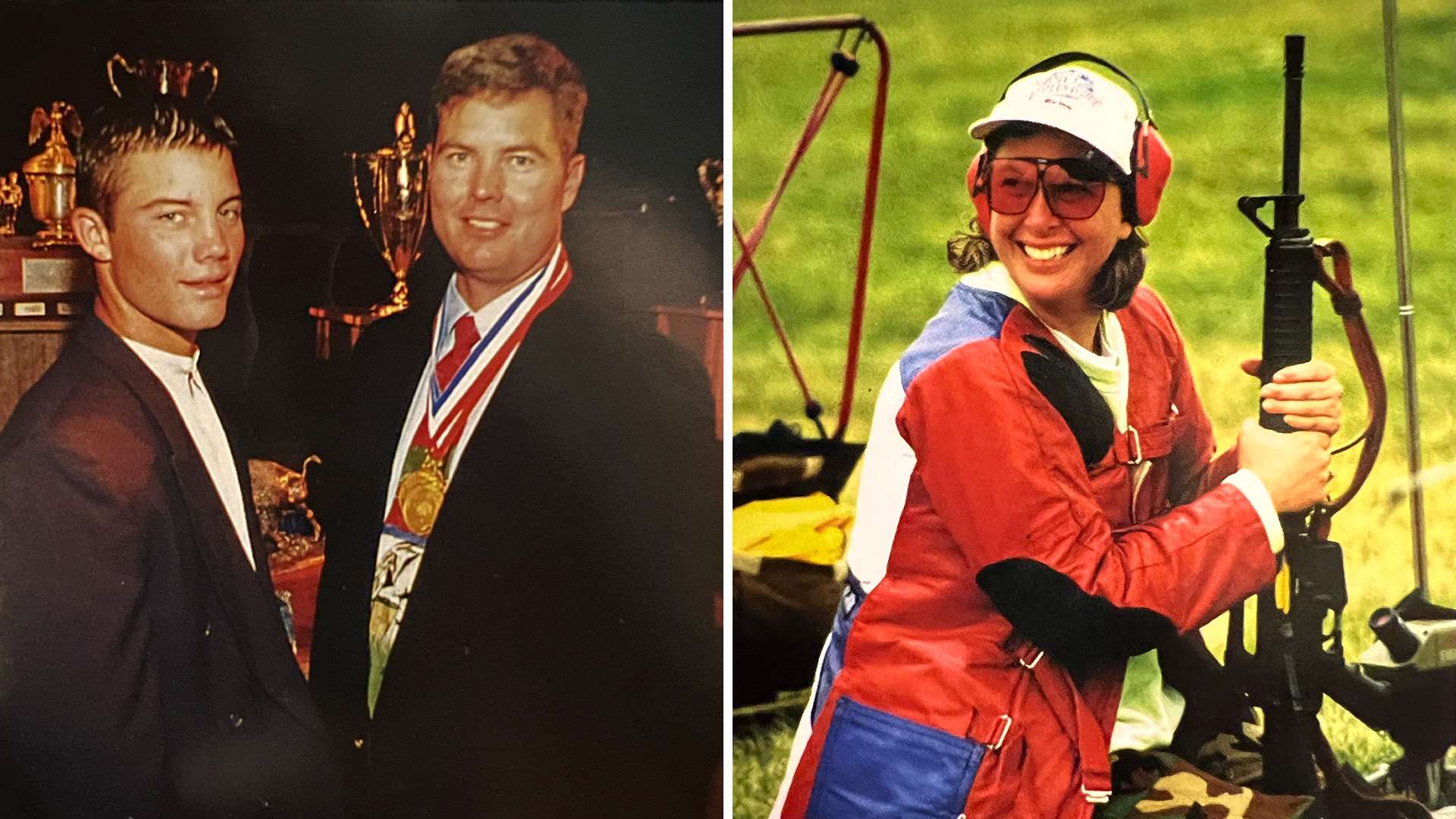
Tubb’s score of 2378 was one better than two-time champion Mitchell Maxberry, while service rifle champion Barry Coleman of the U.S. Army Marksmanship Unit finished third overall. Unlike other years when Tubb built momentum over the course of fire, he established himself early this time around with a win in the Coast Artillery Match at 300 yards and captured the first of the three championship aggregates, the Vandenberg, with a 793 out of 800 possible. Although defending champ Tom Whitaker claimed victory in the other two aggregates, Tubb didn’t waver and fired the best rapid fire aggregate for the McCann Trophy, falling just one point off the record score he fired at the 1991 National Matches, the year he won his fifth national title.
In other categories, the Tubb name also appeared atop the junior standings when David’s son Taylor earned the honor after being named top intermediate junior the year before. Nancy Tompkins-Gallagher denied Sandy Pagel a third straight title and returned to the podium for another women’s crown while Bert Medina repeated as police champion and Alan Dapp (the 1960 smallbore position champion), topped the seniors. (David and Taylor Tubb also teamed with Kent Reeve and former champion Mitchell Maxberry to finish first and second in the 1,000-yard Herrick and Roumanian Trophy Matches, respectively.)
Prior to the firing of the NRA Championship, service champ Coleman and his AMU teammates held court in the National Trophy Matches. After an opening win in the President’s Match by National Guard Staff Sgt. Richard Zolnowsky over more than 1,200 others, AMU Staff Sgt. Kevin McMahon won the National Trophy Individual contest, then joined Coleman on the six-man squad that fired a record score in the National Trophy Team Match before taking part in the winning Infantry Trophy Match effort. The momentum carried into the NRA team events when USAMU Remily, with both Coleman and McMahon on board, won the Enlisted Men’s Trophy Match while Coleman’s run continued through the 1,000-yard Roumanian Trophy Match, where he was part of the victorious USAMU Dooley squad. Both the Rumbold Trophy and RNDC Trophy Team Matches were won by the eminent Hard Holders, comprised of Mid Tompkins, Nancy Tompkins-Gallagher, Tom Whitaker and Frank Behle.
In long-range competition, Tompkins-Gallagher and Michelle Gallagher performed a National Match first when the mother-daughter duo won the Leech and Wimbledon Cups, respectively, with the same rifle. Tompkins-Gallagher went on to win the Canadian Cup (aggregate of 800-, 900- and 1,000-yard matches) as well as the family namesake award, the Tompkins Trophy, emblematic of the NRA Long-Range Championship. Tompkins-Gallagher’s national long-range title this year was her second—she also won in 1977, the first year for the championship. The Long-Range Championship Aggregate included the three 600-yard scores from the NRA High Power Championship. One of those matches, the Crowell, was won by Tompkins-Gallagher while daughter Sherri was top sub-junior.