
The NRA’s 125th anniversary year proved to be a significant one in National Matches history when an act of Congress eliminated the government’s affiliation with the Civilian Marksmanship Program (CMP).
The National Defense Authorization Act for 1996, known as Public Law 104-106, was signed by President William J. Clinton on February 10. Specifically, Title XVI, Sections 1601-1924, of the Act established the “Corporation for the Promotion of Rifle Practice and Firearms Safety” (CPRPFS) as a private, non-profit organization which assumed, effective October 1, 1996, that the administration of the CMP program, a responsibility previously held by the Dept. of the Army. The Secretary of the Army appointed the initial board of directors for the new group which, as a self-governing entity, selects its own Director of Civilian Marksmanship to oversee daily operations.
“The 1986 National Matches were my first as DCM Director. I joined the NRA staff in 1991 (after 26 years in the Army). If the Matches are to survive, the NRA has got to be involved. It was true then and it’s true today. When I was in DCM I made the effort to spend time with the NRA. If you want the National Championships, you better count on the NRA.”
—Gil Gilchrist, Director, NRA Competitions, 1994-2006
The National Board for the Promotion of Rifle Practice (NBPRP), which had been in existence since 1903, was abolished by the Act. Particular provisions of the Act include Sect. 1615, which authorizes the transfer of firearms and ammunition from the Army to the Corporation; Sect. 1617, which provides logistical support for the National Matches via the National Guard and Army Reserve as part of their annual training requirements previously prescribed in Titles 10 and 32 of the United States Code; and Sect. 1618, which states the Corporation “may impose, collect, and retain such fees as are reasonably necessary to cover the direct and indirect costs of the Corporation to carry out the Civilian Marksmanship Program.”
Change was not limited to the administrative side of the National Matches as first-time champions were named in three of the four NRA National Championships: Marine Sgt. Brian Zins in pistol; Army Capt. Web Wright, III, in smallbore three-position; and Tom Whitaker in high power.
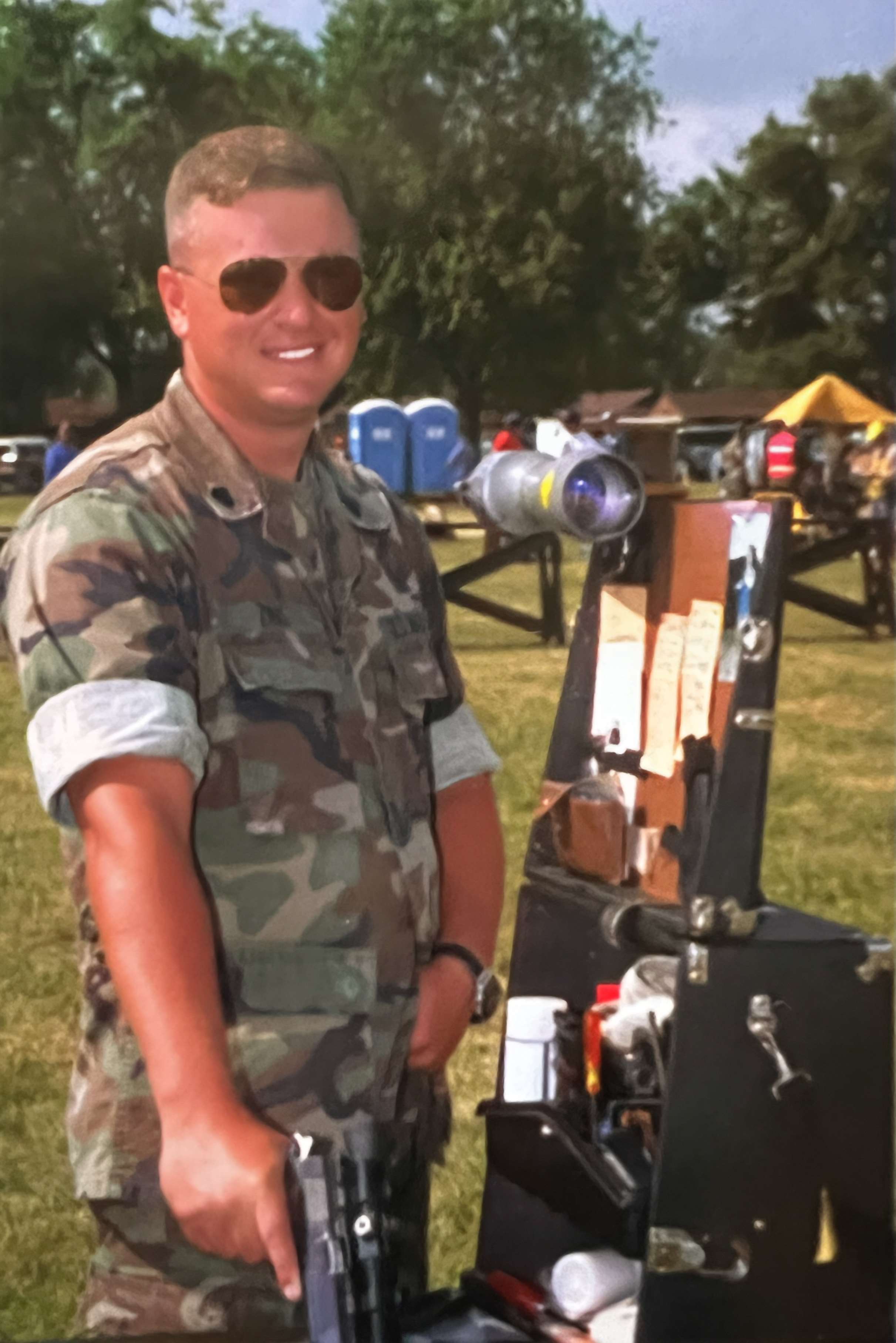
After a record score (894) in the Preliminary Championship and a first stage .22 score that placed him four behind Army Reserve Sgt. James Henderson and defending champion James Lenardson, Zins switched out his Hammerli 208 for his trusty .45 auto and proceeded to win the next two stages to secure his first national pistol title with a final score of 2661-158X. The fact that Zins shot the highest score since the championship record (2668) was set back in 1969 by Don Hamilton proved to be a presage for future National Match programs. This was not only Zins’ breakthrough year at the National Matches, but the start of an impressive stretch in event history that would place him among the handgun elite.
Henderson teamed up with George Greene and former national champions Steve Reiter and Darius Young to claim the new Coming Through the Rye Trophy, which replaced the Gen. Twining Trophy for the NRA Pistol Team Aggregate the year before. (With the addition of the Coming Through the Rye team award, the Twining Trophy returned to its origin as the award for the high scoring active duty Air Force competitor in the NRA National Pistol Championships.)
Ruby Fox performed a multiple hat trick of sorts when she swept all three aggregate titles for the third year in a row. Fox’s 13th women’s national title also brought good fortune in that she became just the third woman ever to be selected for the Mayleigh Cup team, an international .22 postal featuring 30 shots slow fire at 50 meters. The 10-person squad is selected from high scores fired during the slow fire segments of the NRA .22 Championship and in the nearly 60 years since the Mayleigh Cup was first fired (initially as the International Pistol Match), the only other women named to the team have been Lucile Chambliss and Gertrude Backstrom. Ricardo Rodriquez earned top civilian honors while his Springfield Armory teammate Roger Willis was high senior. John Bickar continued his domination of the junior ranks and this year added collegiate laurels as well.
In the National Trophy Pistol Matches, Army National Guard Staff Sgt. Eric Wilson won the President’s Match, Army Reserve Master Sgt. Robert McIlhaney won the National Trophy Individual Match and All-Guard Blue notched a six point victory over the Marines in the team event.
As the smallbore position shooters streamed into Camp Perry after the range change, the competitive field looked wide open. Unlike the days of the Wigger era, the odds seemed pretty even with a slight edge to the Army, which had sent the likes of Lance Hopper, Matt Suggs, Steve Goff, Tom Tamas, Troy Bassham and Web Wright, III.
It didn’t come as a surprise, with windmills clattering and flags flapping in all directions, that the iron sight scores were down. Wright won the standing match with a 341-9X, confirming that winds were not going to make it easy for anyone. Civilian Ken Benyo, who had won the prone match but could only muster a 329 standing, finished strong with his specialty, for no one on the line had won more kneeling matches at Nationals than he in recent years. His winning score of 375 was 11 more than his nearest opponent, allowing him to not only make up for his standing deficit, but pull ahead of Wright for the metallic sight championship. Benyo’s 1097-36X was not pretty, but considering the conditions, it was fine shooting. Wright finished second with a score of 1088-36X.
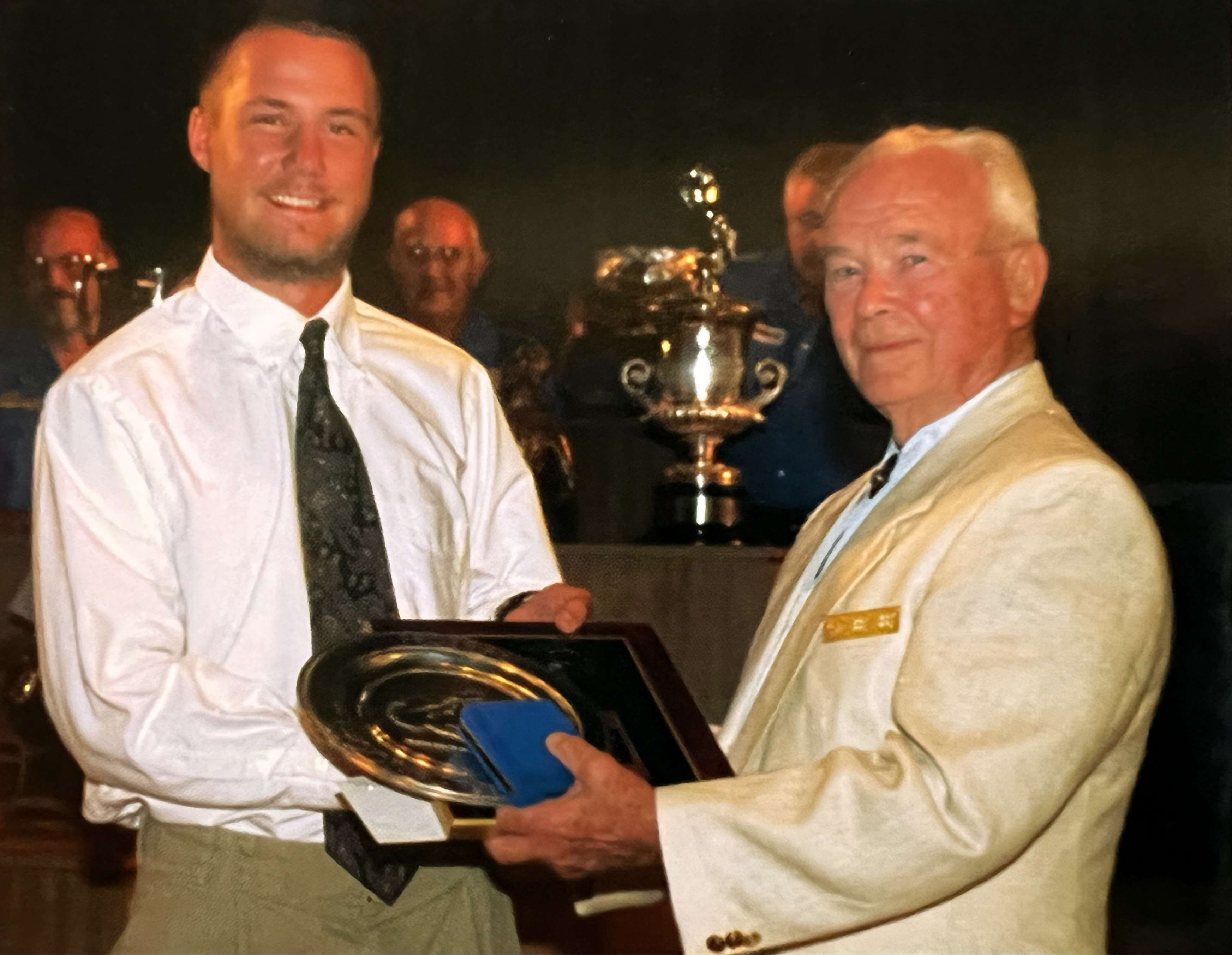
The calm conditions that followed, coupled with the change to telescopic sights, made the final day seem like a holiday. Goff and Tamas led the Army charge in prone with 394s while Benyo’s momentum stalled after he failed to crack 390. Goff’s X lead gave him the win and he followed with the high standing score to lock up the any sight championship. The final numbers, however, revealed that Wright had parlayed his 2214-75X score into the Frank Parsons Trophy as well as the service championship. Bassham finished five back for second while Benyo’s iron sight scores helped secure his fourth consecutive civilian award. The Mary C. Camp Trophy for the women’s championship went to Emily Caruso while Fred Cole was able to regain the senior title, his eighth in nine years. In addition, Shane Barnhart won the junior title and finished fifth overall.
Prone tends to be more of an open contest than position with favorites much harder to pick but the Army was on a roll and Wright kept on winning. His 400-35X was the best score turned in for the iron sight Dewar that marked the start of the prone matches. By the end of the day, however, Barnhart’s 1599-126X earned him the first aggregate and a 12X lead. Day two began with another Army win, this time by Tamas who creedmoored teammate Suggs in the Dewar. The early victory propelled Tamas to the top of the second daily and helped him grab metallic sight honors with a two-day score of 3195-256X.
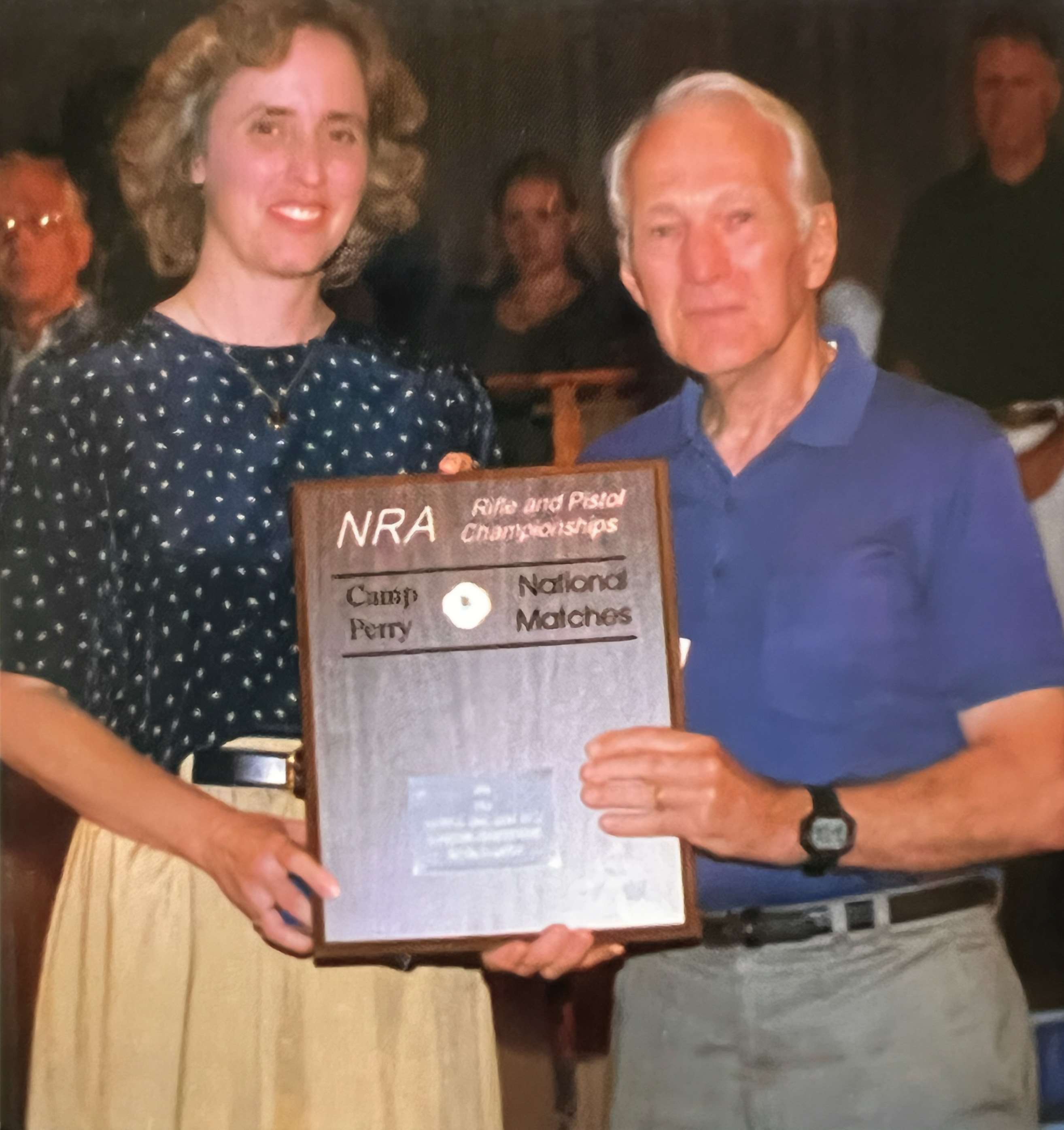
Heading into the any sight stage, Tamas had little breathing room for Barnhart was just seven Xs back and Camp Perry mainstay Edie Reynolds had a 3193. But despite the pressure and challenges, Tamas finished the second half with a performance no other shooter could match—back-to-back 1600s for a 3200-269X total and the U.S. Cartridge Company Trophy. His 6395-525X total gave him his second consecutive National Prone Championship and completed a sweep of all the 1996 smallbore aggregates. Barnhart finished second overall and added the civilian and junior titles to go along with his earlier junior position win. Women’s champion Reynolds claimed her second Remington Trophy in as many years while Ron West continued his winning ways among the seniors with his third straight title.
After Marines finished one-two in the NRA pistol championship and Army shooters dominated the smallbore scene, the two services split honors in the four National Trophy Rifle Matches. On the individual side, Army Sgt. Grant Singley fired an M16 for the high score in the President’s Match, an event he also won in 1992, while Marine Gunnery Sgt. Jeffery Schafer won the National Trophy Individual Match. In team competition, Marines armed with M14s edged the Army’s M16 effort by one, topping the Army’s 1995 record score by two points. Army shooters got the last word, however, when in the National Trophy Infantry Team Match, they posted their own record score for the win.
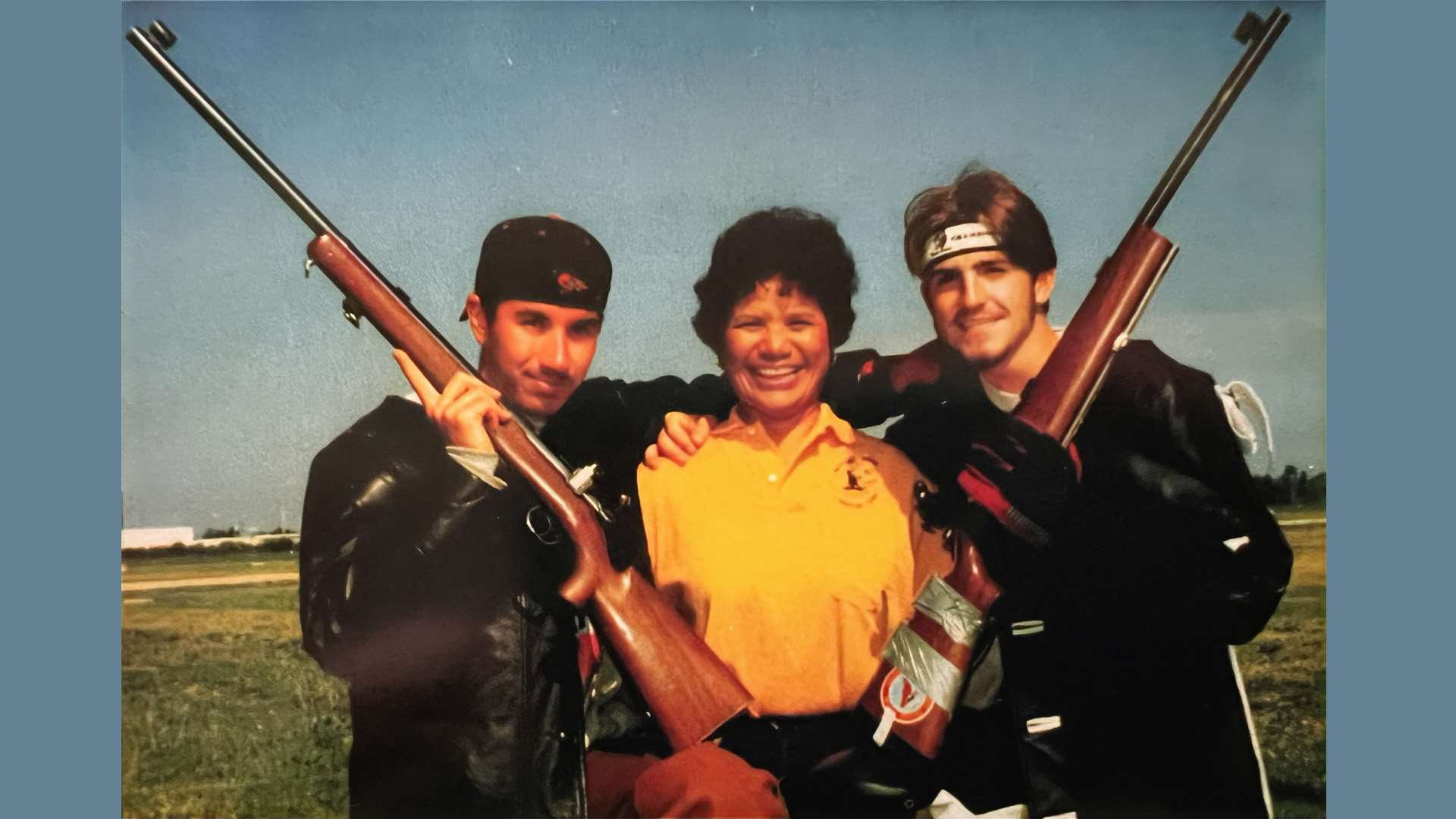
Both services carried momentum into the NRA phase when President’s winner Singley fired the high service score in the NRA Championship and Marines won the Enlisted Men’s and RNDC Trophy Matches. In match rifle competition the momentum effect was not so immediate, but 1995 runner up Tom Whitaker remembered the feeling of being a title contender and capitalized on it this year for his first national high power championship. With his win, Whitaker became one of just four marksmen in National Match history to claim titles in both smallbore and high power, and the 27 years between his two titles is the longest of the foursome, a true testament to his endurance and competitive nature.
Whitaker’s high power title did not include any aggregate wins—they went to former champions G. David Tubb, Mid Tompkins and Mitchell Maxberry who collectively accounted for 14 national titles—but Whitaker stayed within reach and called on his long-range abilities to push him over the top. He won the Centenary Trophy for high aggregate in the 600-yard matches (the course of fire was reduced in 1995 to include scores from the Army, Air Force and Crowell Trophy Matches only) and coupled with wins in the Crowell and the 200-yard Coast Guard Trophy Match, tallied a 2377-124X to finish four ahead of Tubb. Police champion Bert Medina, who switched from service to match rifle this year, placed third overall with his 2372. Singley earned his first service rifle championship with a 2367 score, Sandy Pagel fired one better to defend her women’s title and Whitaker’s Palma teammate Bert Rollins bested the senior field.
“I give my wife a lot of credit,” Tom Whitaker said. “The evening before the final day of high power, she demanded I get my act together and reminded me that she was tired of all this second place stuff. I knew I had a great shooting rifle, and it was time for me to take care of business.”
—Tom Whitaker, 1996 High Power Champion
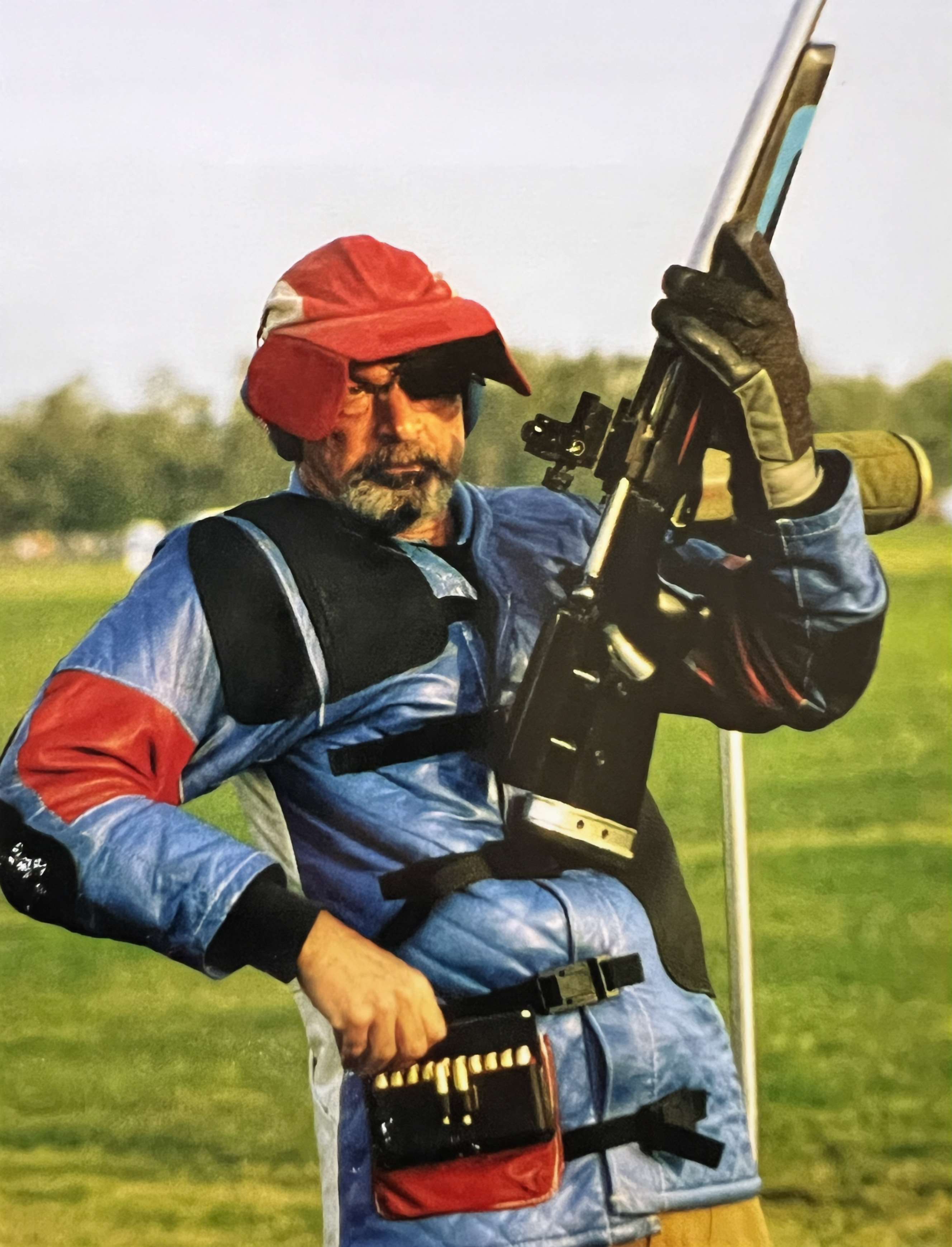
Whitaker’s talents at long range were showcased further when he won the Palma Individual and Canadian Cup (record score) en route to the Long-Range Championship and Tompkins Trophy. Thus, with his high power and long range national titles, Whitaker joined Tubb and Maxberry as the only shooters in National Match history to win both in the same year.
First time wins occurred in both the Leech and Wimbledon Cup Matches in 1996 as Jack Jones won the former and Lt. Carl Kovalchik the latter. And this year former NRA National Match Coordinator Ed Andrus was honored posthumously with a trophy in his name. Californian Mark Bauer won the inaugural Edward D. Andrus Trophy for his 388-8X aggregate fired from two 1,000-yard matches with the Palma rifle.
Read more history articles:
Most Popular