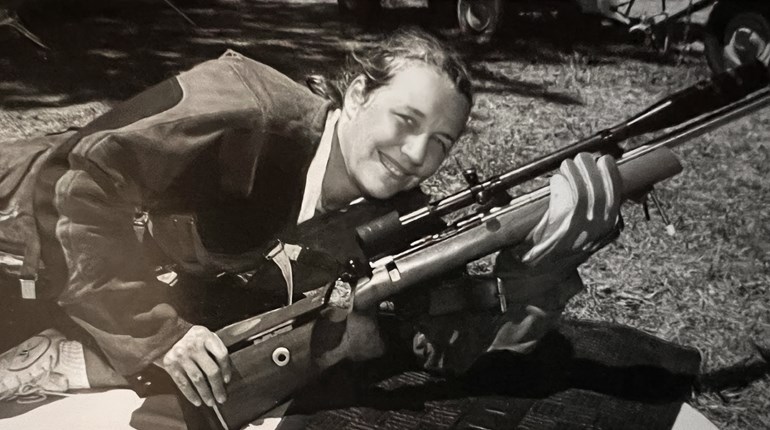

Over the last few National Match programs, the high profile accomplishments of big bore shooters Michelle Gallagher, Nancy Tompkins-Gallagher, and Julia Watson helped draw attention to the appeal of shooting as a family and gender equitable sport. As the youngest of the triumvirate, Gallagher, 19, hit a singularly historic note in 2000 when she became just the fourth National Match competitor—and the first in over three decades—to win both the prestigious Leech and Wimbledon Cups in the same year. In 2000, Gallagher succeeded Tompkins-Gallagher as national long-range champion and possessor of the Leech Cup award. The mother-daughter duo also won the Wimbledon and Leech Cups, respectively, in 1997. In 1998, Tompkins-Gallagher won the overall national high power championship—the same year Watson of the Marine Corps Shooting Team fired the high overall score in the National Trophy Individual Rifle Match—both accomplishments were firsts for women at the National Matches. Watson also became the first woman DuPont Trophy winner last year for her open service rifle championship win.
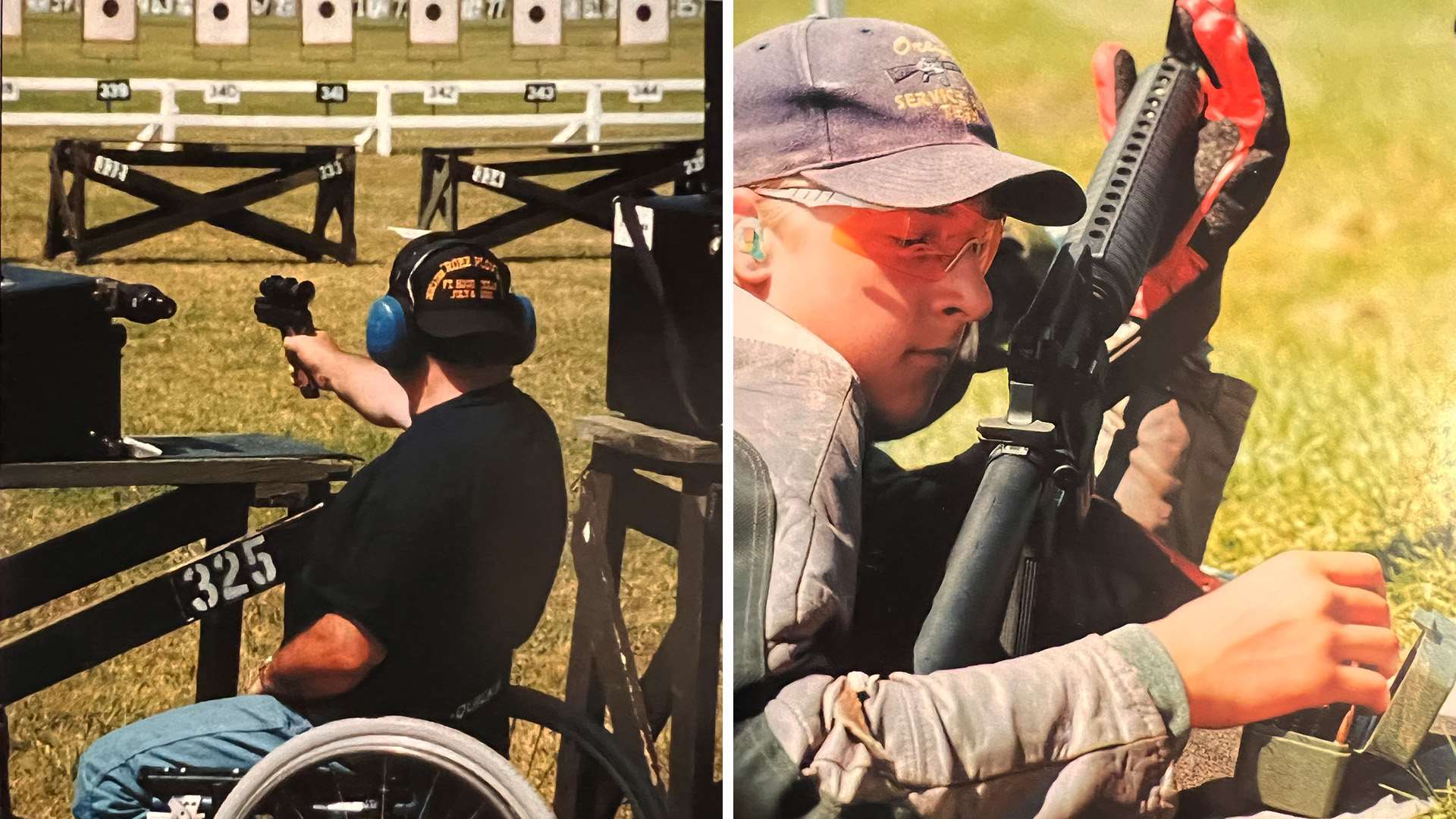
In the only phase of National Match competition that has yet to produce a woman national open champion, Army Reserve Master Sgt. Steve Reiter withstood some very tough weather conditions better than the rest of the pistol contingent and came away not only with an impressive title defense but his fifth national championship in 10 years. With his latest win, Reiter joined Harry Reeves, Joe Benner and Bill Blankenship, Jr., as the only handgunners in the championship’s 65-year history to claim more than four national titles.
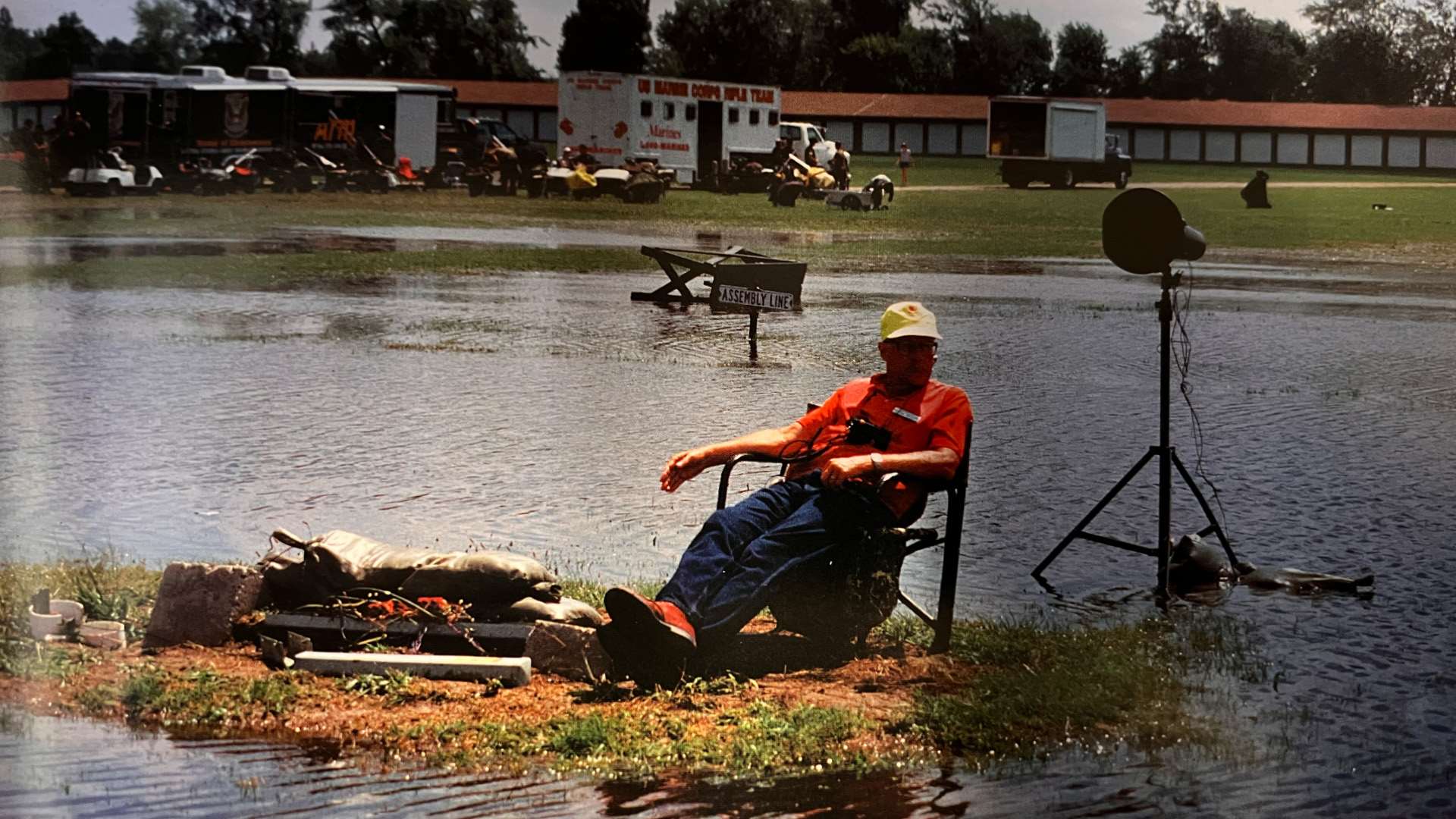
Reiter jockeyed for position in a tight .22 race where the top three order of finish was determined by X count—Reiter and Jerry Chaney tied at 890-44X behind Sgt. James Henderson’s winning 52 Xs. The turning point of the championship then occurred during center fire when rain and wind affected everyone’s scores. For Reiter, however, it was an opportunity to prove his mettle, which he did by winning the slow-fire match and the aggregate (875) to emerge 17 points ahead with one stage of the championship remaining. Lawrence Carter won the .45 Championship, but Reiter had him even on points (876) to finish with a 2641-129X for the national title, a comfortable 19 points ahead of Marine Sgt. Keith Sanderson, who finished second to Reiter for the second straight year. Lightning, wind and hail forced the postponement of the .22 Caliber Team Championship halfway through the competition. Firing was completed the next day after the Center Fire Championship
As was the case the year before, Kimberly Hobart and Ruby Fox went to the wire in women’s competition but this time, Hobart stood on the upper step at the awards ceremony. Darius “Doc” Young defended his senior title but relinquished the civilian crown he won in 1999 to Chaney, who finished third overall. West Point cadet Sally Talbott claimed the collegiate title while Patrick Powell topped the junior class.
Reiter returned to the spotlight during the CMP matches when he succeeded Young as the President’s Pistol winner. Sgt. Roger Jacobson of the Army Reserve National Guard won the National Trophy Individual Match and USMC Scarlet took the team event.
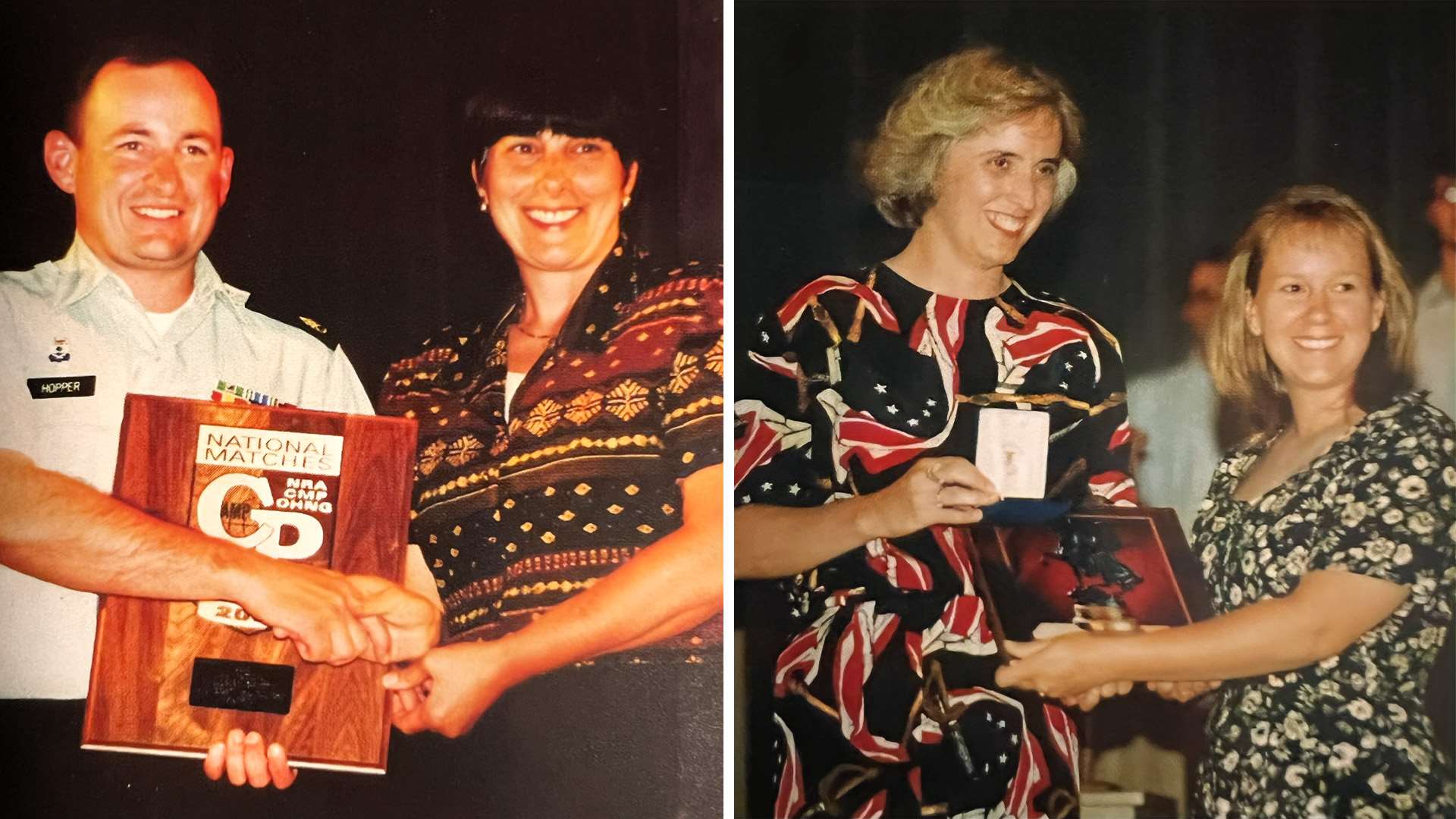
A dominating U.S. Army Marksmanship Training Unit (USAMU) presence during this year’s smallbore championships was spearheaded by Staff Sgt. Lance Hopper who won both the metallic-sight and any-sight aggregates of the three-position championship to convincingly claim his first national title with a 2280-90X, which was 4 points over runner up and teammate Capt. Dave Johnson. Hopper was no stranger to the National Matches, having previously won the President’s Hundred and National Trophy Individual Matches in 1990 and 1991 when he fired on the USAMU service rifle team. Certainly, his experience helped him deal not only with the buffeting winds off Lake Erie, but with the tension of vying for a top prize at the revered Camp Perry ranges.
A fair share of position awards left Camp Perry in the same family car after siblings Jamie and Michael Beyerle topped a number of categories and classes. Jamie put together an aggregate score of 2217-60X that was good for three titles: high woman, junior and intermediate junior. Her 1111-28X also earned her the high women’s iron sight award. Michael finished as the collegiate champion and high expert with his 2185-54X tally.
Fred Cole, a National Matches fixture, was the runaway winner of the Meister Trophy awarded to the senior champion for his 2196-63X effort, a most respectable score for any competitor, let alone one in his 70s.
The prone championships opened with fine weather and slightly tricky winds that allowed for many perfect scores in individual matches, but minimized the number of 1600 aggregates. Only 13 perfect 1600s were fired and they occurred after the break for team competition. The championship began with a victory by two-time national prone champion Sgt. Thomas Tamas with a 1599-124X. Tamas and USAMU teammate Mike Anti, who won the first day’s 50-yard match, were competing at Perry to keep in trim for the upcoming Olympic Games in Sydney, Australia.
The second day of iron sights was much like the first as Tamas recorded a 1599 for the aggregate win. At two down heading into the break for team competition, Tamas had very little breathing room as former champion Cory Brunetti sat just one point back. Anti was also within close reach and when the any-sight matches began, he started his ascent up the leader board. By the end of the day, Anti sat atop the pack with a 1600-137X, setting the stage for a hard-fought finale.
The last day was marked by 400s and high X counts and just when it seemed that the scores couldn’t get any better, master civilian J.B. Throne cleaned the very last match of the very last day on the very last relay of the championship—with two 200-20Xs in the 50-yard match for a Perry rarity—a 400-40X.
When all shots were scored and verified, Anti emerged victorious with a 6395-544X for his first Critchfield Trophy. That he also won the Frank Parsons Memorial Trophy in 1994 enabled him to join an exclusive club of shooters who have won national titles in both smallbore prone and position. Art Cook, Lones Wigger, Jr., Presley Kendall, Ken Johnson and Thomas Tamas are the others.
The 2000 championship was tight as Anti edged civilian champ Brunetti and Tamas by a paper-thin margin. Brunetti finished just 38 Xs back while Tamas was a point and 12 Xs behind the winner. At 6387, former national open champion Carolyn Millard-Sparks claimed her fourth straight Remington Trophy as high woman, upping her cumulative total to eight, while Jim Hinkle defended his senior title with a 6382 effort.
A multi-talented marksman, whose cross-discipline abilities kept him away from the Camp Perry firing lines on more than one occasion, returned to claim a national title after an eight-year absence from the awards podium. Carl Bernosky, one of the few shooters in National Match history to have won both smallbore (1985) and high power championships (1977-80, 1992) captured his sixth national high power title this summer, tying Mid Tompkins for second place on the all-time win list. The leader, G. David Tubb, won his eighth championship in 1999.
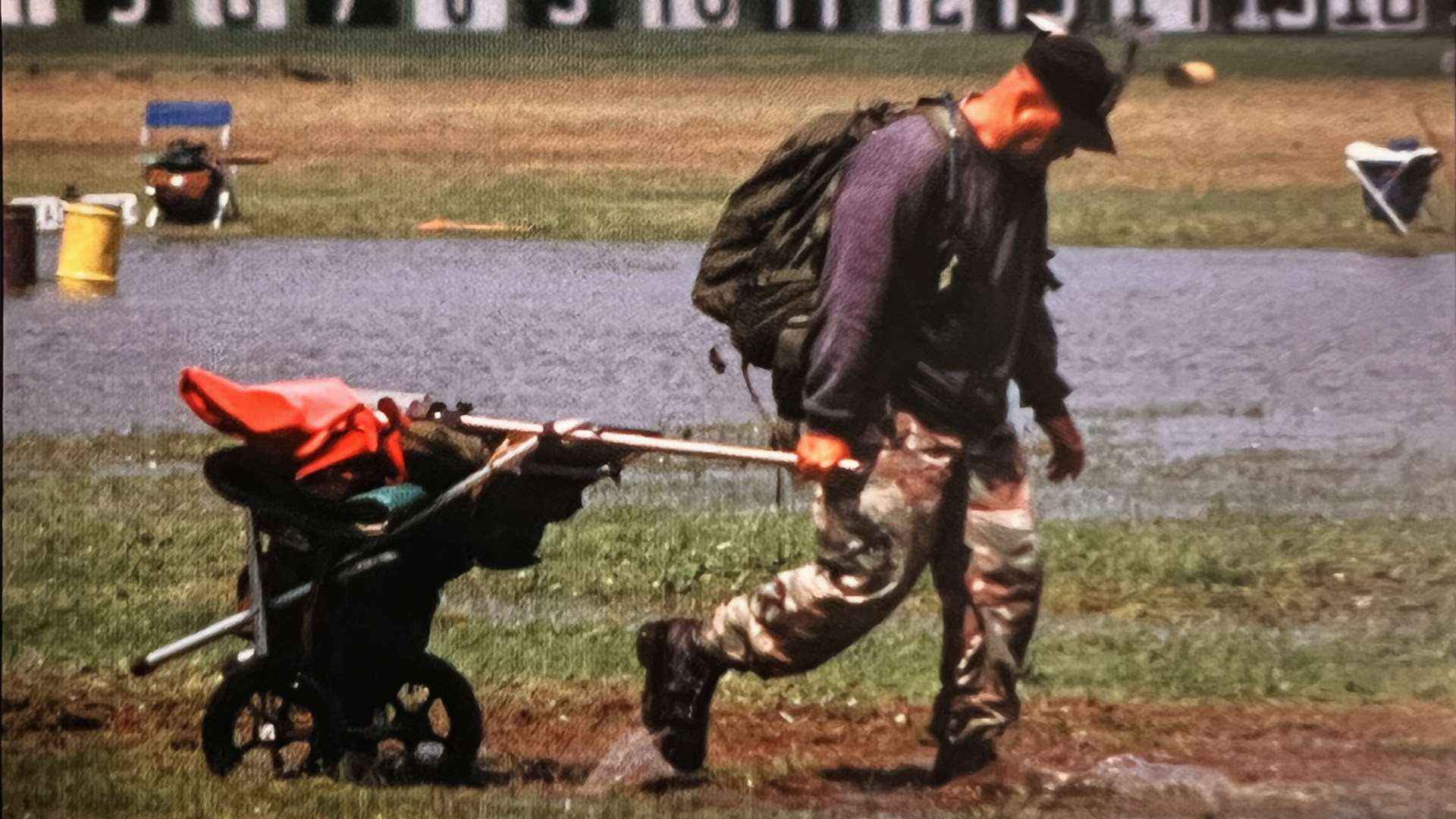
Bernosky’s 2381 score this year fell four points shy of the national record he fired in 1992, and marked just the second time since then that the winning score exceeded the 2380 plateau. (Tubb fired a 2383 in 1993, the year he matched Mid Tompkins in title counts at six.) After dropping the bulk of his points (13) in the first aggregate (Vandenberg Cup) when poor weather and standing water challenged the entire field, Bernosky directed his Winchester Model 70 for winning scores of 796 and 798 in the Nevada and Clarke Trophy Aggregates, respectively. The Clarke Trophy score (798-45X) established a new championship record as Bernosky added five more Xs to the previous high he fired in 1992. And it was the firing of three perfect scores on the last day that separated Bernosky from the others and gave him the final six-point cushion over two-time champion Mitchell Maxberry. Along the way, Bernosky also collected the Centenary Trophy for his record aggregate compiled from the three 600-yard matches, the first time that a perfect score (600-36X) was fired for the win.
Marine Master Sgt. Harry Harrison was named service champion for a 2369 effort that also placed him third overall in the standings. Harrison’s win was the second consecutive for the Corps (Staff Sgt. Julia Watson won in 1999) and marked its first service title defense in several years. Noma Zinsmaster-Mayo returned to collect a ninth women’s title, her first in more than a decade, while Mid Tompkins fired the high senior score for the third straight year.
Earlier in the program, two-time service champion Grant Singley won the National Trophy Individual Match, the second year that Army shooters claimed the CMP prize while the President’s Match was won by National Guard Col. Eddie Newman. In the CMP-sponsored team events, Marines claimed bragging rights in both the National Trophy and Infantry Matches.
The first National Match program of the millennium concluded on a significant and celebrated manner for Michelle Gallagher, 19, who won her second NRA Long-Range Championship. On a more historic note, her performance featured wins in both the Leech and Wimbledon Cups. Michelle became just the fourth shooter—and the first in more than 30 years—to win both the Leech and Wimbledon Cups in the same year. In 1997, Michelle, then 16, became the youngest Wimbledon Cup winner in National Match history. When she successfully won the Cup again the next year, it marked only the ninth time in the 113-year history of the award that back-to-back wins were achieved. She is the first three-time Wimbledon Cup winner in the post-World War II era. Gallagher tied the record Wimbledon score (200-15X shared with five others) and came within five Xs of breaking Tom Whitaker’s Canadian Cup record from 1998, the award for the high aggregate compiled from Leech, Wimbledon and Palma Individual scores. The one event of the Canadian Cup trio that Michelle did not win went to her mother, Nancy-Tompkins Gallagher with a 450-27X, who added four Xs to the Palma record score previously held by Nancy’s husband, Mid Tompkins.
In long-range team firing, Michelle and family (Mid, Nancy and sister Sherri) held court in both the Roumanian and Herrick Trophy events where they defended their crown in the former and upped the record by two points in the process.