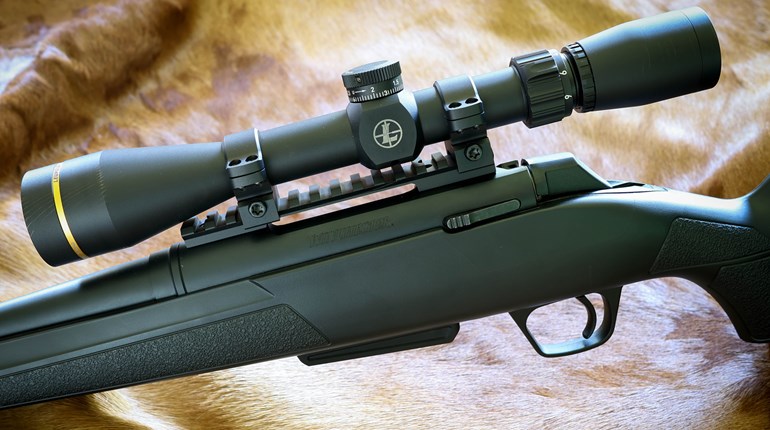

Trijicon’s new REAP-IR-50 series puts the ranging and the camera inside a thermal scope. Anyone who has carried a handheld rangefinder in a chest pocket, or clamped a phone behind the eyepiece to get the shot on video, can see the appeal.
It comes in two versions. The REAP-IR-50LRF adds an integrated laser rangefinder and ballistic solver, while the standard REAP-IR-50 estimates distance in stadiametric ranging mode using on-screen reference shapes. Both run on a sensor core and operating system developed in-house by Trijicon’s Electro Optics Division. Thus, the company decided which features make the cut, instead of designing around outside hardware.
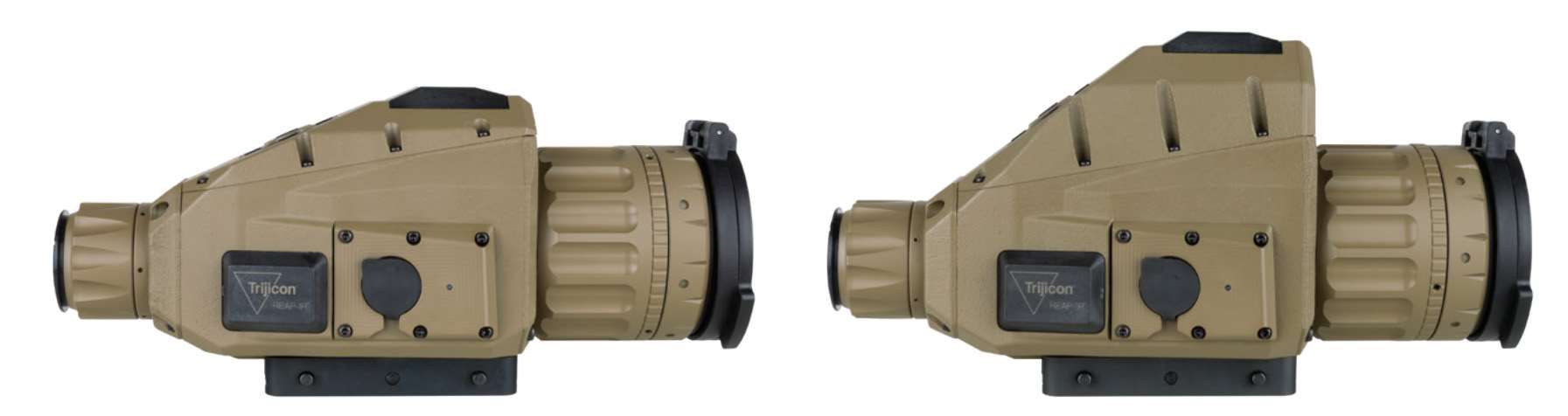
The REAP-IR name has been in Trijicon’s thermal catalog for years, and the existing 35 mm and 60 mm models remain on the company’s website. Almost everything inside the REAP-IR-50 is new.
At the center sits a 1024x768 uncooled vanadium oxide sensor with a 12-micron pixel pitch, a solid jump in resolution over the 640-class sensors found in many high-end hunting thermals. It refreshes at 50 Hz, and Trijicon rates its thermal sensitivity at less than 25 millikelvin. The latter number describes how small a temperature difference the sensor can separate. Lower is better, and the advantage shows most on muggy or foggy nights when everything in the frame reads close to the same temperature.
A manual-focus 50 mm f/1.0 objective gathers the scene, and a 1280x1024 color OLED display presents it. Base magnification is 1.5x, and digital zoom carries it to 12x. Because the reticle sits in the first focal plane, it scales with the picture at every zoom step, so holdover and ranging marks stay accurate whether the shooter is at 1x or 8x digital.
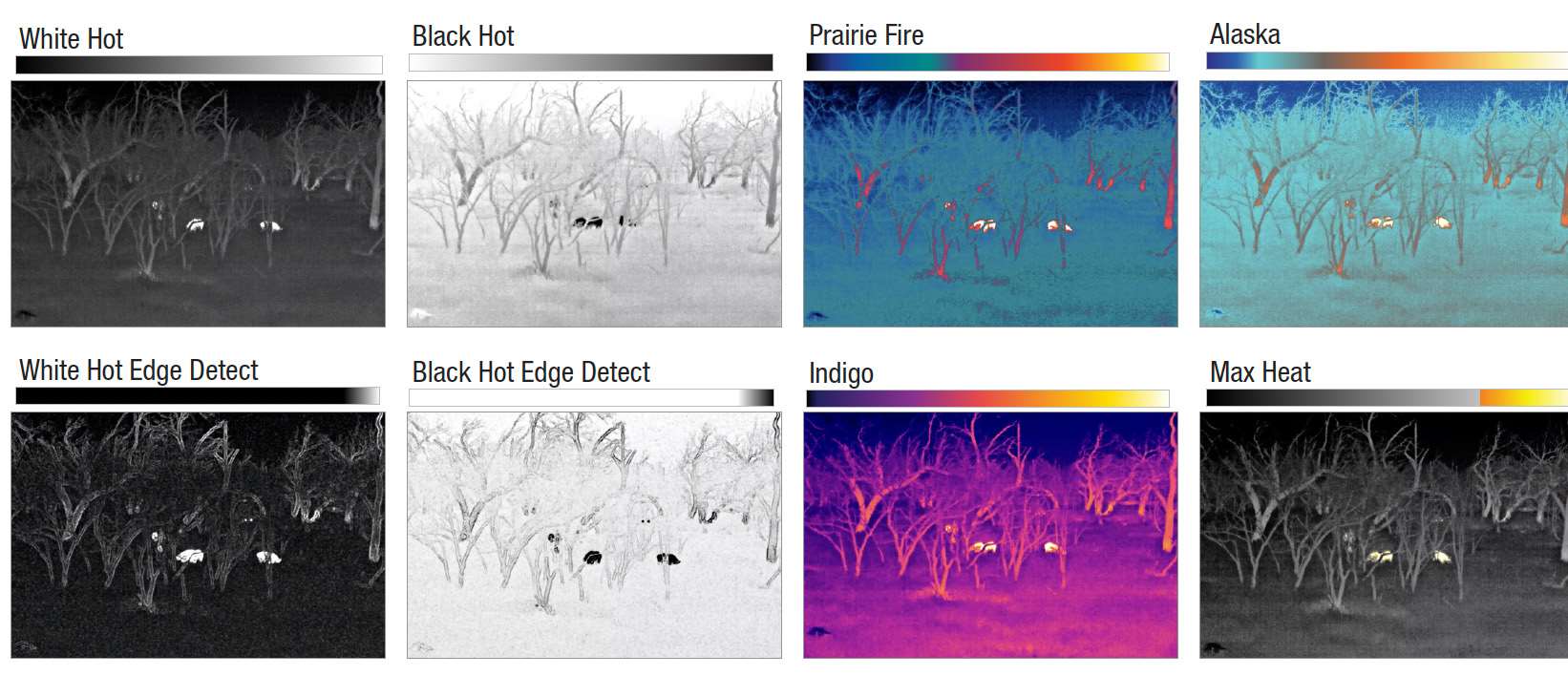
Two image-processing modes stand out. Enhanced Target Recognition, or ETR, deals with a familiar thermal headache: a stretch of open sky in the frame can flatten detail in the rest of the scene. With ETR on, the scope shifts its contrast toward the primary viewing area. Edge Detect, offered in both White Hot and Black Hot, traces terrain, brush and buildings in thin gray outlines while warm bodies stay bright, which Trijicon says reduces eye strain over a long night. Add standard White Hot and Black Hot, three color palettes and a hybrid mode called Max Heat, and there are eight palettes to choose from.
On the LRF model, a 905 nm laser measures distance from 50 to 1,500 meters, or roughly 55 to 1,640 yards. The onboard solver takes that reading, runs it against the active shooter profile and places a corrected hold on the screen. Users can store five profiles, enough for a couple of rifles and a handful of loads.
The standard REAP-IR-50 drops the laser in favor of stadiametric ranging. Shooters bracket the target with a deer, hog or hare reference on the display, and the scope works out an estimate. While slower and less precise than a laser, it trims a few ounces and, presumably, some cost.
Eight reticle patterns come in eight colors. Alongside standard, MOA and MRAD crosshairs and a circle dot, Trijicon includes bullet-drop compensating reticles matched to .223, .308, 300 BLK and 7.62x39 mm.
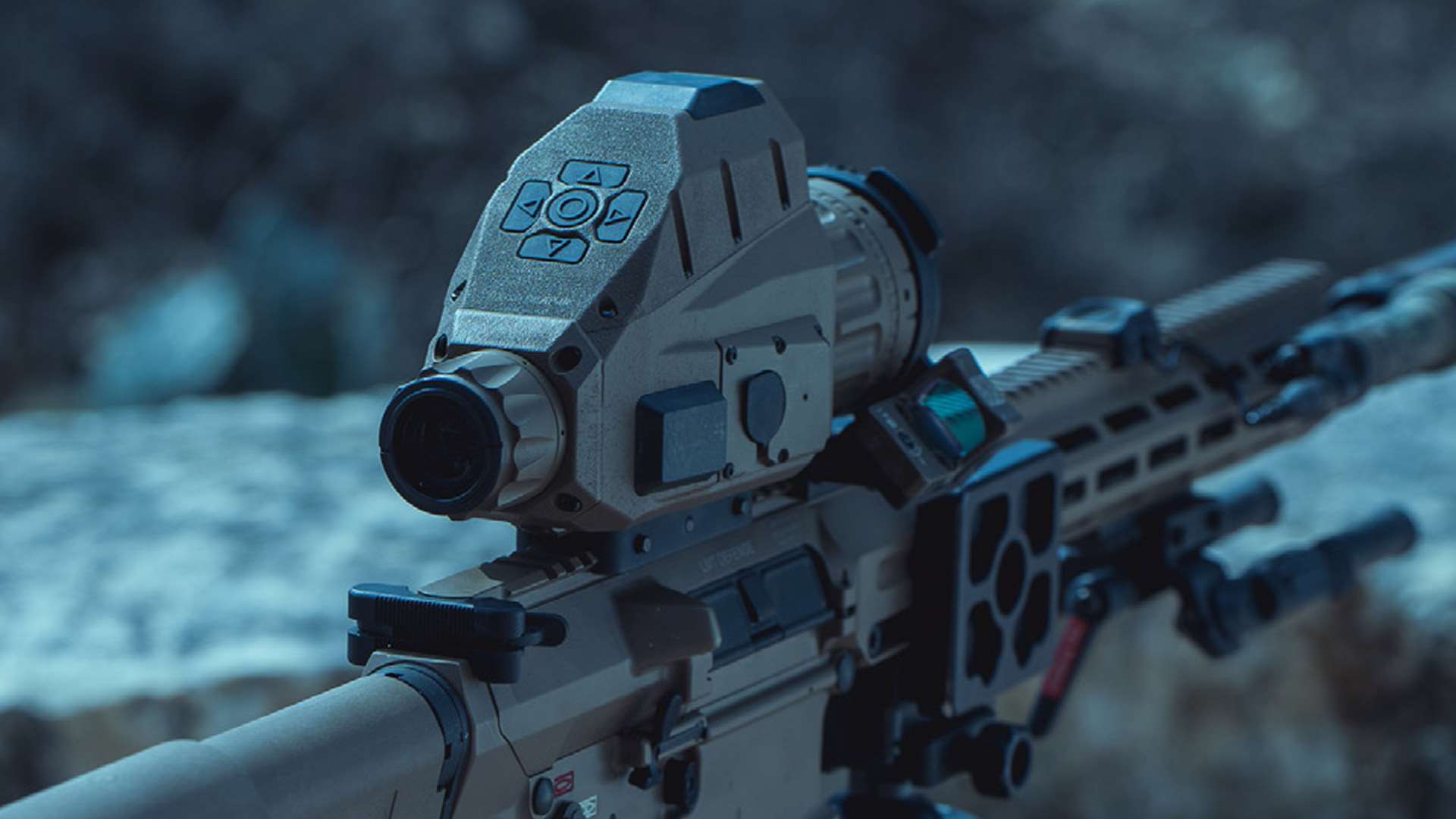
Controls got as much thought as the optics. A five-button keypad sits on the sloped rear face of the housing in an ambidextrous layout, with buttons big enough to find by feel in the dark or through gloves. Programmable Quick Keys put frequently used functions one press away, so there’s less menu diving with a target in view.
The REAP-IR-50 also doubles as a camera. Video and stills save to 64 GB of internal memory, and recoil-activated recording captures the shot automatically. Dedicated Wi-Fi links the scope to the Trijicon App on iOS and Android, where users can pull files to a phone or tablet or watch a live feed from the optic.
Live View may be the most useful feature of the bunch. A guide can see exactly what the client sees, and a new hunter can learn to read a thermal picture without passing the rifle back and forth. Pitch and roll indicators, GPS, a compass and a microphone round out the electronics, while the USB-C port handles file transfers, software updates and external power.
On its two CR123 batteries alone, the REAP-IR-50 is rated for about 1.5 hours at room temperature, or roughly an hour while recording, and cold weather shortens that. Trijicon recommends an external pack and estimates 12 to 14 hours of runtime from a 10,000 mAh battery bank connected via USB-C. Anyone planning an all-night sit should count on carrying one and figuring out where to mount it.
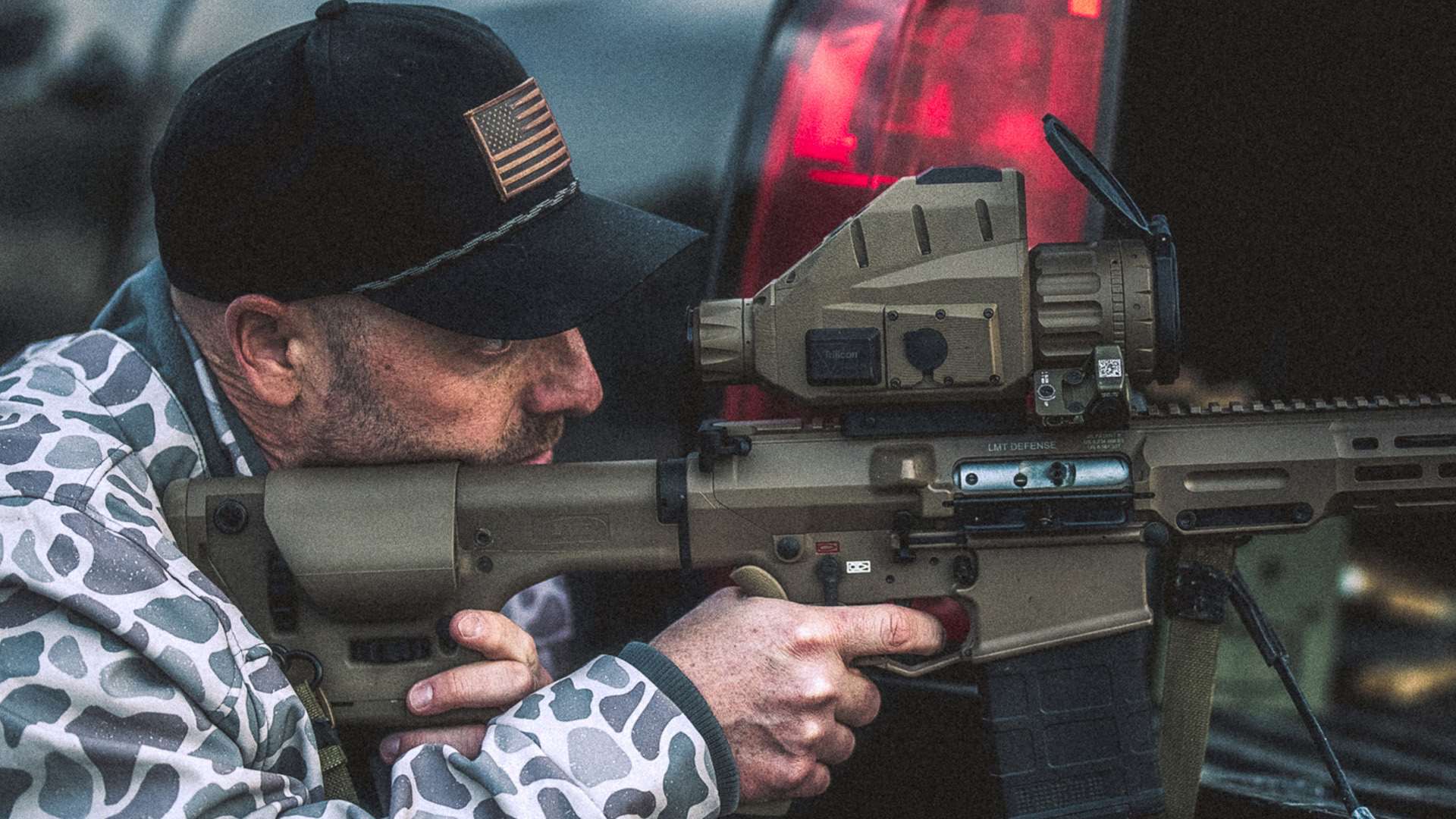
As for durability, the aluminum housing wears a Cerakote FDE finish and was built and tested to MIL-STD-810H standards for shock, vibration and temperature extremes. It operates from −26° to 131°F, survives submersion to 1 meter for an hour and attaches with Trijicon’s Q-LOC Picatinny mount.
The REAP-IR-50LRF weighs 54.9 ounces, about 3.4 pounds, with its mount and lens cap but without batteries, while the standard model checks in at 51.4 ounces.
At $9,499 retail, the REAP-IR-50LRF ships with a hard case, the Q-LOC mount, a USB-C cable, two CR123 batteries and a LensPen. Price for the standard REAP-IR-50 is $8,999.
To learn more, visit trijicon.com.