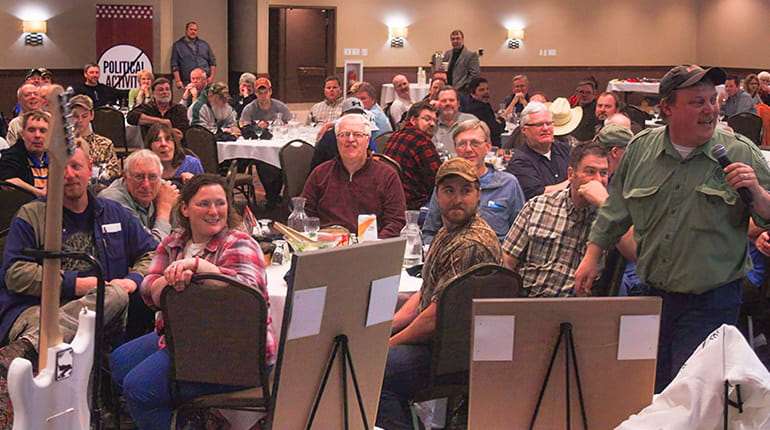

Eighty years after Camp Perry became site of the National Matches, logistical challenges continued to underscore the firing of the storied event. Back in 1907, the biggest test was for Camp Perry founder Ammon Critchfield to make sure that the swamp-converted ranges, which housed fewer than 200 targets for rifle and pistol shooting combined, were built and serviceable for the first shots. In 1987, National Match officials encountered capacity-filled ranges along a mile-long firing line which, in some cases, meant more than 1,500 entries in an event.
Record entry levels in pistol and high power pushed the overall attendance figures up slightly from the year before and marked the third straight year that some range limits were exceeded. (A system employed in 1987 allowed last minute no-show spots to be filled with stand-by shooters. Previously, vacant firing points caused by late no-shows could not be reprocessed and turned over to shooters on the wait list.) As a result, the competitive aura that hovered over the match site this year, like so many summers before, was one that transcends any tangible aspect of Camp Perry. Physical, structural and policy changes aside, what transpires on the firing line each summer is what the National Matches are all about.
In 1987, close to 5,000 shooters of all ages and disciplines contributed to the uniqueness of yet another National Match program, one that experienced its highest level of National Board funding since the watershed year of 1968 when federal support was completely withdrawn.
Practically no weather condition is unique to Camp Perry and temperatures that neared the 100-degree mark greeted pistol shooters during the opening phase of competition. The heat, which peaked during the center-fire matches, took its toll on many shooters before Army Master Sgt. Erich Buljung emerged triumphant with a score of 2627-104X. Darius “Doc” Young, the 1979 champion and Buljung’s frequent teammate, held the early lead after posting an 892 in the .22 Championship but, by the beginning of the .45 stage, Buljung had closed a seven-point gap and assumed the lead that he did not relinquish. Young ended up in third place behind Marine Sgt. Mitchell Reed.
Army Reservist Ruby Fox earned her ninth women’s championship and Joe White claimed his fourth senior title. Allen Fulford topped the civilian class while Philip Bradley and Jimmy Marsh finished atop the collegians and juniors, respectively. The U.S. Army Reserve Blue team, with Young as a member, didn’t win any of the three championships that comprise the NRA Aggregate but consistency, a hallmark of Young’s own Camp Perry performances over the years, earned the unit the Twining Trophy for the victory.
In National Board competition, Marine Master Sgt. Ricardo Rodriquez won the President’s Pistol Match while runner-up Leonard Hall followed with a victory in the National Trophy Individual event. All-Guard Blue won the Gold Cup for its high score in the National Trophy Team Match.
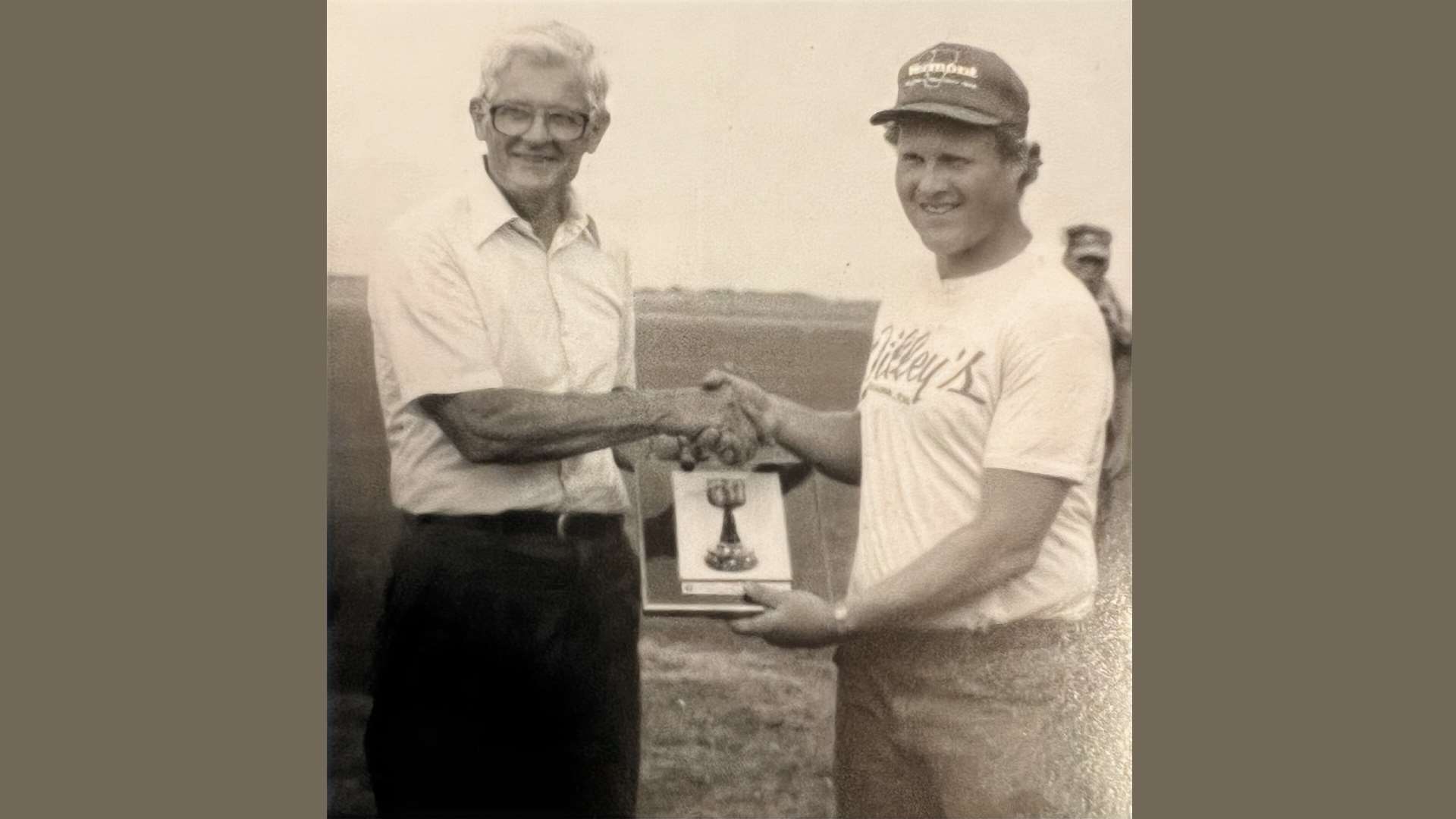
Smallbore shooters were pleased to find a light blue canopy that measured 10 feet high and six feet wide covering the half-mile long firing line this year. Army Reserve Sgt. Karen Monez, no stranger to Camp Perry, took advantage of the new shelter and otherwise pleasant conditions to make National Match history.
Monez first came to Perry in 1973 and steadily progressed as three women’s position championships would attest. This year, Monez again was named women’s champion but she also added the service championship which was automatic upon winning the open title. Her road to victory included one metallic-sight and one any-sight match win.
Army shooters David Cannella and Bob Mitchell won the two aggregates that comprise the championship, but Monez produced a solid 2303-36X that proved worthy of the title and a place in the record books as the first woman to be named national position champion. Cannella placed second with a 2300, while a newcomer to the civilian ranks, Lones Wigger, Jr., tied up third with a 2297. Robert Makielski captured his third senior title this decade, Erin Gestl topped the juniors, and Mike Anti, in his last year of college eligibility, earned the National Championship Medallion for his high score in that category.
Wigger, or a member of his family, seemed to win just about every smallbore trophy possible over the years. But after retirement from the Army and subsequent civil status, his vistas expanded and the man quite often referred to as “The Big Guy” found himself in position to win the Schweitzer Medal, the 14-karat symbol of civilian supremacy in smallbore prone shooting. The only thing that stood between him and medal was a competitor list of some 340 people that included a host of national champions, talented shooters and hungry youngsters.
With conditions about as good as they get on the south shore of Lake Erie in August, prone was a festival of 400s. Army Reserve Maj. Ray Carter led off with a perfect score in the metallic-sight 50-yard match, followed by Herb Pasch, Steve Dember and Ron Wigger’s possibles in the meter, Dewar and 100-yard matches, respectively. Day two started out in similar fashion and with the matches so evenly split, there was an excitement surrounding the metallic sight championship and how it would play out.
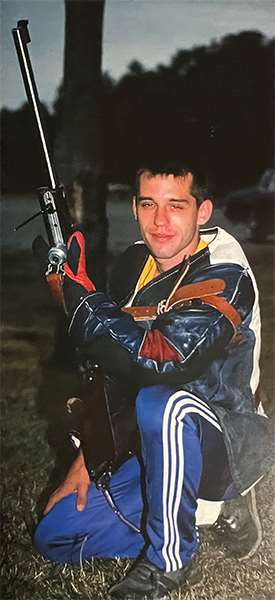
The Hoppe Trophy went to Marine shooter Robbie Franker with a score of 3197-252X. Franker finished one point ahead of teammate Dennis Ghiselli and Web Wright, III. There were also Wiggers aplenty on the scoreboard as Lones topped the civilian masters, son Ron led the service masters and daughter Deena was high woman.
By the time the last targets were hung, plenty of 400s had been recorded and three very fine shooters—all with last names beginning with W—positioned themselves for the final run to the championship. Barring a major disaster like a crossfire, either former prone champions Dave Weaver, Lones Wigger or newcomer Web Wright, III, would have his name engraved upon the Critchfield Trophy. Weaver was in the lead by one point, Wigger had the most Xs and Wright, at nine Xs back, was poised to take advantage of any error.
Few scores produce more stories filled with horror, or humor, than a 199-19X. In Weaver’s case, with a national championship on the line, it was the former. He closed out his last 20 shots with a 200-18X for a 399-37 total but Wigger added his own drama to the mix when, although he collected his points, his X count suffered to the point that he switched both brands and lots of ammunition in an attempt to build a cushion against Weaver.
When Weaver and Wigger met after the match, they were tied and Wigger was astonished to learn that Weaver had closed the X gap. Both men knew the rules and unless Weaver could come up with an X from a match that still had an open challenge period, Wigger would win on long-range score. Weaver challenged his Dewar but when the targets were checked, he ended up losing an X and with it, his part in the closest championship finish in National Match smallbore history. Instead, the 1987 prone championship became the second tightest finish on record, exceeded only by the three-way tie in 1953 among John Crowley (winner), John Moschkau and Charlie Whipple.
Wigger’s fifth national prone title was accompanied by his first Schweitzer medal for civilian honors while Weaver settled for second. Wright took third overall in addition to the collegiate and junior titles, while Gwendolyn Fox picked up her first women’s championship as well as the intermediate junior crown. Richard Hanson was again top senior, a title he last won four years earlier.
“For only the third time in the past 15 years a service rifle shooter had bested the bolt gunners …”
—American Rifleman, October 1987
Ten years after he first shot on the Camp Perry ranges, Army Staff Sgt. Greg Strom found his way to the top of the entire National Match high power field—with an M14. With his victory Strom, 30, became the most recent shooter in National Match history (ninth overall) to win the NRA high power title with a service rifle since the championship format was instituted in 1951. He was also the first recipient of the Mumma Trophy, which replaced the Sierra Bullets Trophy in 1987 as the award for the overall national champion. Part of the winner’s take also included $250 from Sierra.
Strom’s winning score of 2356 bettered two-time champion Pat McCann’s high match rifle score by four points and included a progressive rise in totals of 775, 789 and 792 in the Vandenberg, Nevada and Clarke aggregates, respectively. Strom found himself eight off the pace to Marine Kenneth Cooper in the Vandenberg before settling down to take second by six Xs in the Nevada to Gary Anderson. He finished with another second place in the Clarke Aggregate, this time by one point to two-time defending champion G. David Tubb, whose 793 effort was especially impressive given that his fate had been sealed earlier in the competition when a gun malfunction cost him 40 points in the Marine Corps Match.
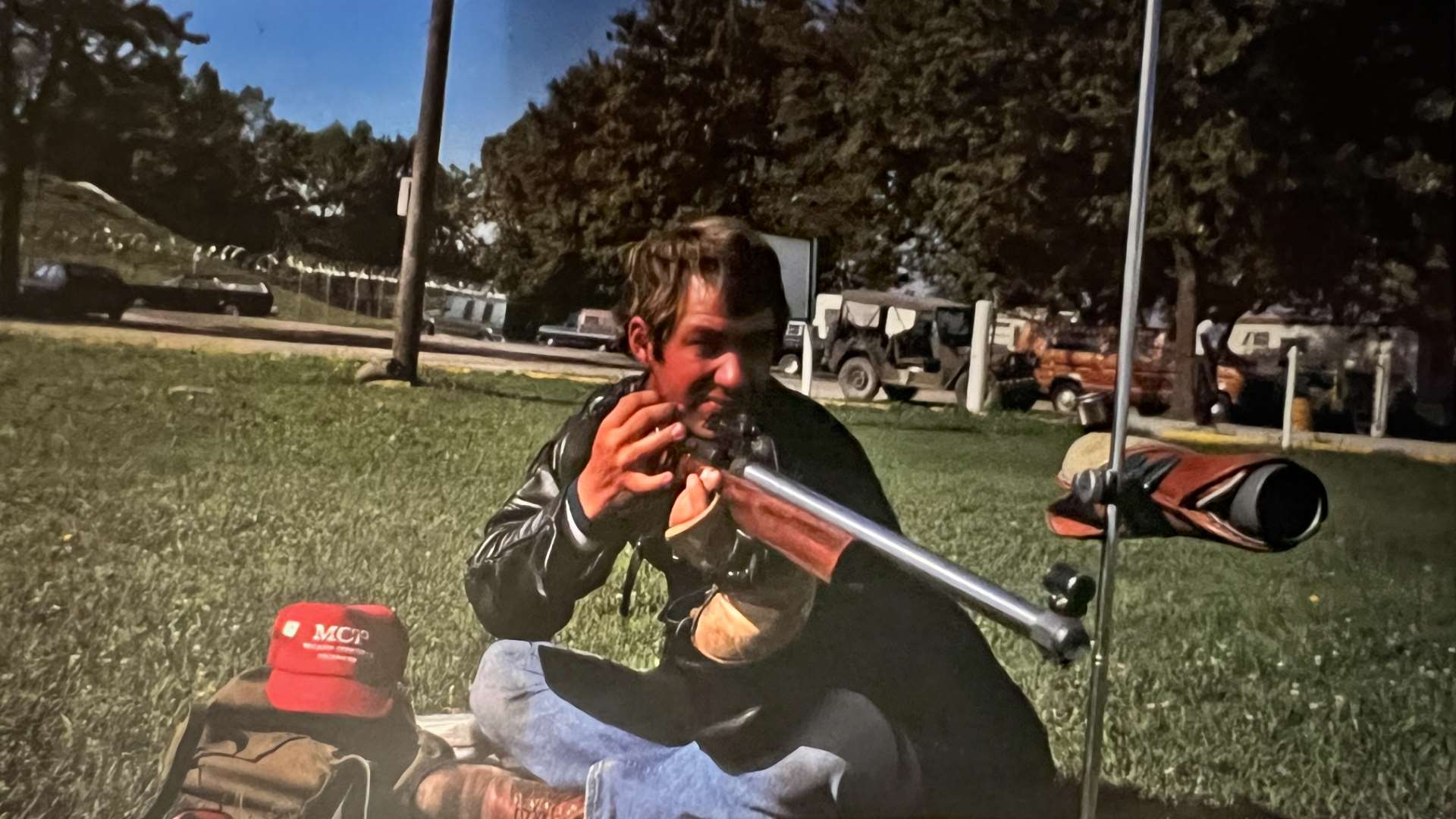
Nancy Gallagher successfully defended her women’s crown and captured the collegiate title along the way, while Eric Luhmann and Ray Burden topped the junior and senior categories, respectively.
Strom didn’t have to wait for the NRA championship to stand atop the victor’s podium because he won one of the two National Board individual matches that preceded the NRA events. His victory in the National Trophy Individual Match marked the second time this decade (1984 was the first) that he won the Daniel Boone Trophy. Army Reserve Sgt. Lowell Johnson won the other Board-sponsored individual contest, the President's Match—an honor that Strom had also added to his shooting resumé twice this decade (1980 and 1984).
In the Board-sponsored team events, the Marines edged the Army by one point the National Trophy Team Match, while Army Reservists reigned supreme in the National Trophy Infantry Team Match.
1987 National Matches Facts
The Long-Range Championship expanded to include three 600-yard matches (Army, Air Force, Crowell) in addition to the Leech/Porter, Wimbledon/Farr and Palma Individual Matches. The Tompkins Trophy was awarded the winner while the Canadian Cup, previously awarded the Long-Range Champion, became the award in a match of the same name and remained the prize for the top score from the Leech/Porter, Wimbledon/Farr and Palma Individual contests. G. David Tubb won the inaugural Tompkins Trophy while Mid Tompkins, who finished second in the namesake match, won this year’s Leech Cup en route to capturing the Canadian Cup. Eric Pintard won the Wimbledon Cup while 1983 Wimbledon winner Peter LaBerge earned the 1987 Palma Individual Trophy.
Smallbore shooter and 1985 National Senior Champion Joe Barnes, without drawing much attention to himself, worked his way through two days of any-sight prone competition without dropping a point. He was the only competitor to compile a perfect 3200 in 1987.