Rifle shooting, particularly at the longer ranges, has gone the way of so many technologically dependent skills in the 21st century. Much of the pick and shovel work has been automated. Take sight changes to compensate for both range and deflection due to wind. Today both corrections come off a table, precisely calculated and published for the shooter’s convenience. Nowadays there are even devices that pretty much do all the work for you. A hundred years ago, it was a different story and it explains the existence of a score (or data) book.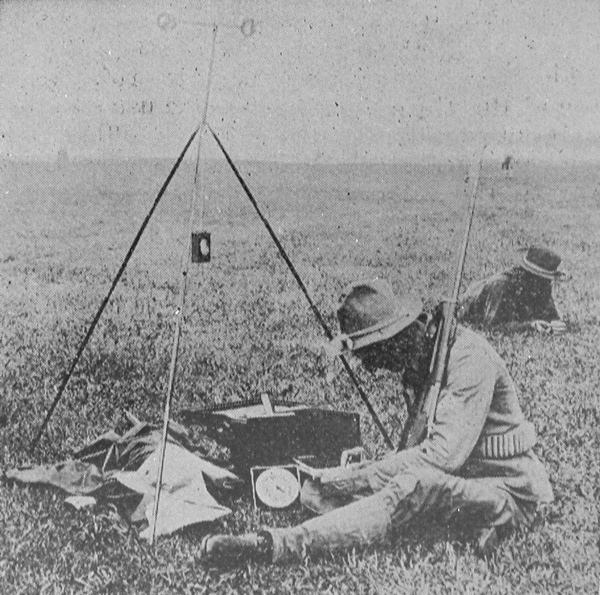
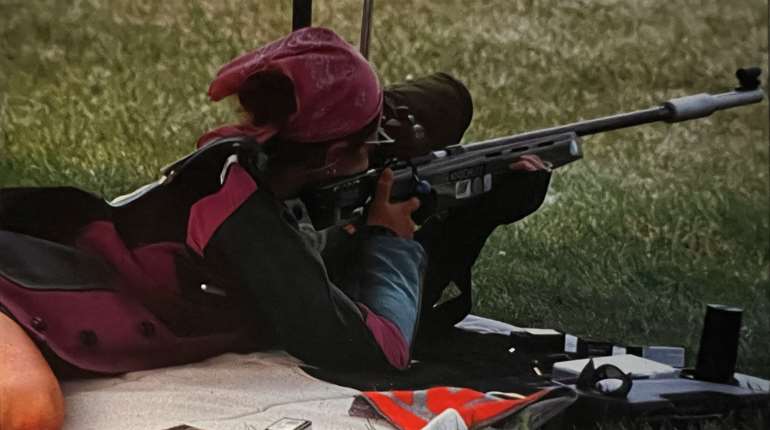
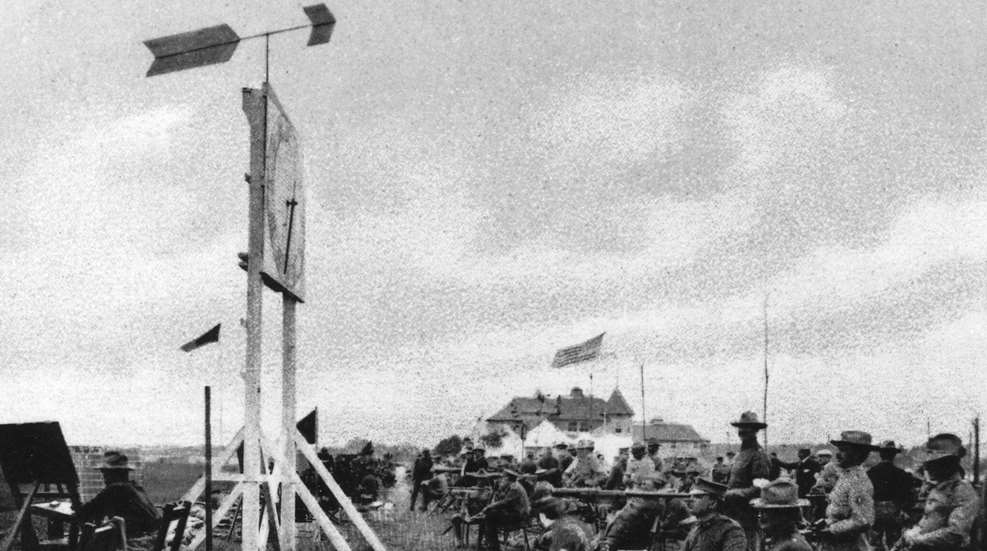
Study the above photo. It was taken on the range at Sea Girt and the individual (it may be none other than the legendary K.K.V. Casey) does have a portable weather station. When shooters of the time went to the line, they knew the wind speed and direction and it’s a fair bet they knew the temperature and the relative humidity, too. It made a difference then. The 220-grain round-nose bullet in the Krag was much more sensitive to wind, even to a no-value wind, than is one of today’s highly efficient projectiles. Propellants, like the Whistler & Aspinwall powder used to load Krag cartridges, were sensitive to changes in humidity and temperature―with a consequent effect on velocity. It’s not a major consideration with modern Ball powder.
What was learned from a weather station was faithfully recorded in a data book (or score book, or shooter’s diary―call it what you will). Other competitors a century ago, lacking a weather station, needed a data book to record the conditions under which a score was fired, the results, and the changes to initial sight settings made to produce them. The really successful shooters kept meticulous records and used them to estimate starting points for subsequent strings of fire. Some things don’t change. Today’s successful shooters keep meticulous records, too.