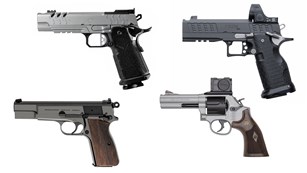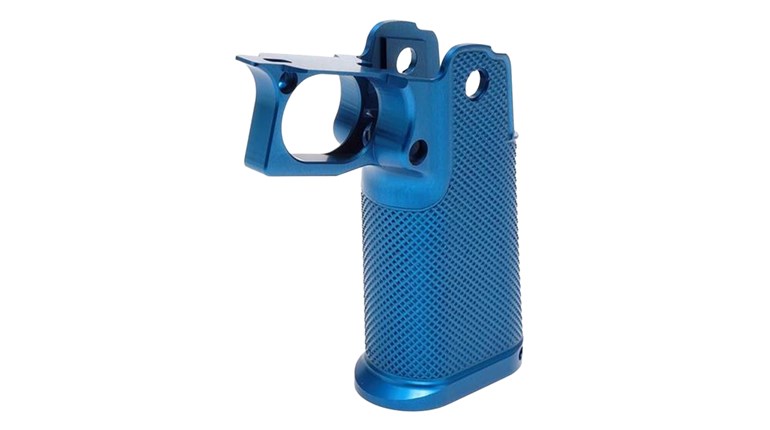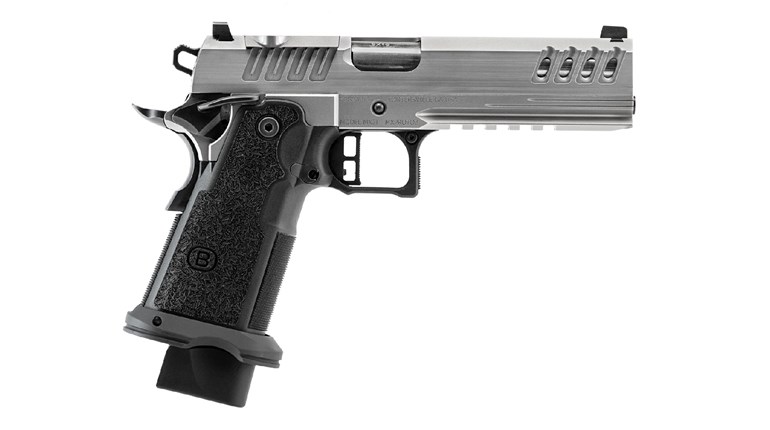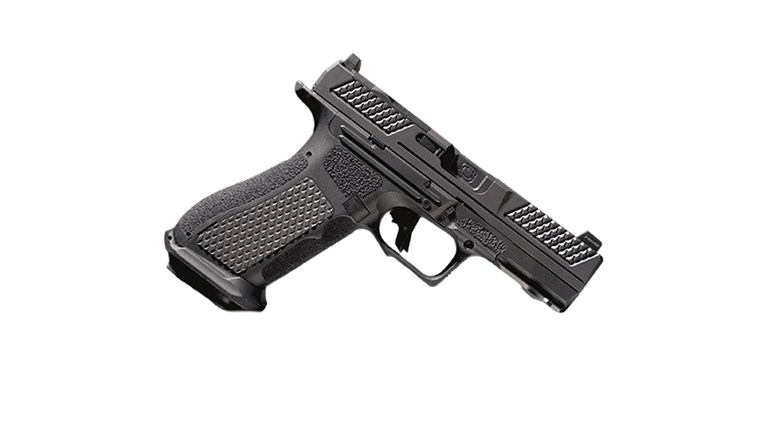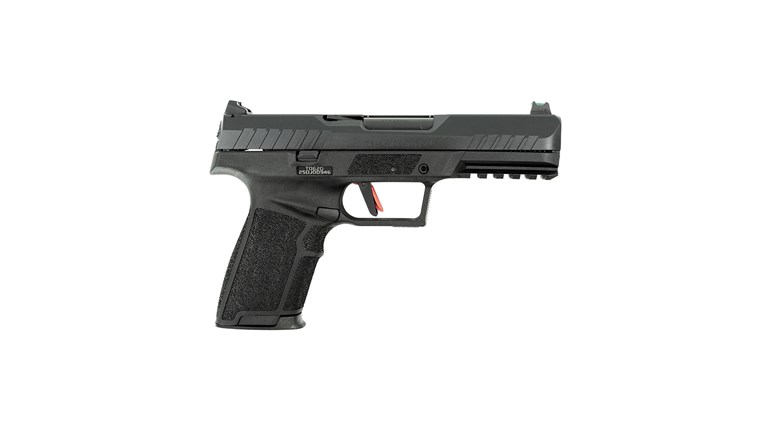

After STI rebranded as Staccato, the 2011 platform exploded in popularity in a way it never had before, particularly among shooters who had traditionally shown little interest in double-stack 1911s.
The 2011 had always existed in action-pistol competition, its silhouette instantly recognizable in Open-division race guns. What Staccato did—through rebranding, proactive marketing and, more importantly, substantive revisions to the core design—was deliberately introduce the 2011-style pistol to the tactical community and the broader shooting public.
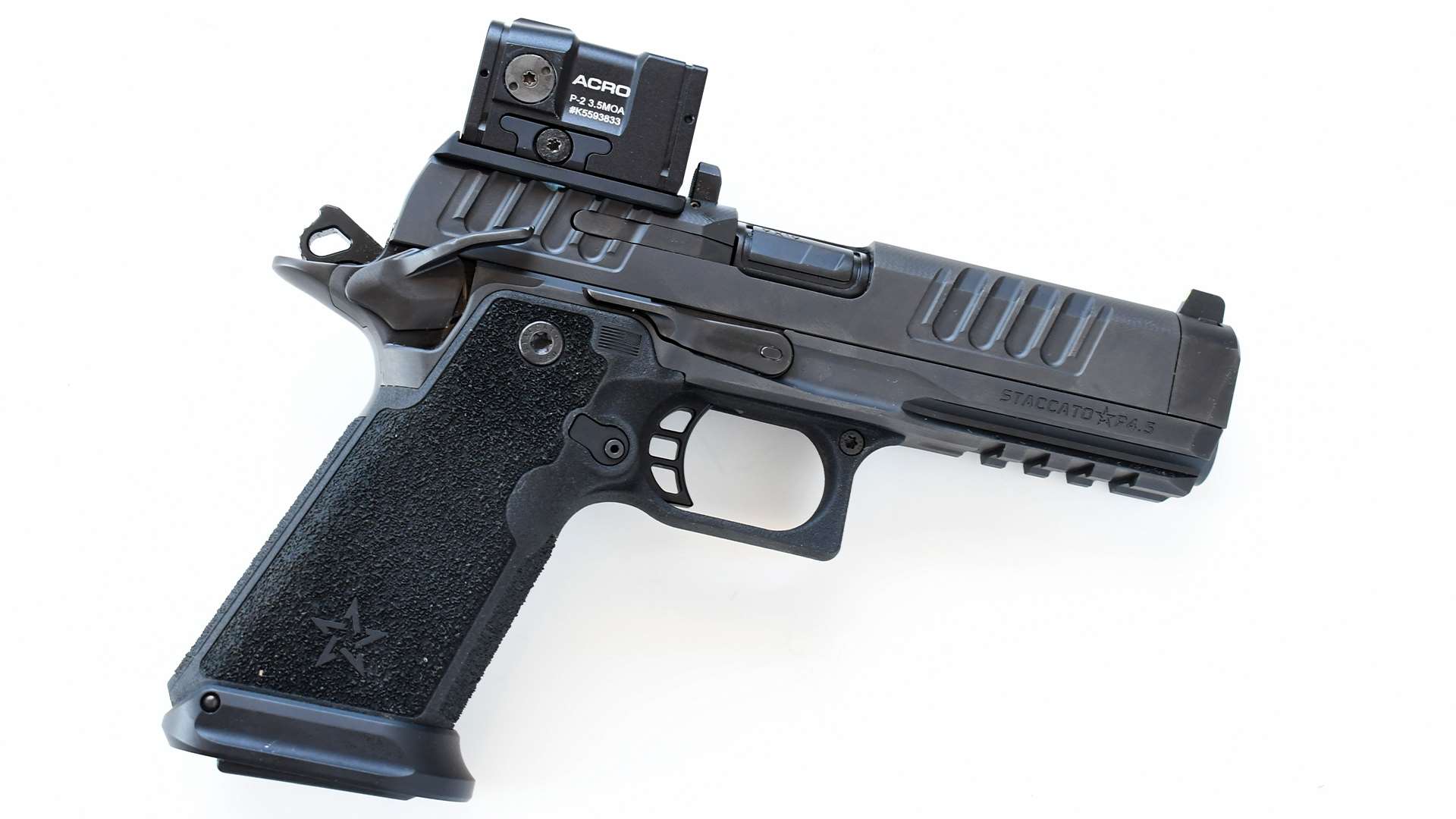
The surge in demand for double-stack 1911 pistols has had far-reaching consequences. Both budget and high-end manufacturers are selling more double-stack guns than ever before. In the action-pistol world, this wave is arguably responsible for the formal creation of USPSA’s Limited Optics division, which was established barely two years ago.
For all their wonderful qualities and performance attributes, dedicated 2011 and double-stack 1911 shooters understand that 2011-pattern magazines are a pain point. They know these magazines need to be carefully monitored, tuned and frequently cleaned.
That’s why it wasn’t surprising that enterprising gunsmiths and tinkerers started to cross-pollinate the basic 2011 design with components from other pistols. With 2011-pattern magazines being a sticking point, seeing designs feeding from alternative double-stack 9 mm magazines was almost to be expected. There were a few companies that introduced double-stack 1911 models that fed from Glock or SIG Sauer P320 magazines that hit the spotlight in the early 2020s. Stealth Arms, who sells the Platypus 1911, comes to mind.
It wasn’t too long that Staccato 2011 followed suit and released its own iteration of 2011s that feed from “alternative” magazines. Known as the Staccato HD series, this product line made its public debut at SHOT Show 2025. Their most notable feature is the fact that they feed from 9 mm Glock-pattern double-stack magazines.
Staccato HD P4.5: The HD Series Standard Bearer
The Staccato HD P4.5 is the duty-sized offering of the Staccato HD product family. This single-action, 2011 pistol chambered in 9 mm Luger sports a 4.5-inch barrel. Its design is based on the original 2011 Staccato P design, with some adjustments.
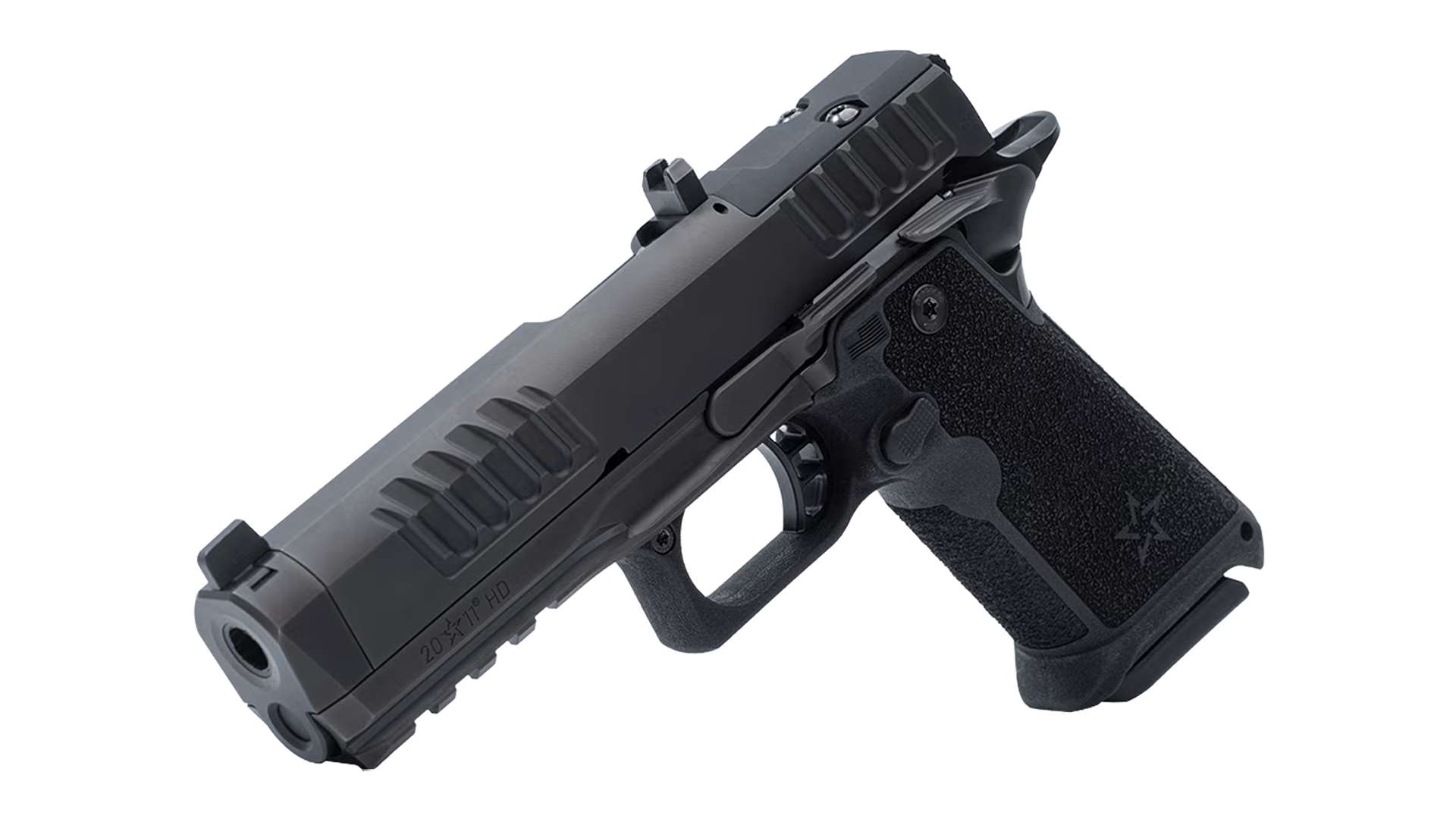
Being familiar with the original Staccato P, it’s easy to notice all the liberties that Staccato took when tweaking the HD series. Staccato Ps and HD P4.5s may share calibers and a 1911-style single-action mechanism, but the HD P4.5 is a completely separate pistol from head to toe.
While it’s true that Staccato markets dedicated competition pistols—and that the HD P4.5 fills a more “duty-style” role, the HD P4.5 remains a 2011 at heart. Pay no regard to how “tactical” this gun looks, because it’s a natural fit for USPSA Limited Optics division or IDPA Carry Optics division.
Its accuracy potential, trigger and specific optics-ready configuration will not hinder the average competitor in the least.
Staccato HD P4.5 Frame Changes
Aside from using Glock magazines, the HD P4.5 has a redesigned steel frame that notably includes a right-side slide-stop as a convenience for left-handed shooters. I appreciate how the frame is contoured with ledges to protect the slide-stops on either side and how its lines gracefully flow into a full-length Picatinny-rail dustcover. One downside: the extra slide-stop adds some complexity to this gun’s field-stripping process. I wish the rear corners of the frame underneath the thumb-safety area were slightly radiused and pared down just a smidge.
Grip & Trigger
It goes without saying that the Staccato HD P4.5’s polymer grip follows a different angle compared to the company’s other 2011s. That’s just a byproduct of using a Glock magazine. As much as the online peanut gallery loves to fret about grip angles, the HD P4.5’s “different” grip angle is a non-issue.
The HD P4.5’s module has a grippy, medium-coarse texture that works surprisingly well. It’s a huge improvement over the texture in earlier Staccato 2011s. All four sides of the grip are textured, and it’s easy to get a good purchase. However, the grip module isn’t the thinnest, nor does it have interchangeable inserts.
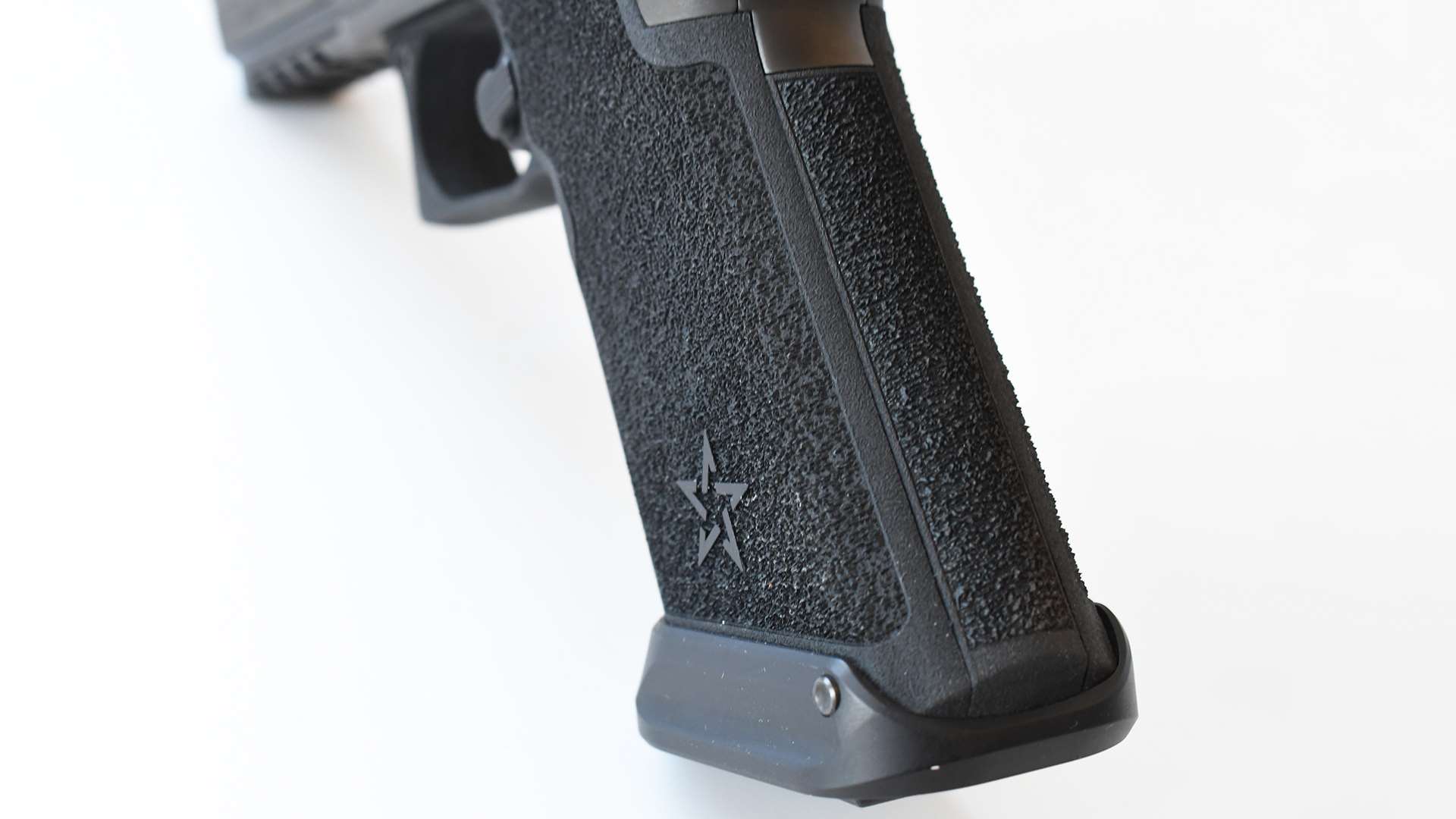
This design also omits the grip safety. The HD P4.5’s magazine well appears to be an improvement over the original, because it has a lower profile while still providing that “funnel” functionality on magazine insertions.
1911-style triggers are one of the biggest reasons why shooters go through the hassle of fielding 2011s and other double-stack 1911 models. The HD P4.5’s trigger is no exception. As someone who spent some time this year managing stock Glock and CZ P10 triggers, dealing with the HD P4.5’s trigger feels like taking a vacation.
There’s approximately 1/8-inch of takeup before the breaking point, which breaks at an average of 2 pounds, 3 ounces. The reset occurs near instantaneously, as soon as the sear spring pushes the trigger forward again.
Optics System & Sights
The Staccato HD P4.5’s slide layout is probably my favorite thing about the pistol. It prioritizes red-dot shooting, as any serious pistol built and sold in the second half of the 2020s ought to.
Staccato HD slides incorporate a new (different) optics-plate system which Staccato calls the HD HOST. The rear portion of the slide is milled out substantially to accommodate HD HOST plates without making the mounted optic sit too tall.
Even though the standard iron sights that these pistols ship with are back-up sights, the way they work in tandem with the mounted reflex sight is extremely well executed. Personally, I find this to be one of the most impressive aspects about the Staccato HD P4.5 pistol.
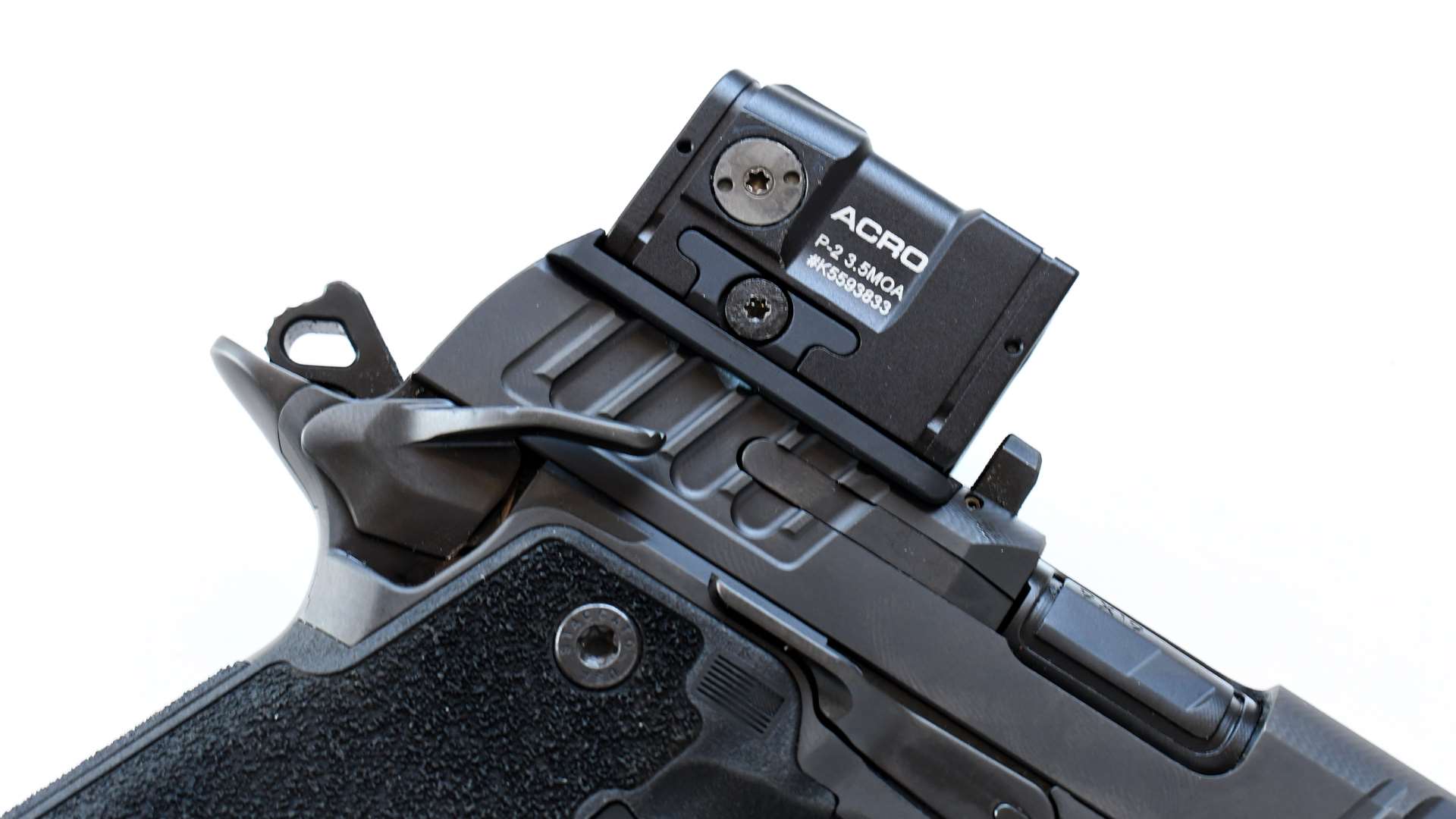
On these guns, the rear sight sits ahead of the optics cut and accomplishes two things. First, the sight acts like a shield to protect the optic from carbon or erratic brass. Second, this leaves the rear portion of the red-dot sight completely unobstructed. In my case, I mounted an Aimpoint ACRO P-2 with an HD HOST ACRO pattern plate, and this combination works immaculately.
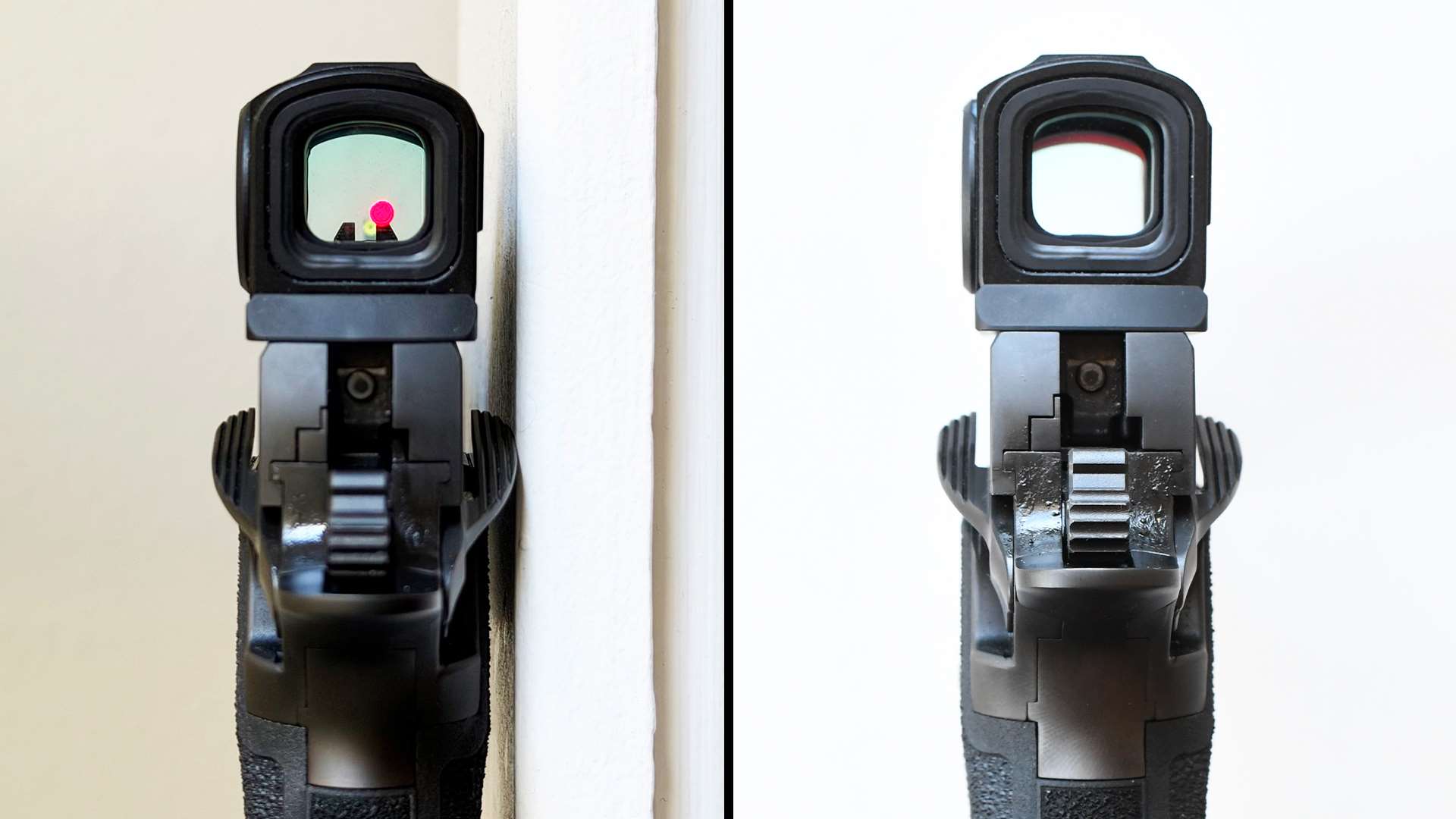
While I can’t comment on all the different permutations when it comes to sight co-witnessing and general sight pictures due to all the variations found in red-dot sights, the user experience with the Aimpoint ACRO P-2 is so seamless, it almost feels like the slide was designed around it. The front and rear sights are easily visible through the bottom portion of the ACRO P-2’s window; the ACRO’s ultra-clear glass also helps.
Instead of a dovetail, the HD P4.5’s rear sight specifically has a small mortise. The sight is held in place by a roll-pin. This means that it’s not drift-adjustable, but the sight still is serrated and has a deep, square notch which would feel at home on any “regular” premium rear sight.
The Trijicon tritium front sight sits in a dovetail over an integrated sight-block that’s part of the pistol’s 4.5-inch barrel. The front sight blade itself is thinner than the typical Trijicon HD or Ameriglo, but wide enough to be useful across the board. It also includes a tritium lamp surrounded by a green, eye-catching color fill. In summary, even though the Staccato HD P4.5’s iron sights are only auxiliary, they are not minimum effort.
Slide & Sight Block
In addition to providing the front sight a home, the HD P4.5’s sight block is an adaptation from race guns. First, its sight block provides extra mass at the muzzle to counter flippiness during shooting. Second, it allows the gun to get away with using a shorter slide, and shorter slides tend to reciprocate more quickly by virtue of having less mass.
Third, since sight blocks don’t reciprocate the way slides do, sights that sit on blocks are easier to visually track. In fairness, this point isn’t too much of a concern with red-dot shooting. Ultimately, the purpose of the sight block is to help keep a slide track flat without having to resort to porting or a compensator. As a side benefit, this keeps such guns away from Open divisions.
Staccato HD P4.5 and HD P4 pistols share the same length slide, which is outfitted with coarse and easy-to-grab front and rear slide serrations.
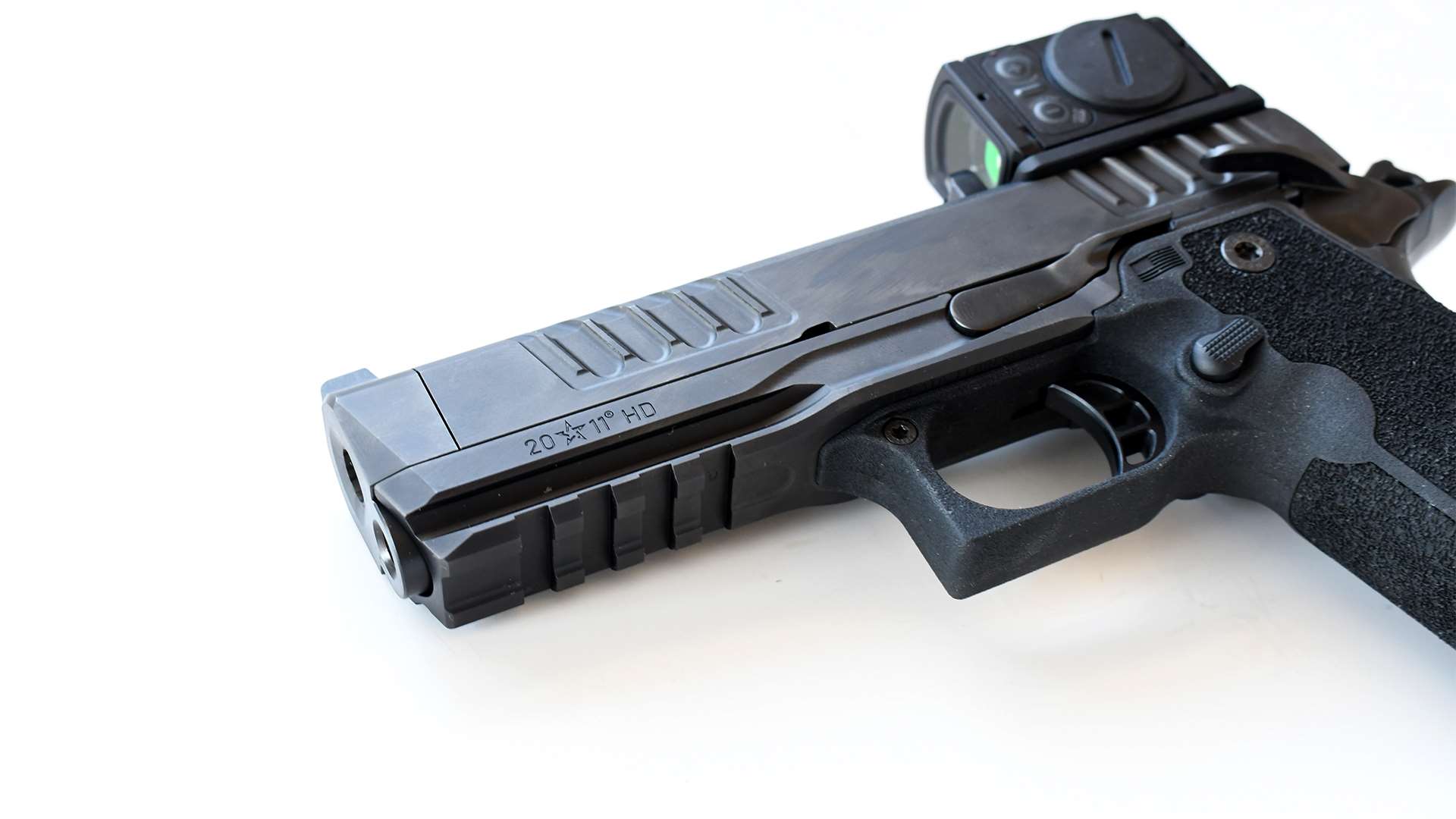
Depending on the trim level, these slides can be had with lightening cuts directly over front serrations, but these aren’t the default. HD series slides maintain that general thinness that all 1911 slides are known for. Mechanically, these slides employ a Series-80 style internal safety array. They also eschew the traditional internal extractor, a vestigial structure in 1911s, for a more modern and robust external extractor.
Range Time with the Staccato HD P4.5
With standard pressure 9 mm ammunition, like the Staccato Range 124-grain FMJ ammunition which I used for this article, the Staccato HD P4.5 is a soft-shooting pistol with a gentle recoil impulse. Not only is it a full-size gun with some heft to it, but its 1911-style tilting action in conjunction with its lighter recoil spring and sight block just make it feel gentle. This gun’s slide certainly has a different rhythm than the typical striker-fired polymer pistol, with slightly heavier springs set up to handle duty pressure ammunition. To be more specific, the HD P4.5 has slower rebound under rapid fire, thanks to its gentleness. This was something I also experienced with the original Staccato 2011 P as well.
Both the HD P4.5 and HD P4 share the same recoil spring assembly with a captured flat-wired design. Although Staccato does not officially list the weight in the RSA’s product specification, it feels like a 13-11# spring. When it came to cycling dedicated minor power factor like HOP Munition’s Poly 147-grain FP loads, I had no issues with the stock RSA.
Slow-fire almost feels like cheating and shooting a rifle so to speak. It’s the combination of that easy trigger, the gun’s clear sighting system and its stable frame. This is the kind of pistol that would tempt a competitor to “snipe” the furthest arrays from across the stage instead of moving continuously. It may not be the best strategy in action-pistol sports, but it won’t be the pistol holding you back. I took the liberty to shoot this at B/C steel placed on a 100-yard rifle berm, and once I found my hold, I dinged the target a few times using generic 115-grain factory ammo. It was so easy with this gun that I couldn’t help but to let out a guilty laugh, as if I were getting away with something.
Besides the standard 124-grain FMJ range load, I also grouped some of Staccato’s 136-grain Match JHP bullets in addition to the HOP Munitions Poly 147-grain loads I already mentioned. Three loads are far from a comprehensive sample size, but with a weighted average of a 1¾-inch, 5-shot group at 25 yards, the results are extremely promising.
25-Yard Accuracy Report
| Ammo (9 mm Luger) | Muzzle Velocity (FPS) | Min Group (inches) | Avg. Group (inches) | Max Group (inches) |
|---|---|---|---|---|
| HOP Munitions 147-gr. Poly FP | FPS: 880.1 SD: 7.5 ES: 29.6 |
1.88 | 2.09 | 2.25 |
| Staccato Range 124-gr. FMJ | FPS: 1,147.7 SD: 17.8 ES: 88.2 |
1.25 | 1.93 | 2.38 |
| Staccato Match 136-gr. JHP | FPS: 1,005.4 SD: 10.3 ES: 50.0 |
0.50 | 1.25 | 2.00 |
| Notes: Measured average velocity for 20 shots fired next to a Garmin Xero C1 chronograph at the muzzle. Temperature 78° F. Abbreviations: FP (Flat Point), FMJ (Full Metal Jacket), JHP (Jacketed Hollow Point), ES (Extreme Spread), SD (Standard Deviation). | ||||
The Takeaway
Due to deadlines, timing and travel, I missed out on taking this pistol to a match as I enjoy doing for Shooting Sports USA reviews, but in the 250 or so rounds that I fired, I experienced no major issues. And this was with using the supplied Mec-Gar 18-round steel Glock-pattern magazines, which also debuted at SHOT Show 2025. I’ve seen some concerns about these magazines online, but I’d like to disclose that I didn’t experience any issues while also being clear that I didn’t torture the pistol (yet) with extremely high round counts. I did shoot the gun with a spare Glock G17 magazine I had—no complaints there.
Staccato 2011s, especially the more ordinary models, have a reputation for being reasonably priced in relation to their quality and fit and finish. The same is readily apparent with the Staccato HD P4.5, and as I point out above, I really appreciate its sighting system, given how important the ability to see is in shooting. That the HD P4.5 circumvents the 2011-magazine Achilles-heel issue might make this my favorite Staccato 2011 to date.
Staccato HD P4.5 2011 Specifications
- Manufacturer: Staccato 2011, staccato2011.com
- Country of Origin: USA
- Action Type: Single-action, semi-automatic
- Caliber: 9 mm Luger
- Capacity: 18+1
- Frame: Steel
- Grip Module: Polymer
- Slide: Steel
- Barrel Length: 4.5 inches
- Sights: Fixed rear sight; fixed Trijicon front sight (green tritium insert)
- Trigger Pull: 2 lbs., 3 oz.
- Length: 8.1 inches
- Width: 1.6 inches
- Height: 5.6 inches
- Weight: 34 ounces
- Accessories: 3 magazines, large soft-sided zippered carrying case, documentation
- MSRP: Starts at $2,699