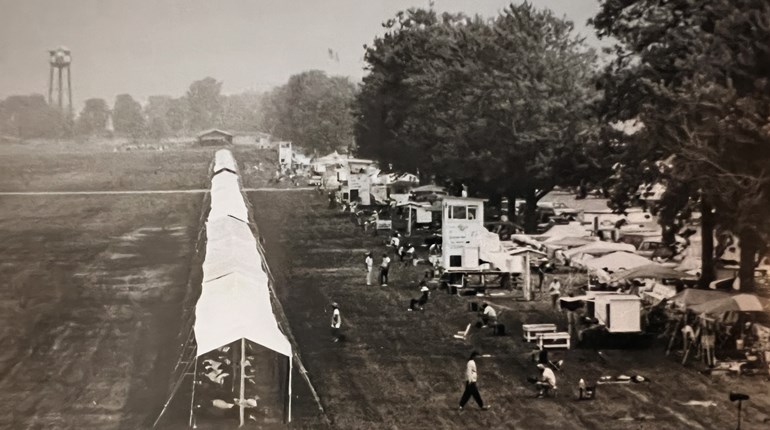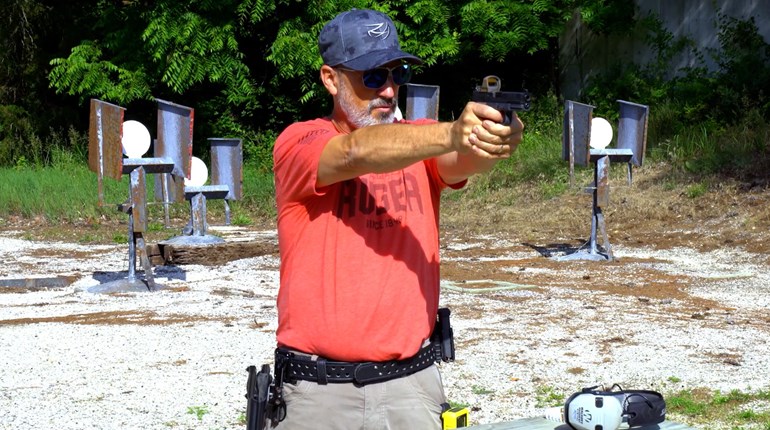
From the vault: Tips for proper trigger technique from a question and answer session with none other than rifle shooting legend Lones Wigger. His sage advice still applies to all rifle disciplines. Taken from the transcription of the 1984 NRA Silhouette National Championship seminar where Mr. Wigger was a panelist.
Trigger Control for Silhouette Rifle
by Lones Wigger
I think there are two ways to control the trigger when you shoot with a telescope. One method is to hold the rifle as still as possible so you have a minimum wobble or holding area and squeeze the trigger. Start applying pressure to the rear and if your area of wobble is small enough to keep the reticle on the animal, you can use this type of trigger control and shoot one right after another all day long and never miss. Basically, I think this is the type of trigger control you should try for. Try to shoot the shot within the smallest possible area of wobble.
The problem comes when your area of wobble is a little bit bigger than the animal, and the reticle starts moving off the animal as you start squeezing the trigger. It either goes out and you have a miss, or you don't shoot and have to try again when it comes back in.
You can't focus on two things at once so focus on the target.Nobody ever said you had to hold in the middle to shoot in the middle. You just have to break it at the right time. There are going to be times when it will pass through the middle. If you are shooting standing in the gallery, you don't hold in the 10-ring. You don't have to hold in the 10-ring to shoot a 10. You don't have to hold on the animal to hit the animal. You have to break the shot when it's on the animal to hit it. That's the key. Proper trigger control means getting the shot off at the right time.
To get the shot off at the right time, get the area of wobble as small as possible, let it move and then apply pressure to the trigger as the reticle comes toward the animal. Apply a little more pressure; if it moves out, maintain the pressure on the trigger until it comes back in again and then resume squeezing until it goes off at the right time. You have a controlled trigger release. You are controlling exactly when you want the trigger to break.
This is a little different than just holding and squeezing through your area of wobble. When you hold and squeeze through the area of wobble, you have a surprise shot. If your area of wobble is too big, control the shot by controlling when the shot breaks. I am not suggesting that you jerk the trigger. Rather, set up a movement or pattern and then control when you break the trigger.
QUESTION: When I watch you shoot, it appears that your trigger finger is actively moving back and forth. Would you explain this to me?
ANSWER: I've never advocated doing what I do; but what I say. That's a bad habit I learned a long time ago. I kind of milk the trigger with my finger in motion so I always have a feel for where the trigger is. I'm squeezing the trigger; you're just not seeing it. And, I'm squeezing it fast.
QUESTION: Do you circle the target, or does your pattern go up and down?
ANSWER: I don't have a set pattern and don't look at a pattern. I move around and then begin to slow down and come into the target. At that point, I squeeze the trigger and try to break the shot in the center.
QUESTION: What should you look at?
ANSWER: Look at the animal. Get a reticle that's big enough so you can see it and don't lose it. You should always know where the reticle is. You can't focus on two things at once so focus on the target.
QUESTION: How much time do you spend firing in a normal week? How much time do you spend dry firing?
ANSWER: I haven't shot any silhouette since last year at Nationals, but I do shoot other things. I probably practice about two days a week and then shoot in competition. You learn to shoot in matches.
QUESTION: Do you prefer a two-stage trigger?
ANSWER: That's something you have to decide for yourself. Most of the better shooters use a two-stage trigger. They seem to have more confidence and control over the trigger when they are able to take up the first stage. Personally, I prefer a single-stage trigger.
See more: The Best High Power Rifle Cartridge