The below is an excerpt from the 1978 book, Olympic Shooting, written by Col. Jim Crossman and published by the NRA.
1960—Rome: 100% Improvement, One Plus One
By Colonel Jim Crossman
Yes sir, 100 percent improvement sounds great—and it is. But when you are comparing two now with one the last time, the numbers really are not very great. And that is how the United States stood at the end of the 1960 Olympic Games. Where as the United States won an award in 1956, it won two awards in 1960. Really, it was more than 100 percent improvement, since Pinion won a bronze medal for third in 1956 and the two in 1960 were a second-place silver and a first-place gold.
There was another significant change in 1960, also. For the first time in history, the U.S. tryouts were conducted on honest-to-goodness international-style ranges. The Floyd Parks Range complex at Fort Benning, Ga., included ranges for all international and Olympic events and every range was laid out to include the best features of European ranges.
For the first time, free pistol shooters and free rifle shooters shot from a permanent protected shooting house. For the first time rapid-fire pistol contestants shot from a proper shelter, rather than the hastily improvised shelters of previous years. The ranges included a running deer installation, since this was still a part of other UIT matches even though it had been dropped from the Olympics. Although there were other running deer ranges of one sort or another around the country, Benning was probably the first range that met the rules.
And for the first time in this country, there was an international clay pigeon range.
After the Korean fracas, the National Matches were resumed in 1953 at Camp Perry with the Marine Corps providing most of the effort to get them going. I think I was the only Army officer on the staff. In competitions among the various Service teams, the Army did not always come out on top. In horrible fact, starting in 1953, the big National Trophy Team Match was won four years in a row by the Marines. The leathernecks had always believed it was the rifleman's job to shoot his rifle—and to shoot it well. For a number of reasons, then, the Army started an active marksmanship program which began in the unit with training and competition, progressing through higher levels up to the All-Army matches.
To further the development of marksmanship at all levels, the Army established and Advanced Marksmanship Unit, now called the U.S. Army Marksmanship Unit. The mission included improvement of existing equipment, development of new equipment, and—more important—development of improved techniques for teaching marksmanship. After making a study of the sad state of international shooting in this country, and seeing with what importance it was viewed by other countries, the AMU started activity in this field.
The obvious first step was to get some true international-type ranges. And so it was that the 1960 tryouts could be held, for the first time, on proper international ranges. In addition to this excellent set-up at Fort Benning, the Air Force and Marine Corps built international facilities.
The best of the military and civilian shooters gathered at Fort Benning to seek a place on the Olympic shooting team.
As in previous years, preliminary tryouts had been held all around the country to give everyone a chance. In addition to the high shooter in the tryouts, the Olympic Shooting Committee extended invitations to shooters who had been on previous international teams. The shooting for each event covered three days so that a shooter had to stand up under much pressure to win a place on this team. When the fur and feathers quit flying and things finally settled down, the squad looked like this:
1960 U.S. Shooting Team
- Dr. Emmet O. Swanson, Minneapolis, Minn., Team Captain
- Lt. Col. S.C. Carpenter, U.S. Army Team Coach
- John W. Hurst, Los Angeles Police Dept.
- Cpl. Gary L. Anderson, USA
- Capt. William W. McMillan, USMC
- Lt. Daniel B. Puckel, USA
- SFC Lawrence K. Mosely, USA
- Lt. John R. Foster, USA
- SFC Nelson H. Lincoln, USA
- GySgt. James E. Hill, USMC
- Lt. James R. Clark, USA
- Mr. Arnold O. Riegger, Castle Rock, Wash.
While there were some familiar names on the list, many were new to the Olympic roster, although all were experienced shooters and some had shot on other international teams.
Read Part Two of our retrospective on shooting events at the Rome 1960 Olympics. Also, remember to subscribe to the free Insider newsletter.
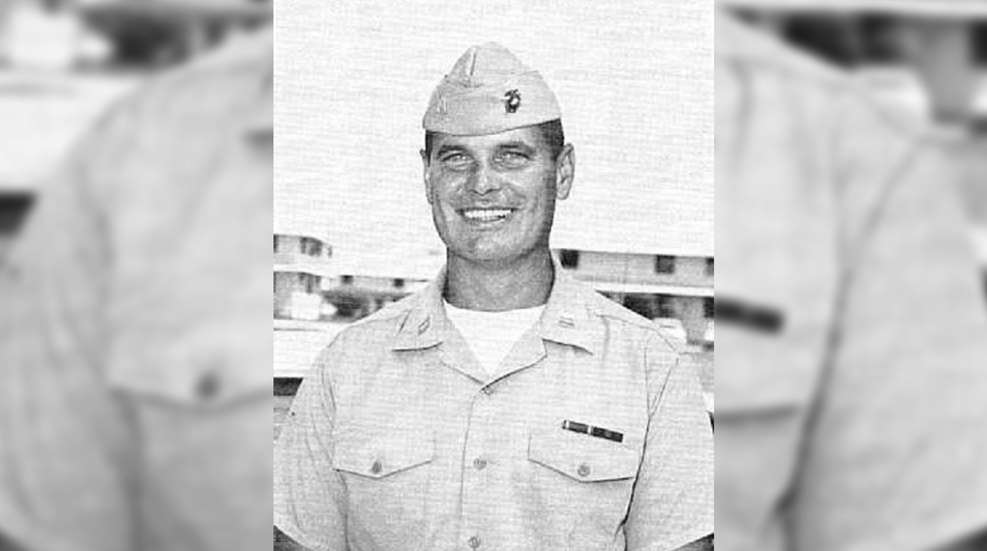
Photo: Lt. Col. Bill McMillan, U.S. Marines, won a gold medal in Rapid Fire as a young captain at the Rome Olympics in 1960. He first participated at the Olympics Games in 1952. Photo from NRA Archives.
Read more: Stockholm 1912 Olympics: The Games Become An Event