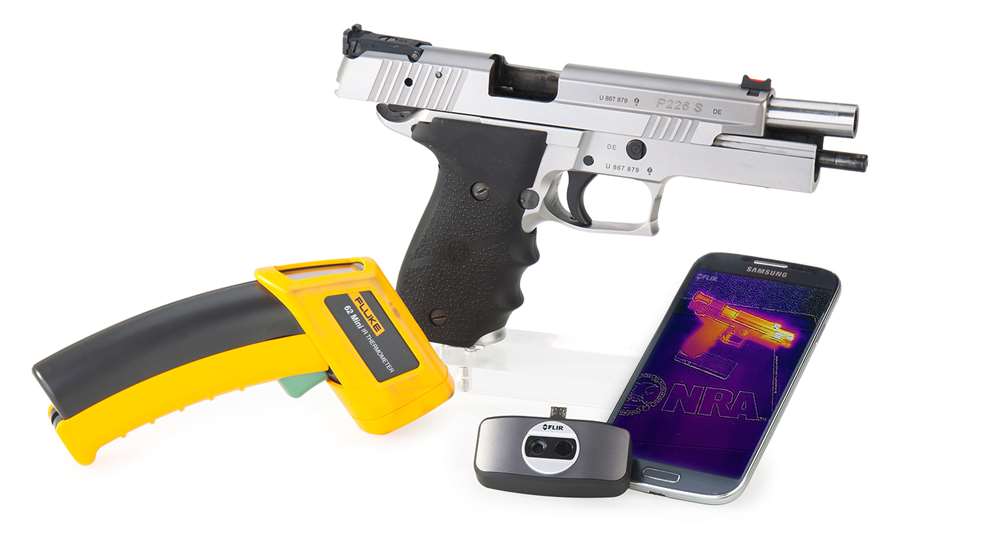
While practicing for the Bianchi Cup Action Pistol Championship scheduled for May, I tried measuring the heat generated by my gun during 240 rounds of rapid fire drills. I had a few expectations of what the test would reveal, like the chamber being the hottest point, but wound up learning something very different.
I thought something was amiss early in the test when the temperature readings with the Fluke IR thermometer were low. From experience, pistol barrels can approach 200°F after constant use. During the first run, my Fluke never registered a temperature higher than 109°F.
I contacted the Fluke Corporation to learn what I may have done wrong and learned that IR technology doesn’t work well with shiny metal. From Travis Porter of Fluke: “I believe the issue is with the gun’s metal. Polished metal has very poor emissivity. This will cause low readings. Also, there is a distance-to-spot-size ratio to consider. I’m not sure on the exact spec for the Fluke 62, but you could have been seeing some scatter in the reading due to this.”
The question of metal type is further borne out by a comparison of the thermal characteristics of various steels, where stainless steel lists a relatively low conductivity rating of 8 (BTU / hr.-Ft-F), compared to mild steel rated at 26-37.
Further conversations with the team at Fluke unveiled a Plan B: Make a screen for the face of the Fluke thermometer to filter out any scatter from the infrared beam and aim it down the barrel, rather than at the muzzle. When that didn’t work, I turned to the spot temperature meter on the FLIR (pronounced Fleer) thermographic camera. The FLIR manual contains the following disclaimer:
The accuracy of the Spot Meter depends on a great many factors, including the distance from the object, the ambient temperature, and the emissivity of the material being observed.
There’s that word again, emissivity: “The effectiveness of emitting energy as thermal radiation.”
So, taken with a conservative grain of salt, the readings provide a relative heat curve rather than precise temperature readings. What follows are the results of the second test, using the FLIR spot meter: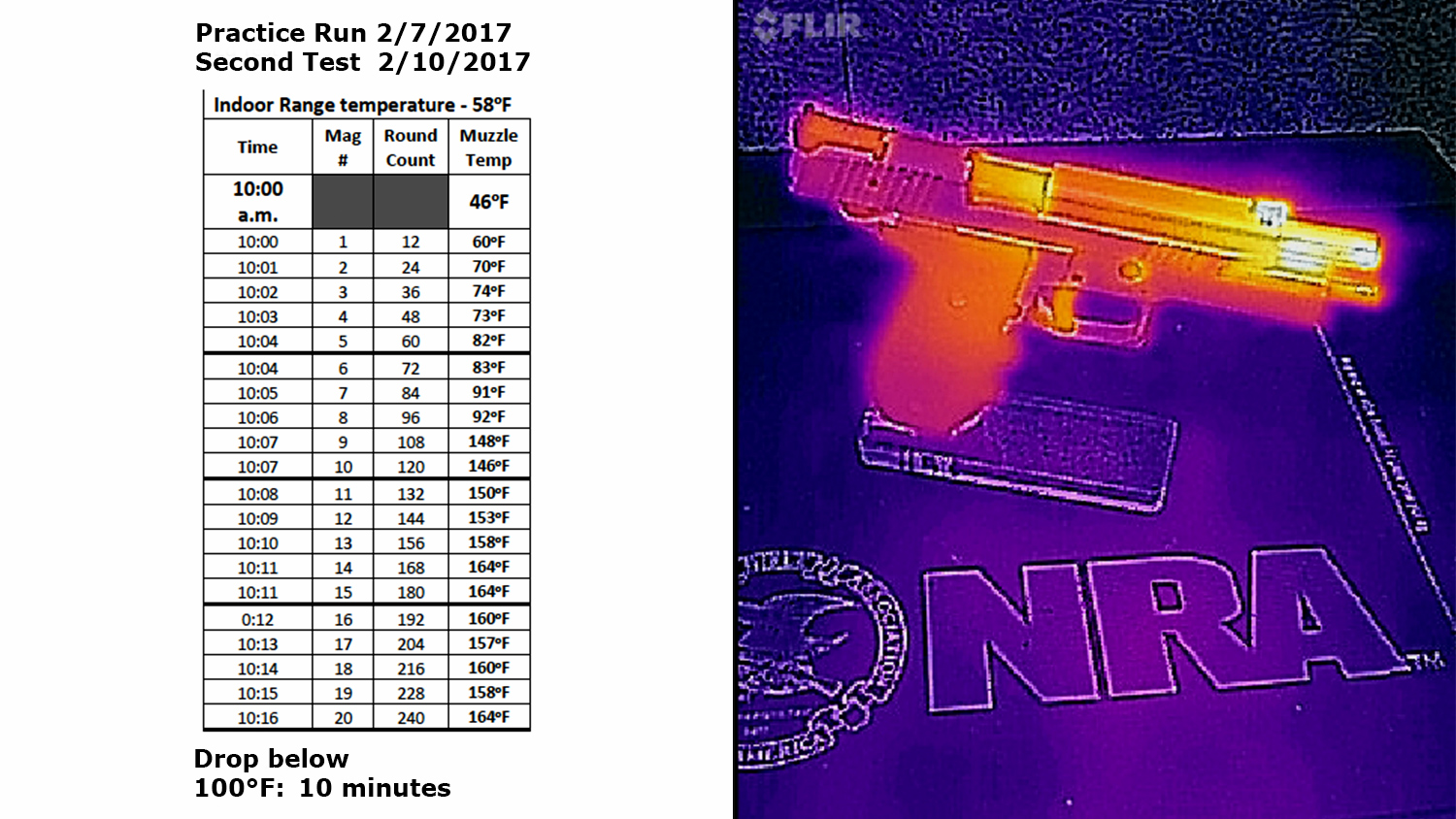
The final thermographic photo above shows the heat pattern after 240 rounds in 16 minutes. Notice that the ferrous metal parts—sights, take down lever pin and trigger, heated up more so than the stainless steel frame and slide. I expected the chamber to be hotter than the muzzle, but that wasn’t the case. Presumably this is because of the insulating effect of the ejected cartridge case. I was also surprised to see the amount of heat transferred to the upper magazine well. Keep in mind that area, with magazine removed, is transmitting heat from the frame through rubber grips, indicating the metal beneath the grips is probably hotter than the image suggests, or this simply reflects the heat transmitted from my hands while gripping the gun.
Finally, the muzzle temperature dropped below 100°F 10 minutes after cease fire. The gun never reached 213°F—the melting point for nylon, as is often used in range bags.
References
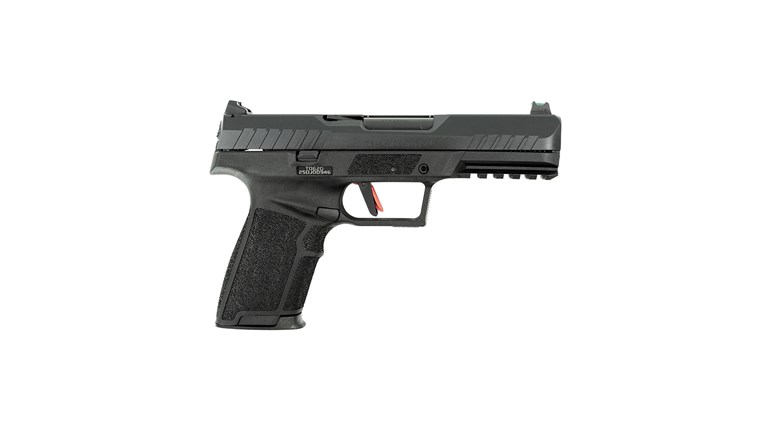
Gun: Stainless Steel SIG Sauer X5-Around, 9mm
Cartridges: Mild reloads
Thermometer: Fluke Model 62
Camera: FLIR One: www.flir.com/flirone/ios-android
For more about thermography, see: www.infraredtraining.com