According to 12-time NRA National Pistol Champion Brian Zins, trigger control is critical in NRA precision (bullseye) pistol shooting. It’s one of the two most important fundamentals along with aiming. (If you missed the previous video on aiming, you can watch it here.)
He cites a point brought up by Rob Leatham in a popular video. “If you can’t pull the trigger without disturbing the sights, stop aiming! If you can’t manipulate the trigger without screwing up the sight alignment and sight picture—why bother aiming?”
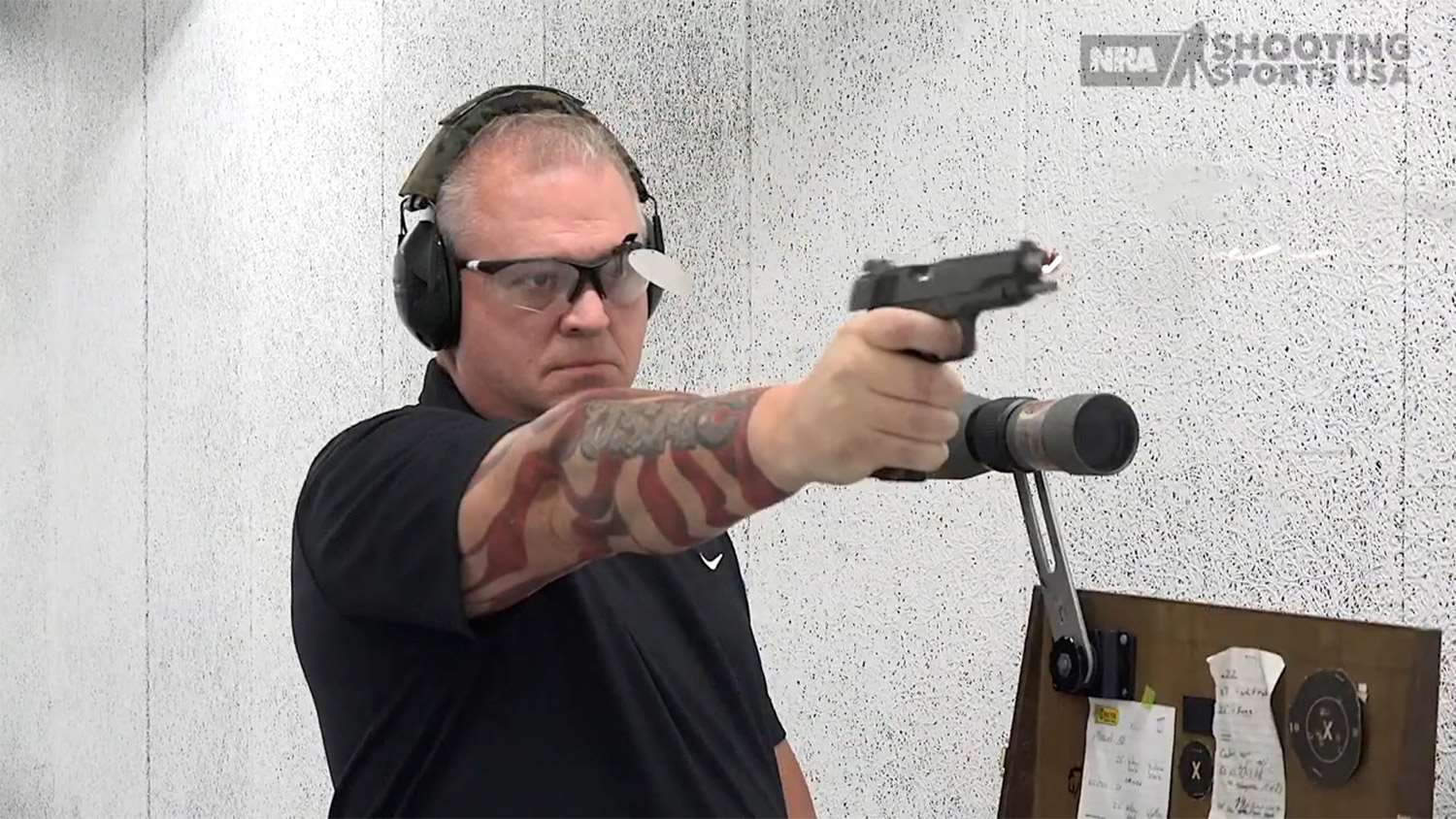
The goal here is to pull the trigger without disturbing the aiming process. At his training classes, Zins asks students, “What’s the trigger for?”
His answer: the trigger is used to help stabilize the sights.
“It’s a little bit crazy, but think about it,” says Zins. “It’s the only part of this gun that is moving during the aiming process. We need to be able to manipulate the trigger and pull it to the rear without disturbing the sights.”
By combining aiming and trigger control into one fundamental instead of two standalone fundamentals, you can start to understand how trigger control relates to the aiming process.
Trigger finger placement
In NRA precision pistol shooting, there’s no reason to have poor trigger finger placement on the trigger, because there is plenty of time to achieve a solid grip and begin the shot process.
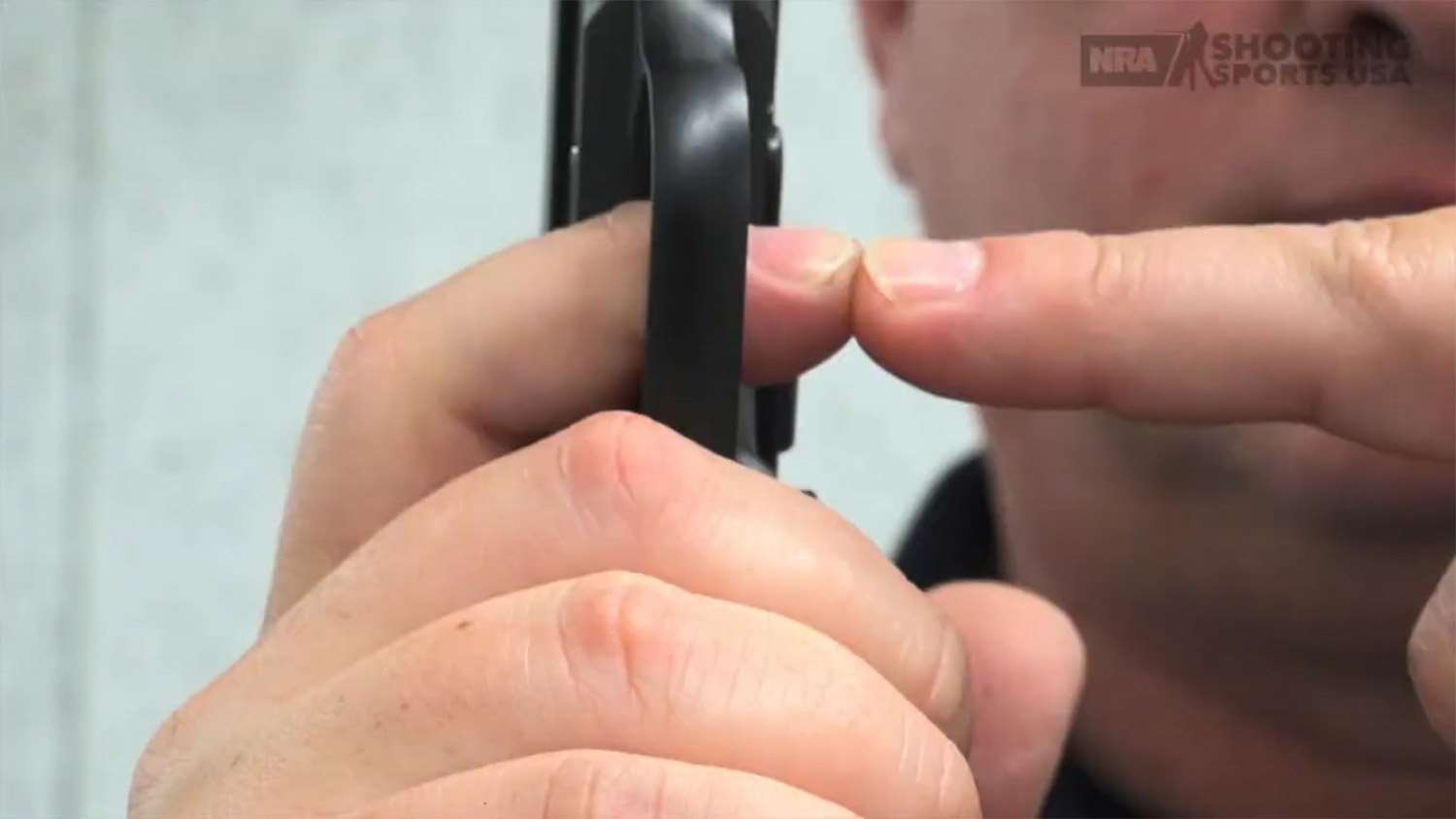
“The key is that once you get your trigger finger placement down, you want to have the trigger finger as flat as possible,” says Zins.
For 1911s, Zins suggests having the first crease of the finger on the trigger’s right edge (left edge for southpaws). This allows for trigger manipulation with a straight rearward pull that keeps things aligned properly.
Conclusion
Instead of just thinking about aiming and trigger control as standalone fundamentals, Zins says that combining the two is a better idea. He calls this technique “aiming through trigger control.”
It’s not as much steering the sights as it is using the trigger to stabilize things.
“We focus on the front sight, and use the trigger to help stabilize the front sight’s relationship with the rear sight and keeping it aligned with the target.”
This video is the third installment of a 13-part series featuring Brian Zins. Below are links to the previous two videos.
To learn more about Zins’ pistol training classes, please visit his Facebook page here.
Read more bullseye pistol articles: