** When you buy products through the links on our site, we may earn a commission that supports NRA's mission to protect, preserve and defend the Second Amendment. **
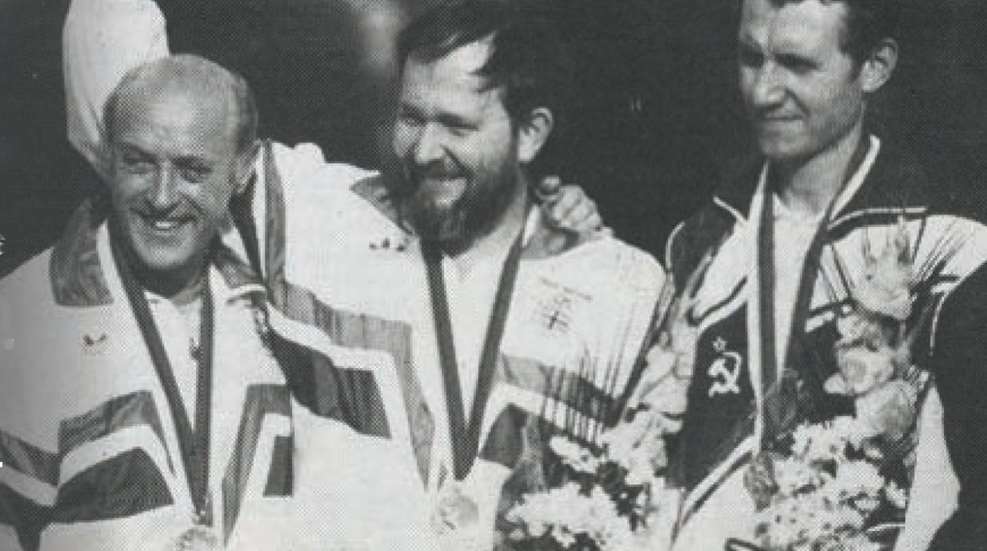
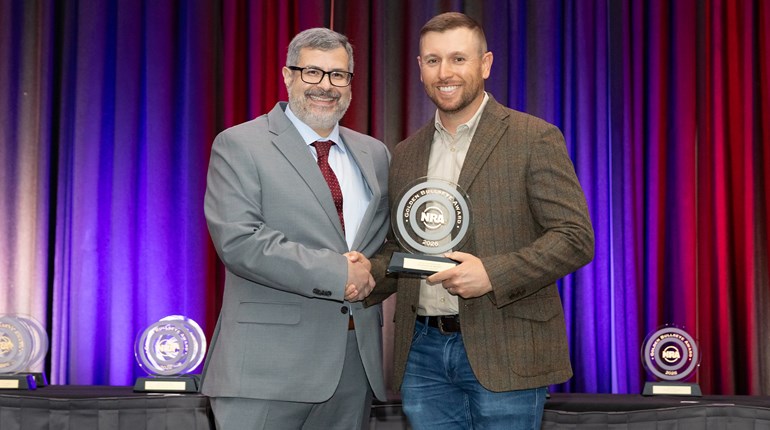
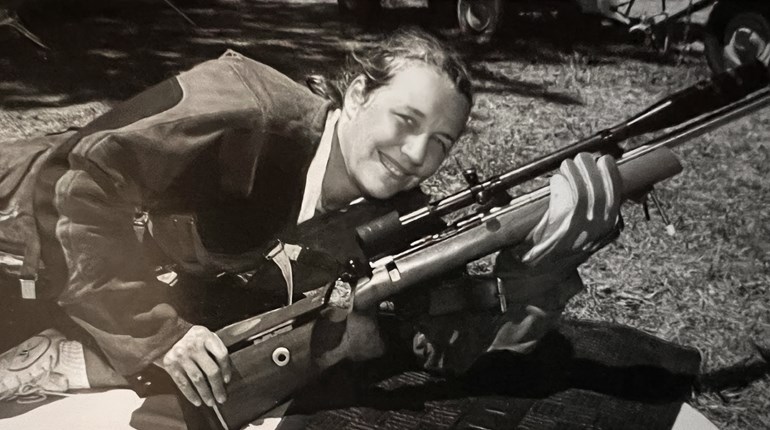
Editor's Note: This is the second installment of our series on Great Britain's Malcolm Cooper, who won gold medals in the 1984 and 1988 Olympics in the smallbore three-position event. Planning for the unexpected helped Malcolm Cooper (pictured above, center) win a gold medal in the 1988 Seoul Olympics. At his left is silver medalist Alister Allan (GBR), the bronze winner is Kirill Ivanov (USSR). Going into the finals, Allan had 1181, Cooper 1180 and Ivanov 1173. Cooper pulled it out over his teammate in the final, 99.3 to 94.6. Mr. Cooper passed away in the U.K. on June 9, 2001. Read Part 1 here, and also check out Mr. Cooper's article on contingency planning.
As a shooter, you know that if you spend time training the body to shoot, your performance will improve. You should realize, however, that the mind can be trained, as well as the body. When you do realize this, you will be able to work out ways to improve your mental performance and address any problems you may have.
Society teaches us, wrongly I believe, to analyze our mistakes. I believe that it hurts your performance to analyze bad shots, since it requires you to focus on what has gone wrong. It points the mind away from what you are trying to do right. The mind functions like a good computer. If junk goes in, junk will come out. The idea is to train your mind not to let the negative thoughts in. Whenever a negative thought comes in, a positive thought should be substituted. For example, after a run of 10s, you may think: “I’m going to shoot a nine anytime now.” You should say to yourself: “I will not accept that,” and substitute the image of a good hold, the front sight centered on the bull, a perfect release and follow through. If negative thoughts are blocked every time they enter your mind, and positive ones substituted, the mind will begin to think only one way—“I can.” Soon, “I will” will replace “I can’t” and “I won’t.” Once you do this, your confidence will skyrocket and you will start to believe that you really can do all kinds of things with your mind. Once you believe that the mind can be trained, you can go on to the next step, which is to develop a series of thoughts that will help you fire a good shot.
"Mental training is no substitute for technical training ... an untrained mind will hold back a well-trained body."
This series of thoughts is another way to train your mind. You can actually work out for yourself exactly how you want to think at a certain time and place. You can sit down and determine the thoughts that would be most helpful to a good performance. Use your imagination to see and feel what a good performance on a shot is like. You must be able to think about that good performance before and during the firing of a shot. For example, before the rifle is picked up for a shot, you should envision a perfect sequence of: Settling the rifle, relaxing with it in the center of the hold area, breathing out, taking the final hold, seeing through the sights with the bull in the center, breaking the shot and following through. This perfect sequence can then be carried out.
Imagining a perfect shot just before you shoot can help bring to your mind exactly what you want, and it increases your ability to repeat it. It also helps keep your mind fairly occupied with performing properly. If you are constantly calculating your score, you are wasting your mental energy and you are not thinking of what you need to in order to do well. It is a good practice to follow a bad shot with a mental review of what you want to think, and then be sure to think correctly during the next shot. This confirmation of proper thinking will tend to eliminate poor thinking and the memory of the bad performance.
Another form of mind training is learning to follow your instincts. All input from training and matches becomes part of your natural instincts, and these instincts can become your best friend. I’m sure that there have been many times when you have wondered how many clicks you needed for wind, answered the question, and then thought: “No, that can’t be right.” You then went with a more conservative number of clicks, only to find out that your instincts were right. I enjoy following my instincts. I get quite a kick when I follow them and they are right, which they often are. While there is an element that draws me back to caution, the rougher the conditions, the better I seem to do by following my instincts. Now, for the most part, I don’t wait on the wind, but go with my instincts for a sight correction and shoot or hold over.
Mental training is no substitute for technical training. It is regrettable that having the mind trained as you would like doesn’t help the body do what you want it to. On the other hand, an untrained mind will hold back a well-trained body.
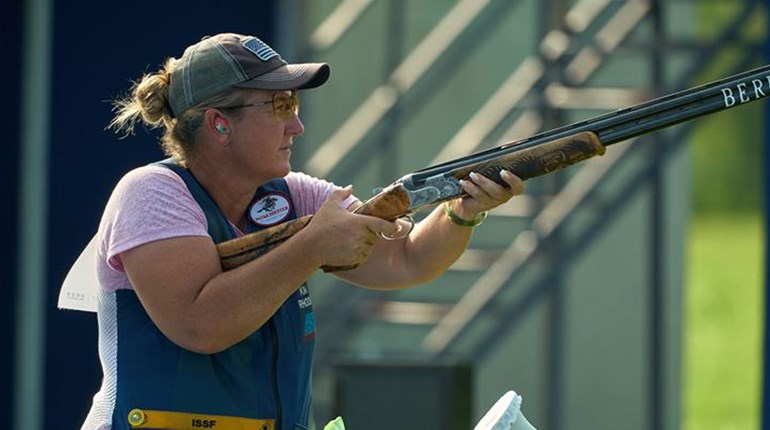
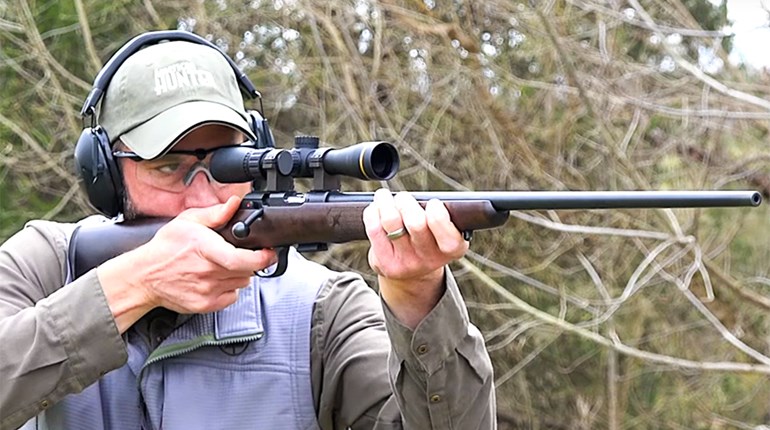
Lead image by Gary Anderson.
As a shooter, you know that if you spend time training the body to shoot, your performance will improve. You should realize, however, that the mind can be trained, as well as the body. When you do realize this, you will be able to work out ways to improve your mental performance and address any problems you may have.
Society teaches us, wrongly I believe, to analyze our mistakes. I believe that it hurts your performance to analyze bad shots, since it requires you to focus on what has gone wrong. It points the mind away from what you are trying to do right. The mind functions like a good computer. If junk goes in, junk will come out. The idea is to train your mind not to let the negative thoughts in. Whenever a negative thought comes in, a positive thought should be substituted. For example, after a run of 10s, you may think: “I’m going to shoot a nine anytime now.” You should say to yourself: “I will not accept that,” and substitute the image of a good hold, the front sight centered on the bull, a perfect release and follow through. If negative thoughts are blocked every time they enter your mind, and positive ones substituted, the mind will begin to think only one way—“I can.” Soon, “I will” will replace “I can’t” and “I won’t.” Once you do this, your confidence will skyrocket and you will start to believe that you really can do all kinds of things with your mind. Once you believe that the mind can be trained, you can go on to the next step, which is to develop a series of thoughts that will help you fire a good shot.
"Mental training is no substitute for technical training ... an untrained mind will hold back a well-trained body."
This series of thoughts is another way to train your mind. You can actually work out for yourself exactly how you want to think at a certain time and place. You can sit down and determine the thoughts that would be most helpful to a good performance. Use your imagination to see and feel what a good performance on a shot is like. You must be able to think about that good performance before and during the firing of a shot. For example, before the rifle is picked up for a shot, you should envision a perfect sequence of: Settling the rifle, relaxing with it in the center of the hold area, breathing out, taking the final hold, seeing through the sights with the bull in the center, breaking the shot and following through. This perfect sequence can then be carried out.
Imagining a perfect shot just before you shoot can help bring to your mind exactly what you want, and it increases your ability to repeat it. It also helps keep your mind fairly occupied with performing properly. If you are constantly calculating your score, you are wasting your mental energy and you are not thinking of what you need to in order to do well. It is a good practice to follow a bad shot with a mental review of what you want to think, and then be sure to think correctly during the next shot. This confirmation of proper thinking will tend to eliminate poor thinking and the memory of the bad performance.
Another form of mind training is learning to follow your instincts. All input from training and matches becomes part of your natural instincts, and these instincts can become your best friend. I’m sure that there have been many times when you have wondered how many clicks you needed for wind, answered the question, and then thought: “No, that can’t be right.” You then went with a more conservative number of clicks, only to find out that your instincts were right. I enjoy following my instincts. I get quite a kick when I follow them and they are right, which they often are. While there is an element that draws me back to caution, the rougher the conditions, the better I seem to do by following my instincts. Now, for the most part, I don’t wait on the wind, but go with my instincts for a sight correction and shoot or hold over.
Mental training is no substitute for technical training. It is regrettable that having the mind trained as you would like doesn’t help the body do what you want it to. On the other hand, an untrained mind will hold back a well-trained body.
Lead image by Gary Anderson.