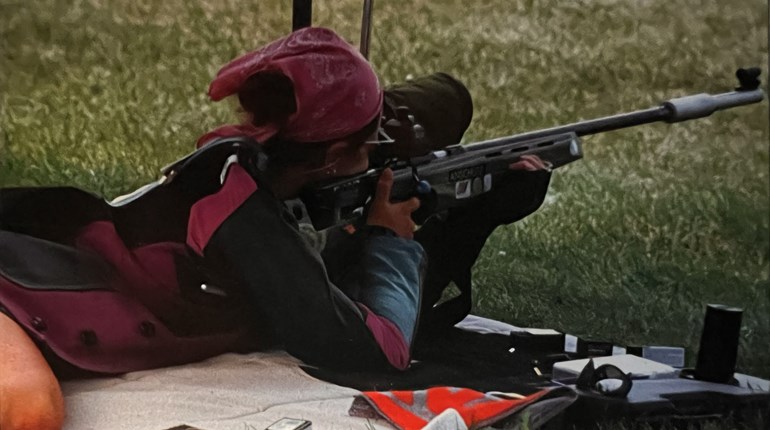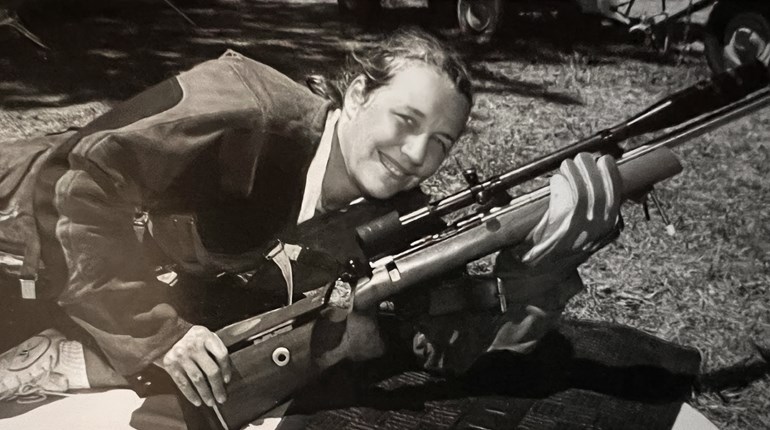
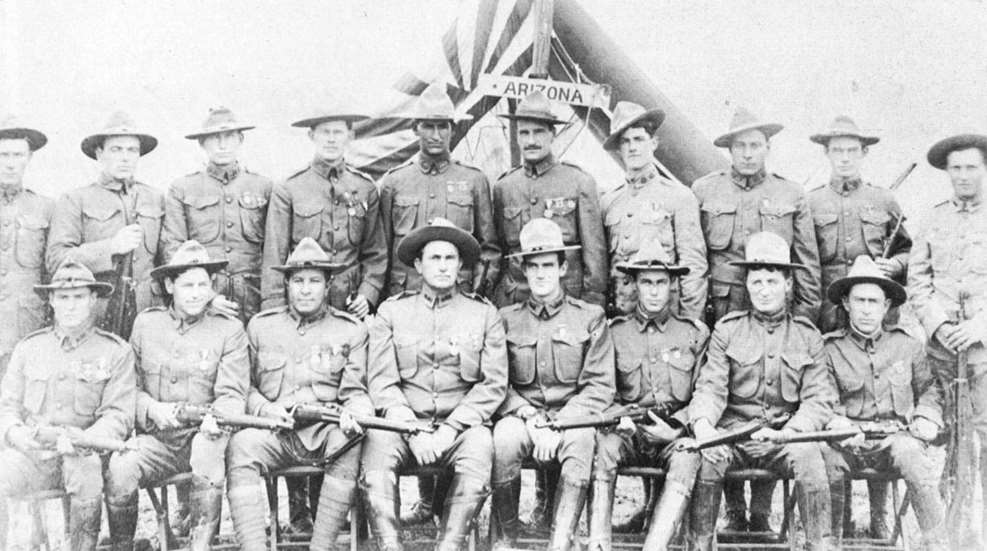
When the National Guard rifle team from the Arizona Territory arrived at Camp Perry for the 1910 National Matches, they were faced with an embarrassing dilemma—they had no flag! Statehood was in the making but, what with one thing and another, no one had thought to design a flag for the about-to-be (it took until 1912) state of Arizona. All the other delegations at Perry had flags, but Arizona did not and they felt distinctly “one down.” What to do? With the energy and creativity that characterized the American West, they took matters in hand and designed a flag.
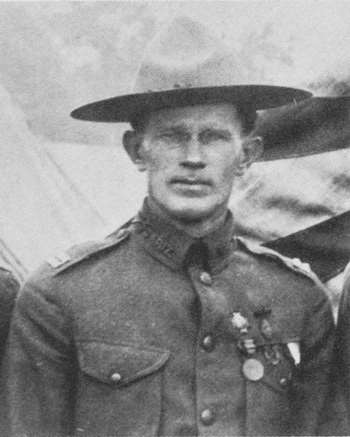
Col. Charles W. Harris, Adjutant General and Chief Administrative Officer of the Territory, got the job and his design is essentially that of the present Arizona state flag. Arizona’s colors are blue and gold, the colors of the Spanish conquistadors (the first Europeans to visit Arizona). The bottom half of Harris’s flag was blue, the top half featured seven gold and six red rays representing the sun—always present in Arizona—and also harking back to the thirteen original colonies.
Arizona, it was then thought, would be the last of the United States. (Arizona was, in fact, the last of the contiguous states—the “lower 48”—admitted to the Union.) The color of the rays, of course, commemorated the area’s Spanish heritage. In the center of the flag was a single, copper-colored star—symbolic of Arizona’s copper mining industry. In the colonel’s design a single red band ran horizontally across the center of the flag, a distracting feature that was quickly dropped.
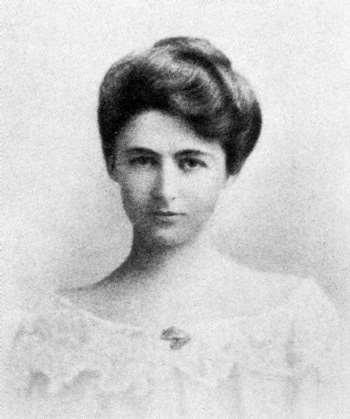
The “Betsy Ross” of Arizona—the lady who actually sewed the first Arizona flag—was Nan D. Hayden, wife of team member Carl T. Hayden. Her work, then as now, proudly marked the location on the Camp Perry firing line of Arizona’s rifle team—the territorial team in 1911 and the state team after 1912. Nan Hayden’s husband—a team member whose greatest contribution was to have placed as a “Tyro” in two 1000-yard matches in 1911—was destined for recognition in another arena. Carl Hayden was the organizer of the Arizona National Guard, at Tempe, in 1903, and went on to be a member of Arizona’s first Congressional delegation. He served in the U.S. House of Representatives from 1912 to 1926, then as a Senator from Arizona from 1927 until his retirement in 1969. For all of his adult life and career, Carl Hayden was a staunch NRA supporter. He was elected to serve on NRA’s Board of Directors in 1911 and served as Third Vice President of the Association in 1913. Cited as having “made outstanding contributions to the National defense by his personal efforts to encourage civilian marksmanship,” he was named an Honorary Life Member of the National Rifle Association in 1957.
The Arizona state flag his wife made was adopted by the Arizona state legislature as the state’s official colors in February 1917. The only change from Harris’s final design was to change the arrangement of the sun’s rays. As adopted, the Arizona flag has six gold and seven red rays. No one seems to know just why the change was made.
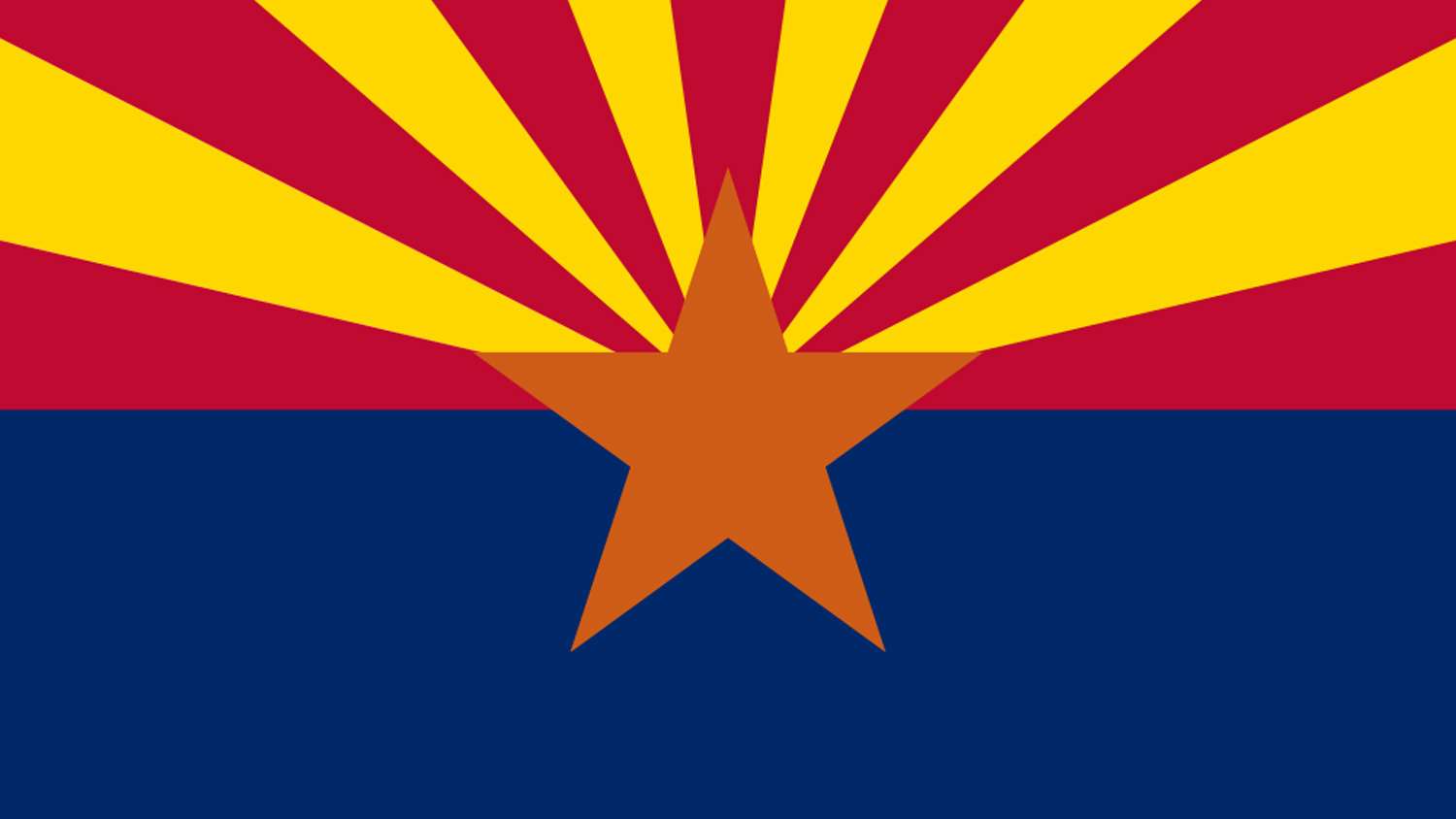
The area that is now the State of Arizona has had no fewer than six flags fly over it: Two Spanish colonial flags, the Mexican flag, the United States flag, the Confederate flag (briefly) and the state’s colors. That the last of these was designed at Camp Perry especially for use at the National Matches gives it a unique place, not only in Arizona’s history but in the annals of the National Matches.
Most Popular