The author of this article, Mr. John Grubar, came to work for the NRA as editor of Tournament News (the NRA's competitive shooter-dedicated newsletter at the time) fresh from his alma mater, the University of Maryland. Before retiring as a full-time NRA employee, he was a part of the Association's Editorial and Competitions Divisions, serving in the last as the Division Director. From 1955, when he first attended, until the National Matches' 2003 centennial, Grubar was present at Camp Perry either as NRA staff or after retiring, a volunteer.
Reporting the National Matches
by John J. Grubar
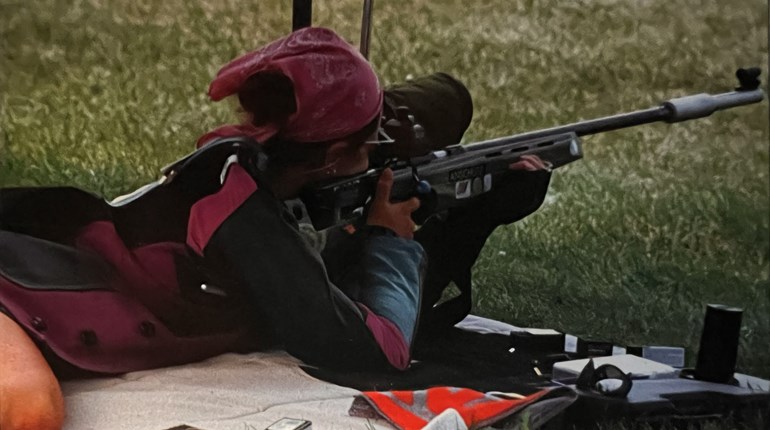
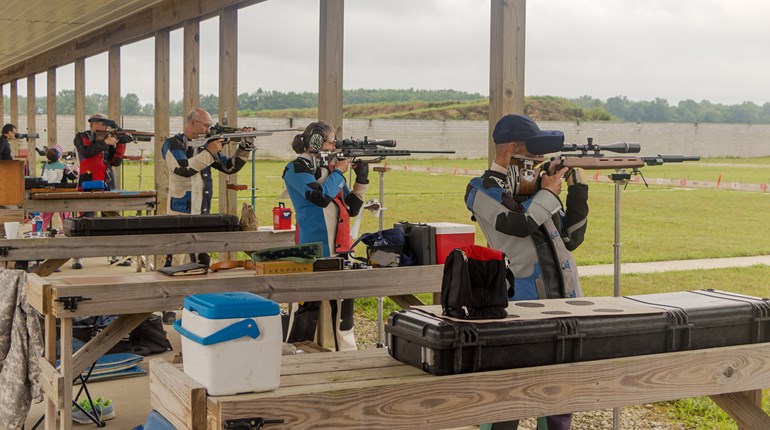
As a part of reporting the National Matches for American Rifleman and NRA's Tournament News plus assisting in media coverage, getting pictures of the events was an important supplement and, as it turned out, quite an experience. The basic instructions, from Walter J. Howe, editor and director of the Editorial and Technical Division, were quite simple—go out and take as many pictures as you can and write up result articles for the above magazines. The goal was that between the two publications all facets of the National Matches would be covered.
As far as photos were concerned, Howe wanted at least one photograph of every major individual and team winner with shooting equipment on the range, or with the appropriate trophy. Also, general range and installation scenes, awards and other ceremonies, along with anything that might be of technical and media value. During the mid-1950s and early 1960s, I was teamed up with NRA photographer Paul B. Gunnell and we worked with both Speed Graphic press cameras and Rolleiflex double-lens reflex cameras. The Speed Graphic used 4x5-inch sheet film and was mostly for color and cover shots. The Rolleiflex (affectionately referred to as the "Rolli") used 120-size roll film and was handy for the awards and "anything of interest" shots.
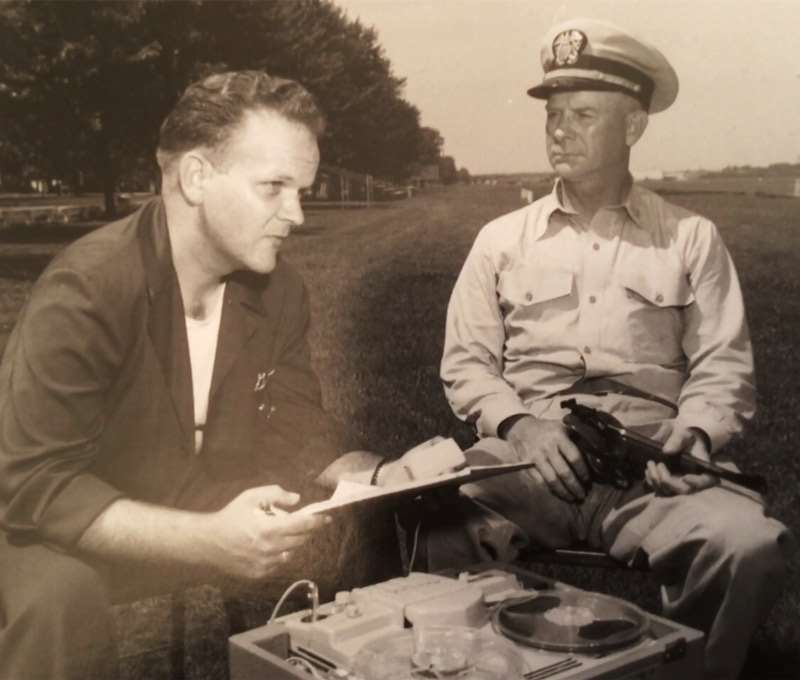
Paul Gunnel had been an Army combat photographer in World War II. While Gen. Douglas MacArthur was wading ashore in the Philippines, Gunnel was with him shooting still photos, trudging elbow-to-elbow with the motion picture cameraman who was shooting footage. So, he knew how to "rough it" as far as getting film developed and printed quickly.
We needed some of the prints daily because of news releases. That problem was solved by commandeering the only hut in Hough Grove that had a bathtub. The tub became our photo lab, where each evening after dark we processed the film shot during the day. It was a hectic, but action-packed and enjoyable summer—at least for me.
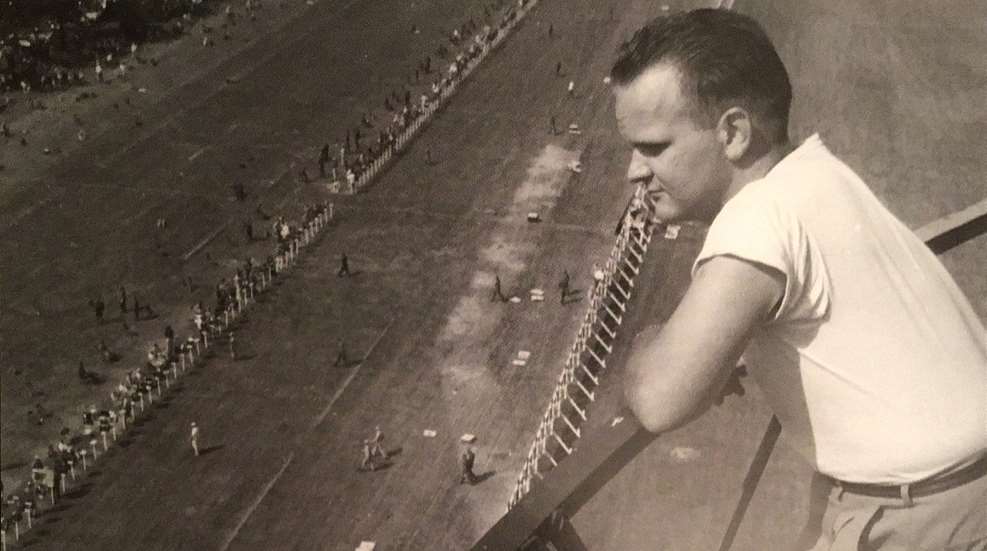
I'm not too sure about Paul, though. When we were told to get some pictures of the ranges from the water tower, I found out that he was scared of heights. It meant that I not only had to climb the tower, I had to push Paul and his Speed Graphic ahead of me, all the way to the top. Getting him down was even more fun. I had to practically blindfold him and hold onto him all the way down. It was a bit like leading a horse through a fire. However, for my memory book, one of the shots he took was of me looking down at one of the 100-point pistol ranges. In my humble opinion, it was a real beauty. (Check out the photo that Mr. Grubar references at the top of this article.)
See more: One Escape: Camp Perry Held 6,000 POWs
Most Popular