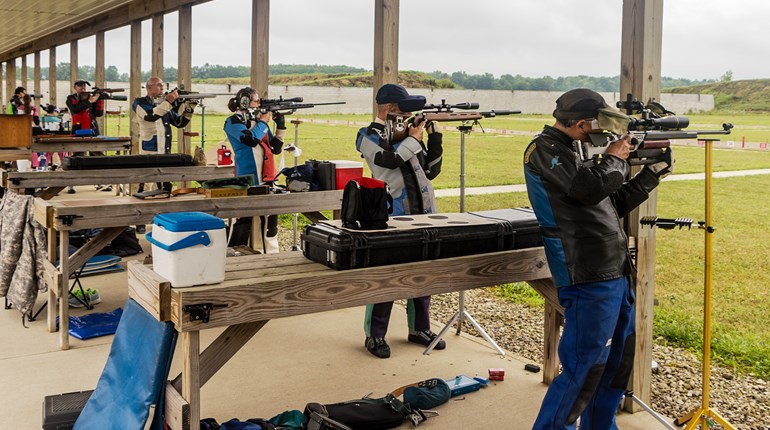

Matches “here to stay” was a headline in the July 18, 1988, edition of the Port Clinton (Ohio) News Herald. The article appeared after growing anti-firearm sentiment in the state, specifically the proposal of widespread gun bans, fueled rumors of National Match cancellation or relocation. (One such rumor pointed to the NRA-owned property in Raton, New Mexico, as a possible alternate site. However, the facility was never a serious or official consideration for its inability to accommodate a National Match-sized audience.)
“Anyone interested in firearms and shooting hears about Camp Perry … There is a mystique about Camp Perry. It inspires a sense of awe as the military policeman waves you through the gate …”
—Gary Amo in American Rifleman, June 1988
Although the championships were not encumbered, this year’s legislative conflict marked the beginning of another period in National Match history where the event’s identity and purpose would be repeatedly challenged—and ultimately changed. But for the time being, contenders for the various national shooting titles waged some classic battles of their own.
Air National Guardsman James Lenardson, a longtime challenger for the national pistol title, broke through in an unconventional way for his come-from-behind win over Army Master Sgt. Thomas Woods, the 1986 champion. Using metallic sights on his Smith & Wesson 41 and Colt .45, Lenardson’s 2643-119X score included an 884 in testy winds for the Centerfire Championship and allowed him to gain back three quarters of a 12-point deficit from the front runner Woods, who had won both the Preliminary and .22 Championships. The slow fire .45 stage was where Lenardson’s momentum peaked and he built a five-point cushion over Woods, who eventually closed to within three, finished second overall and was named regular service champion.
Ruby Fox made her 10th trip across the awards stage as national women’s champion. And like Fox’s repeat win, titles were defended in the junior and senior categories as Jimmy Marsh and Joe White were again called to the podium.
In team competition that featured 154 entries, Marines won two of the three championships that comprised the NRA Aggregate. Their success then carried over into the Board phase with a win in the National Trophy Team Match. Gunnery Sgt. Andy Moody, who fired on both teams, also topped the President’s Hundred and finished second by one to Lenardson in the National Trophy Individual event.
The number 25 was significant during 1988’s blustery smallbore position championships. In the two-and-a-half decades since a young 14-year-old Suzanne Gerstl first spread her shooting mat on the firing line in 1963, much had changed. Now married to National Rifle Team Coach Bob Mitchell with an active four-year-old son born the year she finished fifth overall in position and second in the women's championship, the Army Reserve shooter had her sights set higher.
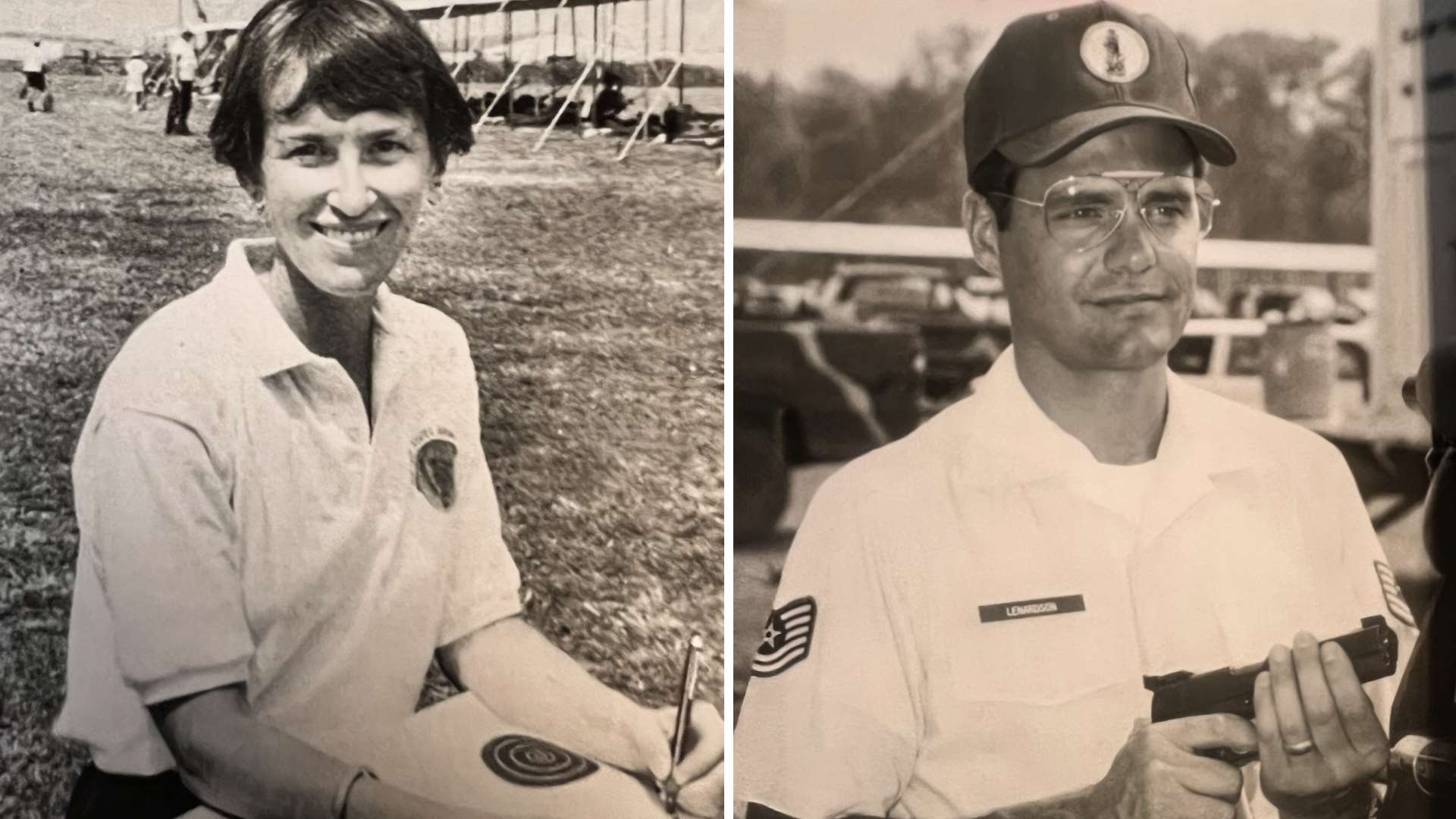
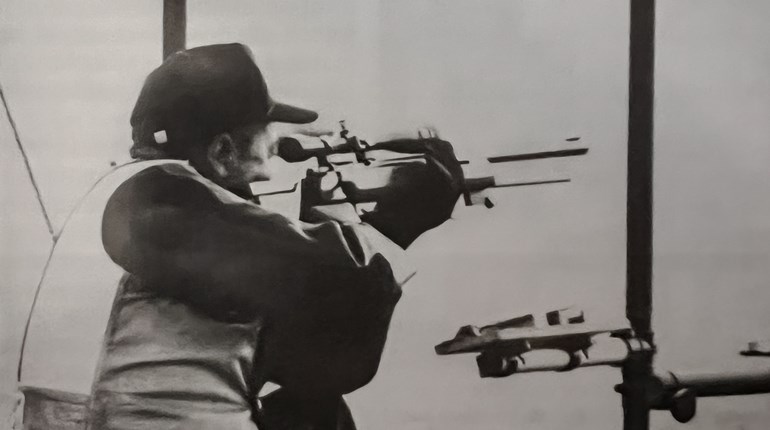
Back in 1963, Suzanne (Gerstl) Mitchell sat in the auditorium and watched a 25-year-old Army Lieutenant take two trips across the awards stage to claim the first of his many national prone and position titles. Lones Wigger, Jr., made history then as the first to capture both prone and position crowns in the same year. Now, 25 years later, both shooters were called to the stage for national recognition.
Wigger began the matches with solid, if not brilliant, performances that resulted in a seven-point margin of victory in the metallic sight championship. Likewise, Mitchell began her run on the women’s title with a win of her own. Through the first two matches of any sight competition, however, Wigger’s lead eroded as Marine Gunnery Sgt. Dennis Ghiselli successfully pulled a few points ahead. At that point however, the winds picked up and if there ever was a shooter who feasted on wind-blown kneeling matches it was Wigger. He had won plenty of them at Perry in the past and though he didn't win kneeling—Earl Hauf did that—he did place second while the winds tore points away from Ghiselli and another familiar contender, Sgt. Lance Peters of the All National Guard.
The two-day tally for Wigger was 2275, an astonishing 30 points ahead of second place-finisher and service champion Ghiselli. For Wigger, his 19th position title was his first as a civilian while Peters, for the fourth time in his National Matches career, finished third to the perennial champ. The high woman was Mitchell, whose metallic and any sight championships sealed her quest that began 25 years earlier while Fred Cole, who missed the 1987 championships, returned to garner the senior title that he held many times before, most recently in 1986. All-American shooter Gary Stephens out of Murray State wrapped up the collegiate title while Erin Gestl successfully defended his junior crown.
The winds that had troubled the position shooters seemed to be an equal opportunity complication for the belly shooters. Intermittent gusts prevented the matches from being dominated by any one shooter and close attention was paid to the scoreboard to see who had the lend at any given moment. Young Army Private Tom Tamas, who five years earlier contended for both smallbore national titles as a junior, held the early lead this time around with a 3198-267X for the metallic sight championship. Richard Hanson, still in search of his first national open title, held on tenaciously with a 3198-251X for second and the high senior honor while Gwendolyn Fox earned the first leg on the women’s title.
Day three produced more than a dozen 1600s on the results bulletin, topped by Edie Reynolds’ high X count with Dave Weaver in second. Then, at the end of the last relay on the last day, contenders compared notes to see if they could determine the winner: Had Hanson finally grabbed the gold ring? He was full of energy when day four began and even posted a 400-40X to keep his hope for an open victory alive. Was Ghiselli going to win prone after his second place finish in position? How hot was Tamas? Would Wigger, Weaver or Kendall be able to emerge triumphant? It only took minutes to realize that four-time prone champion Presley Kendall, whose last title came six years earlier, had won the any sight championship with a pair of 1600s. Reynolds was the women’s any sight champion while Hanson easily won any sight honors among the seniors.
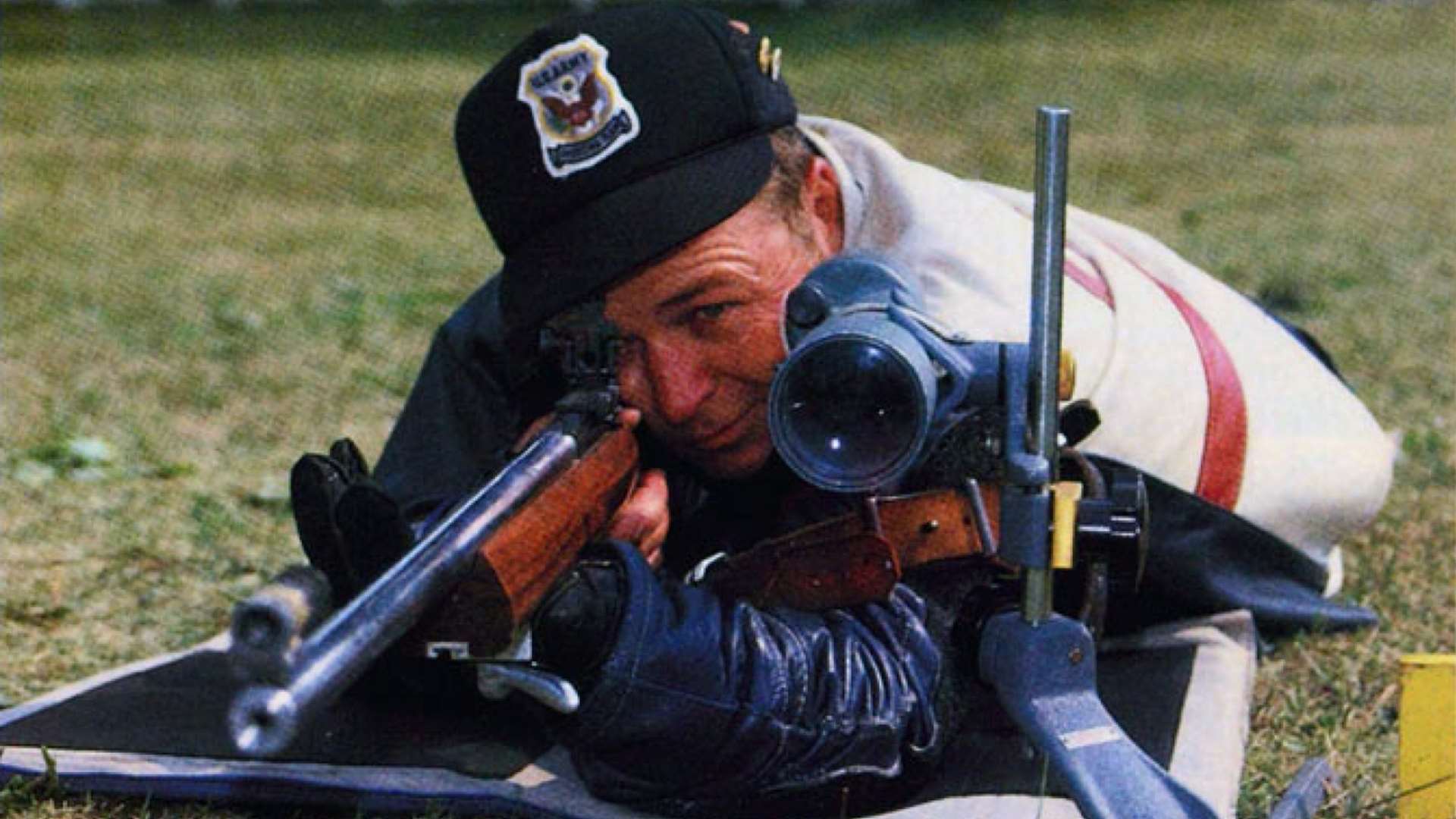
In the end Tamas finished six down, as did Hanson while Weaver and Ghiselli each dropped five with the title going to Weaver—his fourth overall—by virtue of 15 more Xs. Ironically it was an X-count decision the year before that kept Weaver off the winner’s podium. Ghiselli owned the service title while Tamas took third overall. Fox rang up both the women’s and intermediate junior titles while Gestl added the prone junior championship to his position title, becoming just the third junior to double up on championships in National Match history.
Like Wigger and Weaver, G. David Tubb was no stranger to victory as his third national high power title in four years would attest. With wins in two of the three championship aggregates, Tubb tallied a 2381-118X score to up the championship record, which he set two years earlier, by one point.
The competition didn’t start out in record fashion for Tubb, however, as two-time former champion Gary Anderson set a torrid pace with his own record 797 in the Vandenberg Aggregate, a score that broke D. I. Boyd’s 1980 mark by one. Tubb and 1987 match rifle winner Pat McCann trailed Anderson by five and six points, respectively.
After the championship Anderson admitted that his duties as executive officer of NRA General Operations kept him out of top competitive condition, and it was evident on the second day that he lacked the endurance to maintain his lead. Both McCann and Tubb gained ground and by the third day it turned into another classic duel between the two former champions. Entering the final match where just two firing points separated them, McCann and Tubb were tied at 2181 with Tubb ahead in Xs. The championship was then determined over the course of 10 minutes when Tubb boldly seized an opportunity of favorable wind and fired all 20 shots in the 10-ring. His 200-14X tied the match record while McCann dropped two to finish at 2379. Anderson managed to lock up third after finishing four behind Tubb.
Marine Staff Sgt. James Cook fired the high service rifle score, a 2365, and among the women, Noma McCullough returned to the winner's podium for the eighth time since 1979. Sam Burkhalter topped the senior category while Eric Luhmann was named both junior and collegiate champion.
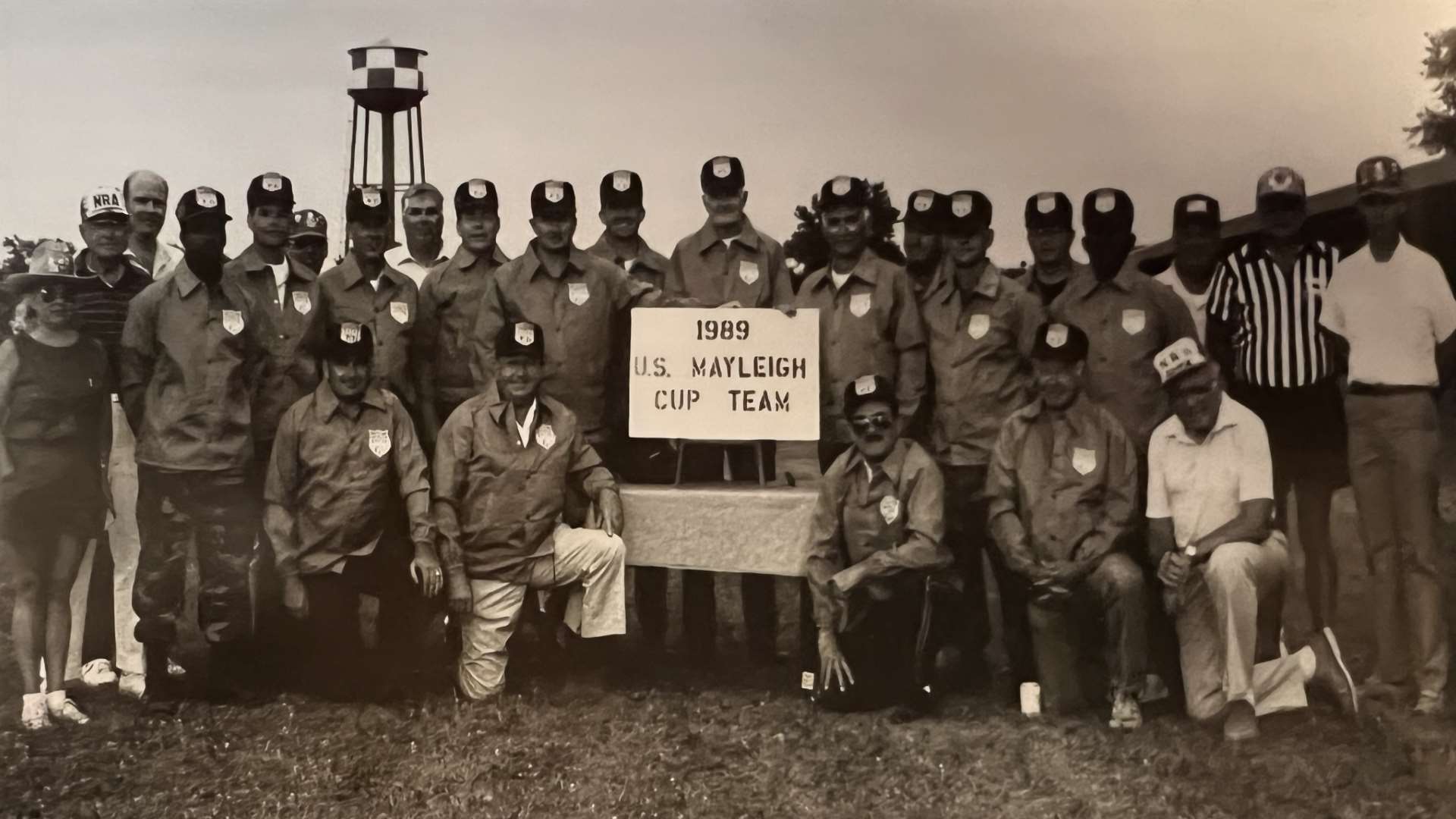
In the four days of Board rifle competition that preceded the NRA matches, two Reserve shooters earned their first major titles while the reliable rivalry between Army and Marine teams prevailed. National Guardsman Nelson Shew and Army Reservist Obed Morley won the President’s and National Trophy Individual Matches, respectively. In the National Trophy and Infantry Team Matches, each of which drew close to 120 teams, Marines edged the Army by three in the former before the order of finish reversed for Rattle Battle honors.
1988 National Matches Facts
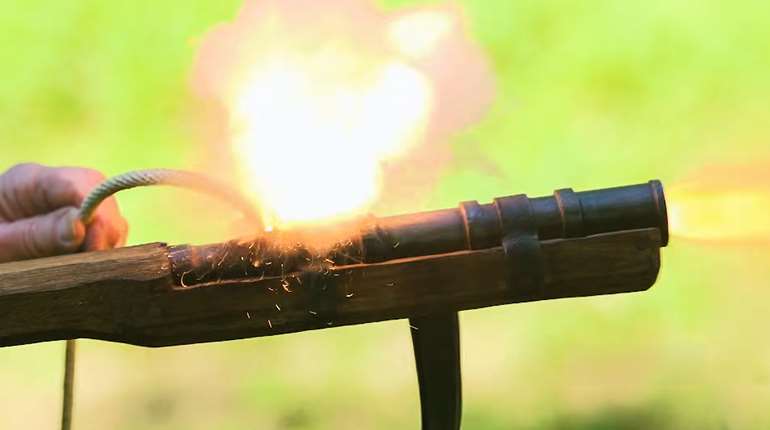
During the 1988 long-range competition, the NRA, in cooperation with the U.S. International Muzzleloading Committee, sponsored the Pacific Zone Championship, a regional match fired on alternate years with the World Muzzleloading Championships. Teams from countries that border the Pacific Ocean—Canada, Japan, New Zealand, Australia, Venezuela and the United States—were invited.
In 1988, Susan Abbott of Louisiana became the first woman to work as an NRA referee at a National Match competition.
Most Popular