
Rumors about a possible National Match site change resurfaced when gun control legislators in Ohio proposed bans that would have affected the majority of firearms brought to Camp Perry by National Match participants. Banishing was also on the minds of federal lawmakers as DCM opponents made motions to eliminate the government program altogether.
Distractions aside, when it came time to compete, veterans and newcomers alike were ready and every phase of the 1989 match program featured impressive performances. In the end, three national crowns were claimed by former champions, while the fourth was earned for the first time by a talented young Army Specialist.
Pleasant weather conditions greeted the 1,000-plus pistol shooters on hand and the first to distinguish himself from the crowd was Marine Master Gunnery Sgt. Ricardo Rodriquez in the NRA Preliminary Pistol Championship. Previously fired as the Warm Up Aggregate, the three-gun National Match Course event this year came with a new trophy and Rodriquez’s 876 earned him the honor as the inaugural recipient.
Rodriquez went on to contend for overall honors, aided by solid shooting and a victory in the .45 Championship. Defending national champ James Lenardson got things started with a field-topping 892 in the .22 Championship and in between, Marine Gunnery Sgt. Andy Moody, who the year before had stellar performances in the Board events, nabbed center-fire laurels. Never far from striking distance, however, was Darius “Doc” Young of the Army Reserves. Young, a perennial title contender, was 10 years removed from his first national crown and he teetered on the edge this year before posting a 2651, which was just enough to hold off the late surge by Rodriquez, who finished second by one.
Not disheartened by the results, Rodriquez, the high scorer on the Marine Scarlet team that won the .45 phase en route to the NRA Aggregate title, bounced back in the hardball competition during the Board phase of the program. Starting with a fourth-place finish in the President’s Match (won by Sgt. 1st Class Jimmie McCoy of the U.S. Army Marksmanship Unit), Rodriquez nabbed the National Trophy Individual crown and asserted himself as high scorer on the winning National Trophy team.
Other category winners this year from the NRA championship included Marine Sgt. Roxane Conrad, who earned the Alexander Trophy as high woman and provided a rare change of scenery on the awards podium, a place that had been predominantly occupied over the last 14 years by 10-time champ Ruby Fox, the high woman in .45 competition in 1989.
Allen Fulford earned his third straight civilian crown, Jeffery Brasseur nabbed the junior title and senior honors went to former national champion Don Hamilton.
While the National Matches stay the same in many ways, competitors know not to discount the element of change that keeps the event fresh and interesting. For example, the smallbore prone events and targets, first employed at the National Matches 70 years ago, had long remained the same as far as most current participants could remember. The newer position matches, on the other hand, sustained several major changes. At the international level, scores had been improving to the point where the 50-meter target size was reduced to better challenge the world’s top competitors. With the modification, all position records at Camp Perry became obsolete, an occurrence that had arisen just once before, when the matches changed from four- to three-position in 1978.
Marine Gunnery Sgt. Dennis Ghiselli wasted no time recording the first National Match victory on the new A-51 six-bull target. En route to the metallic sight championship, Ghiselli, who finished second overall in the prone championship the year before, also captured the second event after he “creedmoored” AMU shooter Tom Tamas by three Xs.
Tamas kept himself in contention and a win in kneeling sealed his any sight championship, despite the extra pressure of having to shoot alongside Lones Wigger, Jr., the undisputed master of kneeling. And by remaining relatively error free over the course of two days, Tamas won this year’s position championship in a commanding style reminiscent of Wigger’s previous wins. This year’s results bulletin put Tamas, 24, on top with a 2271, 16 points higher than Wigger, who finished second and earned the high civilian honor. Third overall was women’s champion Kirsten Pasch, an Army Reserve Lieutenant who opted to use metallic sights throughout the competition and earned the any sight title in her category.
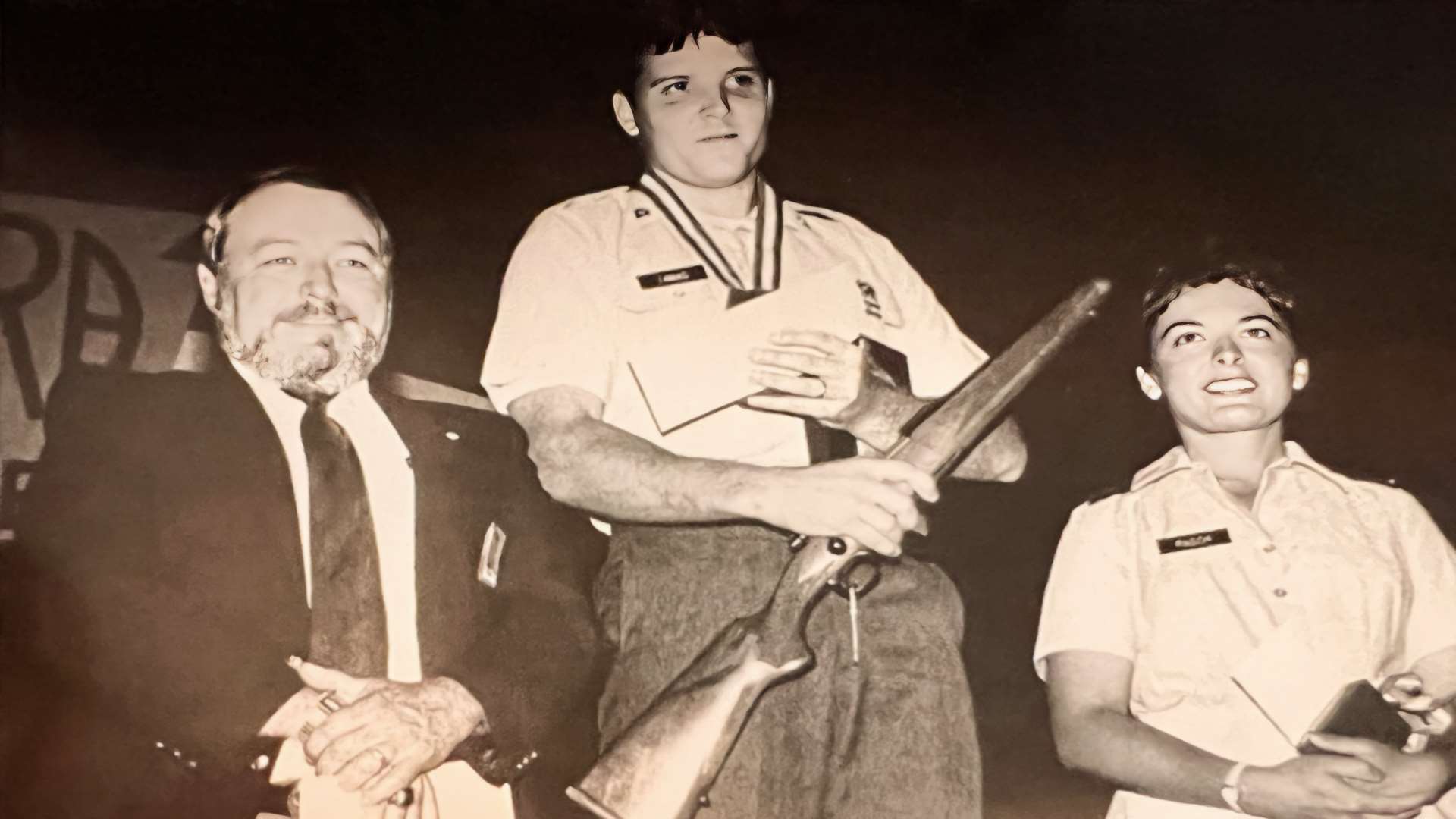
Fred Cole and Charles Langmaid topped the senior and intermediate senior categories, respectively, over both days to win their national titles while Erin Gestl won his third consecutive junior title and repeated the double distinction of being named top junior and collegiate shooter in the same year.
The prone championship opened with seven-time senior champion Richard Hanson firing a stupendous 400-40X with metallic sights at 50 yards. Other match winners on day one included Army teammates Steve Goff and position champ Tamas as well as defending prone champion Dave Weaver. Hanson and Weaver also logged wins on the second day, but just one 3200 score was recorded and it belonged to Ghiselli, who earned the Hoppe Trophy for the metallic sight championship.
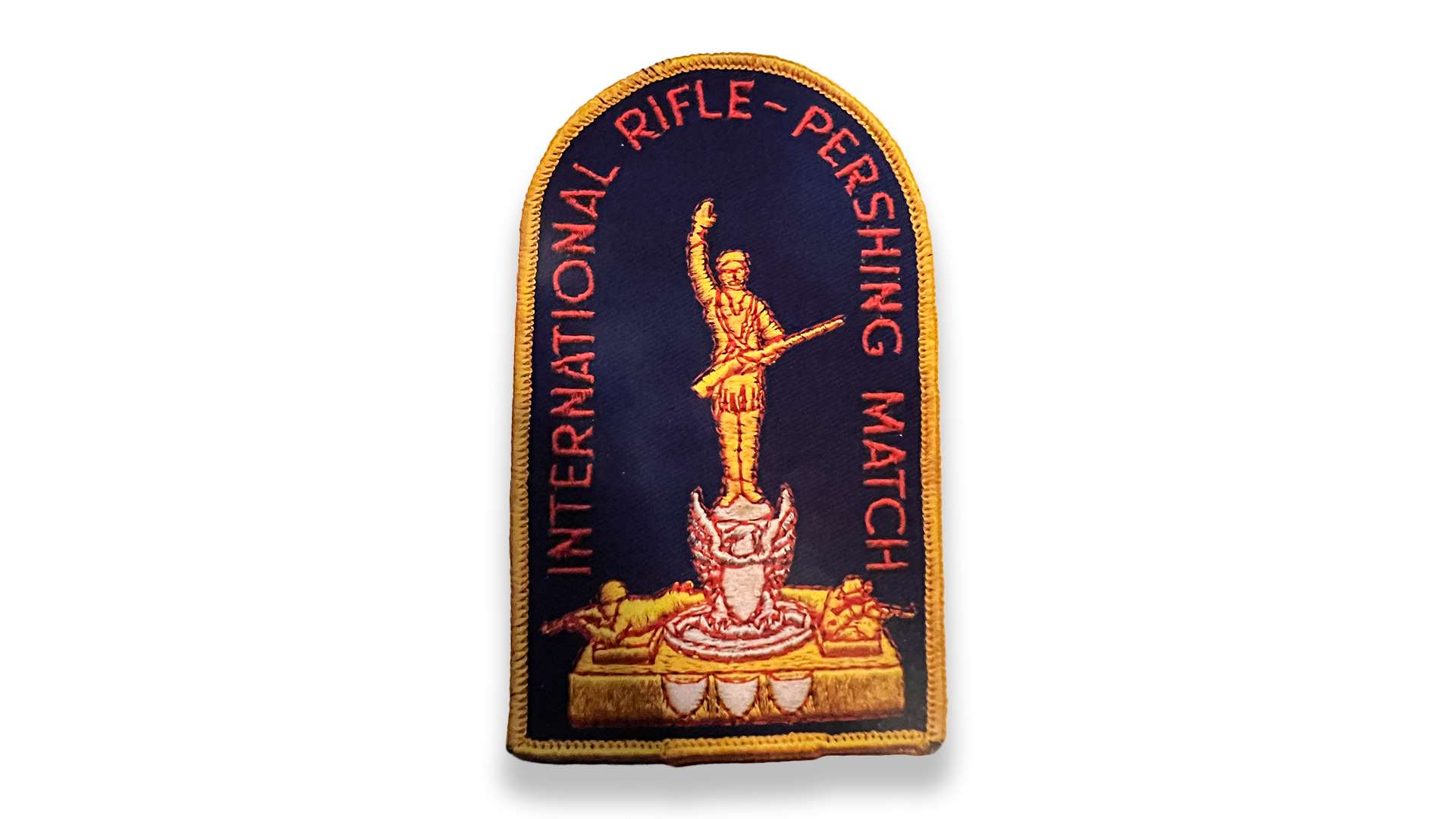
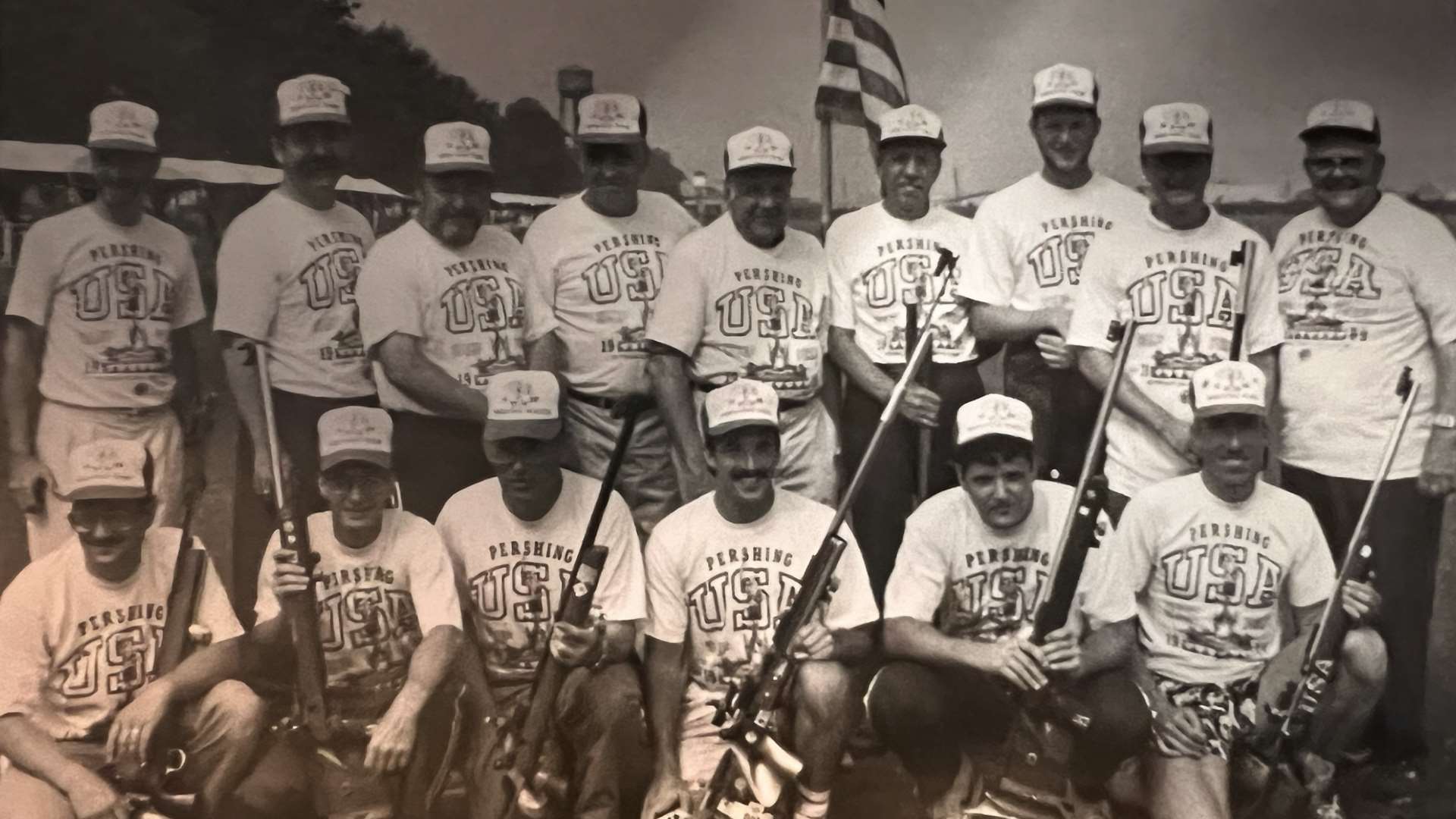
An extra day was added to the 1989 match schedule to accommodate the Pershing Match, shot every eight years between the host United States and visiting teams from Great Britain and Canada. This year the U.S. squad, chosen from top finishers in the metallic sight aggregate, fired a perfect 4000-301X score to retain the trophy it had now possessed for half a century.
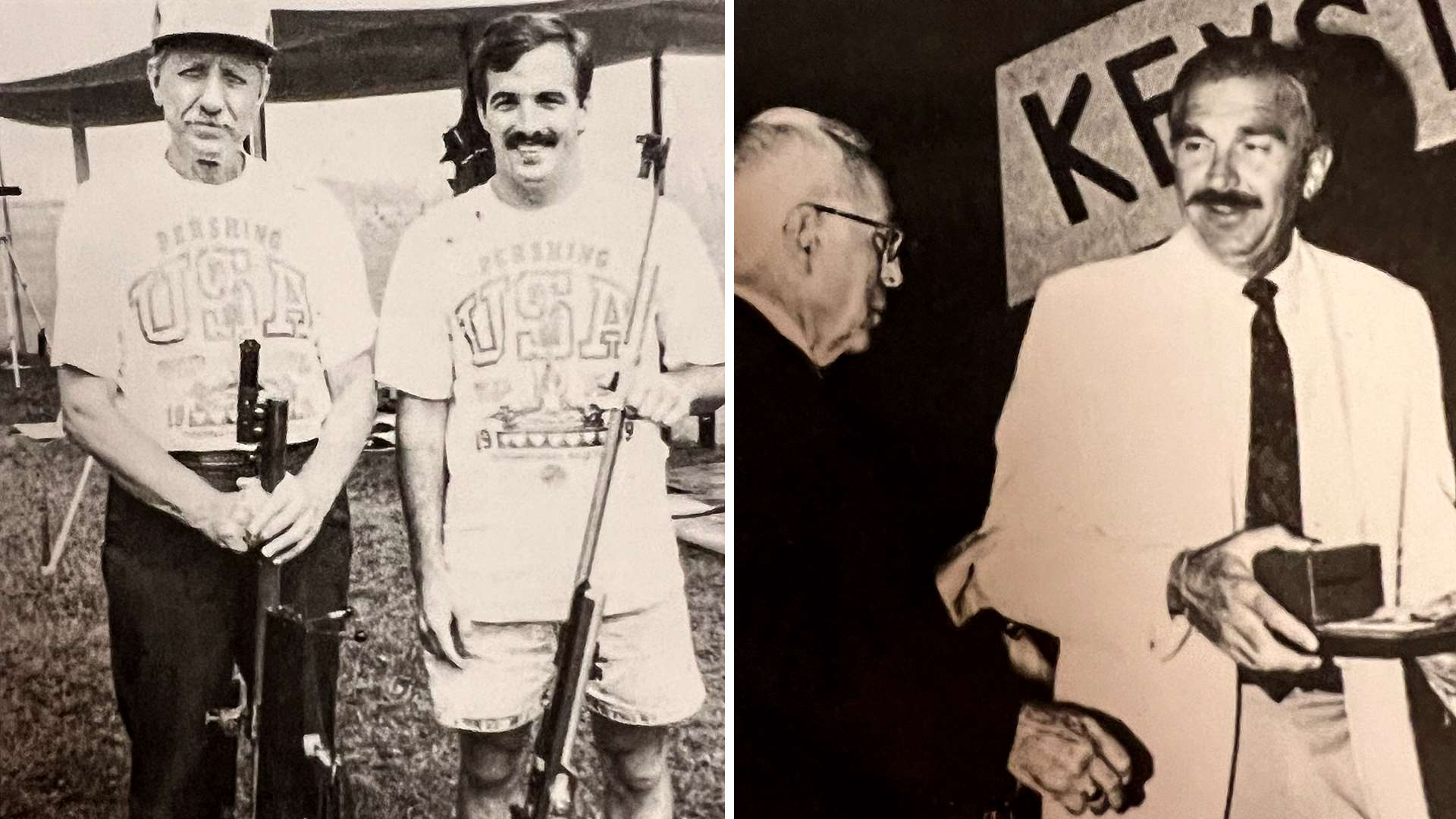
When championship firing resumed on the fourth day, the traditional prone Dewar Team matches began with a new twist—metric targets. After much debate, some of it heated, the decision was made to adopt the smaller target for the team matches. The experiment also tested the possibility of changing the prone match program from conventional to international targets. The major argument in favor of change was that the younger shooters in the hunt for international success would benefit from the exposure to metric targets. Those against the change argued that the smaller target would come at the shooter’s expense as the need for the absolute best ammunition and equipment would price many out of the sport. As in most cases, the truth lay somewhere in between.
The Black Hawk Rifle Club won the first metric team match with a score of 1555-70X. In the past, this metallic-sight match was won with scores in the 1597 to 1600 point range. The record on the conventional target was 1600-128X set by the USAMU in 1984. The any sight conventional match record of 1600-149X belonged to the Stinknik Gentlemen and had stood since 1974. This year honors went to the Champion Shooting Club with a 1579-100X and their effort offers the best comparison, for they had a proven track record of winning the title for many years leading up to the target change. The year before the same team, comprising Carl Jooss, Ron West, Aaron Hupman and Presley Kendall, posted a 1600-132X.
Note: The one-inch 10 ring on the metric target was the same size as the X ring on the conventional target and while there was a noticeable change in the scores there was little discernable difference in standings—those who placed high with the conventional target also did so with the metric.
At the conclusion of the Pershing competition, the dark side of Perry conditions showed its face. It was no longer necessary to be polite to the visitors and the winds, which had been mild, roared consistently at 25 miles per hour with occasional stronger gusts. The leveling nature of such high winds changed the complexion of the match. All bets were off and it was a whole new contest.
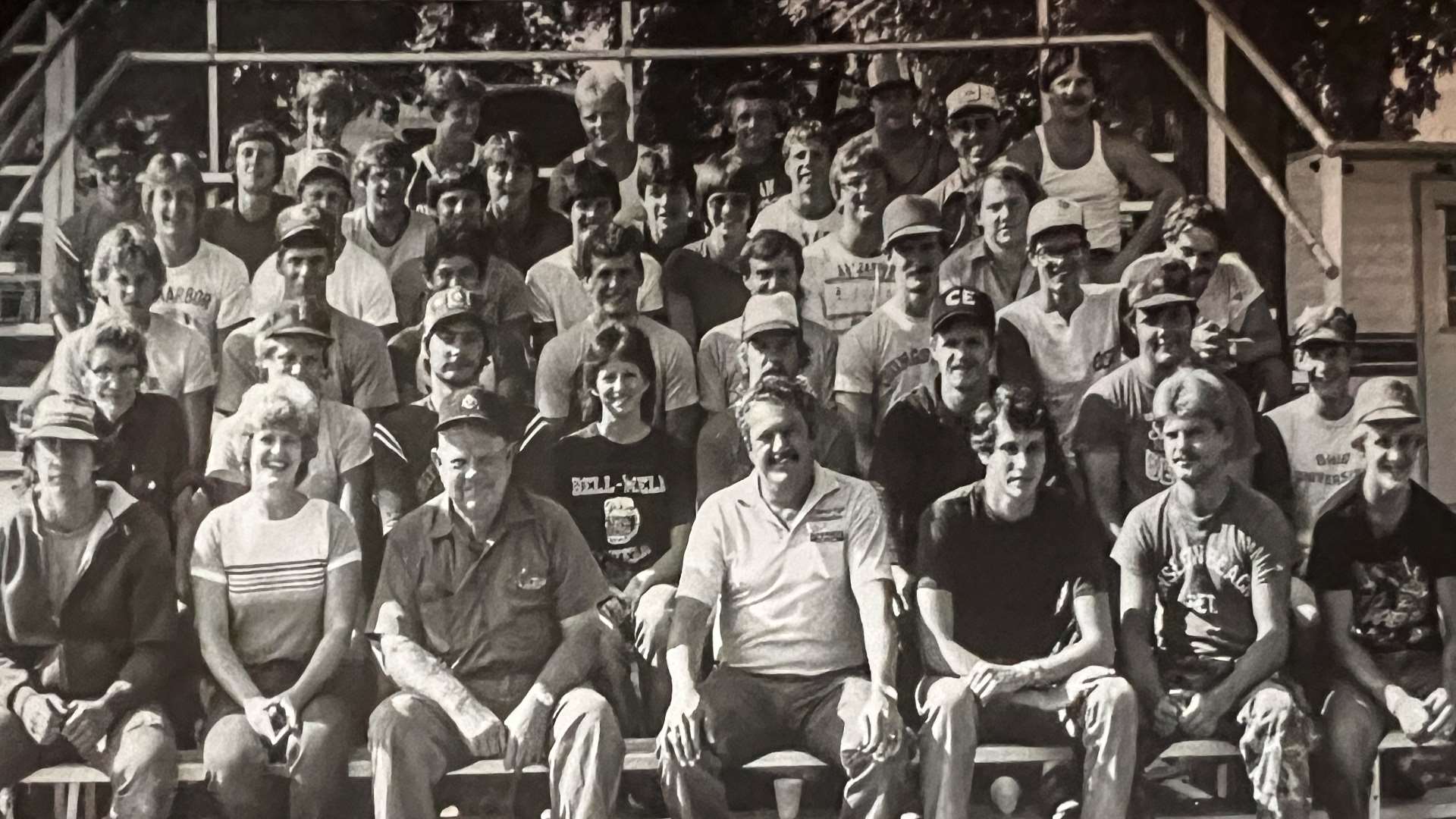
The scope savvy hard holders managed to hang on but none of the match winners showed up in the top three of the first any-sight aggregate, which Boyd Metz won with a 1599-115X. Conditions improved on day four and Carolyn Millard-Sparks claimed the final aggregate with a 1600-145X. None of the front runners scored big on the last day and dark horse Maj. Ray Carter of the Army Reserve managed to keep points where others were losing them. His 6393-489X earned him the silver medal and service honors. Meanwhile, defending champion Dave Weaver kept plugging along and went into his last shot two points up on his closest competitors. Needing only an eight for the win, Weaver’s margin of victory spanned from a one-inch X-ring to a six-inch eight-ring. After taking a moment to settle down, he shot a wide 10 that cut the line neatly at 11 o’clock. It was not Weaver’s most elegant shot but it was enough to secure a repeat championship, making him only the fourth prone competitor to earn consecutive national titles. It was also his fifth title (his others came in 1976, 1979, 1983 and 1988), which tied him with Lones Wigger, Jr., as the only five-time national prone champions.
Millard-Sparks claimed her second women’s title while Richard Hanson battled his old friend Larry Moore down to the wire to win his 10th national senior crown. Cory Brunetti of the Stratford, Connecticut-based PAL shooting club garnered the intermediate and junior titles while Tom Schady, who had won the sub-junior crown in position earlier in the program, scored a rare double by topping the category again in prone. (David Edgar first accomplished the sub-junior sweep in 1985.)
Pat McCann was a dominating high power presence all decade and he closed out the period with an equally commanding performance this year. His track record in the 1980s is one any shooter would envy—second place by one X in 1982; national titles in 1983 and 1984; third place in 1985 and second place finishes in 1986, 1987 and 1988.
McCann’s 1982 finish was by all accounts the most heart wrenching as he lost a seven-point lead in the final 20-shot match. His relentless competitiveness however, kept him at or near the top for the rest of the decade and during the 1989 contest, McCann again entered the final match with a comfortable lead—one he did not relinquish. His third national high power crown came by way of a 2371 score—10 points over 1988 champion and chief rival G. David Tubb. Army Sgt. Vince Greiner fired the same total as Tubb to win the service title.
McCann claimed two of the three championship aggregates (Vandenberg and Clarke) while Tubb nabbed the Nevada. The windy conditions that befuddled the smallbore contingent also wreaked havoc with many high power shooters and McCann proved the most proficient at staying the course with his modified Winchester Model 70.
Some of the top women shooters of the era battled it out for the women’s championship which resulted in a fourth title for Nancy Gallagher over 1988 winner and eight-time titleist Noma Zinsmaster (formerly McCullough). Meanwhile, Marsha Beasley crossed over from her successful smallbore environs to capture the women’s service rifle crown. Eric Obermeyer and Bob Jensen were the high junior and senior shooters, respectively.
In the Board events that preceded the NRA championship, Marine Sgt. Robert Tomasik won the President’s Rifle Match and then contributed to his Gold team’s victory in the National Trophy Match. Top honors in the National Trophy Individual Match went to Army Specialist Bruce Gilbreath while a convincing All-Guard performance that netted a 119-point margin of victory was turned in during the National Trophy Infantry Team Match.
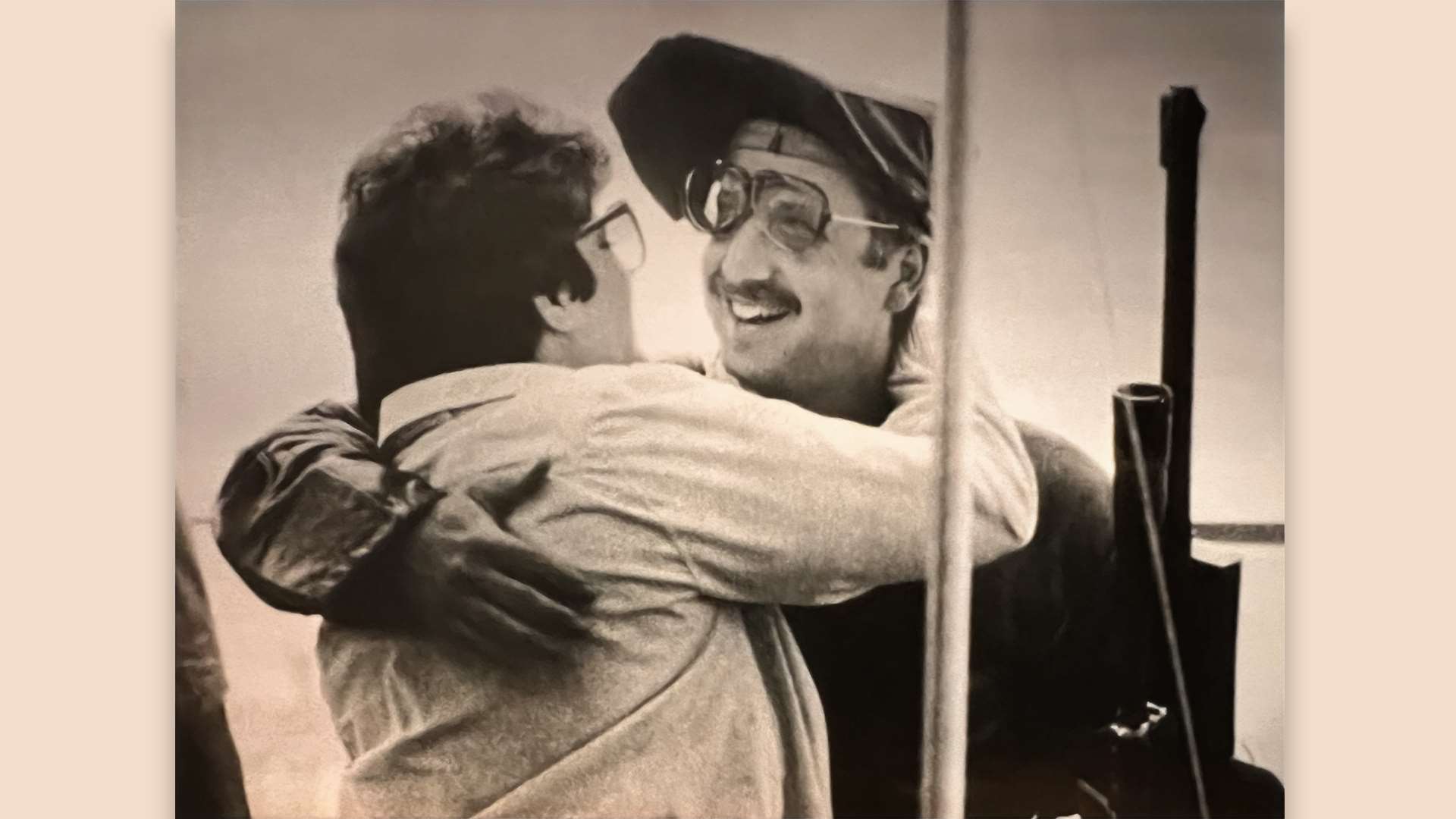
Long-range firing closed out a very successful National Match program in terms of participation and of the more than 500 who competed in the final segment, G. David Tubb stood atop the field to claim the Canadian Cup for the high aggregate score compiled from the Leech, Wimbledon and Palma Individual Trophy Matches. Tubb won the Palma contest outright while Randall Sweetland and Russell Jones won the Leech and Wimbledon Cups, respectively. Tubb’s proficiency at 600 yards during the NRA Championship also earned him the Tompkins Trophy Match, emblematic of combined scores fired from the 600 and 1,000 yard events.
“What better place to learn of the shooting sports … than on the ranges where shooting legends have assembled for … decades and at a time when those legendary shooters are gathered together.”
—American Rifleman, October 1989
1989 National Matches Facts
An interesting technological innovation took center stage this year when Bill Dodd earned a spot on the Pershing Team. Dodd’s rifle sported a barrel extension tube with a ramp that increased his sight radius. Certainly, his bona fides as a four-time, two-discipline All American, membership on both the Pershing and Dewar Teams, as well as a 3197 in the metallic championship in 1989, added respectability to the device, which was quickly given the nickname “bloop tube” for its shape and sound upon the rifle’s report.
Secret Service shooter Randall Sweetland almost accomplished a rare National Match long-range feat when he won the Leech Cup and nearly claimed the Wimbledon Cup, which went to Russell Jones with a clean shoot-off score.