Double jeopardy can happen—and I'm not talking about a television game show. In USPSA shooting, it concerns the application of penalties in a match. Although action shooting is fundamentally a freestyle activity, and most stages allow the shooter to choose his or her shooting solution, some shooter actions are affected by the stage procedures listed in the Written Stage Briefing (WSB).
Even a freestyle stage WSB can require a certain action such as what I call “carry the brick” (substitute your own distracting action here). Failing to “carry the brick” invites the application of one procedural penalty per occurrence. Should a significant advantage be gained during the violation, a per-shot penalty can be applied instead. Note that significant advantage is a subjective opinion and its use should be consistent across the match. Range Master involvement prior to deciding should be common practice. This helps avoid inconsistent penalties in different squads with roving ROs at a local match.
The application of procedural penalties can become challenging in a Virginia Count or Fixed Time stage. As a longtime friend and RM once told me, “Virginia Count makes my head hurt!” Why? Well, a VC stage (and a FT stage which is simply VC with a time limit) can have a number of “Do this” and “Don’t do that” in the WSB. Beyond the potential for faulting penalties, you have the possibility of firing too many shots, having too many hits on a target, failing to perform a mandatory reload and perhaps the failure to do some specified evil act which the stage designer has mandated to interfere with your focus and usual shooting accuracy. That is a lot for the ROs to watch for. Counting shots and observing the shooter is critical for competent officiating by all involved ROs.
When those violations take place, it falls unto the ROs (yes, plural) to not only observe them but to also decide how many penalties are correct. It is quite easy to apply specified penalties when the violation is addressed in a specific rule. Using Rule 10.2.4 as an example, if the RO is paying attention and counting shots, it is a simple matter to come to the correct number. (Note that unlike the penalties for faulting under 10.2.1, this penalty has no limit. It can be a match buster.) Problems arise when the RO wants to also apply an additional procedural under Rule 10.2.2 for failing to comply with the required procedure (the mandatory reload). Doing so is an example of double jeopardy—applying multiple penalties for the same singular action or violation.
So how to avoid this problem? Consider that Rule 10.2.2 is a general rule—a catch-all. It applies to unspecified procedures and essentially defines the difference between a single penalty for each occurrence and the application of per-shot penalties for significant advantage and nothing more. The rules which follow Rule 10.2.2 address specific requirements and violations. If a specific rule is involved in the violation, it is unnecessary and incorrect to also apply a penalty for a general rule such as failing to comply with a stage procedure.
Another example of double jeopardy is a violation of a procedure specified in the WSB. This falls directly and only under Rule 10.2.2 (and subs). The shooter was required to “carry the brick” and failed to do so. The RO decides that this was a significant advantage and applies per-shot penalties. The RO cannot also apply a general penalty for violation of Rule 10.2.2.
If you are faced with such a situation, first consider the penalties and if double jeopardy might apply. If uncertain, request the advice of the Range Master so that the application of penalties is consistent across the match.
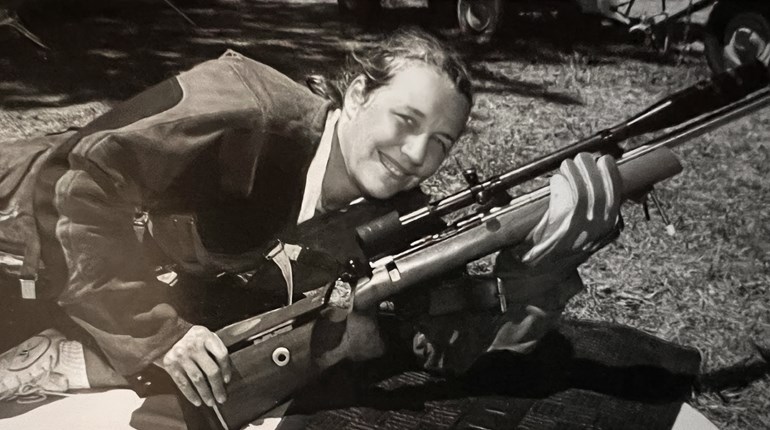
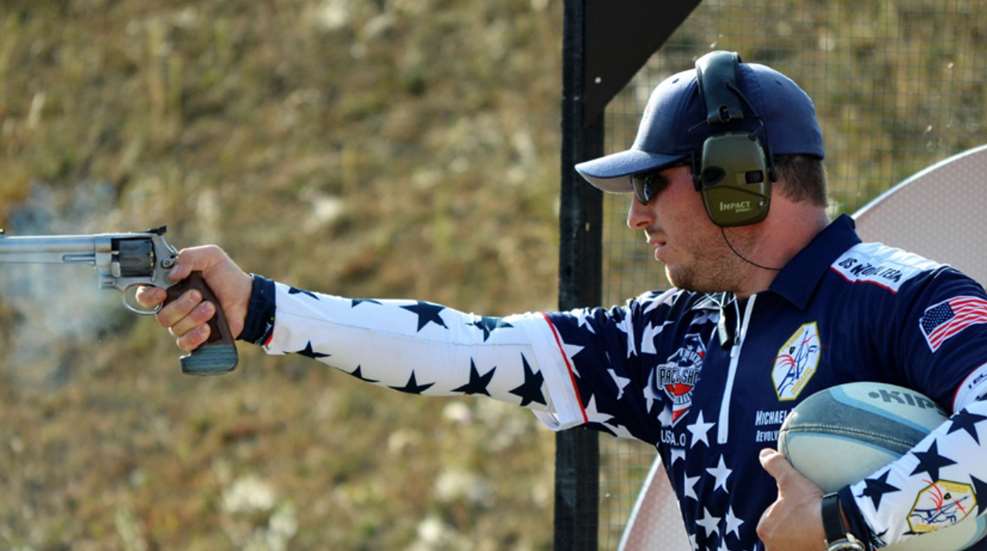
Article from the January/February 2021 issue of USPSA’s FrontSight magazine. Lead photo of Michael Poggie by Carole Bryant.
Read more: Preview: ZEV Technologies FDP-9 and FDC-9
Most Popular