From the vault: an excerpt from a classic article with timeless advice regarding the selection of protective eyewear. As published in the March 1999 issue of Shooting Sports USA, the NRA’s competitive shooting journal.
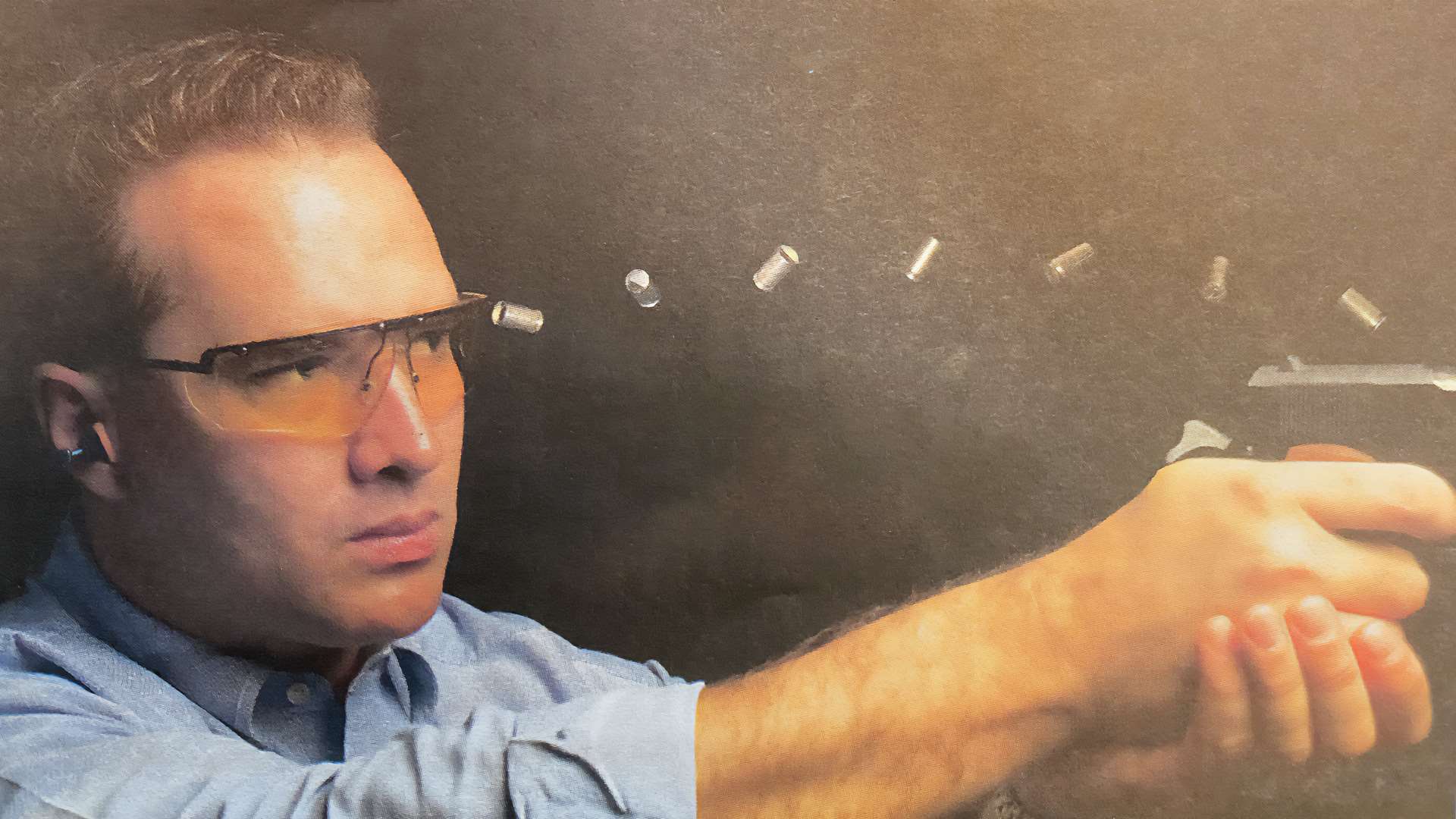
The NRA is the first to say safety is a paramount concern for every responsible shooter. As such, the types of safety equipment that you choose are equally important. Proper eye protection should be worn at all times when handling or using a firearm, however with the enormous number of manufacturers and styles available today, choosing the one that is just right for you can be a daunting task.
WHY WEAR PROTECTIVE EYEGLASSES?
The human eye is a delicate, complex and extremely sophisticated part of your body. Various forms of trauma that would be only mildly annoying to other parts of your body can be extremely damaging to your eyes. Although, it is a fact that, when handled responsibly, firearms are extremely safe.
However, shooting is an activity that involves explosive propellants, bright flashes of light, super-hot gasses, flying lead and extreme pressures. The human eye does not particularly respond well to any of these things and, as such, must be protected. In addition to providing invaluable protection, shooting glasses can actually help you shoot better. When I began researching for this article, I was absolutely astounded by the level of technology involved in the manufacture of some shooting glasses. Space age coatings and materials are being used to produce glasses that can dramatically improve clarity, increase depth perception, minimize glare, increase contrast, enhance ground contours, reduce haze and gather light.
AREN’T ALL GLASSES THE SAME?
Admittedly, there are a few characteristics that are common to all shooting glasses. However, before you go skipping off to the gun range with those new cartoon character sunglasses you bought at the discount store, you might want to consider a few things.
The level of protection provided by a pair of shooting glasses can vary dramatically from manufacturer to manufacturer. A quick and easy way to be sure that the glasses you are considering will provide you with at least adequate protection is to verify that it either meets or exceeds the ANSI Z87.1 industrial standard. ANSI, or the American National Standards Institute, is a private, non-profit organization that helps to set benchmarks and testing criteria for products made in the United States. To meet the ANSI Z87.1 standard, a pair of shooting glasses has to pass a series of tests for things such as high-velocity and high-mass impact, as well as optical clarity. For example, in order to pass one of the impact tests, a lens must withstand a one-inch steel ball dropped from a height of 50 inches without fracturing. (Note: The most recent standard since this article was originally published is ANSI/ISEA Z87.1-2020: American National Standard for Occupational and Educational Personal Eye and Face Protection Devices—Ed.)
Bear in mind however, that just because a pair of shooting glasses meets the ANSI standard does not mean that it is the final word in optical protection. As you can see by the above example, the testing criteria isn’t really that strenuous. In fact, instead of little steel balls, some manufacturers choose to test their lenses with things like 12-gauge shotguns, dynamite, blasting caps and C-4 plastic explosives. The ANSI rating is valuable only in that it identifies shooting glasses that provide at least a minimal level of protection. If the glasses you’re thinking of purchasing don’t at least meet the ANSI Z87.1 standard, politely hand them back to the salesperson and ask to look at something else.
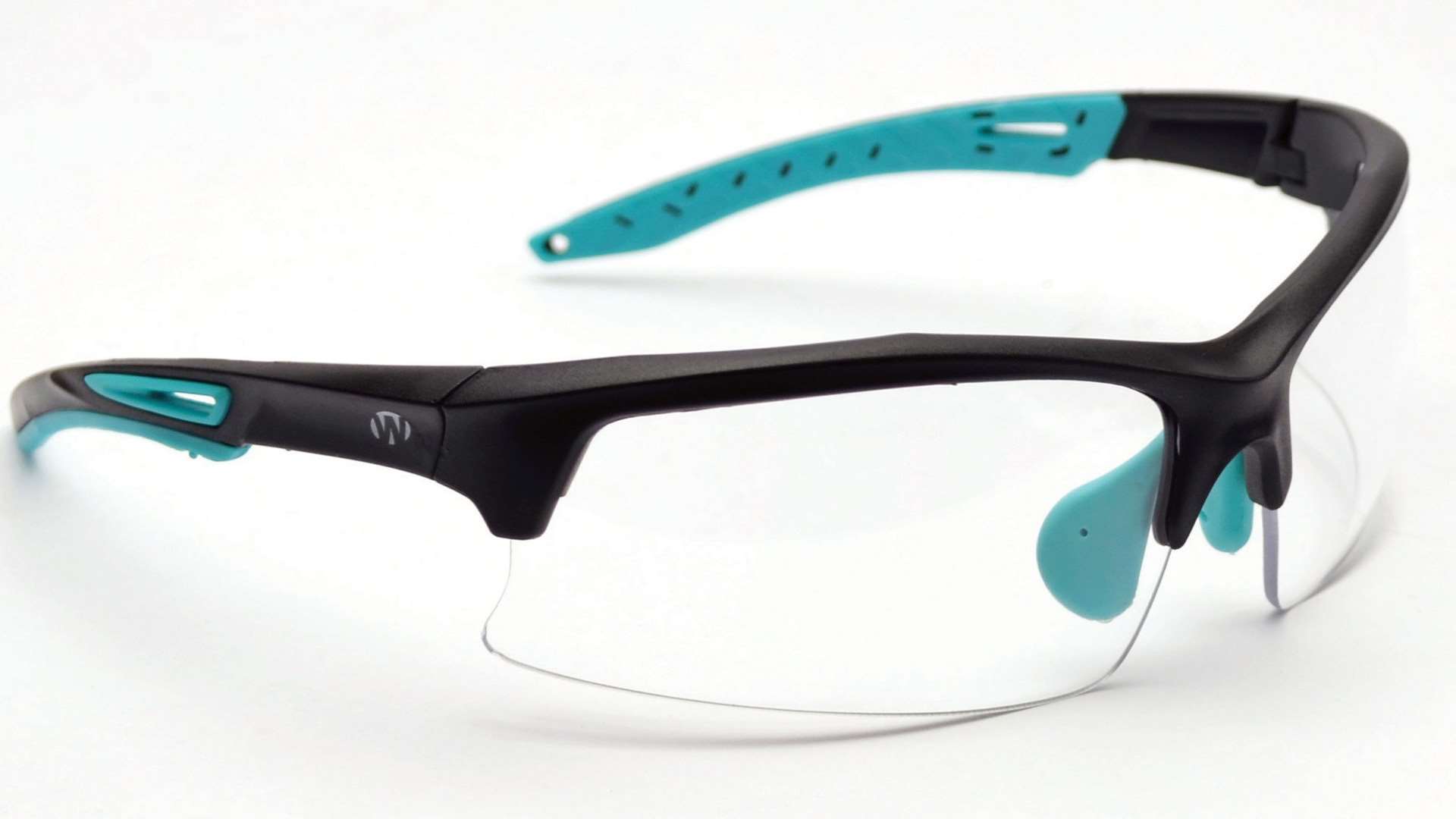
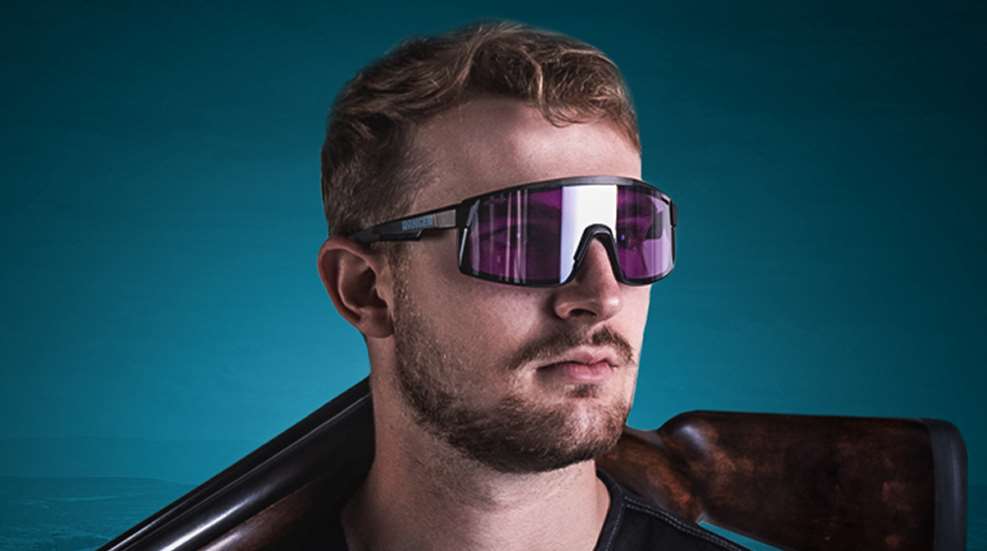
While conducting your search, also keep in mind that the light modulation quality of color tinted glasses is very important, as tinted lenses control the quality and quantity of light entering the eye. In distinguishing between lenses and filters, a sunglass reduces the amount of light entering the eye equally across its spectrum. Common sunglass lens colors are gray and green, though gray tends to perform better. Filters, however, are lenses that take out light selectively, or more at one end of the color spectrum than the other. Choosing the correct color for your particular shooting conditions and target can increase contrast and make seeing the target easier.
Orange “blue-blocker” lenses take out the ultraviolet and blue end, and permit the red end and infrared through. Blocking out the blue and shorter wavelengths shortens the chromatic range for which the eye has to adjust, sharpening vision to some extent and, presumably, reducing fatigue.
Brown or bronze lenses also filter out much of the same light as the blue-blockers. These filter colors can cause an orange clay pigeon to stand out against a wooded background and are useful on really bright days.
Yellow or light gold lenses add contrast without reducing illumination. This is helpful on overcast days or at dawn and dusk, when a shooter wants contrast, but needs additional illumination. These colors have also proven beneficial when shooting at white targets under lights.
SHOOTING GLASSES CARE
Regardless of the style of shooting glasses you choose, they must be cared for properly. Whether you select glass or plastic, lenses are best cleaned under running water using liquid soap and should never be wiped with paper towels, only soft-fibered (or microfiber) cleaning cloths.
Most Popular