WARNING: All technical data in this publication, especially for handloading, reflect the limited experience of individuals using specific tools, products, equipment and components under specific conditions and circumstances not necessarily reported in the article and over which the National Rifle Association (NRA) has no control. The data has not otherwise been tested or verified by the NRA. The NRA, its agents, officers and employees accept no responsibility for the results obtained by persons using such data and disclaim all liability for any consequential injuries or damages.
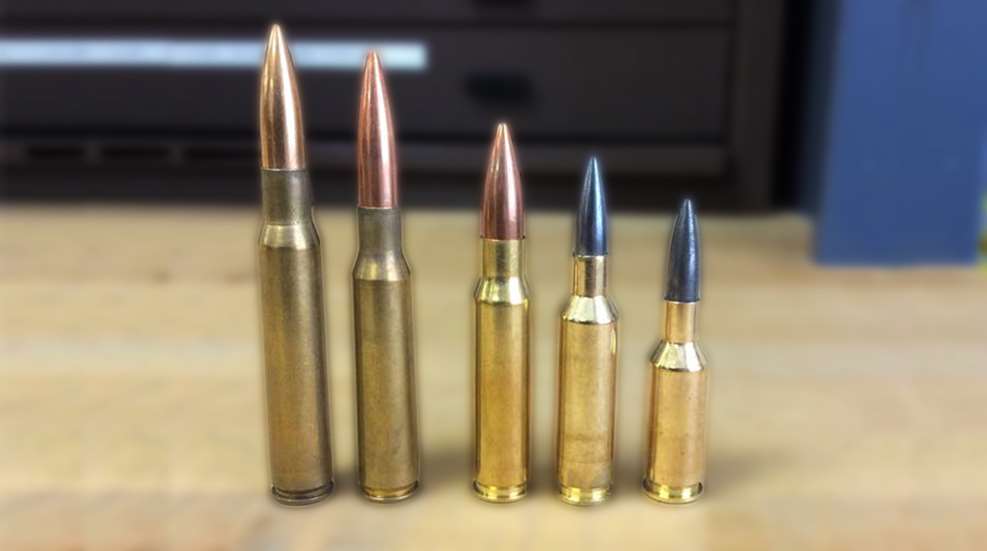
Above photo: From left to right: .30-06, original 162-gr. 7x57, .308, 6XC, 6BR.
Previously, we addressed basic handloading philosophies that might direct competitors down varying paths to achieve their goals. Briefly, these included:
A. Emphasizing pristine medium/long-range accuracy over absolute top, safe velocity.
B. Accepting somewhat less accuracy to get highest safe velocity, to minimize wind drift.
C. Emphasizing powder choices that yield very consistent velocity regardless of ambient temperature—thus keeping elevation zeros and wind calls more predictable. (This is especially handy when sighting shots aren’t on the menu.)
D. Choosing powders that increase velocity with higher ambient temperatures, for any wind drift advantage one can eke out. (This last option seems more popular when sighters are allowed.)
Our previous article on handloading philosophy was written within the context of NRA Service Rifle and High Power Rifle competition, with their relatively generous 10-ring to rifle accuracy ratio. Moving to International Rifle competition, targets become more demanding and rifles are tailored to the various disciplines accordingly.
Shooter performance has less “wiggle room,” even when equipment is at its peak. Cartridge and bullet selection, mechanical accuracy, ballistic coefficients, velocities and recoil all have their gold to be mined. All are also intricately interrelated, requiring careful consideration by the advanced shooter and handloader.
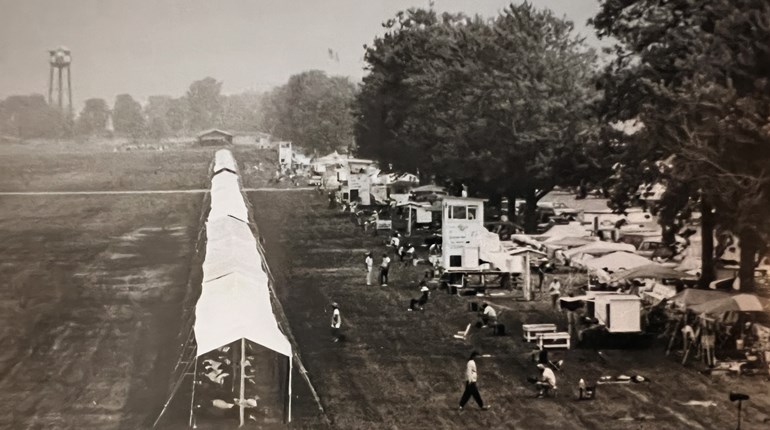
Using 300-meter (328 yard) Free Rifle competition as an example, the 10-ring measures 3.9 inches in diameter, vs. 7 inches for NRA High Power’s 300-yard rapid-fire 10-ring. Obviously, superior accuracy is a primary goal, but reducing wind drift effect on one’s bullets is also important. Thus, this becomes a balancing act. An Olympic gold medalist outlined his experiences in 300m shooting, illustrating some critical principles.
First, during the height of his shooting career (1968-76), many of today’s delightful super-accurate, low-recoil cartridges and high-BC bullets simply didn’t exist. Many fewer choices giving adequate accuracy were available. The AMU Free Rifle standard then was the .308 cal., launching 168-gr. match bullets at ~2700 FPS. Accuracy standards required that all rifles shoot less than 1.5 inches for 3 consecutive 10-round groups at 300m.
This worked great … until the U.S. International Team Championships’ venue was moved to Phoenix, AZ under a multi-year contract. Once the Phoenix venue became a factor, with its often-vicious wind conditions shooters began searching for heavier artillery. The AMU settled on the .30-06 shooting various 185-200-gr. match bullets at ~2625 FPS.
The well-built .30-06’s gave up a small amount of accuracy (10-rd. groups were under 2 inches at 300m), but gained about 1.5 inches in wind-resistance in a 10 mph, full-value wind. Please note, these rifles weren’t always loaded to maximum velocities—superior accuracy was primary, while any wind advantage was good, but secondary.
Phoenix was something closely akin to Hell for precision shooters, sporting winds often 15-20 mph or worse, and 110-plus degree temperatures. Wind reverses and fishtailing were standard. Missed wind calls were not infrequent, even by world-class shooters, and sent rounds as far out as the 7 or 8 rings. Shooters quickly moved up to the .30-06, while the search for combinations with still-better ballistics and high accuracy intensified sharply.
The 7 mm-08 and .284 were tried but accuracy was lacking, given the bullets then commonly available. However, our Olympic gold medalist built a custom 7x57 mm and adopted a lesser-known maker’s 162-gr. rebated boat-tail match bullet. The Uber-bullets, which were only produced for a few years due to heavy forming-die wear, sported fine accuracy at 2700 FPS with a 0.612 BC. This combination yielded “.300 Magnum wind drift with .308 accuracy and recoil.” Wind shifts became less costly, with very positive results.
Computer ballistics programs were not nearly as available as those we enjoy today; this was still the era of algebraic formulas and slide rules. However, our Olympian was treated to an almost pristine, laboratory-grade “experiment” that definitively confirmed his rifles’ ballistic superiority [with accuracy!] in international competition.
Here, we must draw to a close, but we’ll be back with “lessons learned” from the account above. We’ll also relate them to the modern international competition environment, with a goal of helping readers efficiently sort through the blizzard of high-tech shooting options that increases daily.
Until next time: be safe, be smart, and be outstanding! It’s what competitive shooters in the U.S. do!
Thanks to the U.S. Army Marksmanship Unit for allowing the reprint of their handloading series.
Most Popular