
The landscape of the Southern Utah Practical Shooting (SUPS) Range has changed dramatically since the last nationals held there in 2019 and so has USPSA. The county that owns the range closed it down after the match and started a rebuilding project that would take what was once there and turn it 180 degrees. The project was designed to change the direction and impact areas of the existing berms and required the complete demolition of the existing structures to start over.
The SUPS range was built on a former rock quarry, and the old berms and ground surface were known for ricochets and rounds skipping off the rock. Washington County worked directly with the SUPS crew to rebuild it. Over the next several years, the berms were built, the bays were redone and every part of the range was moved. The ground crew at SUPS was involved in removing and replacing everything from the Berry’s Pavilion to the carports on the bays. The bays and ground surface continued to be enhanced to make this a premier range for hosting these events.
The county and the crew at SUPS were involved in ensuring everything was moving forward, and so was the Greater Zion Convention and Tourism Office. They have been a solid strategic partner for SUPS as the area continues to grow. Bringing in large events increases tourism to the area that has so much to offer. Leading up to the event, there had been several meetings with everyone at SUPS, as well as with Zion and Washington County, to make the decision on which range to host nationals easy. The result of several years of communication, planning and behind-the-scenes work was the largest-attended USPSA Nationals to date.
There had been other USPSA Nationals held at the range in 2013, 2014 and 2017, and the back-to-back in 2019. Just as the range has changed, so have USPSA divisions in the years since the last Nationals. The Back-to-Back Nationals in 2019 featured two matches, both dubbed the “HI-Cap” Nationals. The first match featured Open and Pistol-Caliber Carbine (PCC), and the second had Carry Optics and Limited. Later that year, the “LO-Cap” divisions were highlighted in a back-to-back in Frostproof, Florida. The split was based on combining the most popular divisions and keeping their capacity as the primary factor in the division.
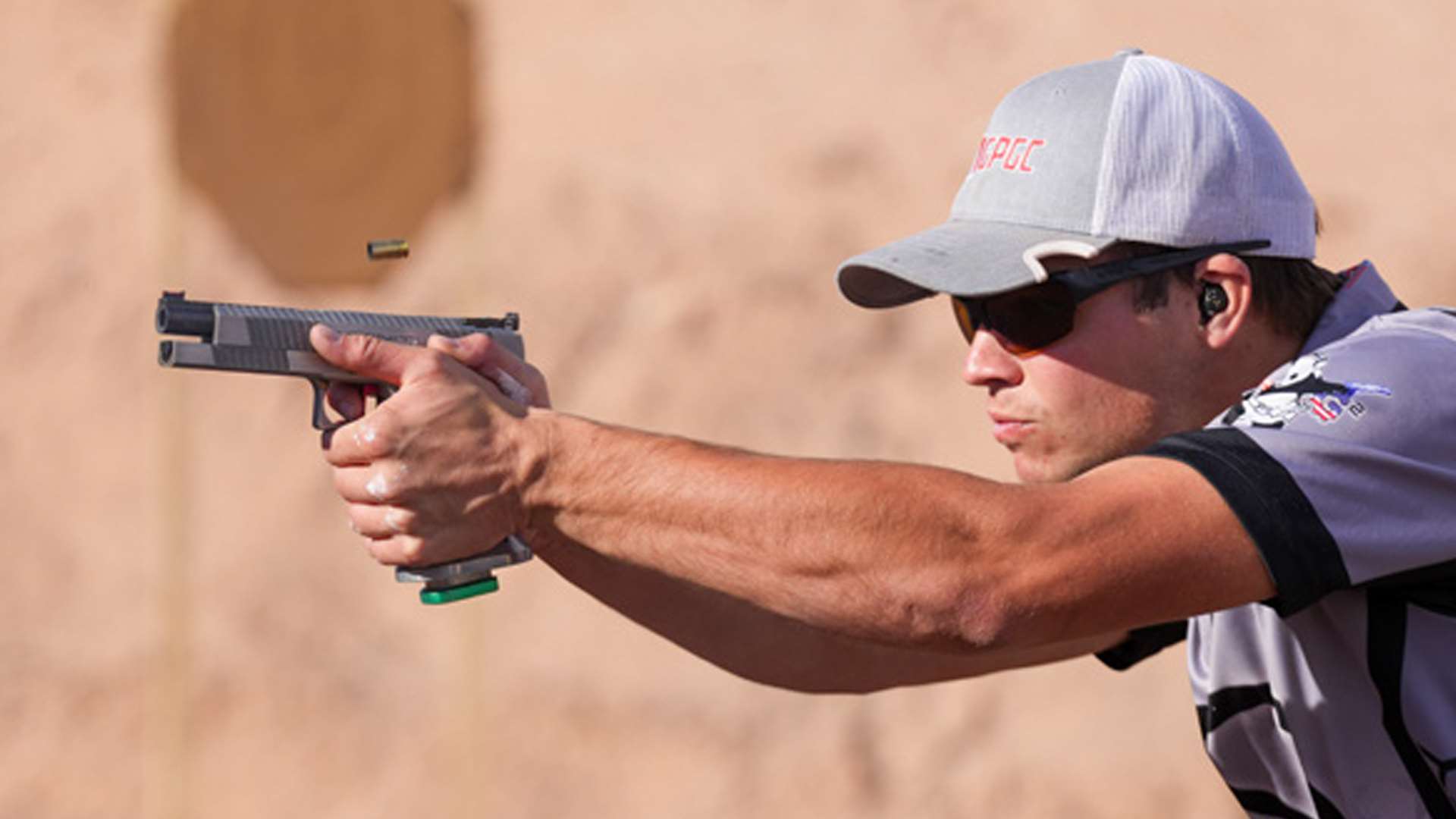
The same philosophy went into the 2025 USPSA Nationals. In 2018-2019, the two most popular divisions were Iron Sighted Production and Limited, at 24% and 29%, respectively. In 2019, Open was at 16%, while PCC and Carry Optics were at 12%. Since 2024, Carry Optics has become number one at 37%, followed by Limited Optics at 26%. Open and PCC have seen slight decreases to 14% and 9%, respectively, but the biggest change has been in the Iron Sight Limited and Production divisions. The most popular have fallen to 6% in Limited and 5% in Production, as the market shifts toward red-dot optics-ready firearms.
The goal of the USPSA Nationals in 2025 (and into this year) was to divide the divisions into approximately 50/50 of the reported activities, keeping the two powerhouse divisions Carry Optics and Limited Optics as the anchors for Factory Gun and Race Gun. Achieving maximum sell-through of the available slots across the two events, without the additional cost of a third Nationals, was also a goal in how these were split. The Factory Gun Event held earlier in 2025 had 532 competitors compete in Carry Optics (412), Production (53), Revolver (22) and Single Stack (38). There were seven unfortunate souls who unintentionally shot Open.
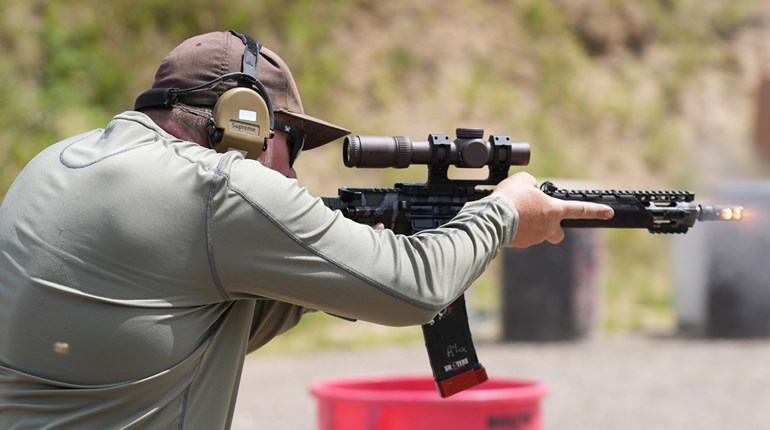
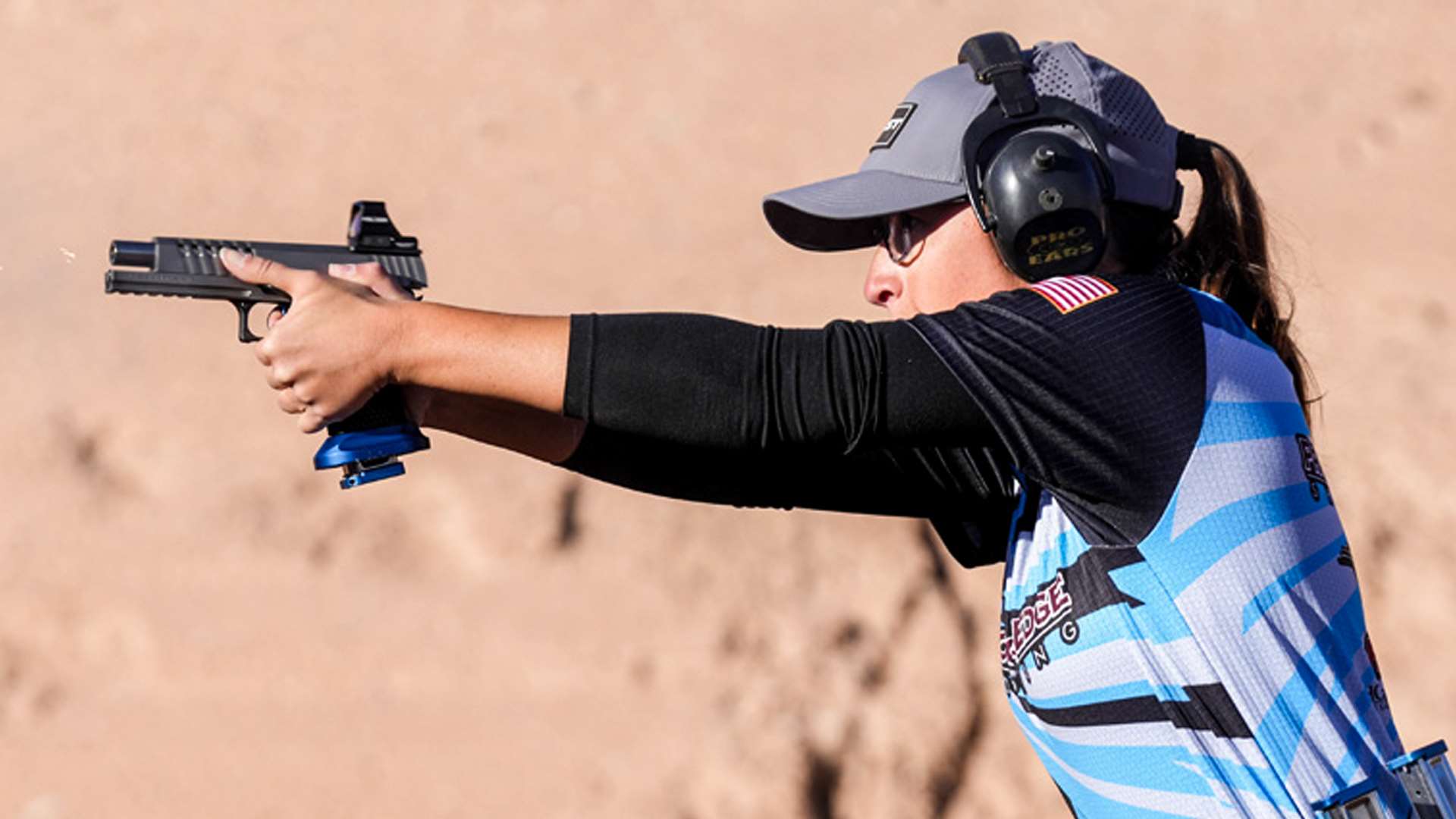
USPSA Race Gun hit the SUPS range from October 22-26, 2025. The main match was held over three days, Friday, Saturday and Sunday; there was an early match for staff and six squads of competitors that was shot on Wednesday and Thursday. This was the same format used at Factory Gun, featuring 18 stops, including a chronograph, which made up the 19 stages for the competitors to face. The SUPS range was divided into three zones that made up the match flow, and the main match was split into morning and afternoon squads that alternated on the second day, shooting only six stops per day. The early match squads would shoot nine stops per day.
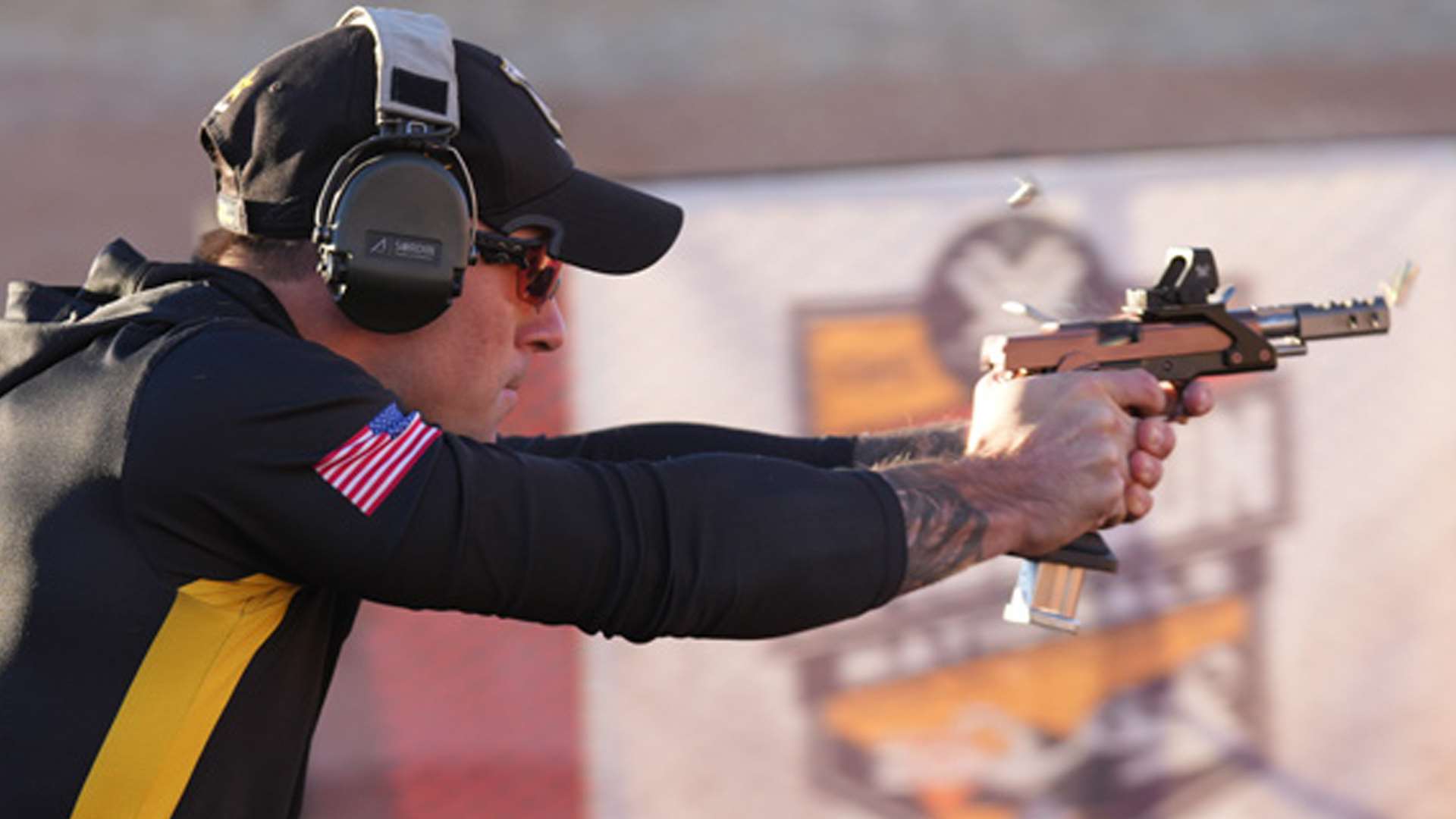
Many of the top competitors had just returned from the 2025 International Practical Shooting Confederation (IPSC) World Shoot held the previous month in South Africa, so the mood on the range was fairly light at first. But that all changed when the first buzzer sounded after the “Stand By” command was given, and the competition got heated on the bays in the beautiful Utah surroundings.
Against the backdrop of Zion and its wonderful sites and attractions, the dust was just starting to rise as the match intensified and competitors pushed through the challenges they faced each day of competition. From target engagement to the sunrise over the tall berms, everyone would need to find that competitive instinct to stick to their plans, get back to the basics of shooting and minimize mistakes to see who would stand on the podium at the end of the match.
Of the 19 stages that made up the match, everything was straightforward and designed as a shooting competition, not a prop match or a contest of who could run the farthest. The tests focused on shooting, with only one stage that featured any kind of unusual prop. This was one of the most talked-about stages (and either loved or hated). As the Match Director (MD), let me explain. The inspiration behind Stage 1, which featured an elevated swinging platform, came from several sources. The first was seeing an all-prone shooting position stage from the World Shoot, so I wanted to include an awkward shooting position. The IPSC had also released a video celebrating the 50 years of IPSC World Shoots. Going back and seeing the level of physical stages that required everything from jumping over walls, hanging off of props, crawling under tunnels, shooting under low ports and all sorts of other human feats, or what I like to refer to as Stupid Human Tricks (if you grew up watching the Letterman Show, you will get that reference).
We identified an opportunity to add a prop. The elevated shooting position was on a “shaky” bridge or platform. To engage all the targets, you would have to go prone for the remaining two that were downrange. I achieved the goal of using the prone position and a prop in a single stage during the match. This solution was either loved or hated (mostly disliked), but it created a unique challenge that pushed competitors out of their comfort zones.
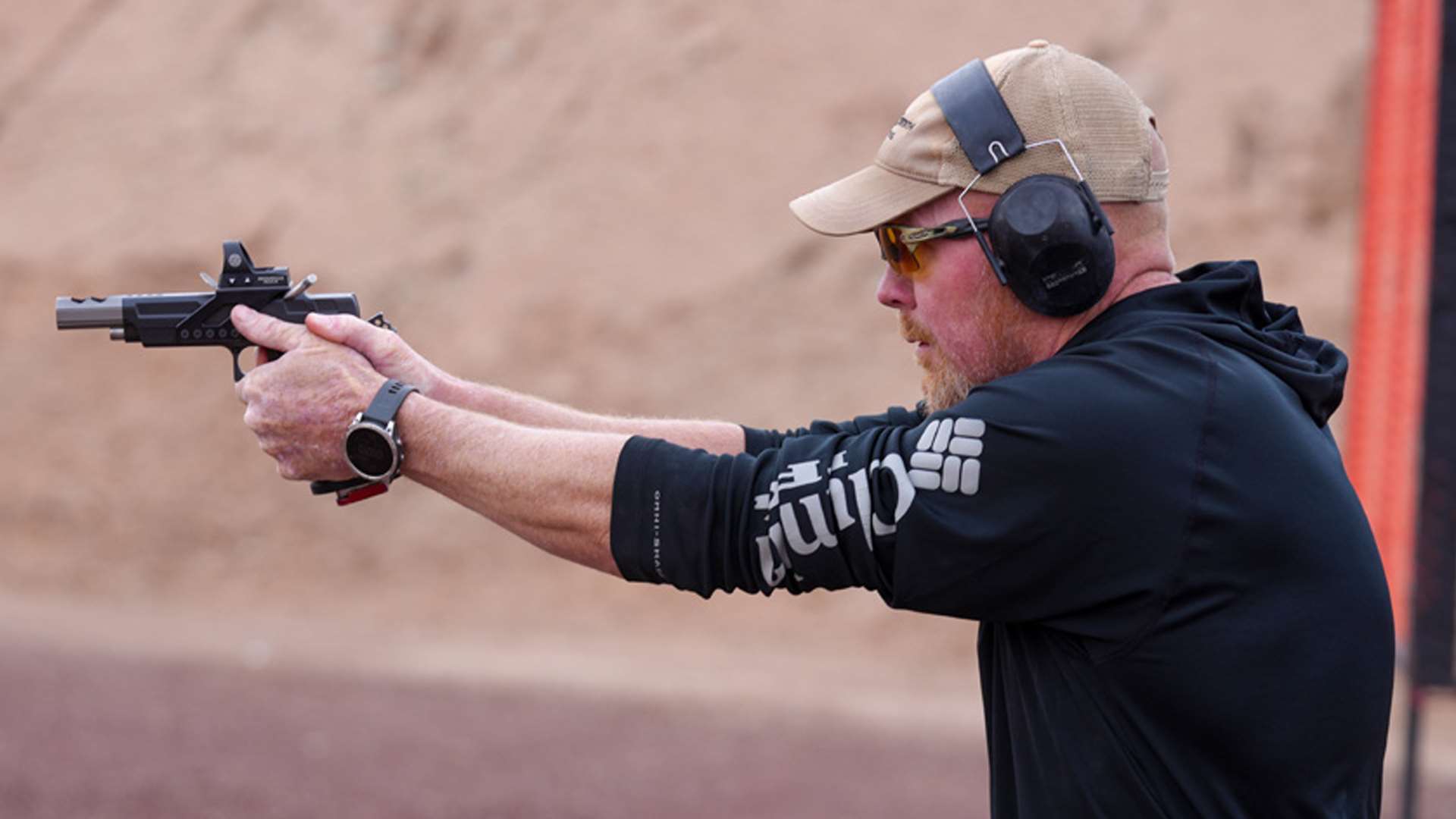
The remaining 18 stages were drawn from stage designs submitted by Danny Minter, Shannon Smith and Drew Coleman, as well as a few I adapted from the previous PCC and Handgun World Shoot. The stages would require just more than 460 rounds to complete and would allow competitors to build their plans around many viable options. The divisions were Limited Optics (282), Open (191), PCC (104), Limited (22) and L10 (16). With everything being high-capacity, except L10, stages were designed to push competitors to go fast, take risks and create speed traps from transitions on near-to-far targets or steel, with activated targets thrown in to encourage risk-reward scenarios.
Each day of the build the directions were simple: to build a stage that doesn’t focus on what if a PCC competitor does this, or how about we try to stop them from doing this, but instead use more of a “let’em cook” approach for all divisions and allow the shooters to get a little bit of a sense of an easy break down, easy engagement—until they realized that there were lots of speed traps with transitions into far arrays and tight shots. Many looked like “I can take that on the move” situations. However, only 31 of the 615 competitors shot a clean match with no misses. The opportunity to drop points was definitely available to competitors.
Zone 1 consisted of seven stages and required 148 rounds worth 740 points. In addition to the tricky Stage 1 with the elevated swinging platform, competitors would also have to complete a strong-hand-only and weak-hand-only stage in this zone. I normally have a standards type of stage in matches that require strong and weak, a typical style of standards format with required reload. These were not your typical stand-and-shoot stages; they were movement stages with no required reload. They shared a bay, and competitors would shoot the weak-hand stage first, then move to the strong-hand stage, shooting them back-to-back.
Zone 2 had six stages worth 735 points and required 147 rounds. It featured more distance and poppers with activated targets mixed in than Zone 1. The stages were designed to push shooters to take chances while shooting on the move with more open targets and the ability to blend arrays, while still requiring them to hit specific spots to engage targets. The added poppers and activators would separate the competitors into those who were back to the basics of grip, sights and trigger control versus those that were going full throttle and on the ragged edge of speed. Having multiple makeup shots on steel and activators just adds time and reduces your hit factor, just as misses do. There were many who suffered through this in Zone 2.
Zone 3 continued to build on the stages from Zone 2, but here there were larger stages with more rounds and more ground to cover in the larger bays. There were 169 rounds required, worth 845 points, so there was a way to make up some lost ground from day two or dig a deeper hole if you were not on your game.
There is a lot that goes into the mental and physical aspects of shooting a match like USPSA Nationals, especially over three days for the main match or trying to get through it in two days if you shot the early match. You are on the range for at least five hours, even in a half-day match. The competitors had cool, welcoming mornings and highs in the 70s, with mostly sunny days, which made the entire experience better than high heat or rain.
Even without the weather as a major factor, there are several other mental and physical aspects to consider. You are working through being on the range, breaking down stages, tracking your progress and dealing with good runs and bad runs. You might have malfunctions to resolve or have to cope with borrowed gear at times. There is also the challenge of travel, being away from home and often balancing other obligations while trying to compete at your highest level. Going into the last day of the match, the mood on the range was still one of everyone having fun, enjoying the competition while trying to stay focused on the end goal—to complete this Nationals and see who would come out on top.
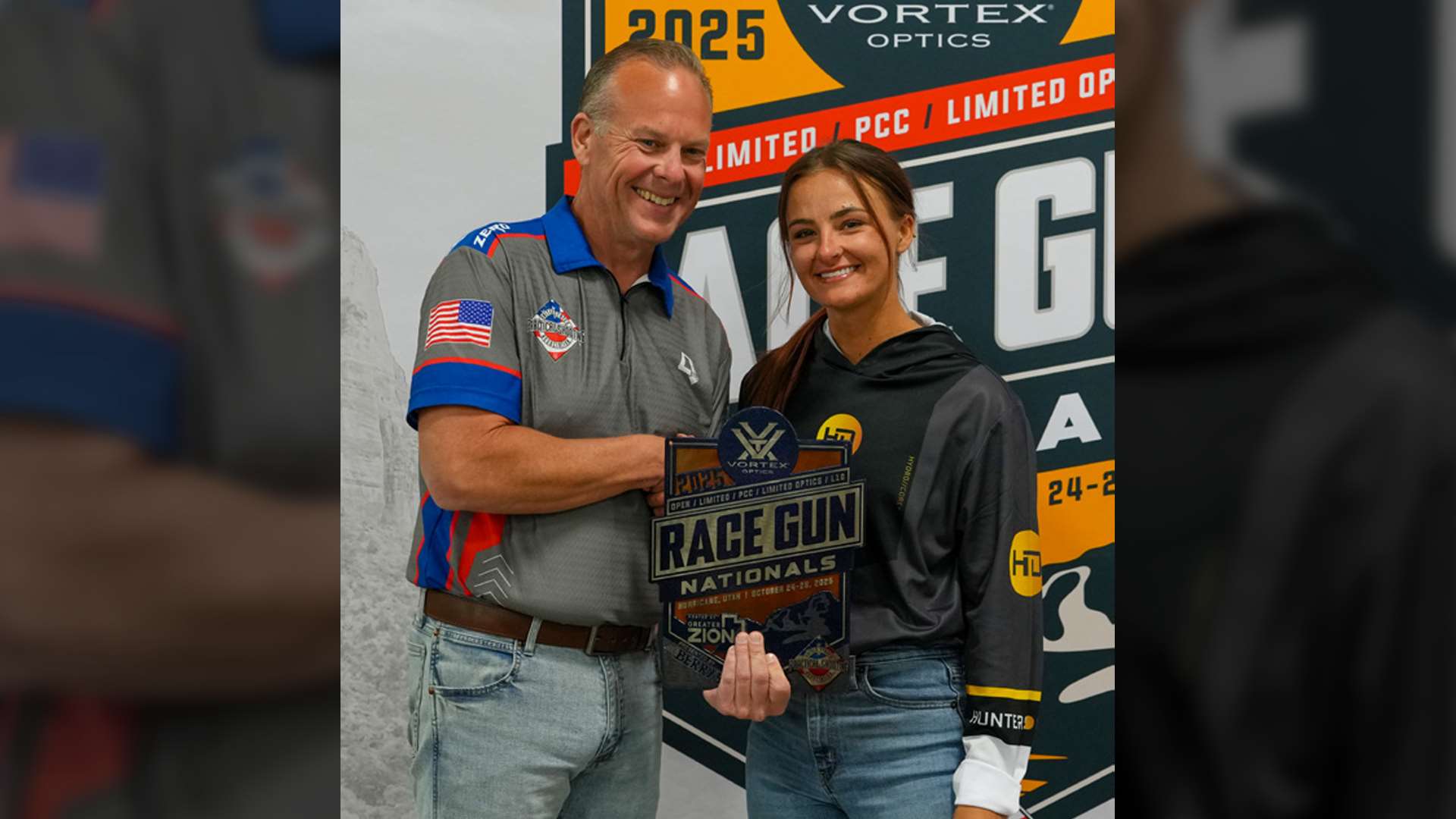
Many different media outlets were on the range, as well as the “BELT” Challenge, which stage sponsor Hunter Constantine was holding to give away a 1980s Corvette. There were also competitors such as Christian Salier working on a repeat win in Open, and Max Leograndis, who has dominated PCC since his very first win way back in 2016 and was defending his title. This was the first year the L10 division allowed the use of a red dot, and Limited Optics was now in its third year as a recognized division, with multiple players chasing the title of USPSA Nationals Champion.
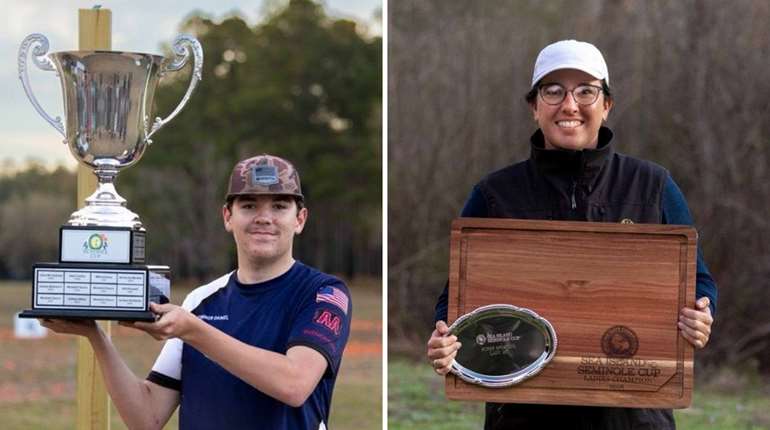
2025 USPSA RACE GUN NATIONAL CHAMPIONSHIP LEADERBOARD
- Open Champion: Christian Sailer, 2258.4206
- Limited Champion: Mason Lane, 2213.8829
- Limited 10 Champion: Shane Coley, 2274.4803
- Pistol-Caliber Champion: Max Leograndis, 2195.1993
- Limited Optics Champion: Adam Grimm, 2155.3315
With the return to Southern Utah, the largest Nationals to date and USPSA membership at an all-time high, this event capped a year full of milestones for USPSA. As the MD for the Nationals in 2025, I have been able to help steer these events, which has been a tremendous honor. But all the real work, all the hard work has been done by the USPSA’s amazing members. I have been blown away by the competitors who keep coming back and the remarkable staff of volunteers who just keep showing up, ready to put in the work. The year 2025 marked my 25th year of competition shooting, as well as my 10th year of being involved with the USPSA Nationals. I have worked with some extraordinary, supportive individuals and it’s hard to find the words to share my gratitude. Every thanks I have ever received must be passed on to these fine people, from whom I have learned so much.
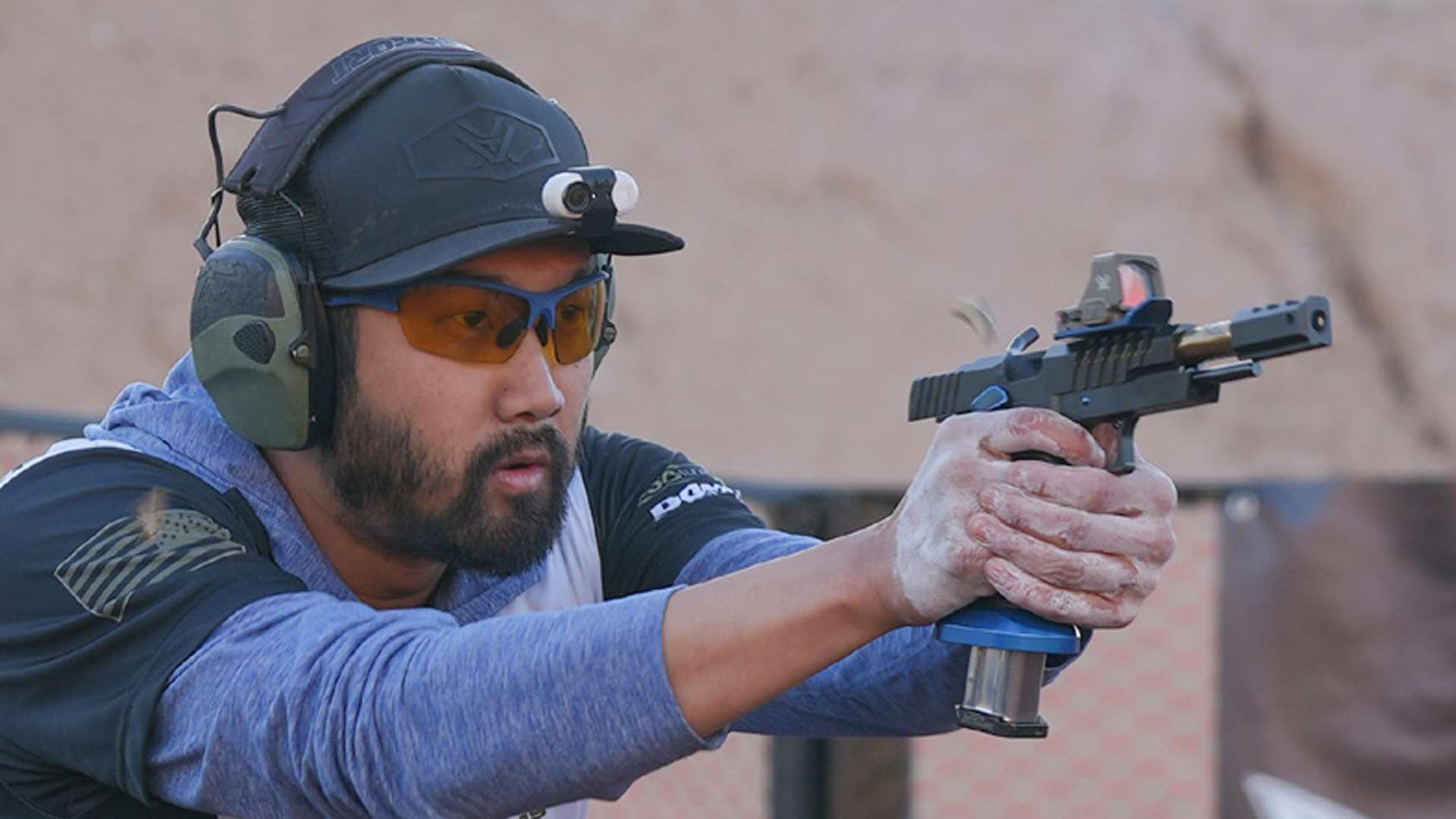
Life throws you many curves and obstacles along the way. The setbacks we face can break you down, but having the right people in your life and the community we surround ourselves with cannot be overestimated in terms of how important they are. Everything from a “woo-hoo” at the end of a stage run, to a simple pat on the back or handshake saying “thank you” has made everything we do worth the time, cost, frustrations, highs and lows.
The staff for the 2025 USPSA Race Gun Nationals was absolutely stellar in every aspect of how they handled themselves from setup to competing and running stages. These fine people cannot be thanked enough—they are the backbone of this organization, the ones who go back and build the local matches, run the registrations, work with the ranges and make this all possible. The competitors at last year’s event showed grace and poise; they were there to have fun and compete with enjoyment as the goal. Let’s all take a moment to reflect on the 2025 National’s highlights, learn from the mistakes and “Make Ready” for 2026.
Article from the November/December 2025 issue of USPSA’s magazine.