In his previous NRA America’s Rifle Challenge videos, Kyle Lamb of Viking Tactics covered the basics: shooting from the ARC barricade, sling technique, scope mounting and zeroing your rifle for all three ARC divisions. Now, in the final installment of the beginner series, he steps back from the how-to and makes a broader case—why competition itself is the point. Watch the video above.
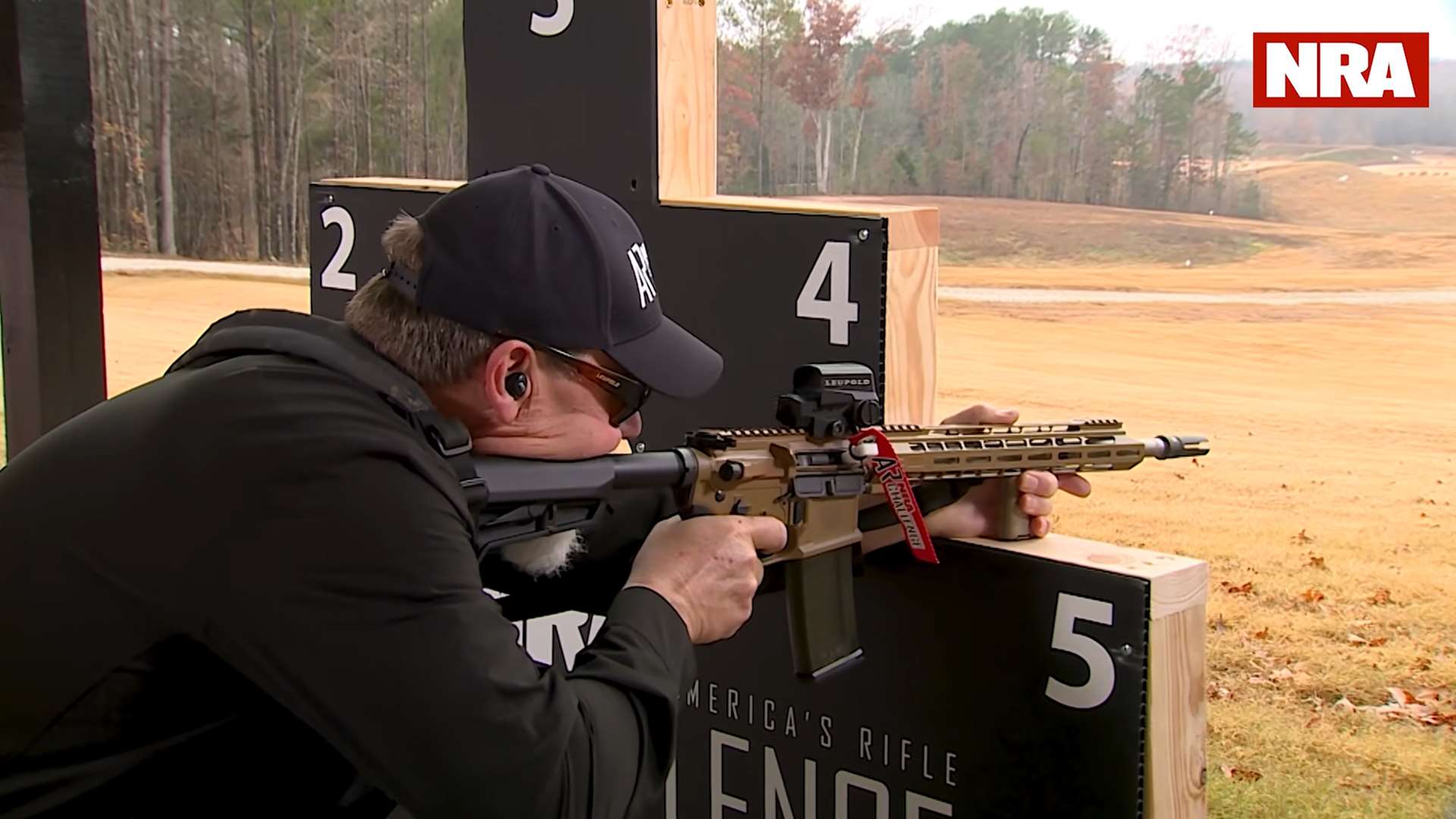
Lamb hears the same question from law enforcement officers, military personnel and civilians: why bother with competition? His answer is practical. A match is the fastest way to find out whether your gear actually works under pressure and whether your shooting ability is as solid as you believe it to be. The range session where everything goes right at your own pace tells you very little. A timed stage with unfamiliar positions, mandatory transitions and other people watching tells you a great deal. ARC is built to deliver that feedback in a structured, accessible format—and to make the process enjoyable rather than intimidating.
He draws a distinction between ARC’s two competitive levels. Level One places shooters on a line together, firing the same course at the same time. The environment is social and low-pressure—a natural entry point for people who have never shot a match.
Level Two puts the competitor out on the stage alone, running the course of fire individually. The jump between the two is significant, and Lamb frames it as a progression worth pursuing. He also notes that he deliberately seeks out shooting disciplines that push him outside his comfort zone, and that ARC is one of those disciplines. The implication is clear: if a retired special operator with decades of trigger time still finds value in showing up and being tested, the program has something to offer at every level.
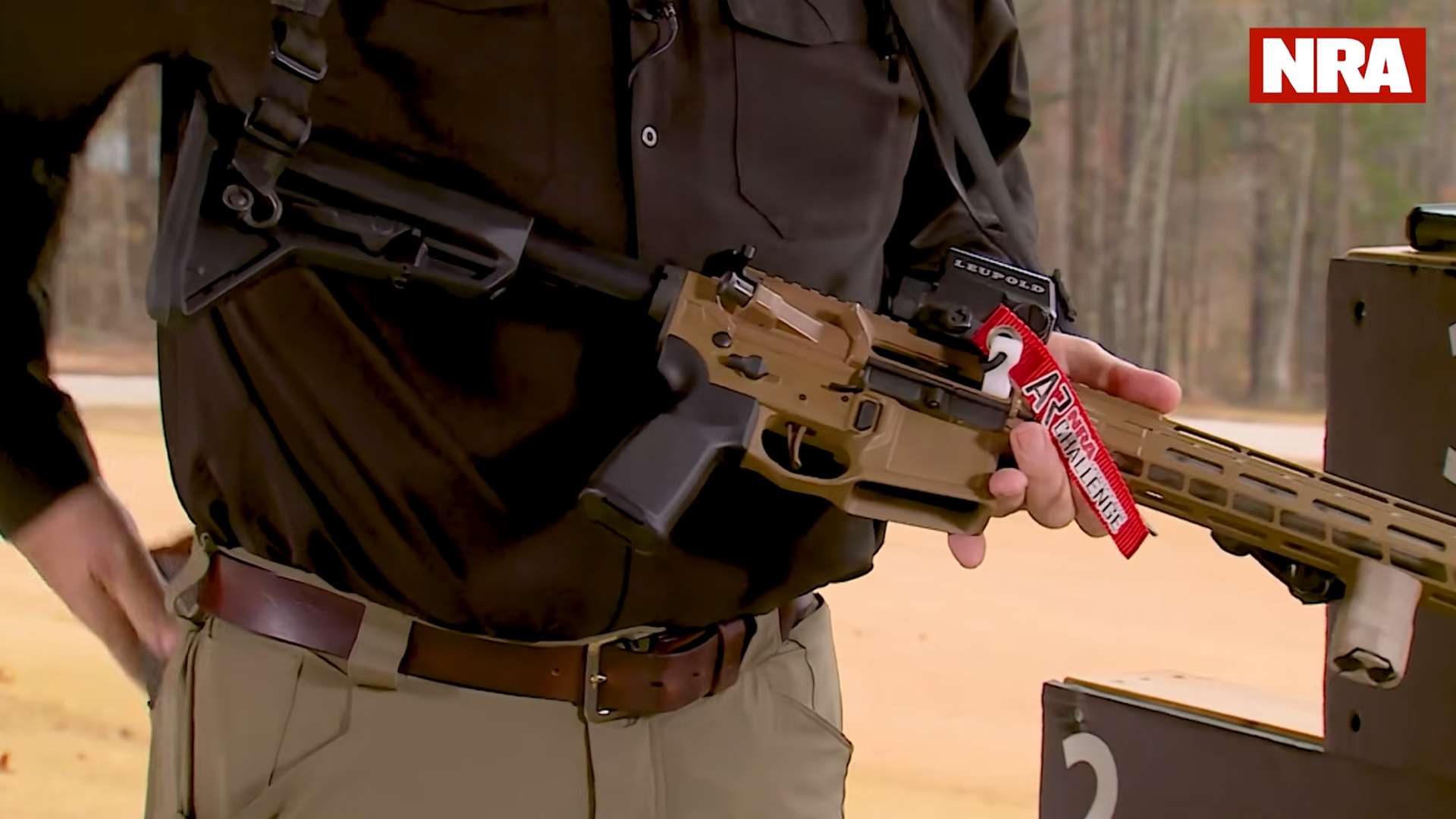
To illustrate the kind of skill that competition rewards, Lamb spends the second half of the video demonstrating a strong-to-support-side rifle transition—a technique that becomes necessary when barricade ports or cover positions favor the opposite shoulder. The sequence is deliberate and safety-driven from the first movement. Before doing anything, he places the rifle on safe. His firing hand then moves forward to grab the front of the magazine well while his support arm drops through the sling. The motion does not need to be dramatic—just enough to get the arm inside the loop. From there, he pushes the rifle away from his body. That push is critical: it clears the sling from his gear and from the shoulder, and it opens space around the pistol grip so the support hand can receive the rifle cleanly.
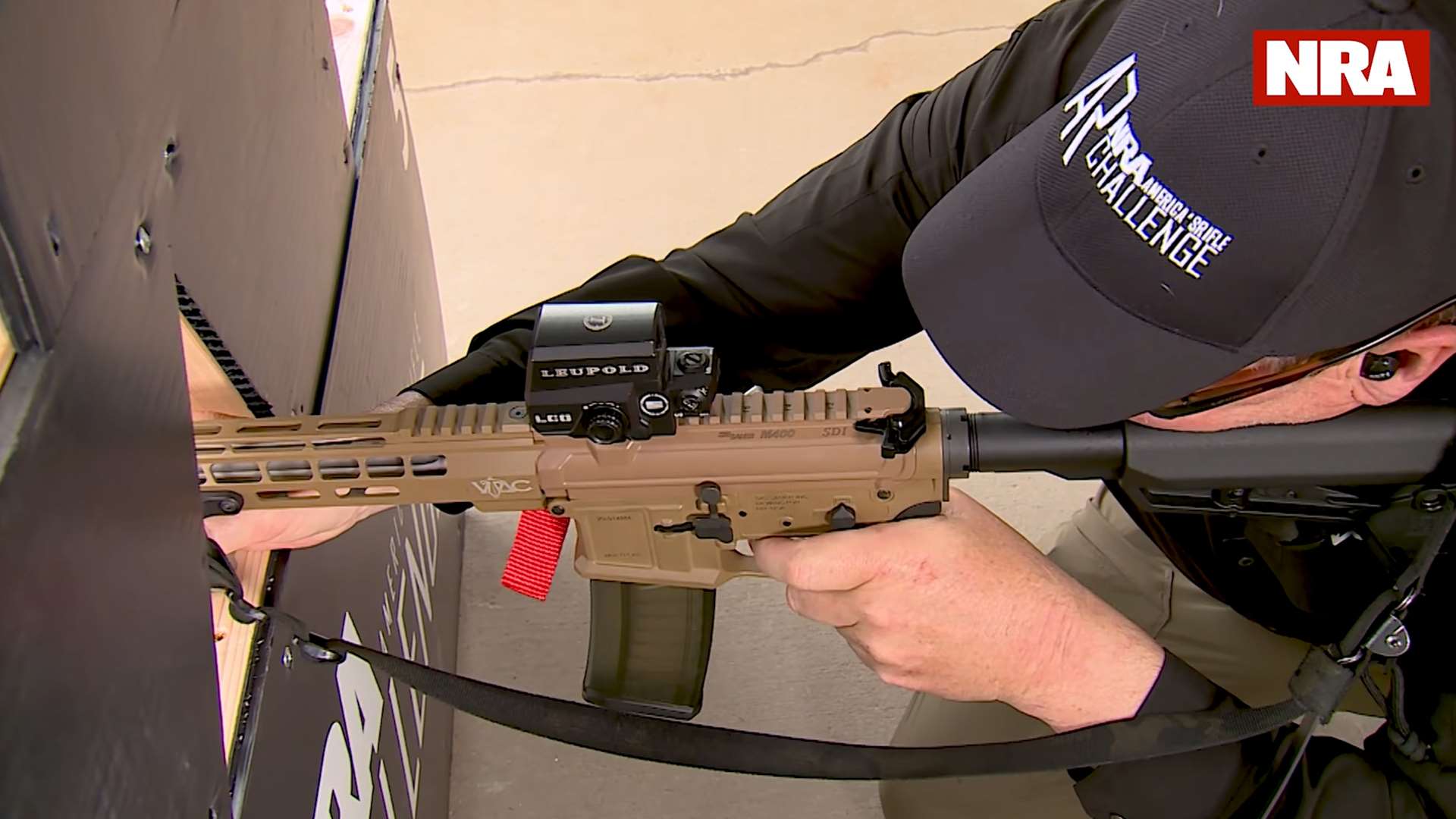
Once the rifle is in the support hand, Lamb brings the buttstock to his shoulder and addresses one of the most common mistakes he sees: people set the stock too low. If the sights are not visible, the stock needs to come up. When the sight picture is confirmed, he sweeps the safety off with the meaty portion of his index finger—not the thumb, which is now on the wrong side of the receiver—and takes his shots. To re-engage the safety, he uses a straight index finger to push the selector back to safe, a detail he emphasizes because an inadvertent trigger press during the manipulation would be dangerous. The return transition mirrors the outbound one: firing hand grabs the magazine well, rifle pushes forward, and the weapon rotates back to the strong side.
Lamb then runs the entire transition on the ARC barricade, compressing the sequence into a fluid movement between ports. He engages a target from the strong side, safes the rifle, transitions, drops to a lower port on the opposite side of the barricade, sweeps the safety off, engages the second target, safes again and transitions back. Every step—safety on, magazine well grip, arm through sling, push, receive, stock high, safety off with index finger, shoot, safety on with straight finger and return—happens in order, every time. The ARC barricade simply adds the positional component: the shooter must also change height and angle while managing the rifle swap.
The transition drill ties Lamb’s broader argument together. It’s exactly the kind of skill that feels manageable in a backyard dry-fire session but reveals its rough edges under match conditions—when the clock is running, the next shooter is waiting and the target needs to go down now. ARC competition creates that pressure in a safe, organized setting, and it’s the pressure that drives improvement. Lamb’s closing advice is the same theme he has returned to throughout the series: get to the range, shoot your first ARC match, learn from whatever it teaches you and then go back and train on what you found. The cycle of competition and practice is the point.
For more information on NRA America’s Rifle Challenge, head to arc.nra.org.