
One thing I’ve learned from years of writing and reviewing guns and gear is that products that hold up in the tactical realm usually perform just as well in competition. Competitive shooters are hard on their equipment—not only during matches, but through the constant travel to and from major events.
Nightforce Optics has earned a reputation for producing rugged, reliable optics, particularly in its top-tier ATACR line. I’ve spent time behind the ATACR 7-35x56 mm F1 (C661), one of the company’s largest and most powerful tactical riflescopes. So far, I’ve shot it mounted on a Tikka T3x Ace Target chambered in 6.5 mm Creedmoor and a Bergara B14² Crest Carbon chambered in 7 mm PRC.
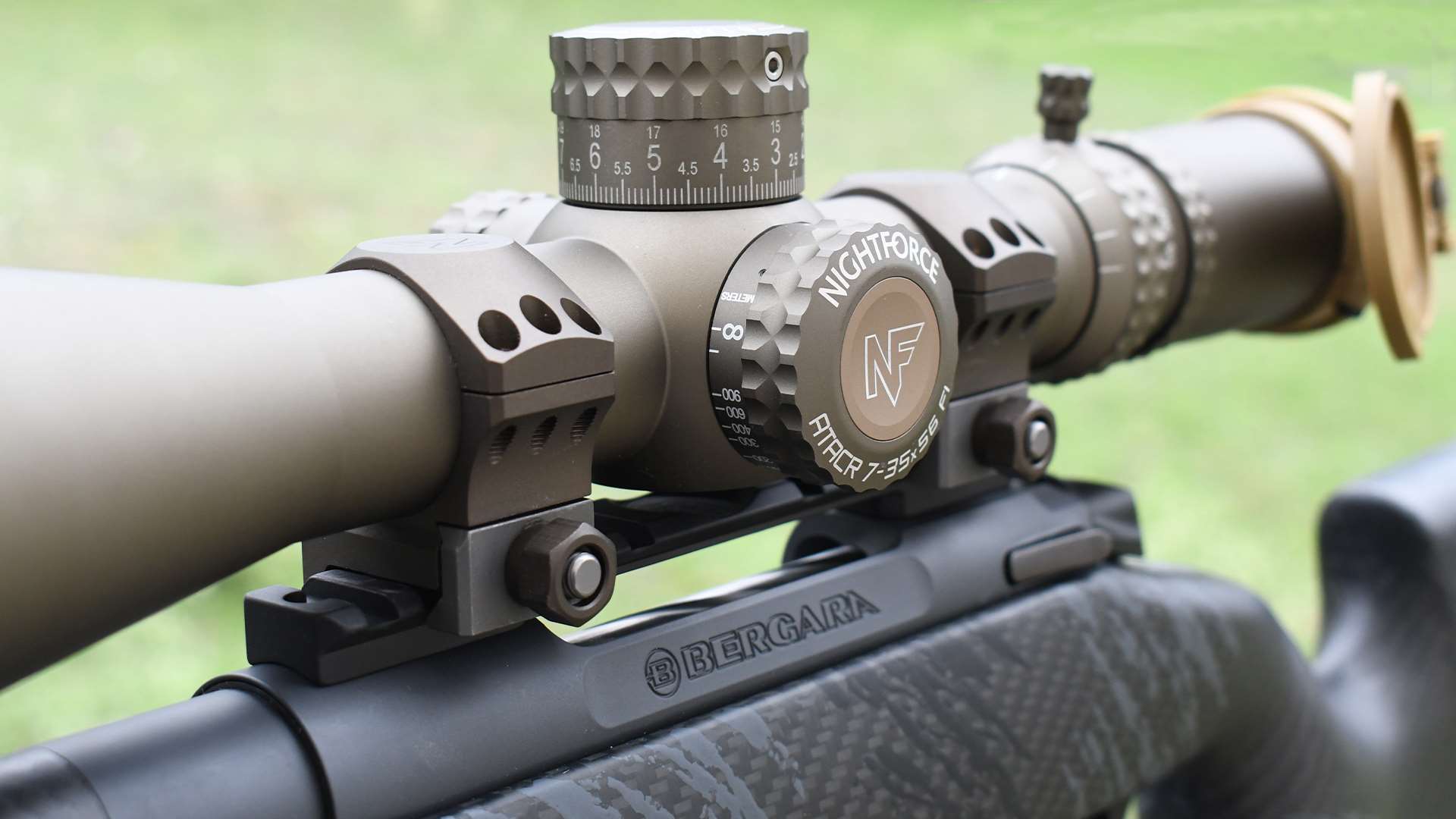
At the time of this writing, I’ve also participated in at least one rifle match with it—along with that Tikka. While the Nightforce ATACR 7-35x56 mm F1 is a tactical riflescope through and through, it possesses several attributes that make it well suited for long-range shooting in both tactical and competitive environments.
Nightforce ATACR 7-35x56 F1 C661 Overview
The full-size, full-power ATACR 7-35x56 F1 (C661) riflescope is built around a 34 mm 6061 aluminum maintube and a 5x zoom ratio. While Nightforce offers many MRAD or MOA reticle options, the C661 is specifically a 100% MRAD scope that uses Nightforce’s own first-focal plane MRAD-based Mil-XT grid reticle. This scope is also equipped with Nightforce’s button-activated Digllium illumination, which provides five different intensity levels in both red and green.
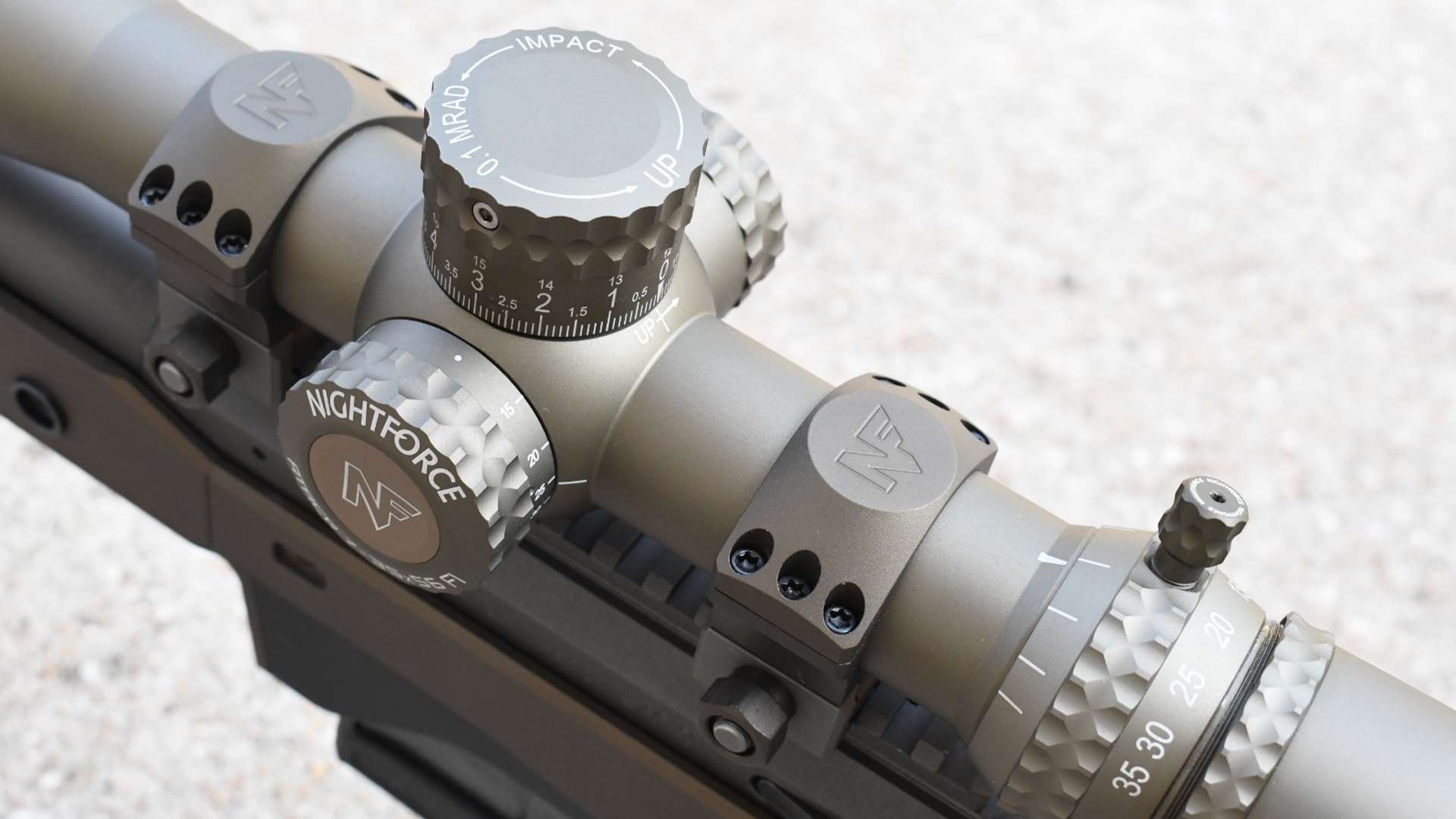
C661s follow Nightforce’s tactical riflescope format, which consist of an exposed elevation turret, a capped windage turret and a left-side parallax/focus adjustment knob. The left knob also houses the CR2032 coin battery and illumination controls. Instead of the traditional twisting diopter ring that sits at the rear-end of most scopes, the C661’s entire ocular piece rotates and is held in place by a textured locking ring for resiliency’s sake. This portion also rotates to adjust magnification, and it’s aided by a low profile throw-lever, which is quite handy.
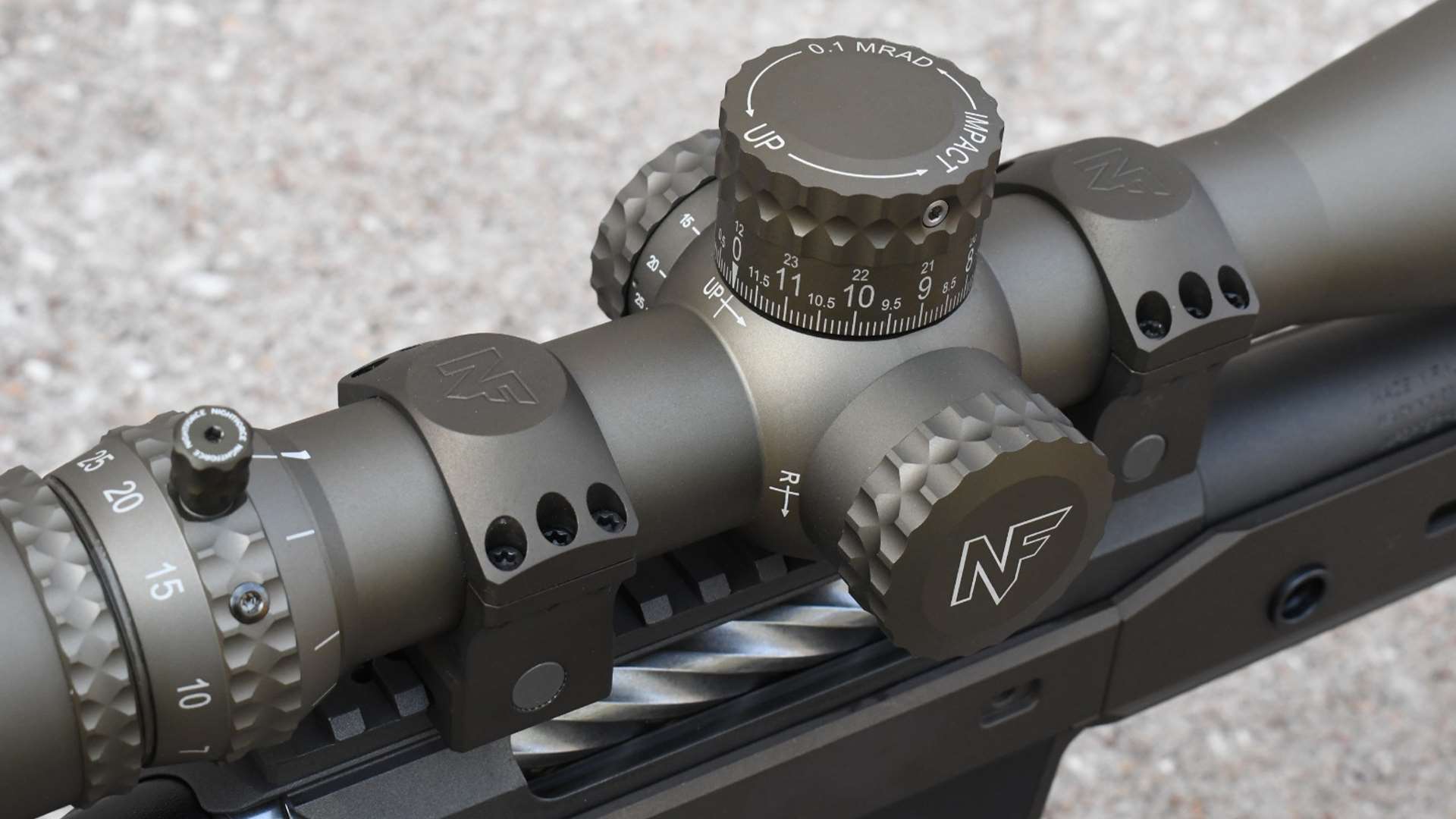
The C661 elevation turret is clearly marked, with .10- and 1-MRAD markings being easy to see. C661s also employ Nightforce’s Zero-Stop locking mechanism to preserve the shooter’s specific baseline zero from their rifle and cartridge. The Zero-Stop has a slight learning curve, but once mastered, it becomes straightforward to set and reset as needed. Shooters only need a common 5/64 Allen wrench to do all the work. Nightforce includes one in the packaging via its “tri-tool.” Other critical included accessories are spring-loaded snapping Tenebraex lens covers and a sunshade.
Application-wise, the C661 elevation turret includes 29 MRAD of total adjustability, which is adequate for long distance shooting, especially when combined with a canted scope base.
Light Optical Works Glass and Mil-XT Reticle
Historically, Nightforce Optics has enjoyed a strategic relationship with Japan’s Light Optical Works, Ltd. (LOW), one of the foremost manufacturers of optical glass in the world. There’s a reason why many high-end optics companies incorporate this Japanese firm’s high-end glass in their products.
The Mil-XT is one of Nightforce’s first-focal plane reticles, which consists of an MRAD-based grid with easy to see 1-mil and 0.2-mil hashes along the primary vertical and horizontal stadia lines. These lines converge to form a fine 0.5-mil central aiming point. The fact that it doesn’t smother the target is conducive to shooting precisely. Previously I’ve described that the Mil-XT’s grid is reminiscent of the classic Horus H59 style, which I find facilitates fast-paced shooting on the fly without needing to dial—something critical in timed precision rifle stages when fighting the timer. Further helping this is the Mil-XT’s easy-to-see numbers (1-mil values) along the entirety of the vertical stadia line.
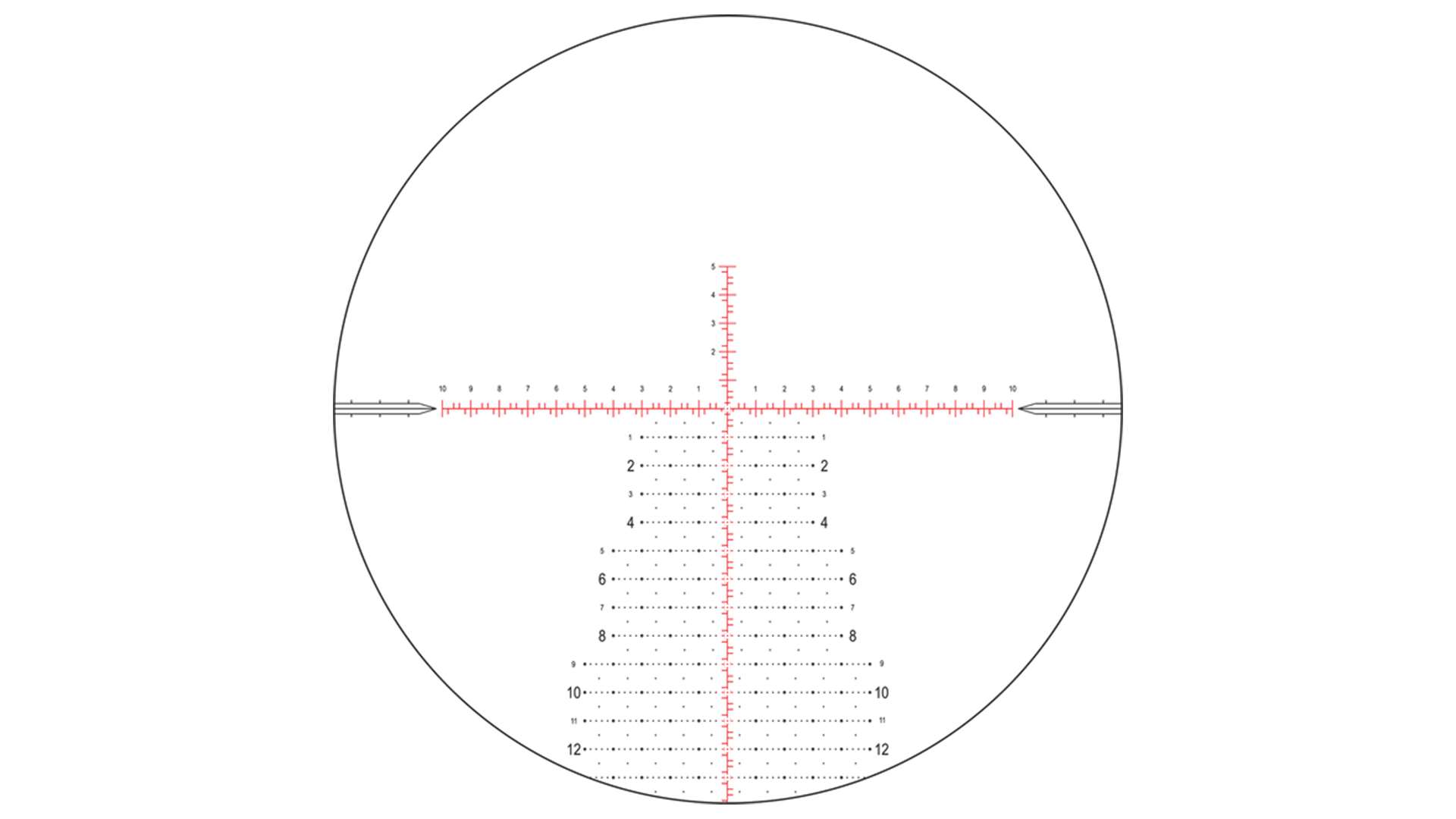
The top half of the vertical stadia line runs the span of 5 mils, which is useful for ranging targets or calculating adjustments when trying to zero on paper. Not to mention, it leaves the entire upper hemisphere of the Mil-XT’s sight picture clear to reduce the reticle’s overall business. After all, being able to spot faraway landmarks or targets is half the reason for mounting a powerful riflescope on a rifle in the first place.
“Sending It” With The Nightforce ATACR 7-35x56 mm F1
I already mentioned that I’ve mounted this scope on two bolt-action rifles, with the aid of Nightforce’s robust X-Treme Duty Ultralight 6-screw 34 mm rings. I’d like to be clear that my experiences shooting with the C661 are rifle-agnostic.
I’ve previously reviewed other Nightforce riflescopes that employ the Mil-XT, so whether I’m shooting for careful groups at 100 yards or shooting out to distance, the reticle’s hashes, markings and stadia lines are central to my positive experience with the ATACR 7-35x56 mm F1. Both the Mil-XT’s grid and ruler-like format make it easy to shoot a precision rifle dynamically. Well, as dynamically as one can with long barreled bolt-action rifles in various supported positions.
To be more specific, whether it’s holding and making a correction on-the-fly or dialing, the C661 facilitates it. Likewise, the exposed 0.1-MRAD click-value elevation turret has strong and tactile clicks, which make it easy to keep track of adjustments.
Beyond the more than agreeable Nightforce Mil-XT reticle, the ATACR 7-35x56 mm F1 is visually a comfortable scope to use. Properly mounted, the combination of a roomy eyebox and a lot of magnification horsepower on tap has made my life easy when shooting for careful groups off the bench. Granted, the C661 is equipped to handle more than that, but as a busy reviewer, shooting fine groups is currently about 80% of my use. And if there’s something about shooting groups, it’s that doing so for extended periods of time becomes extremely draining on one’s mental and visual faculties. This scope’s optical qualities tend to spare my eyesight after hours on the bench.
Similarly, the wider objective lens along with the 34 mm maintube allows for easy light gathering. While I didn’t shoot with illumination, I did look through the glass with it in low-light conditions and the illumination array nicely fills in the main stadia lines and their hashes without any starburst effect.
The Takeaway
The Nightforce ATACR 7-35x56 mm F1 C661 is a big, heavy scope. It’s also fairly expensive (around $3,800 to $3,900 online) and with that it may not be the scope for everyone. But for someone needing a solid 7-35x riflescope who has the budget and appreciates Nightforce ruggedness, this unit has much to offer both beginner and experienced rifle shooters.
In my case, shooting with it improves the overall experience no matter the rifle, thanks to its great glass and useful reticle.