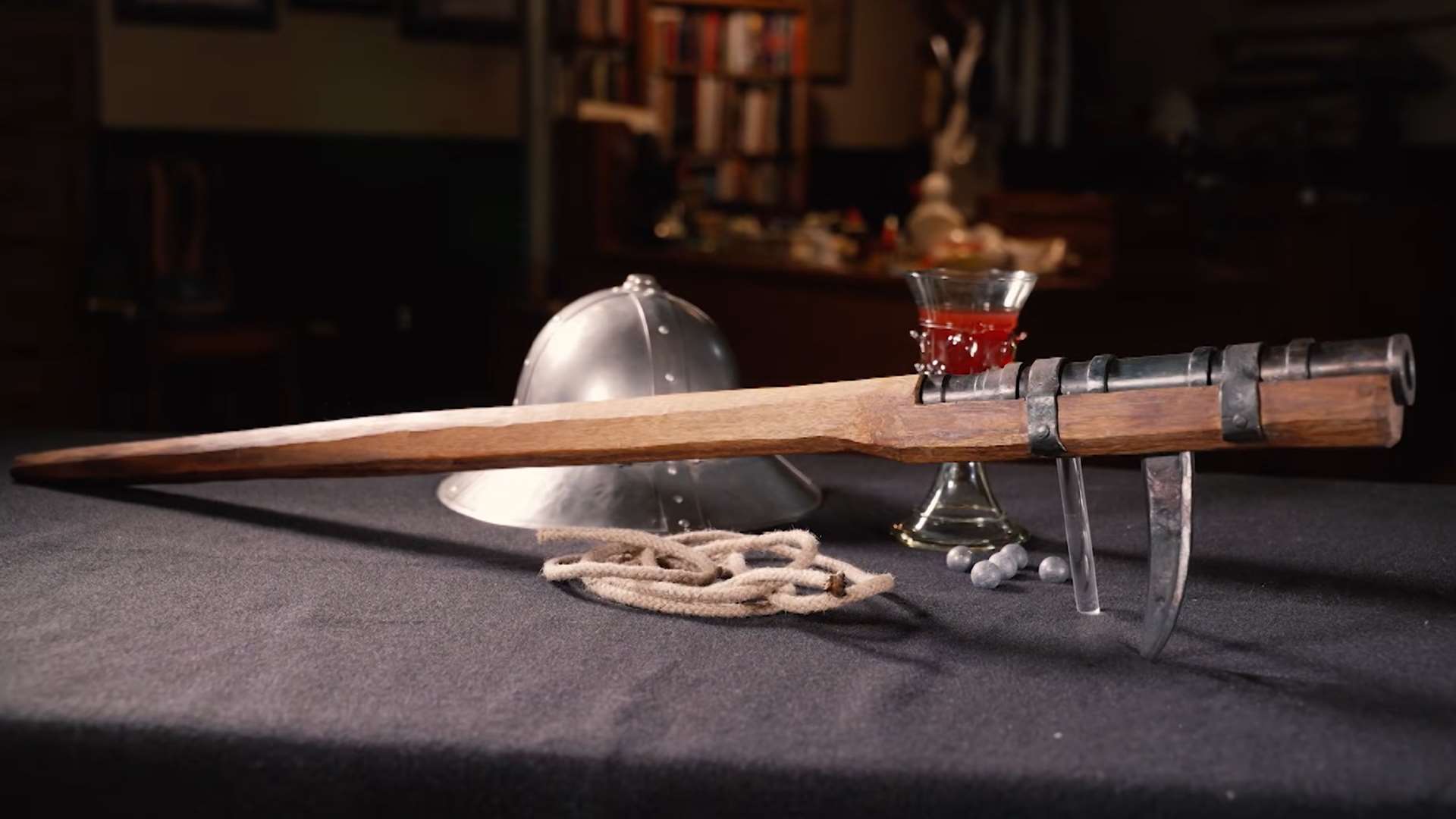
Long before the flintlock, the percussion cap and the self-contained cartridge, there was a metal tube with a hole at each end and a stick where the stock would eventually go. It had no trigger, no sights and no real way to aim. What it had was a charge of black powder and a burning match held to a touch hole, and that was enough to change the trajectory of warfare, technology and civil society for the next seven centuries. The hand cannon is where the story of the handheld firearm begins. In this “I Have This Old Gun” segment on “American Rifleman TV,” experts traces the hand cannon from its earliest documented appearance in the 1320s through its evolution into something recognizably closer to a modern firearm. Watch the full video above or at the NRA Pubs YouTube page.
The gunpowder trail begins in China.
“The Chinese were the first to really discover gunpowder and figure out the formula between sulfur, saltpeter and charcoal in the right proportions to make an explosion,” Kenneth L. Smith-Christmas, retired museum curator for the U.S. Marine Corps and U.S. Army said.
Chinese fire sticks made from bamboo appeared in the 1100s and 1200s, and by the end of the 13th century, bronze-cast tubes had replaced them. NRA Media Editorial Director Mark Keefe places the first documented European hand cannons between 1326 and 1332, when records describe an encounter involving two people firing them at each other—an early and apparently contentious debut.
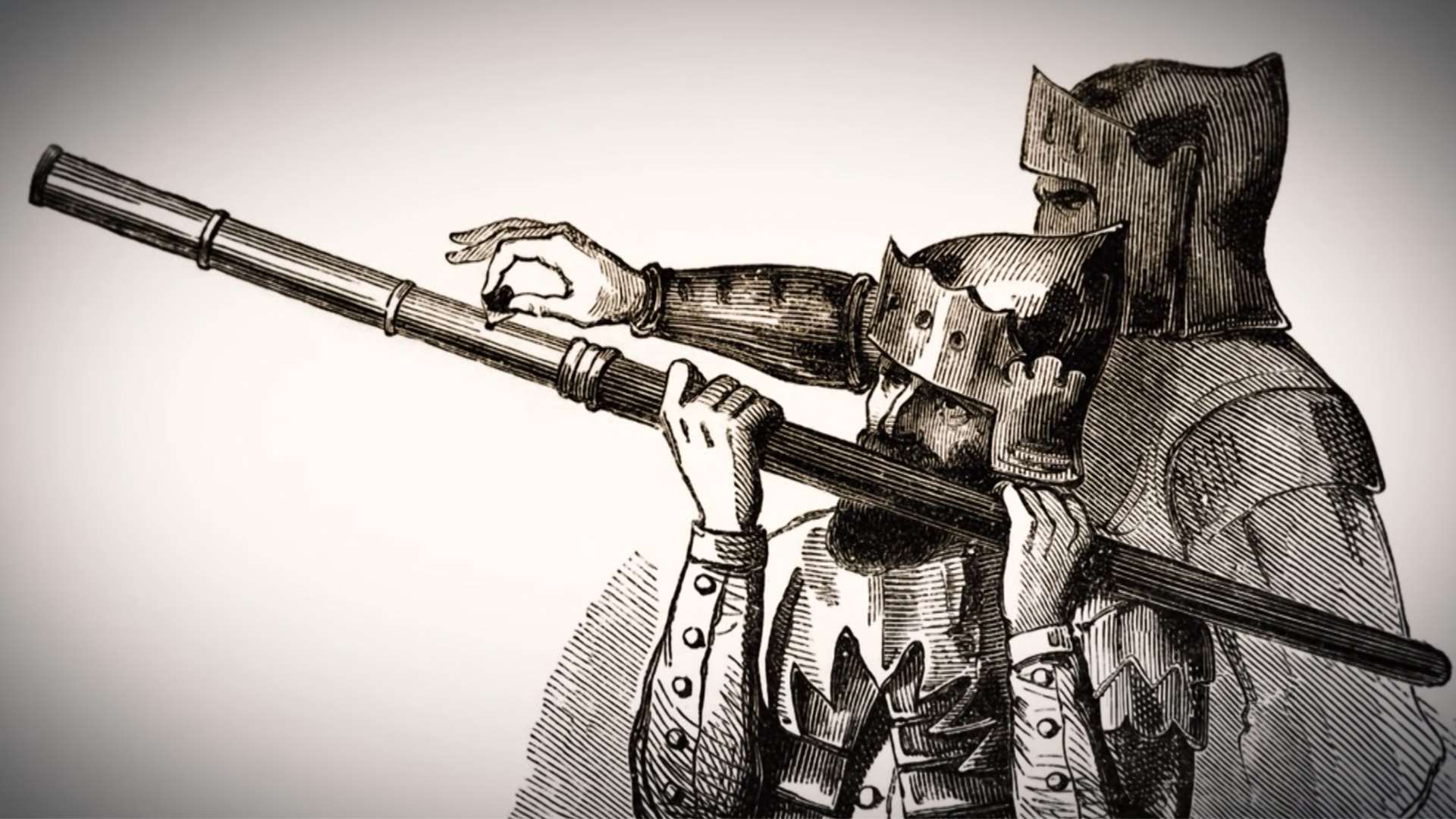
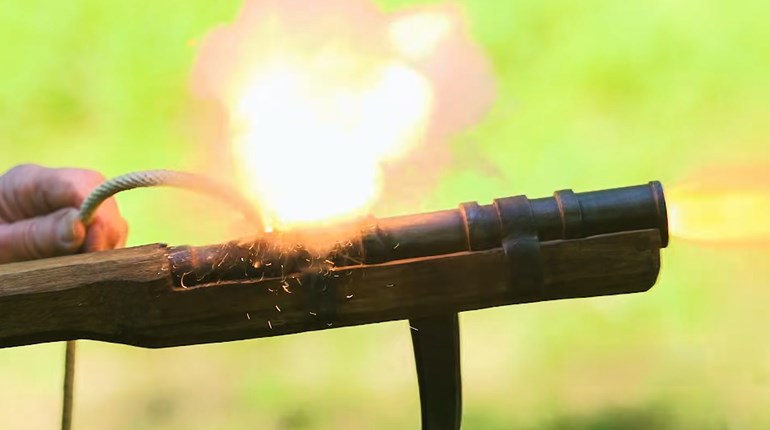
The design was as crude as the concept was revolutionary. A metal tube, open at one end for the projectile, with a pan or touchhole on top for ignition. There was no stock in any meaningful sense—just a tiller, a pole held under the arm or braced against the body. As for ammunition, there was no standard.
“They put all kinds of stuff in there,” Keefe said. “Metal arrows, eventually stones, and then iron balls were used.” Lead balls came later, and their arrival was driven by practicality: lead melts at a lower temperature than iron and could be more easily cast to fit the smaller bore sizes of handheld firearms, as opposed to the stone projectiles used in the large bombards of the era.
American Rifleman Field Editor Garry James identified three distinct types that emerged as the hand cannon evolved. The first was a small-bore tube attached to a straight wooden stock, either inserted into a socket integral to the barrel or nested into a cradle and held with bands. The second was an all-metal design with a long metal tiller and a shorter barrel, often fitted with a hook on the underside. That hook, James notes, was not a weapon—it was a rest, meant to brace against fortifications, walls or tree limbs to absorb recoil during firing. The third type moved closest to what we would recognize as a firearm: a longer barrel mounted on a wooden stock shaped to be held against or near the shoulder.
One of the more striking details in the segment comes from American Rifleman Executive Editor Evan Brune, who pointed out that many surviving hand cannons share a bore diameter in the .75-to-.78-caliber range—a size established in the 1330s and 1340s that persisted as a near-standard all the way into the early 19th century. That’s roughly 500 years of continuity in a dimension that was arrived at by medieval metalworkers without the benefit of ballistic science. It suggests that the practical limits of what a person can hold and fire were understood early and changed slowly.
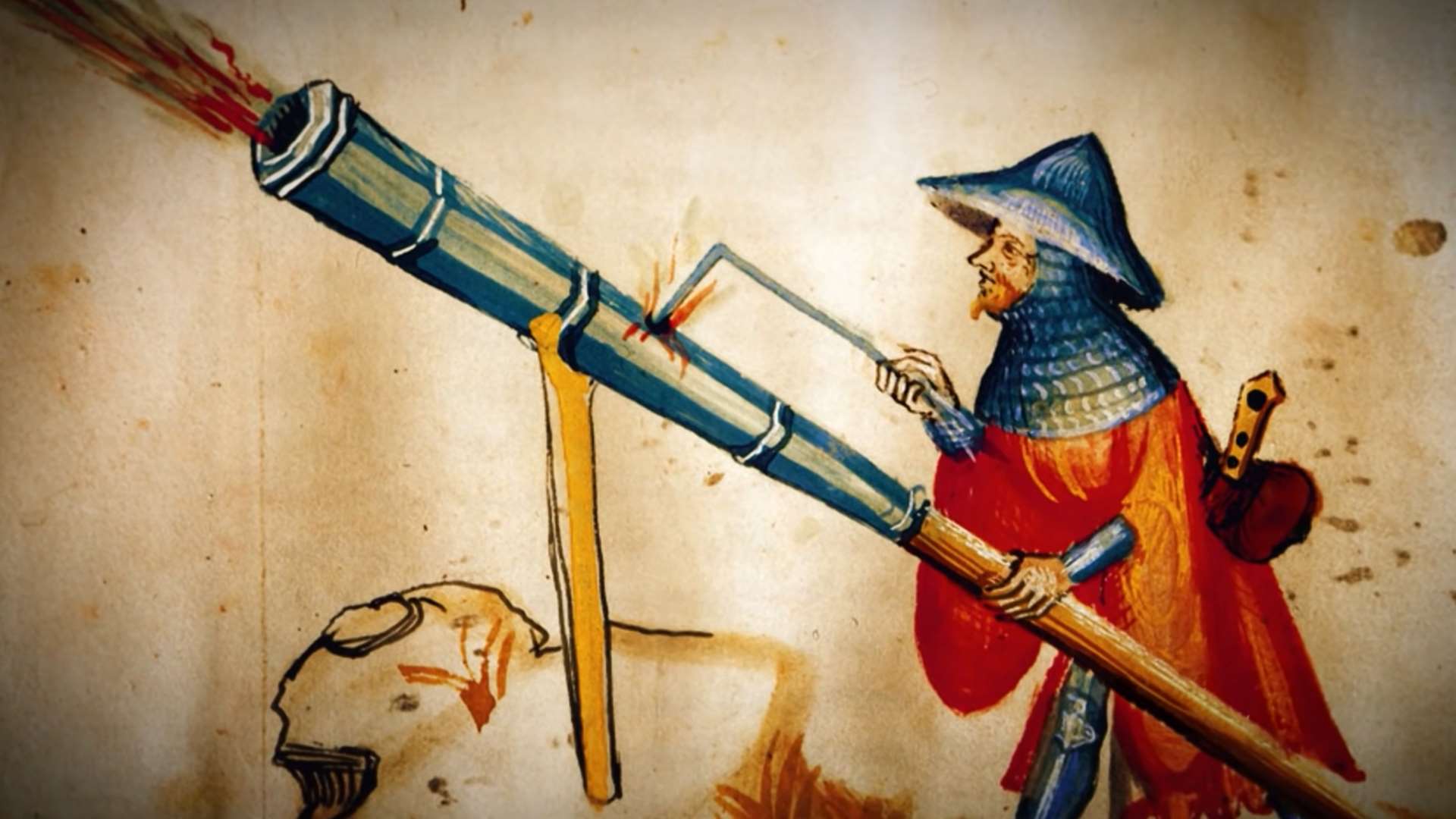
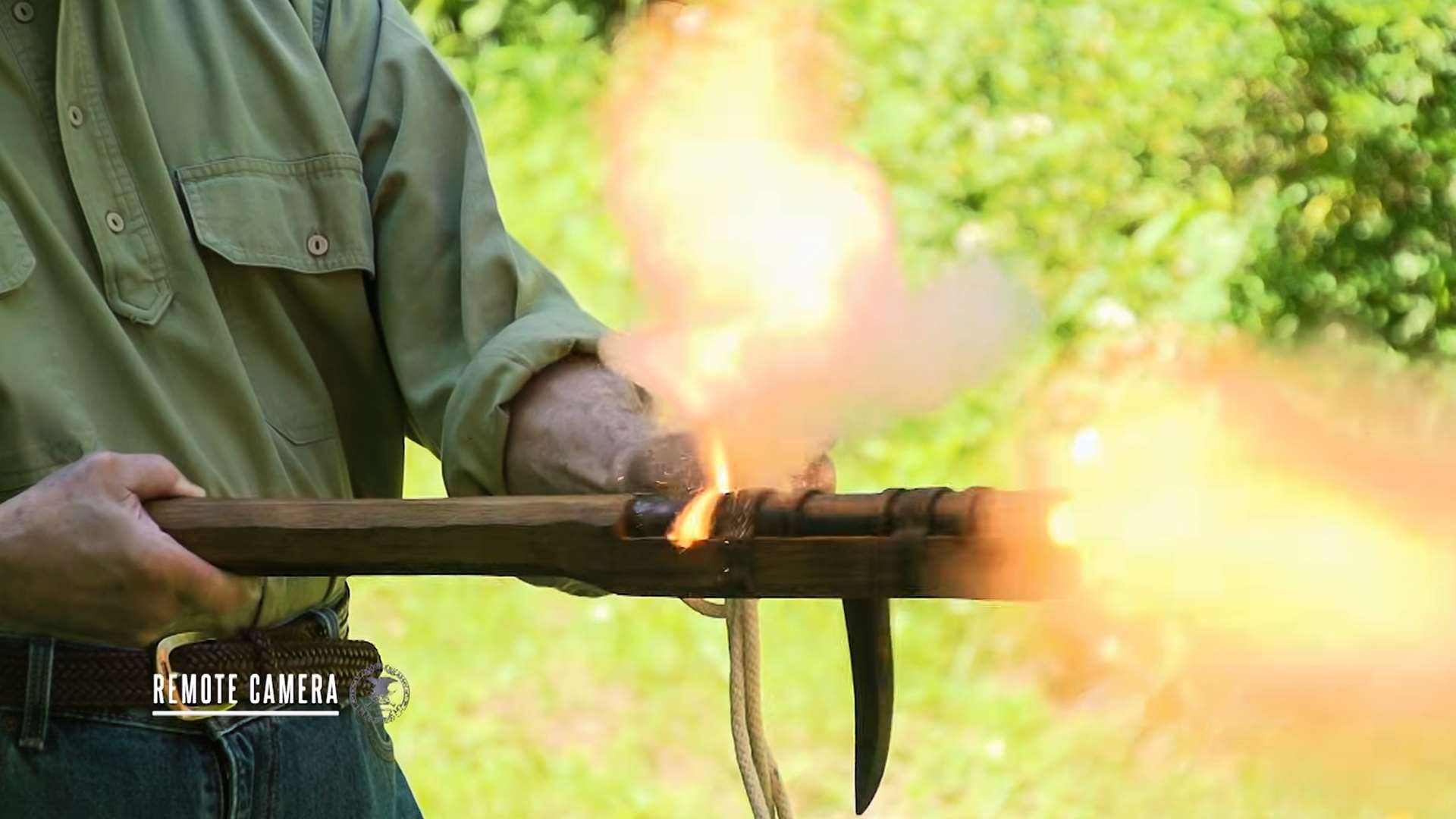
The hand cannon’s most obvious flaw was its ignition system. The touchhole sat on top of the barrel, which meant the shooter had to take a hand off the firearm or enlist a second person to apply the burning match to the pan—a process that made aiming approximate at best. The solution, as Keefe explains, came in two steps: moving the touchhole from the top to the right side of the barrel, which made it accessible without repositioning the body, and then attaching the match to a mechanical arm that could be triggered by the shooter. The result was the matchlock, and from that point forward, one person could aim and fire without assistance. Everything that followed—the wheellock, the flintlock, the percussion cap and the cartridge—was refinement. The hand cannon was the leap.
To watch full segments from previous ARTV episodes, head to americanrifleman.org/videos/artv. New episodes air Wednesday evenings on Outdoor Channel at 8:30 p.m. and 11:30 p.m. EST.