It has been said that when one is given no time to think, they will react as they have been trained. Being a long-time trainer and police officer, I have seen this come true frequently over the years. As a competitor and student in the use of force I have witnessed it both while studying videos and live in person. I’ve seen officers holster an empty pistol to reload a magazine and competitors put pistols down on a table before reloading. When time was of the essence, I’ve seen officers and competitors remove magazines from guns to place them on tables, in pockets or ease them to the ground.
These habits are formed by practice. Practice of skills that have no place in action shooting or defense of life. Most are caused either by a lack of training, training with those who don’t know any better or training with instructors that are unwilling to tell a student, “Stop doing that!”
Experience has taught me this because I was always “good enough.” Actually, I was so “good enough” that trainers rarely said anything to me, until the day I asked for more. I was tired of practicing and needed training. This would mean change. I had to be willing to change and suffer the pains of learning new techniques. Like making sausage, it’s never pretty, but worth it in the end.
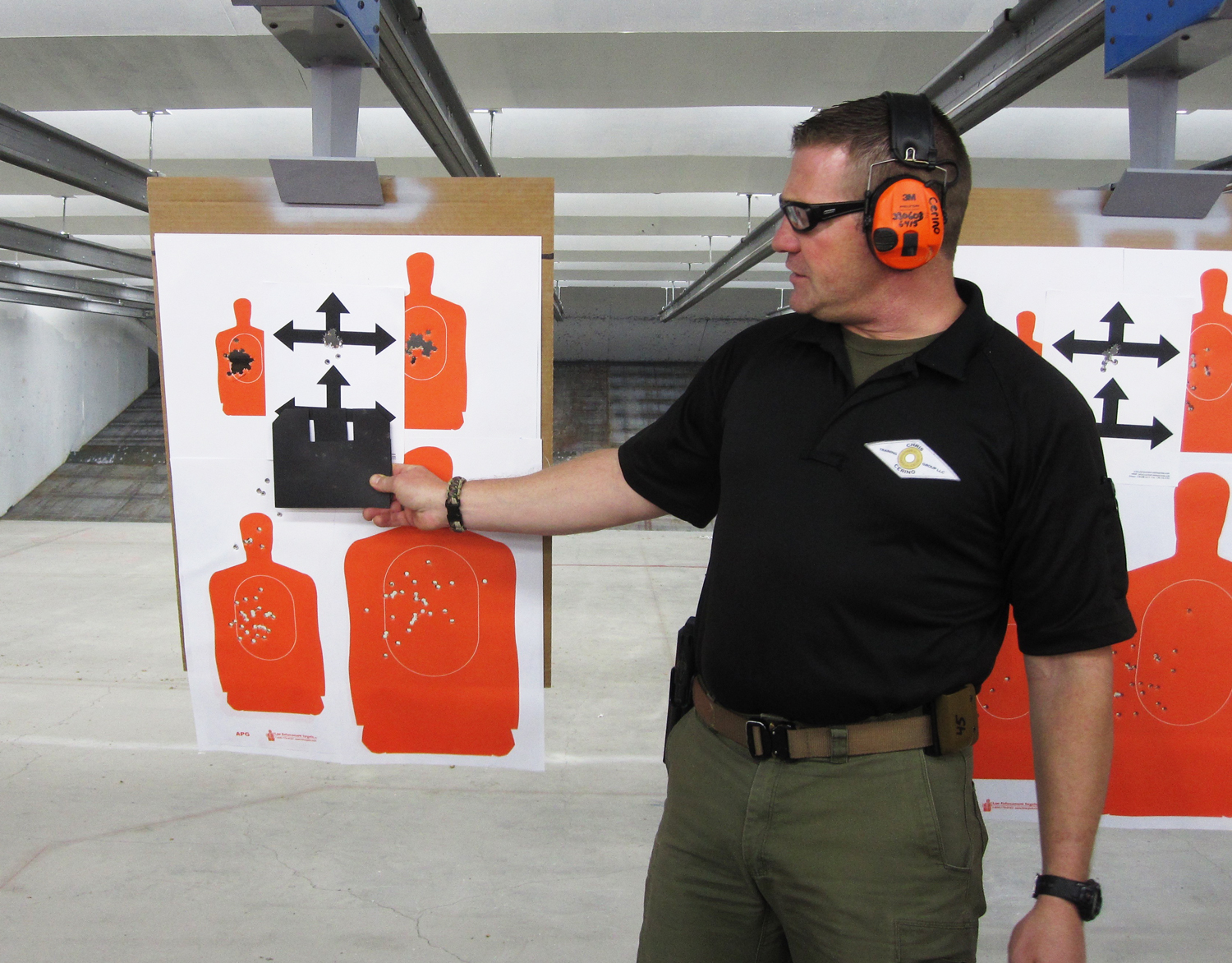 Watching novice competitors or officers in scenario training, I am reminded of the need to practice within context. Those who come to training and say, “This is how I do it” and are seemingly unwilling to do something new, remind me that if all you do is what you’ve always done, all you will ever have is what you have now.
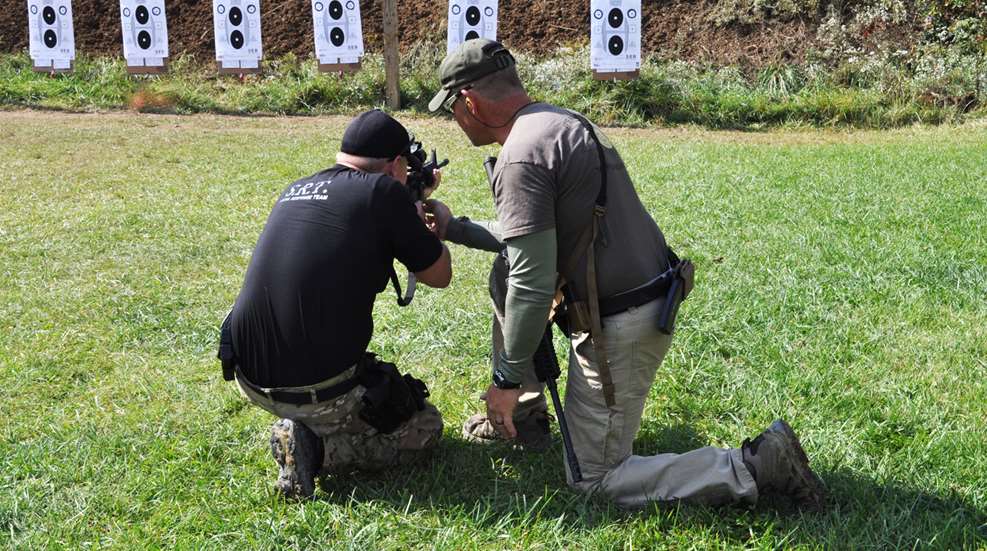
Training is performed under the watchful eye of a qualified instructor or peer. Practice is the performance of knowledge or skill already attained.
Look back on training you have attended and make an honest assessment as to whether it was training or practice. Did you leave with greater knowledge or just a lighter ammo box? Did the instructor explain, demonstrate and inspire you to practice a new skill or technique or did the instructor pat you on the back and tell you good job? Did he ever show you how you could do it better or did he just walk off and tell you it was good enough?
When you practice, try to do it with someone who has equal or preferably greater skill than you. Someone who can push you forward and share details that increase their performance or validate what you’re doing. The differences between a good shooter and a great shooter are usually details. Never neglect the fundamentals or attention to the nuances of them.
Training should involve learning something new to make you more accurate, faster, consistent or more economical in your movements. Training drills should increase knowledge and build skills along with decreasing insufficiencies, not just be fun drills to shoot more rounds—unless the goal is to define deficiencies.
Lastly, practice involves repetition with high round counts to create improvement and should include fun drills to test and refine skills.