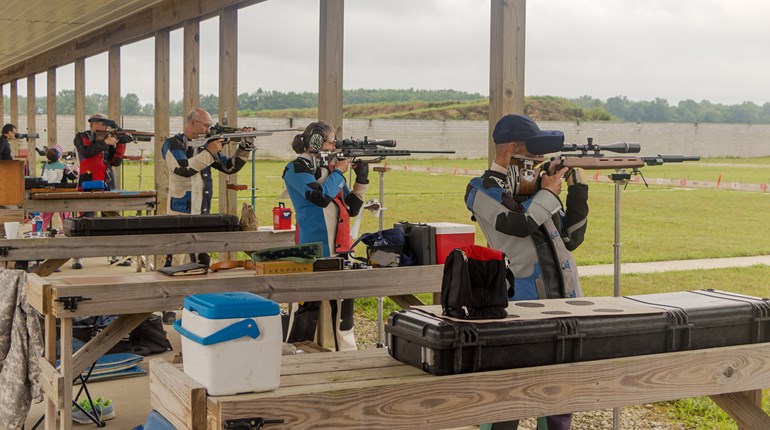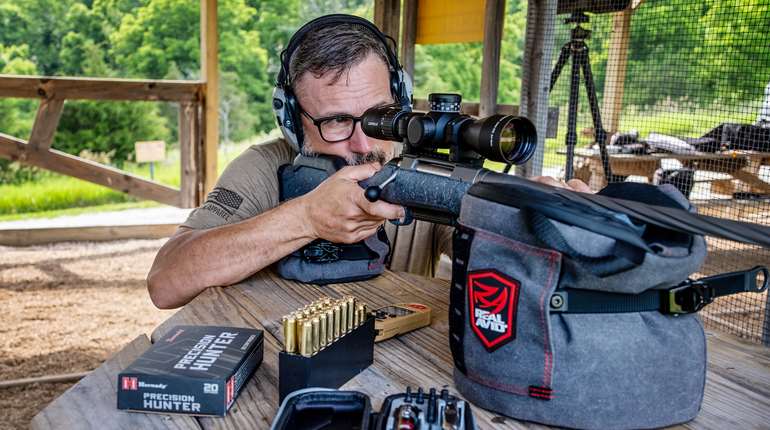
This article focuses on prone; however, information contained will also help your position scores. So keep in mind that shooting encompasses two primary areas, technical which includes position and the integrated act of firing a shot, and mental, the thinking and focusing of your mind.
The first thing in shooting better prone is for each individual to establish a personal goal. Simply said, make up your mind to achieve. Then work constantly at a high level continuously over a period of time. Focus and effort in training must be as intense as that experienced in competition, in order for a shooter to learn to shoot at the highest level.
As a junior in the Acorns Junior Rifle Club, we were taught that you win competitions by shooting good in standing, and you lose competitions through shooting bad prone scores. As a result, a heavy emphasis was placed on shooting perfect prone scores. I often hear coaches working to help their shooters shoot a scratch 10 or a 10.0. The correct goal is to shoot a center 10. The best shooters are always working to be in the exact center of the 10-ring. In American shooting that gives the shooter a little leeway to be off and still shoot a 10. But when shooting the international target, it is very important to be centered in the 10-ring to achieve the best scores.
Therefore, a shooter needs to teach himself to recognize the perfect sight picture with the bullseye exactly in the center of the front aperture. Many shooters shoot when the bullseye is close, but not centered up. When the shooter truly recognizes the sight picture, which is totally centered up, scores will also improve.
The recognition of the sight picture being perfect will result in that recognition in kneeling and standing as well. In addition, there is a transfer of training when the shooter fully recognizes the centering of the bullseye in the front aperture. An indication that the shooter has learned this technique is when prone scores repeatedly reach 100.
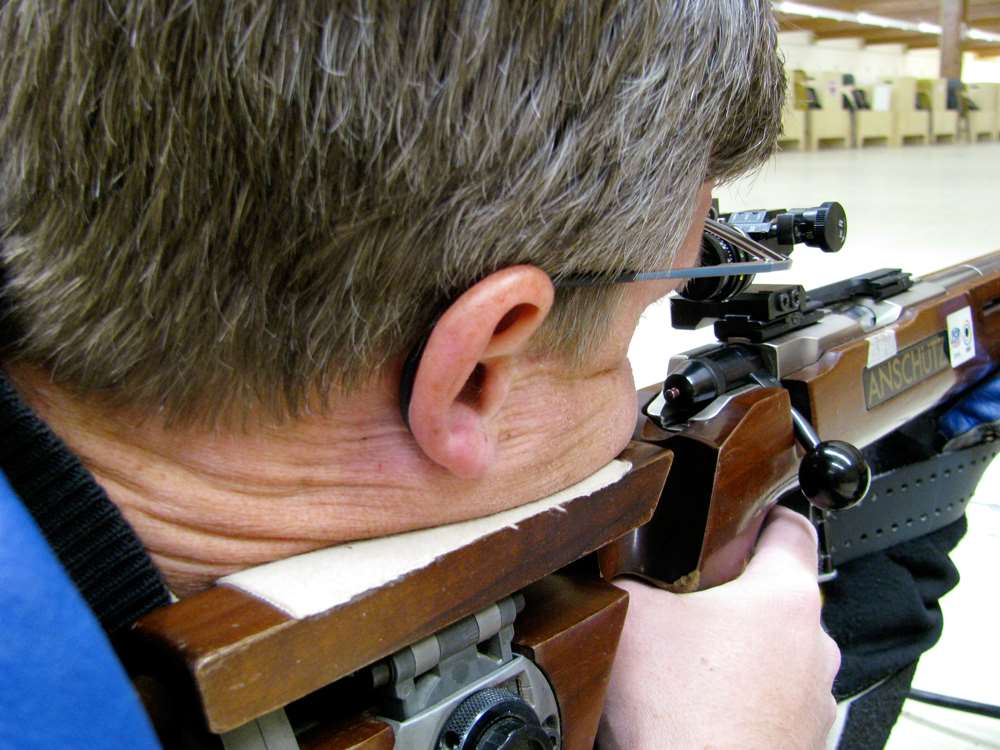
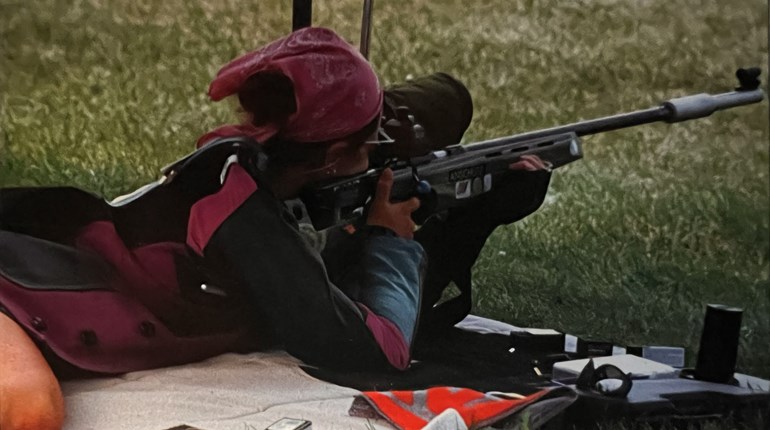
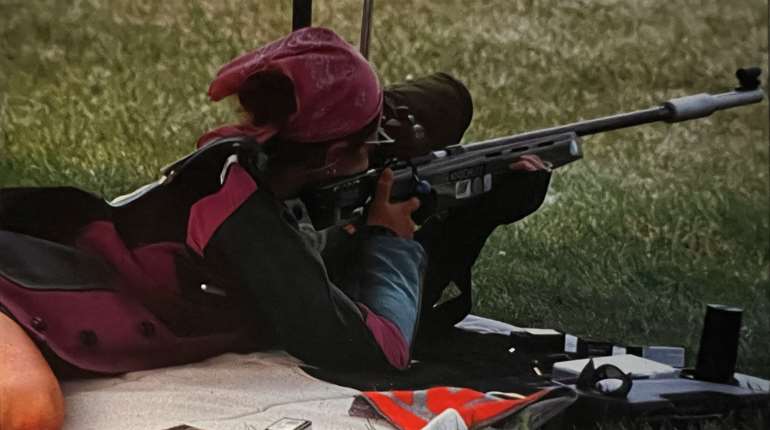
However, I have noticed an issue which prevents shooters from obtaining the highest score levels, which is incorrect head position. The head position must be the same placement, an exact placement on the cheek piece shot after shot. Thus, it is repeatable and repeated shot after shot. Placing the cheek on the cheek piece must not utilize any muscles in the head, neck or shoulders. Nevertheless, the first check concerning head position a coach needs to make is to stand behind the shooter and watch how the shooter puts his head on the stock. The correct method is for the shooter to move his head, after reloading, directly above the cheek piece, which would be at 12 o’clock, and then move directly down onto the cheek piece. If done correctly, a portion of the cheek is pushed up and out looking like bunched up cheek skin, which extends out away from the cheek. See Figure 1.
On the other hand, incorrect placement of the head on the cheek piece will result in a flat, non-bunching of the skin on the cheek. When this occurs the shooter will typically come in from the left, 9 o’clock to the line of fire, and push the cheek into the stock yielding a relatively flat cheek on the cheek piece. If the incorrect method is utilized in one position, it is often utilized in other positions. That is why the coach needs to check head position in all positions.
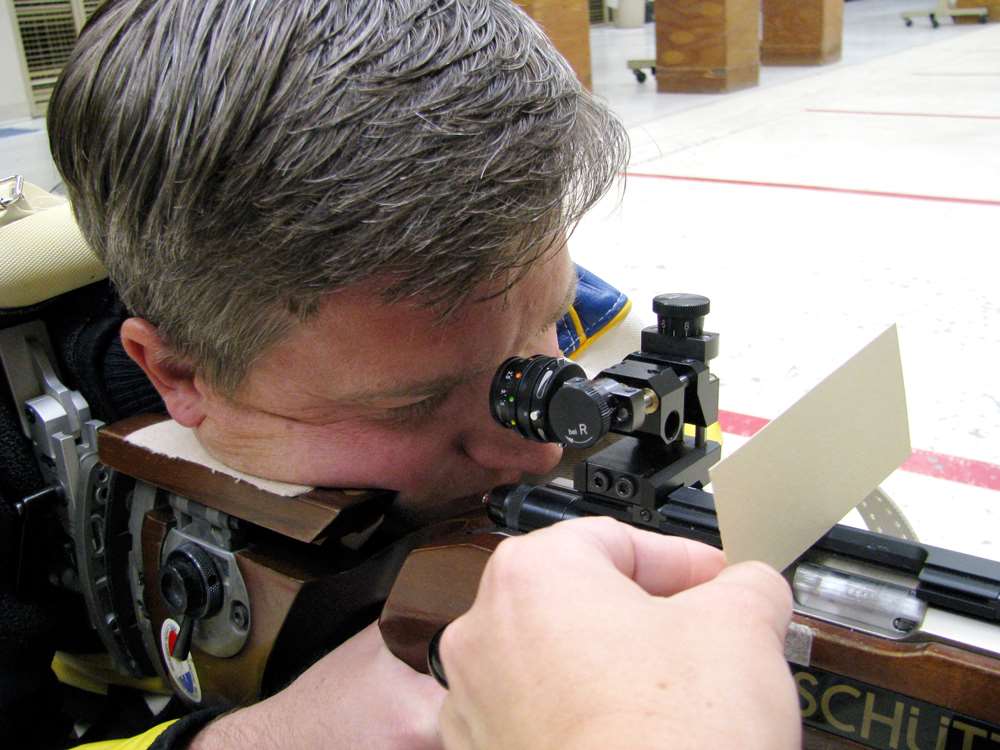
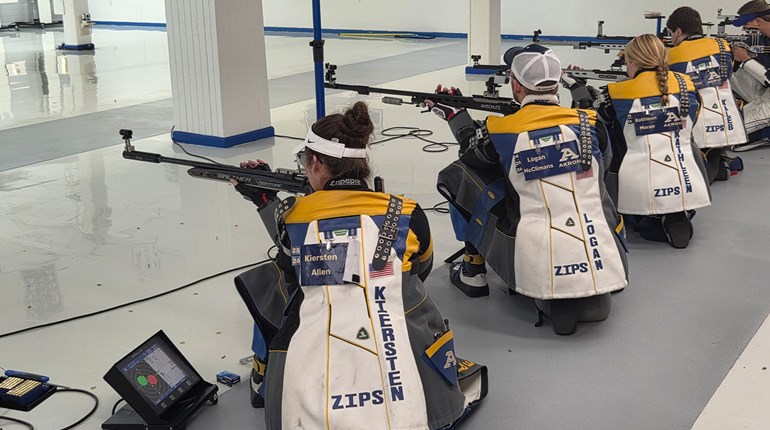
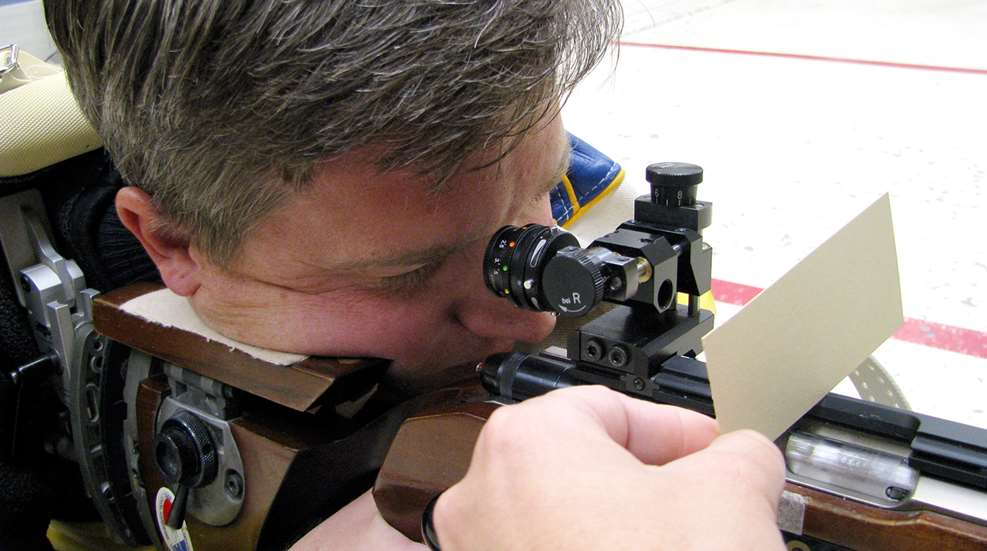
A technique to determine correct head position has been referred to as the card exercise. First, the shooter is in position and aiming at a target. Then the coach takes a business card and places it in front of the rear sight blocking the shooter from seeing the target. The shooter is then told to close his eyes and lift his head up and then place it down on the cheek piece keeping his eyes closed. When the shooter feels he has the correct head position he makes a sound indicating he has found the correct head position. The shooter must not speak to tell the coach correct head position has been achieved, as that requires moving the jaw, which in turn invalidates the procedure. The shooter still has his eyes closed and now the coach removes the card and tells the shooter to open his eyes, but do not move his head. Then the coach asks if he is high, low, left or right of the bullseye. He is then told to move his head to be able to see through the sights. Repeat this process five times and a pattern is formed. From that the coach and shooter know if the cheek piece needs to be moved, which direction and by how much. After moving the cheek piece repeat the process until the shooter is consistently very close to being centered up or is centered up. If the shooter does not have an adjustable cheek piece, the same can be achieved by taping material to the cheek piece. See Figure 2.
Overall, high-level training is important. Having a goal, being constant and consistent in your training, centering on the bullseye and continually having the correct head position will improve your scores and your X counts. By utilizing these techniques you will do just that!
Photos by Reya Kempley.