For the U.S. Army, 1939 and 1940 were tumultuous at best. The big picture―particularly after September 1939―promised that world affairs were going to get worse before they got any better. And, down in one corner of the frame, was a note reminding the Ordnance Department that the vaunted M1 rifle was going to have to get better.
In 1939, the rifle Gen. George S. Patton, Jr., would later call “the finest battle implement ever devised,” was having birthing pains. To begin with, John Garand’s new rifle was only creeping into production. In 1934, 80 rifles were fabricated essentially by hand. By the late summer of 1937, things progressed to 10 rifles per day, slowly increasing to 20, then 80, until finally―on the day Hitler invaded Poland―100 rifles per day.
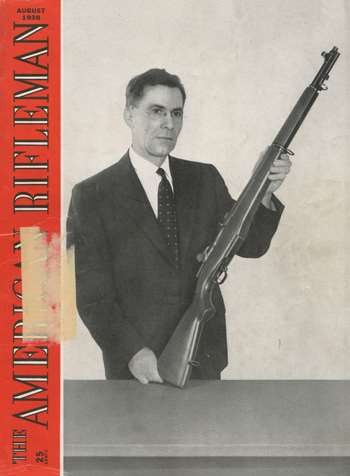
In addition, production rifles had mechanical problems. Solutions to those problems were in the works in the summer of 1939, but growing apprehension over the M1 rifle’s ultimate suitability for military use overshadowed them. Thus it was that the War Department set out to use the 1939 National Matches and the Small Arms Firing School as a way to convince a knowledgeable and vocal segment of the American public (target shooters) that the M1 was OK. And they went all-out to do it.
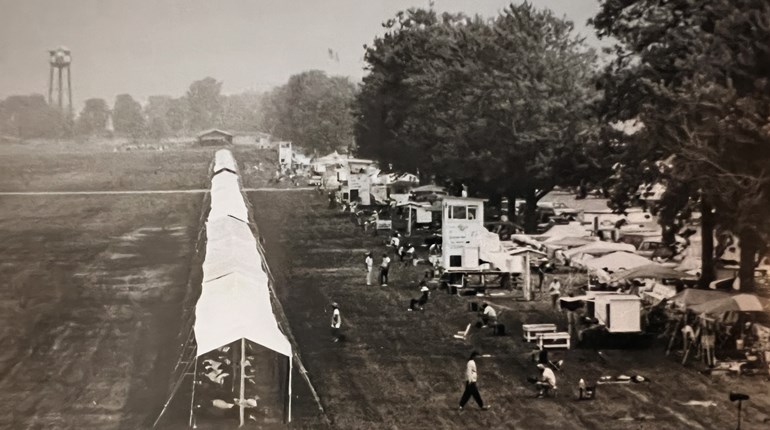
Two-hundred M1s were shipped from the Springfield Armory to Camp Perry, OH. They were accompanied by a contingent of soldiers who were to oversee the introduction and to make sure nothing went wrong. And nothing did go wrong―except the demonstration. The news media and the NRA had already raised questions concerning the M1’s usefulness, and the Army’s over-protective conduct left American target shooters even more doubtful. It would take several added demonstrations of ever-improving production rifles, an exhaustive test of several military semi-automatic rifles and the National Matches in 1940 to put the subject to rest.
For the 1940 National Matches, the Army changed its approach. Instead of the closely supervised familiarization firing that marked the 1939 debut, the M1s at Perry in 1940 were included in the Small Arms Firing School instruction, then put on the firing line and used in competition.
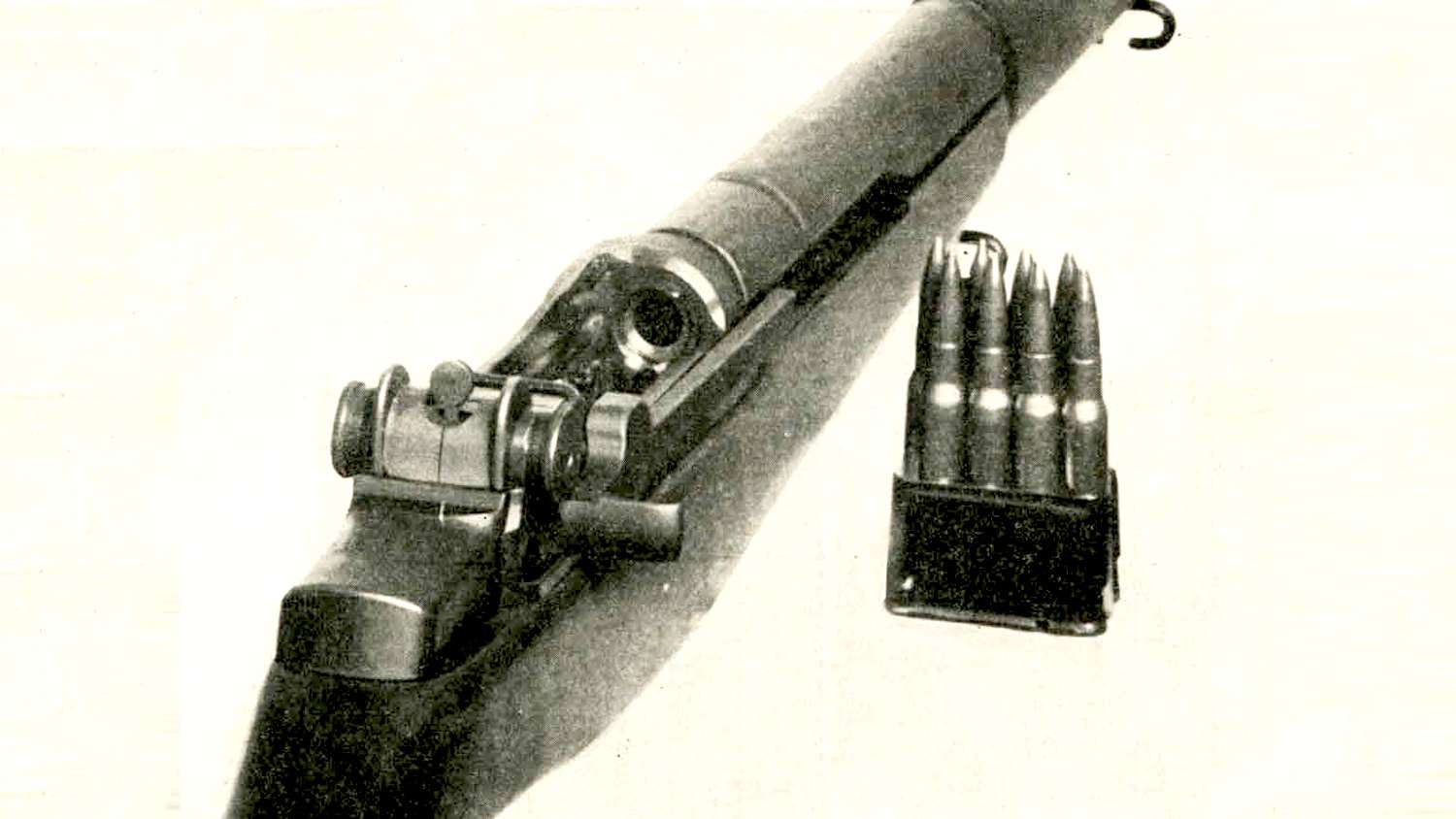
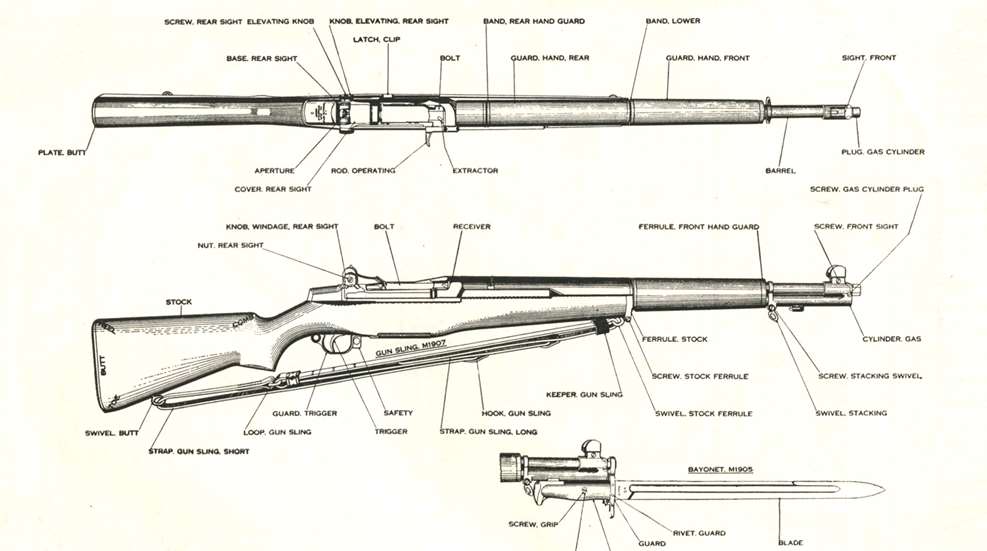
They were different rifles from those provided a year earlier. Gone was the original gas-trap cylinder―replaced by the now familiar ported-barrel, gas-impingement system. The rear sight, which had a tendency to lose elevation during firing, had been refitted with a positive lock. The en bloc clips stayed in the magazine for all eight shots, then were ejected along with the fired, eighth cartridge case. Seventh rounds chambered reliably, regardless of the way the clip was filled. The operating rod am still had a tendency to stick when wet―which wasn’t corrected until the adoption of the M14―but the MoS2 lubricant had been supplied, and instructors at the Small Arms Firing School emphasized its importance. And, considering they were not finely tuned match rifles, they shot pretty well.
In very quiet rebuttal of one rather unfounded criticism, the ammunition used at Camp Perry in 1940 was National Match―the specially selected and assembled equivalent of M1 Ball―rather than M2.
The match program for 1940 called for a total of four contests to be fired using the M1 exclusively. To call attention to the M1’s strengths, two matches were rapid fire―sitting at 200 yards and prone at 300 yards―another was the Instructors’ Surprise Fire Match, and the last was a 600-yard, slow fire team match, for which the DuPont Trophy was awarded.
In its match report for 1940, American Rifleman noted that civilians won two of the three individual matches, with the 300-yard rapid fire match going to U.S. Army Cpl. Carl Byas. The team match wen to the U.S. Marine Corp Reserve. The 1940 Marine Reserve team included some of the heaviest hitters on the Camp Perry scene at the time, and to this day its members are pleased to remember beating the regular Marines.
Those who shot the 1940-vintage rifles came away much more confident of the M1’s ultimate usefulness than were the competitors of 1939. The straw that broke the skeptics’ backs, however, came in November 1940, when an exhaustive series of Marine Corps tests pitted the M1 against other service rifles: the bolt-action M1903 Springfield and prototypes of two semi-automatic rifles supplied by civilian manufacturers. John Garand’s rifle was rated the “most satisfactory semi-automatic rifle available.” It would take experience on Guadalcanal, nearly two years later, before the Marines dropped the words “semi-automatic” from their finding.