Previously, we covered front sight focus for static targets. The next logical discussion after achieving a steady sight picture is how to keep the sights still, while moving the trigger. What else do we do that requires precision and a steady hand? How about threading a needle, or painting with a small brush? Both require a steady hand, but neither rewards our efforts with a loud explosion, as when shooting.
In NRA pistol classes, we divide this challenge into two parts: The mental and physical aspects of trigger squeeze. The mental aspect is such that, if all we had to do was squeeze the trigger, we wouldn’t be having this discussion. It’s the loud noise afterwards that causes our 3 million-year-old reptilian brain to protect us, just like it does when a rock hits the windshield and we’ve already blinked before we realize what happened. For most of us, our “lizard brain” is hard-wired to reflexively blink our eyes and push the gun away in what is known as an anticipatory flinch, which causes the bullet to consistently avoid whatever we’re trying to hit. Practice, and perhaps good ear protection, will help.
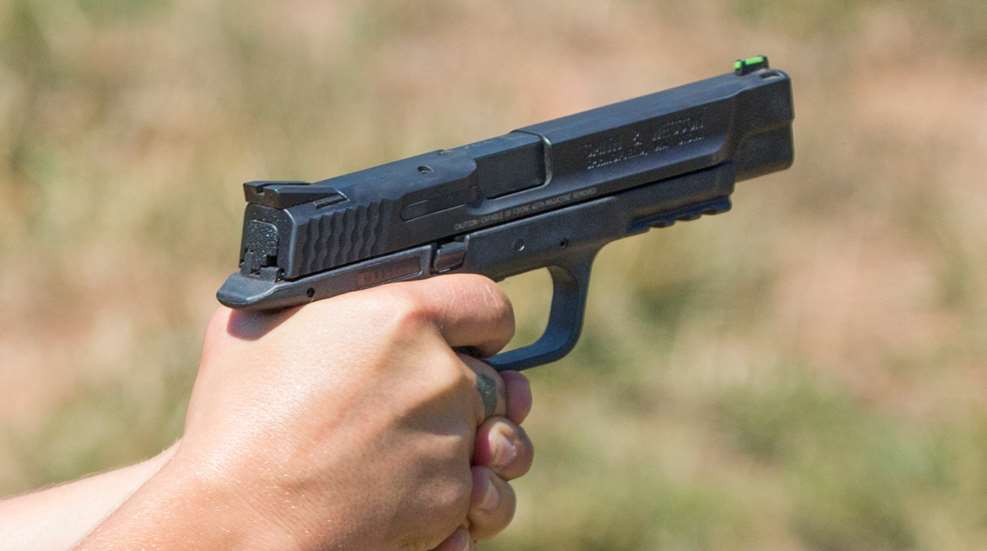
The physical aspect of trigger squeeze is that it can act as a lever. Because it hangs below a relatively short barrel that is only supported with our hands (no arms or shoulder as with a rifle), it’s pretty easy for the trigger to tip the barrel if we pull it quickly. So instead of yanking the trigger in anticipation of the loud noise, try sliding the trigger along the same axis as the barrel—straight back. That won’t work if your index finger is pressing sideways on the trigger. And, like threading a needle or painting, it’s easier to steady the sights during trigger squeeze if you’re supporting the gun correctly. We’ll get to that in the next blog on proper grip.
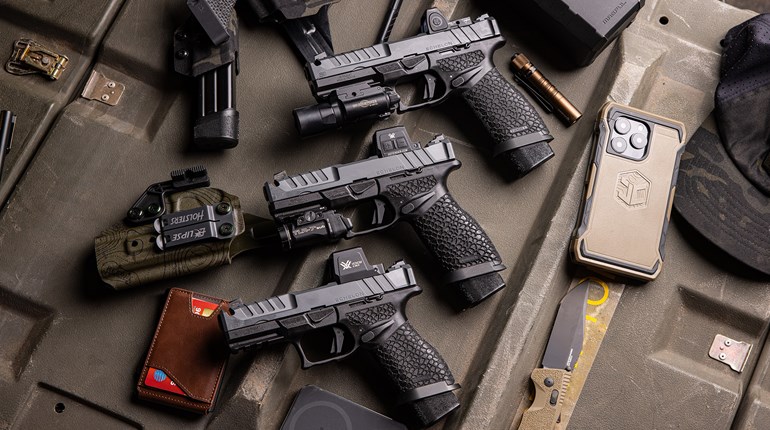
As for the mental aspect: I encourage students to keep their focus on “their side of the trigger,” rather than anticipating what’s about to happen on the other side, near the muzzle. This can be practiced by dry-firing an unloaded pistol, just like a practice swing in golf, without the ball. To get the feel of squeezing the trigger, practice dry-firing an unloaded pistol while balancing a coin on the slide or rear sight. You’ll naturally squeeze the trigger gently in order to avoid shaking the coin off the gun. Check your owner’s manual for any instructions about protecting the firing pin or the action during dry-firing, like using dummy ammunition or snap-caps, particularly with a .22 cal. gun.
Don’t practice dry-firing enough, and the lizard brain will win every time. Or as one student joked, “I’ll just aim high and hope that I have a consistent flinch.”
Next up is the basics of pistol grip.