
There’s a particular kind of object that gets built only when an institution old enough to remember the invention of the wheel-lock decides it has something to prove. In May of 1526, in the foothills of the Italian Alps, a man named Bartolomeo Beretta took a commission for arquebus barrels and signed a document that survives to this day. Five hundred years later, the company that grew out of that signature has decided to mark the occasion. Not with a commemorative plate, but with this.
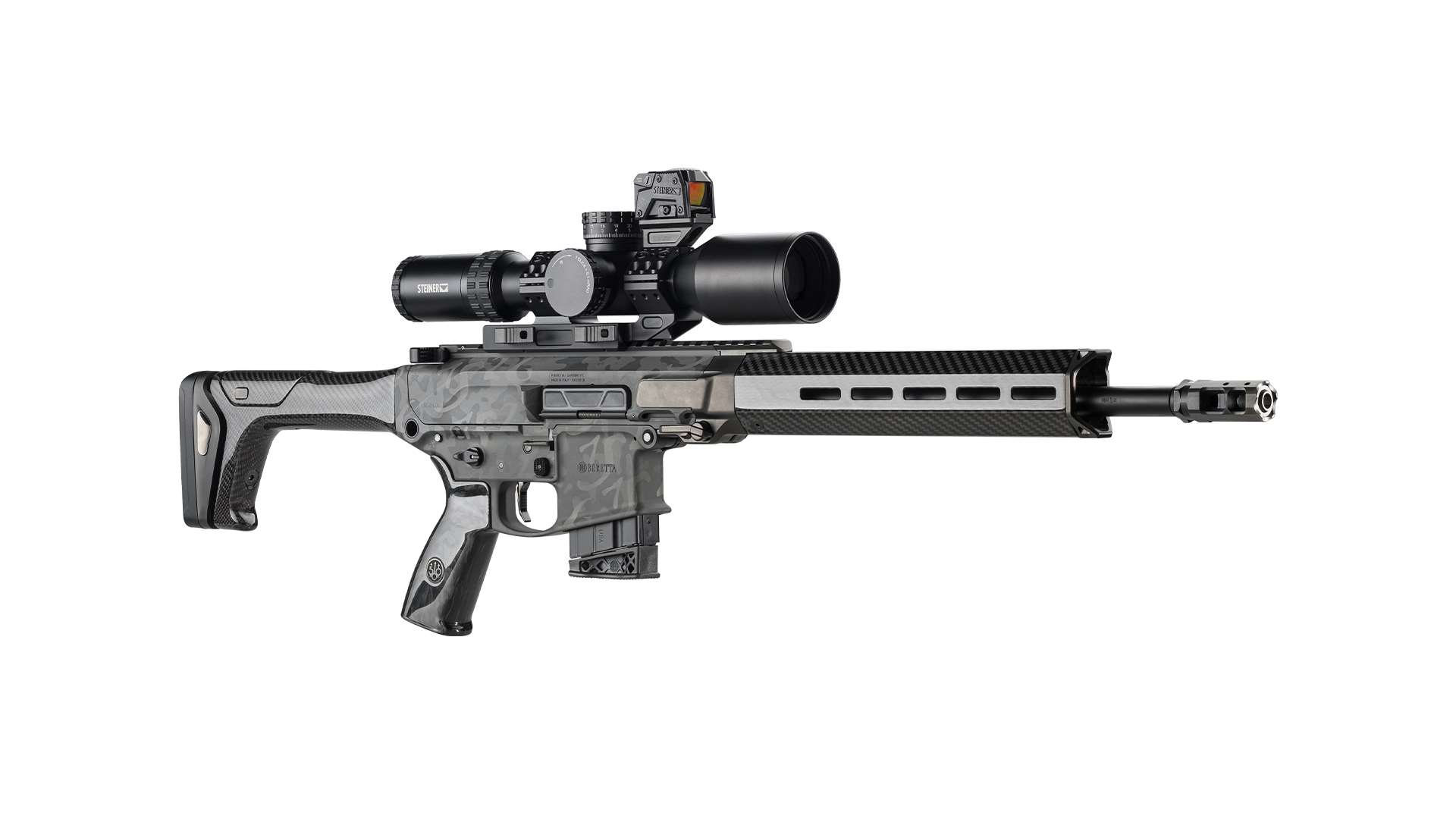
The one-off rifle is called the Titan, and Beretta unveiled it on May 12 in Gardone Val Trompia, the same valley where Bartolomeo’s forge first threw sparks. It’s the first of several anniversary projects scheduled to roll out across 2026, and the brief given to the engineers was as direct as it was inconvenient. Build something that has no business existing yet, and make it work.
What they built is a semi-automatic modern sporting rifle chambered in 6.5 Grendel. That detail alone is worth pausing on. Beretta is not historically known for the MSR category, which is a relatively recent addition to the firearms world borrowed from tactical platforms and translated into civilian ergonomics. The company has been quietly developing its NARP rifle platform for the Italian Army since 2018, and the Titan appears to share considerable technical DNA with that program. The Italian Army has reportedly ordered 7,000 NARPs chambered in 5.56 mm NATO. The Titan takes the same fundamental architecture and pushes it into territory the military version was never going to occupy.
Starting with the materials, the upper receiver is titanium and the lower receiver is magnesium. Stock and fore-end are carbon fiber, while the pistol grip is forged carbon. No Beretta product has ever combined these four materials in a single firearm, and very few firearms anywhere have. The reason is that each one introduces its own engineering headaches in terms of how it interfaces with the others, how it handles the pressure of repeated firing and how it ages over thousands of rounds. The choices are aeronautical rather than industrial. According to Beretta, the result is a platform that gains rigidity while losing weight, which is the trade most rifle designers spend their careers trying to make.
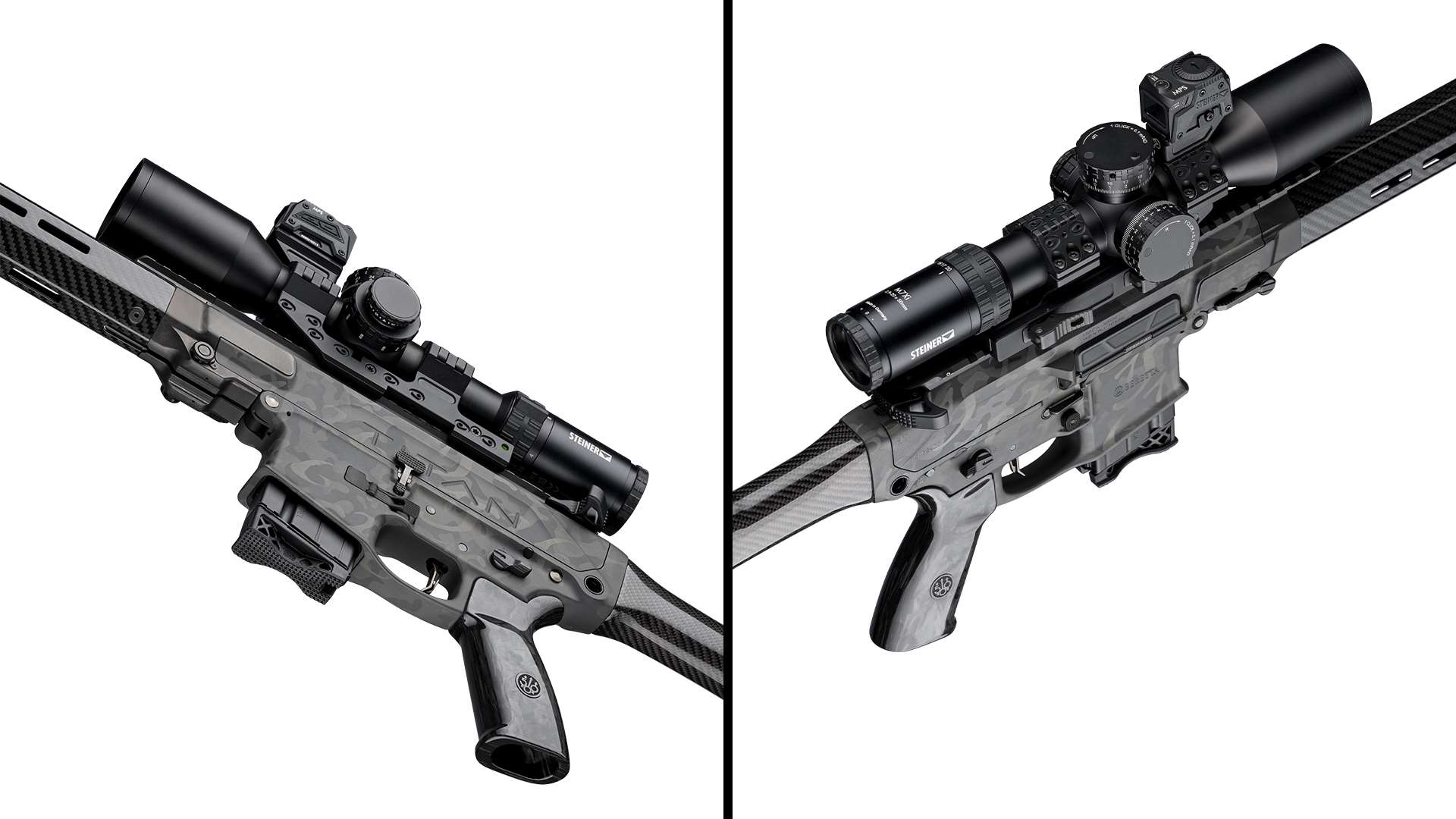
The operating system is a short-stroke gas piston with adjustable settings, paired with an enhanced two-stage trigger built for a clean break. The 6.5 Grendel chambering delivers more effective range and better ballistic performance than the 5.56 mm NATO the military variants typically run, which makes sense for a sporting rifle aimed at shooters who care about hitting things at distance.
But the Titan is also a 500-year anniversary piece, and Beretta didn’t let the engineers have all the fun. The receiver wears a custom grey camouflage pattern that, on close inspection, incorporates the date “1526” written in Bartolomeo’s own hand from that original founding document. A dedicated “500 Years” logo is embedded into the forged-carbon pistol grip. One discreet detail at the front of the Picatinny rail nods to the first spark struck in the original forge. The whole rifle ships with a Steiner optic developed specifically for this project, which carries the same 500th anniversary logo integrated directly into the lens display.
The case the rifle lives in deserves its own paragraph. It’s a carbon-fiber shell with an Alcantara interior, custom French-fitted so every component sits exactly where it belongs. Integrated wheels and a telescopic handle make moving the whole package straightforward.
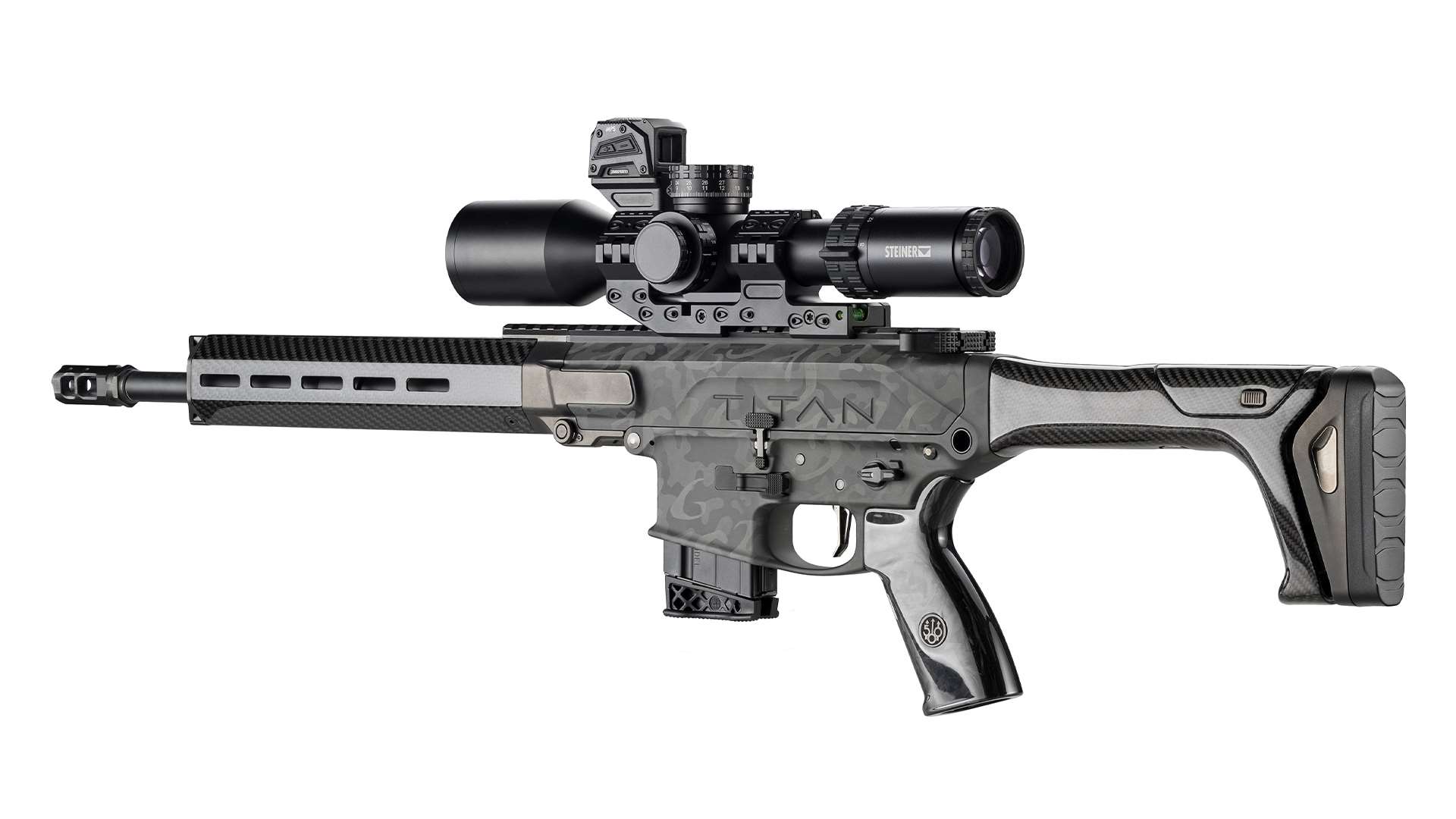
The Titan is a one-off, and there’s no MSRP because there is no production run. Speculation about whether Beretta will eventually translate the Titan’s lessons into a series-production MSR for the American market is understandable and probably warranted, given how aggressively the company has been talking about the modern sporting rifle category. Carlo Ferlito, Beretta’s CEO and general manager, framed the Titan as the company’s interpretation of a firearms category that has, in his words, gained considerable ground in the international arena. That framing does not sound like a one-time tribute, instead it’s like a flag being planted.
Riccardo Perotti, who runs Beretta’s law enforcement and defense firearms operations, was more poetic, describing the Titan as a fusion of tactical performance and ceremonial elegance. The rifle bridges, in his telling, the sporting tactical world and the collector’s cabinet. Both descriptions are accurate. How the Titan ends up being remembered will depend on what shows up in 2027.
For now, it exists somewhere in Italy. Built from modern materials to mark an anniversary that almost no other living company on earth can claim. Learn more at pietroberetta.com.